Welcome to Sheridan Memorial Hospital
1401 West 5th St. Sheridan, WY — 307.672.1000
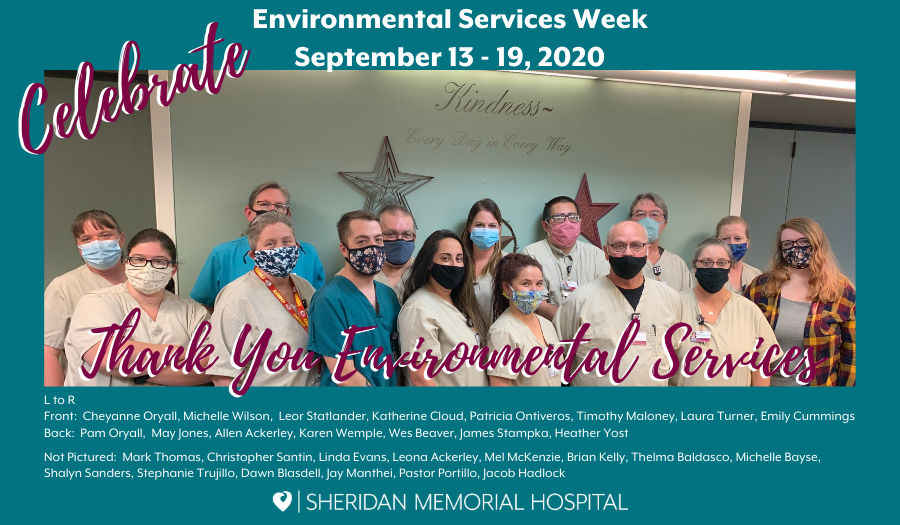
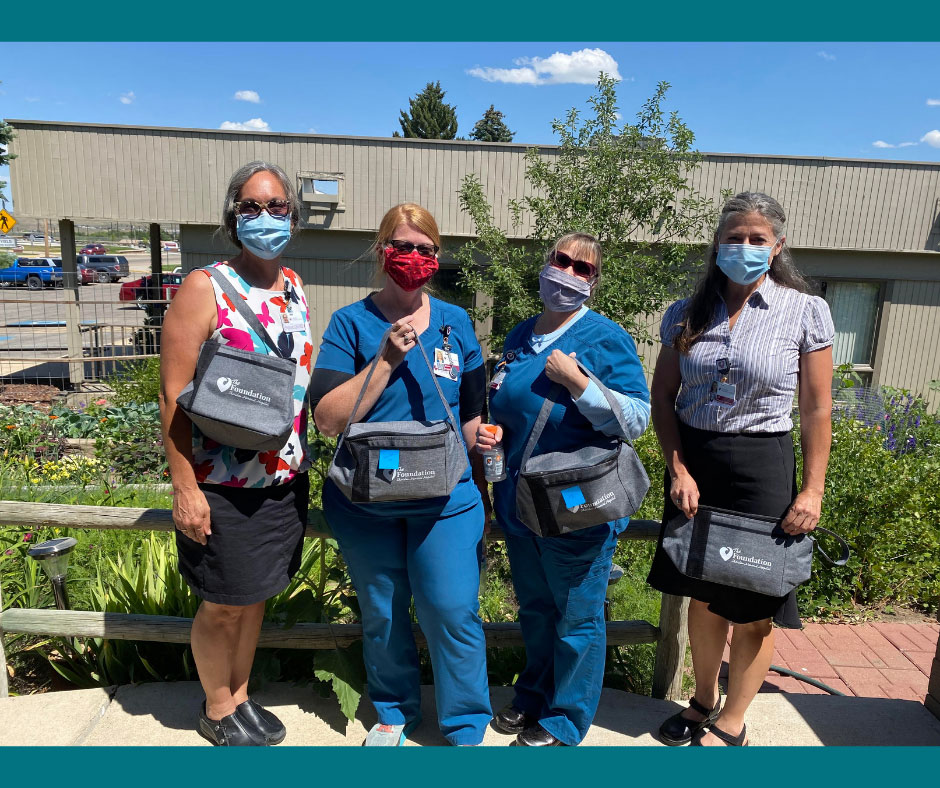
Environmental Services (EVS) has always been an integral part of Sheridan Memorial Hospital (SMH). With the rise of COVID-19 cases, their hours of dedicated service towards keeping everyone at our hospital safe has been all the more necessary. So in honor of EVS Week, we want to shed some light on everything the members of our housekeeping and laundry staff have done and currently doing to ensure SMH can keep providing excellent patient-centered care to our wonderful community.
March began as just another routine month for the EVS staff. Their days consisted of the usual standard daily work, and they followed the same processes and procedures. But when COVID-19 began rapidly spreading throughout the country in mid-march, EVS had to break from routine and start adopting new ways to keep the hospital as safe as possible. One of the most difficult initial problems that EVS had to work around was the lack of information on how to protect against COVID-19. Heather Yost, an environmental services aide, explained, “Since COVID-19 was such a new disease, a lot of the health organizations, like the CDC, were still trying to decipher exactly what did and didn’t work when trying to stop its spread. So a good number of the processes that we would adopt ended up being changed pretty rapidly because of new discoveries. It also didn’t help that with every new process, we had to get additional education for that process, which took even more time out of our already cramped schedules.”
But now that time has passed, and much more research has been done, the entire EVS team has finally been able to find a consistent process they use to keep us safe. However, just because they’re done doing all the guesswork, it doesn’t mean they’re done doing all the hard work.
Whenever EVS cleans an isolation room after the patient has been discharged, they must first wait outside until any air in the room which could’ve been contaminated by the patient has been filtered out. While waiting, EVS dons personal protective equipment (PPE), including gloves, gowns, and facial coverings such as MAXAIR CAPRs to protect them from any traces of disease. When the contaminated air has been filtered out, they can enter the isolation room and begin disinfecting. Once they’ve entered the isolation room, procedure dictates that they are to remain inside until all cleaning processes have been followed, and the room has been completely sterilized. So EVS goes about the room, disinfecting the entire space, including the floors, furniture, bathroom, and even the walls. Then, once the room is thoroughly cleaned, they must remain inside it to doff all of their PPE and dispose of any materials that may have been contaminated in the process of cleaning. It is only then that they are finally allowed to exit the room. The process of cleaning just one of these isolation rooms can take up to 2 hours, about twice as long as it normally takes to clean a typical MedSurg room, and that isn’t including the time it takes to don and doff any necessary PPE. With this additional time devoted to cleaning the isolation rooms and other areas vulnerable to COVID, EVS has never been busier. But they’ve kept their chin up and continue to push through these congested times, even when that has meant working overtime or helping to share someone else’s load during a hard shift
You might wonder what keeps them going, how they are able to take on such busy days, and how they are able to keep cool under this kind of pressure. Emily Cummings shared, “My family is what drives me forward. I’ve had loved ones who once stayed in these same rooms that I cleaned today. EVS was there to keep things clean and safe for the people I loved. If my Dad were sick in the hospital, I’d want to know that everyone there was doing everything they could to keep him safe, so that’s why I need to do everything I can to keep these patients safe.” “I’ve been afraid to get COVID, I know how serious this disease can be, but I want to contribute in any way I can to stopping it from getting to somebody else,” Heather Yost explained. “I keep going because of everyone on the EVS team. I see how hard they work every day, and I’m so proud of all the hard work that they do. They inspire me every day to work harder than I ever thought I could,” Karen Wemple concluded.
We at Sheridan Memorial Hospital are so very grateful for our outstanding Environmental Services team. We can’t thank them enough for their perseverance throughout these difficult times and for the amazing work they do every day to ensure that our community has a clean, safe place to receive excellent patient-centered care.
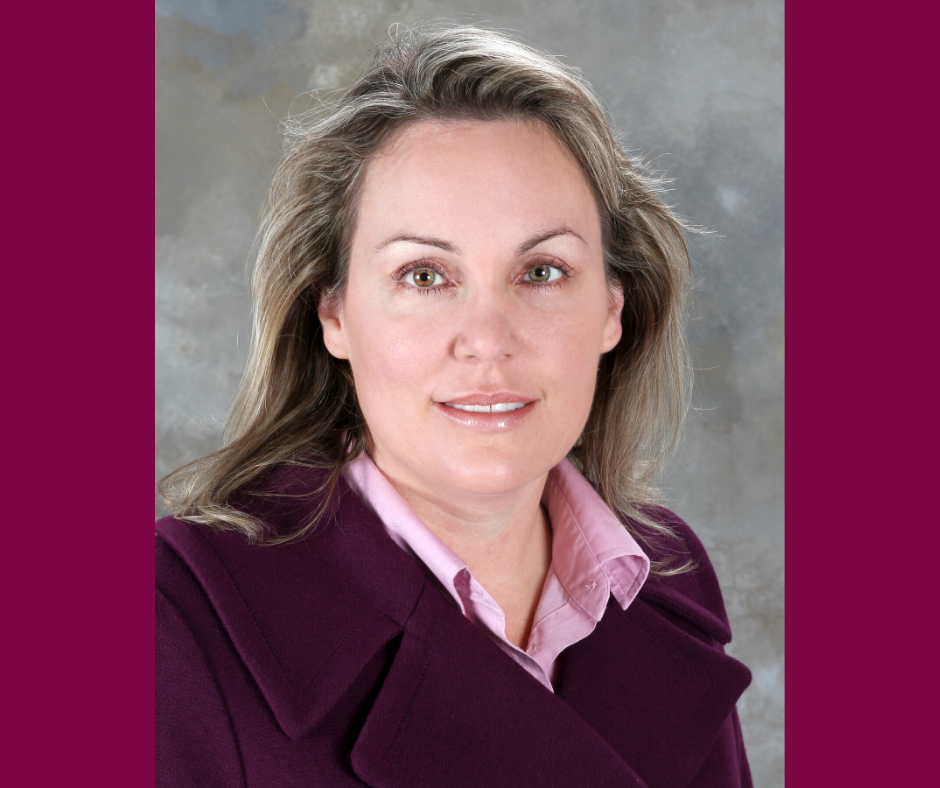
When you meet Elisabeth Scalva, MD, the first thing you might notice is her height. However, that quickly fades away as her vibrant personality radiates as she engages with people. As a new Obstetrics/Gynecology physician at SMH Women’s Clinic, Scalva will bring that positivity, and her infectious laugh, to bear on her work every day.
“I have always had a genuine love for people,” Scalva says. “When I couple that with my love for science, I naturally moved towards healthcare.”
It was her grandfather, a veterinarian, who initially piqued her interest through his practice.
“He would have to dissect animals or do surgeries and that was my first exposure to any type of medicine,” she adds.
Originally from Littleton, CO, Scalva grew up in the shadow of the big city of Denver. But she knew she had a passion for rural areas and bringing quality healthcare to those who make their homes away from the big city lights, especially women.
“I trained in rural settings after medical school and have always had a commitment to rural medicine,” Scalva says. “I thought I wanted to be a general surgeon at first, but found that I am passionate about helping women throughout their entire life. I like and appreciate that continuity.”
Scalva was part of a private practice in Grand Junction, CO for the three years prior to her move to Sheridan. Her best friend from med school, Lindsay Capron (another OB/GYN physician at the SMH Women’s Clinic), was recruiting her pretty hard.
“Lindsay and I are very close and she knew how much my family and I would love it in Sheridan,” Scalva said. “And she was right. We came to interview and just loved it.”
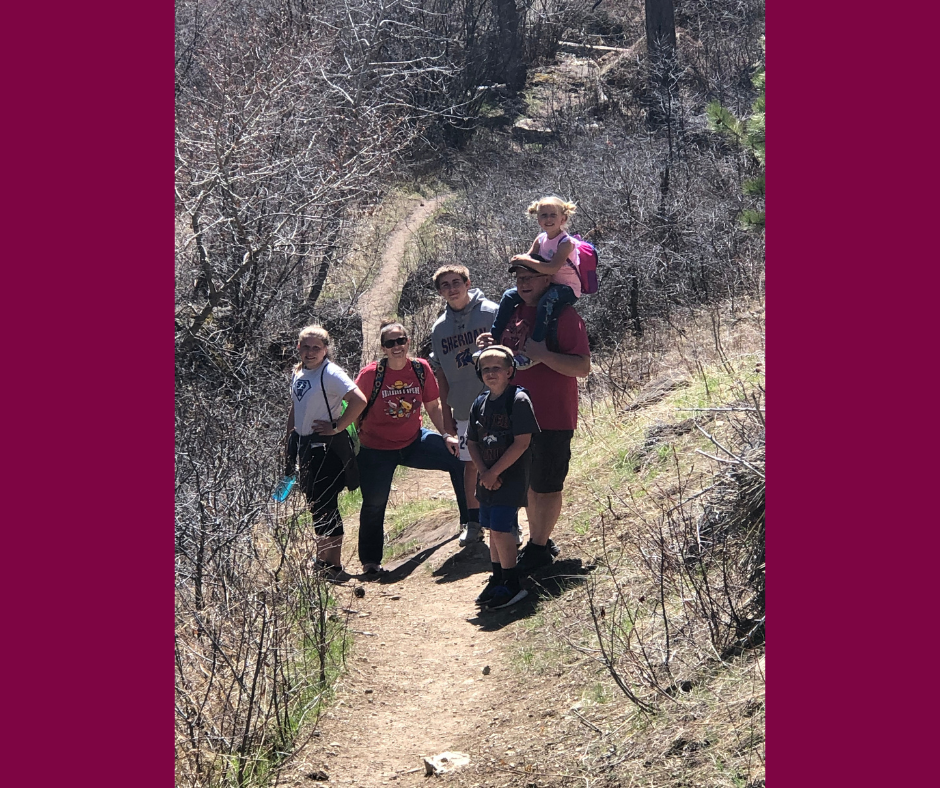
Describing herself as “outdoorsy,” Scalva and her family like to hike, backpack and camp. She is also into trail running and yoga.
“My husband, Ryan, and I bought a home near the park and just love being able to take our kids, ages one and four, to the park,” said Scalva. “We want to be a part of the community and living in the heart of it makes sense for us.”
By Kim Gilbert, FNP-C, AGACNP-BC
Kim Gilbert is a Family Nurse Practitioner at Sheridan Memorial Hospital’s Internal Medicine practice.
I am a certified Family Nurse Practitioner, earning my master’s degree in 2012. Recently I completed a post-master’s certificate program through the University of Northern Colorado-Greeley as an Adult Gerontology Acute Care Nurse Practitioner, graduating in April 2020. I am now dual certified FNP/AGACNP. With this new certification, I am better able to care for our communities’ aging population, diagnosing and treating patients in both the clinic as well as the hospital.
I would like to explain what a Nurse Practitioner is and what we do. There are many types of health care providers in our current health care delivery system. Physicians, physician assistants, and nurse practitioners make up a vast majority of them. Over the last fifty years, advanced practice nurse roles have increased and evolved with the ever-changing health care system. Nurse practitioners, also known as NPs, are one type of advanced practice nurse. NPs are nurses who obtain additional training to provide either primary care or specialty care to a specific population. NPs are trained in a specific role based on the education they obtain. Nurse practitioners can diagnose and treat acute illness and chronic disease as well as provide preventative health care to the population they serve.
The most common type of nurse practitioner is the Family Nurse Practitioner (FNP), making up approximately 70% of advanced practice nurses. Family Nurse Practitioners provide primary care to all ages. Some Family Nurse Practitioners obtain additional training such as Emergency NP or specialty, such as oncology. In addition to FNP, there are other nurse practitioner education programs that train to a specific population, such as pediatric (ages 0-21) or adult-gerontology (age 18 and older). Within these roles, there are educational programs geared toward primary care (PC), which is the management of chronic conditions and preventative care, or programs with an emphasis on acute care (AC), or the management of acute illness (which includes patients in the hospital setting). Another specific training program includes Women’s Health Nurse Practitioners (WHNP). These NPs provide a variety of care to women of all ages. Finally, there is the Psychiatric Mental Health Nurse Practitioner (PMHNP). These NPs provide psychiatric and mental health care to all ages of patients.
Nurse practitioners typically have either a master’s degree (MS) or a Doctorate of Nursing Practice (DNP) degree. State licensure and certification are required to practice within a state. Each state has specific requirements for practice, which includes required continuing education to maintain licensure as well as requirements to maintain the ability to prescribe medications, also known as prescriptive authority.
As a health care consumer, there are many options and choices for receiving care. Understanding your options can be very difficult, especially as health care delivery systems change. Learning more about the training and certification your health care provider can help when you are looking for a primary care provider or if you become ill and require additional services such as hospitalization or specialty care. Sheridan Memorial Hospital’s Internal Medicine providers include physicians, physician assistants, and family nurse practitioners who are divided into teams to ensure patients receive consistent, well-managed and timely care.
While the hot, summer month of August melts away and we rush on with the hope of cooler days, Sheridan Memorial Hospital would like to slow down for a moment to celebrate August’s WOW Employee of the Month: Megan Ripley. Megan is an employee who has not only pursued wellness as a hobby but has adopted it as her way of life and navigating through obstacles every day. From consistently maintaining healthy blood sugar levels to the everyday challenges of being an Oncology Registered Nurse, she strives to maintain her health, and she does it all with a beaming smile on her face.
Megan Ripley’s journey towards wellness started at the early age of 9 when she was diagnosed with Type 1 Diabetes. At the discovery of her condition, she feared how diabetes might affect the rest of her life. Megan grew up just outside of Cheyenne during her early childhood, and because of this, she was able to attend the Barbara Davis Center for Childhood Diabetes in Denver. Megan explained, “I always knew that I wanted to become a nurse. Many nurses that cared for me came forward to share with me that they, too, lived with diabetes, showed me how they navigated throughout their day as a nurse with diabetes. The team showed me that I could still be the person I dreamed of becoming, and I really can’t thank them enough for all the help they have given me throughout the years.”
Megan often wondered about what restrictions she would have to implement into her daily routine, or what opportunities she might miss. Still, this girl was committed to finding a solution. She knew what a great influence exercise and diet would have on her physical and mental state, so she never gave up looking for results. Eventually, she found the answer to the exercise dilemma when she realized just how much she liked doing long distance, moderately paced cardio. Walking, hiking, and biking are great activities for our WOW Employee of the Month because they are often enjoyed with others. Megan enjoys biking to work with her coworkers, walking her dog, backpacking with her husband, and riding her spin bike if the weather doesn’t permit outside activities.
As for what Megan eats, she doesn’t believe in sticking to a strict diet. Megan does her best to eat as many whole foods as possible. She enjoys eating fresh fruits; her favorites include honeydew melon, berries, and frozen mango chunks for a sweet treat. She also likes to eat fresh vegetables and always fills half of her plate with greens. She also likes to keep small healthy packs of trail mix on hand for snacking. Megan always feels her best when she is eating healthy and thinks that this is the best reward.
Megan’s advice to all those who desire to get well is this: “Start small and set goals that are attainable, all of us progress at our own rate and your rate is completely unique to you, so don’t compare yourself to anybody but yourself. If you want a jelly donut, then eat a donut, and go for a walk later, it is all about balance. Do not underestimate the power of thinking positively; mental health is just as important as physical health. Being happy and positive thinking can take you just as far as any workout routine.” Now more than ever, Megan’s advice reigns true in focusing on health and wellness in all aspects of our lives.
This month’s W.O.W Employees of the Month are the “Home Girls” from Sheridan Memorial Hospital’s Home Care, who won the hospital’s Spring Wellness Challenge, “The Amazing Race ‘Round Wyoming.” Casi Morgareidge, Shannon Stellingwerf, Jill Hegy and Martha Cover-Killian all competed together to win for the second year in a row!
This year’s challenge was held from June 1st to July 4th and encouraged teams to practice healthy habits daily. Each day, team members could earn points as follows:
– Eat 5 fruits or vegetables – 5 points
– Drink 64 oz. of water – 5 points
– Exercise for 30 minutes or more – 5 points
– 7 to 9 hours of sleep of each night – 5 points
We had the pleasure of sitting down with the Home Care team to discuss how they’ve been consistently successful.
The Home Care team has competed together in different challenges for the past three years. When asked about their success, it all comes down to teamwork and the bond they have toward one another. Their expectations of each other during a challenge is to commit to giving 100%, and they definitely hold each other to it. Their accountability and support for one another, both at work and during challenges, is truly the success of the Home Care team. If one of them is struggling, they unite together to do what is necessary to help their friend and co-worker stay on track.
When asked what the most difficult part of the challenge was, each of them struggled in different ways. Jill and Shannon felt that getting enough sleep and letting go of things at night so they could get to bed earlier was difficult. Casi said that eating her fruits and vegetables is always her biggest challenge, and Martha struggled to find the motivation to exercise on Sundays because of family time.
Their advice to future challenge competitors would be to set aside time for yourself to be active and schedule your exercise time like you would a meeting or a doctor’s appointment. It is best if you make every aspect of the challenge a priority in order to develop habits that continue long after the challenge is over. Doing this can have a major impact on your health.
They are a great team that is dedicated to each other, and repeatedly challenge one another to do their best. Congratulations ladies! You are an inspiration to all of us.
By Benjamin Widener, MD, of Sheridan Memorial Hospital Rheumatology
I am pleased to announce that Sheridan Memorial Hospital is opening a Rheumatology practice in August, where I will be working as a Rheumatologist. I recently completed my Fellowship in Rheumatology at the University of Nebraska Medical Center (UNMC) in Omaha, Nebraska, and have returned to my hometown of Sheridan to continue serving the community and surrounding region.
Many of you may know me as I previously practiced in Sheridan as an Internal Medicine physician before being accepted into the two-year Rheumatology Fellowship, where I received advanced training and education in the diagnosis and management of Rheumatic diseases.
As a medical specialty, Rheumatology is new to Sheridan. In assessing the healthcare needs of our community, Rheumatology was identified as a needed and valuable specialty for our community.
Rheumatology fellowship develops a physician’s skills to better diagnose and treat diseases such as rheumatoid arthritis, gout, lupus, psoriatic arthritis, ankylosing spondylitis, and many other inflammatory and arthritic conditions. This education inherently involves developing a deeper understanding of the immune system and of the rapidly advancing therapies being developed to help treat Rheumatic diseases. My fellowship education consisted of clinical care of patients, academic research, teaching resident physicians and medical students, and advanced education in clinical Immunology.
Additionally, I received dedicated education and training in the use of musculoskeletal ultrasound. Thanks to the generosity of the Sheridan Memorial Hospital Foundation and our community, the hospital has been able to acquire a brand-new point-of-care ultrasound machine to facilitate this unique service. This training and technology can be used to aid in the diagnosis of rheumatic conditions and guide therapeutic procedures, making them safer and more effective.
Access to a Rheumatologist is limited in many parts of the country, especially in rural communities, as there are around only 5,000 Rheumatologist in the United States. Having worked in Sheridan previously and knowing the limitations my patients had in accessing Rheumatology care, I am passionate about providing this specialty care to the Sheridan community.
Rheumatic disease and similar conditions can be complex, and patients benefit from the care of a specialist, particularly within a collaborative care network, such as the team available at Sheridan Memorial Hospital. I am excited to continue to work with the Sheridan Memorial Hospital clinicians and staff to serve Sheridan and the surrounding community. It is my hope that having local access to Rheumatology will allow many of our patients to stay here in Sheridan rather than traveling out of town for their healthcare.
If you are interested in seeing me, please contact your primary care provider about sending a referral to Sheridan Memorial Hospital Rheumatology. I will begin seeing patients when the new practice opens in the Outpatient Center beginning August 3, 2020.
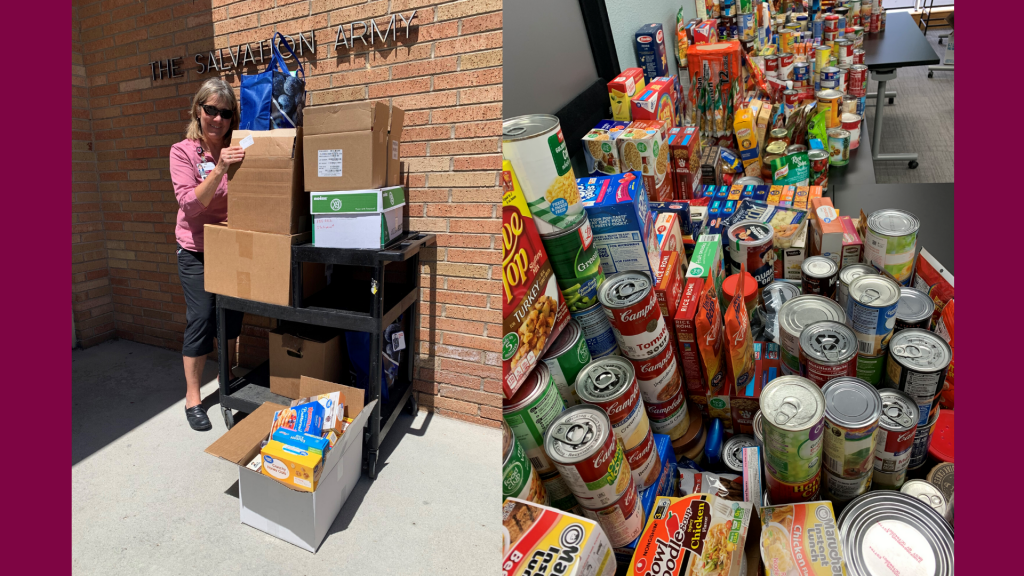
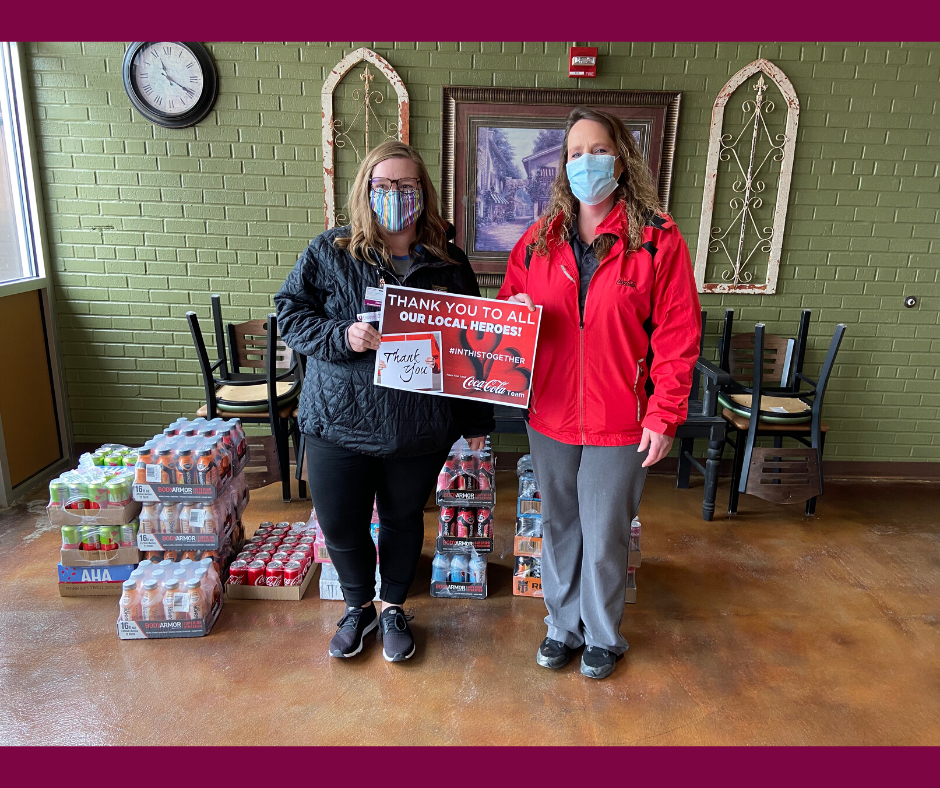
Sheridan Memorial Hospital staff are very grateful for all the wonderful things our community has done for us during the pandemic. There have been so many businesses, organizations, and individuals who have given to us, that Chad Slyngstad, one of the house supervisors at the hospital, brought up the idea of a community food drive.
So during June, the SMH Gives Back Food Drive was held. Staff donated two full pickup loads of food which were distributed to The Food Group, People Assistance Food Bank, and the Salvation Army in early July.
After the food was delivered, some SMH staff picked a day to volunteer to help The Food Group as a team-building experience. They enjoyed the experience of organizing, sorting, and bagging the food, as well as learning the nutritional needs in our community.
Overall, SMH staff had a great time during the food drive and we look forward to more food drives in the future!


By Cheryl Varner, M.D.
I am a physician in the Navy reserves just returning to Wyoming from serving in New York City. I was deployed to the Javits New York Medical Station in early April and began seeing COVID patients by April 8. This was at the peak of the number of COVID cases happening in NYC, the top of their “curve”. During that time, NYC hospitals were operating above capacity and our mission at Javits was to offload some of the less acute patients in order to make room in local hospitals to care for the sickest patients.
Javits was not a full-service hospital (think field hospital set up in a convention center). We provided approximately 4,700 hospital bed-days of relief to local NYC hospitals during our mission. Most of our patients got better and were discharged home, which was definitely cause for celebration.
The public health conditions of NYC are very different from Sheridan, WY. Population density, social determinants of health, and Health Care Systems all look quite different here. Retrospectively, it appears that COVID has not had community spread in Sheridan, even though we have had a few cases. When community spread occurs, we will likely see more cases and some hospitalized patients. I feel Sheridan County is prepared for community spread, if and when it occurs. If it does occur, we will need to protect each other (and vulnerable people) using the same tactics we have been employing so far, wearing facemasks in public, practicing frequent hand hygiene, and being tested if we have COVID symptoms.
Because someone can be sick with little to no symptoms (asymptomatic), they can spread COVID to other people unknowingly. It is also known that there is a pre-symptomatic phase of COVID when you can spread the virus unknowingly. This is why my family will wear a facemask, even if we feel well, to help reduce the spread of COVID. This was especially important in NYC with such a high prevalence of COVID and high population density.
I am overjoyed to be back home in Sheridan. I missed my family, friends and community desperately. Your support while I was gone meant the world to my family and me. I appreciate you all so much.
Cheryl Varner, M.D.
Sheridan Memorial Hospital Ear Nose and Throat
June 18-24 — National Certified Nursing Assistants Week
Certified Nursing Assistants (CNAs) provide intimate, hands-on healthcare to patients. A day in the life of a CNA might include taking patients temperature, blood pressure, and other vital signs, helping with bathing, dressing and the basic activities of life.
According to Lacey Johnson, Director of Nursing, “At Sheridan Memorial Hospital, our CNAs, are really the heart of our patient care areas. They are at the bedside providing hands-on care to our patients – assisting the nurses with many, many responsibilities. CNAs play an important role in the patient care team — answering the patient’s questions and responding to their needs. Quite a few of our CNAs perform a dual role as unit clerks, managing information and communication within their departments. We thank them for the care they provide round the clock every day!”
We caught up with a few of our long-time CNAs – here’s what we found out about them:
Ronnie Munroe – Patient Safety

Ronnie has worked in healthcare for nearly 32 years, 12 of those as a CNA at SMH. She worked on Med/Surg and sometimes in ICU and now has changed roles a bit, currently working in patient safety – helping to prevent injuries.
She has always liked to help people and enjoys interacting with staff and patients. Over the years Ronnie has loved getting to know her patients and would to do anything she could to make their day better. “If they were craving something and weren’t on a special diet, I might bring them something from home. Or if someone was down, I would go to the gift shop and get them a little something.”
Ronnie says that sometimes patients would say they would like to pay me. I would ask them to smile and then say “paid in full” — my payment was their smile.”
Looking back, one of her most memorable moments at SMH was when Ronnie had her first code, “She was a patient I had taken care of before. Helping assist with that code and getting her back was awesome!”
Another fond time at SMH was when Ronnie impersonated Elvis Presley for the hand hygiene talent contest.
Cris Sears – Emergency Department

Cris has worked at SMH for nearly 35 years as a CNA and as a Unit Coordinator. She’s worked in every department, but has spent most of her time in the Emergency Department.
“I love taking care of people – patient care. And the different things I’ve seen and the people I’ve met. I love it and wouldn’t change one thing about it. I like the hands-on, taking care of people. Through the years I’ve met so many people and enjoy hearing their stories,” Cris says.
Cris says that between the employees and the people she has taken care of, she can’t even try to count the memorable moments at SMH. She recalls that when she started at SMH she was the young one – but that’s changed now.
Sue Bohm – Women’s Health

Sue says that SMH is her home – where she’s worked as a CNA for 40 ½ years! But that wasn’t the beginning of her healthcare career, she first worked at Eventide (now Sheridan Manor) back in 1976.
Even though Sue says she always swore she didn’t want to work in healthcare — she says what brought her to the profession was her aunt, who is now 82 years old and still teaches CNAs the “old ways.”
Sue says, “I just applied to Eventide and have been at it ever since. At SMH I have worked on Med/Surg when it was on 3rd floor, in Central Supply and then in Women’s Health for the majority of the years.” Sue plans to retire this summer.
Thinking back, Sue remembers a 5 year old patient who was in the hospital for quite some time. She had cancer and the staff would play with her and make her laugh so hard she would cry. They even got her a puppy and gave it to her just a few days before she passed away. That was back in the old building.
Sue feels that the people she works with are her family – she loves them and has fond memories of monthly birthday parties for staff.
Sandy Boll – Recovery Room

Sandy has been at SMH for over 18 years working as a CNA and a Unit Coordinator. She’s been in many departments including Med/Surg, Emergency Department, ICU, Women’s Health, Transitional Care and now in Outpatient Surgery. Her healthcare career didn’t start at SMH though. Sandy worked in a nursing home in Nebraska for 10 years – starting at age 18. Then she worked as a CNA at RENEW for 5 years before coming to SMH.
She has many fond memories of SMH – like the first day of the EMR go-live and the first day of the new Emergency Department with two helicopters coming and going.
Sandy truly enjoys helping people even if they are going through rough times. “I like knowing I can make a difference, no matter how small, in the patients and family’s lives.”
“I absolutely love this hospital. I have the opportunity to get to know the wonderful people of our community and also to build relationships with the doctors and nurses here. I’ve enjoyed watching the growth and progress that the hospital has made. Providing the best care for our patients and community,” Sandy says.
Our W.O.W Employee of the Month for June is Kim Gilbert, Nurse Practitioner at Sheridan Memorial Hospital’s Internal Medicine practice. Kim recently completed a Post Master’s Certification program in Adult Gerontology Acute Care and passed her boards a couple of weeks ago. It is evident that life has been very busy for Kim as a student, Nurse Practitioner, wife, and mother of five. However, wellness is and continues to be a very important priority in her life.
As a young girl, Kim saw her mom as a dedicated runner. This inspired and motivated her to run with her mom and at the age of 11, she completed her first 10 K run. In January of 2020, Kim started training to run her first ½ marathon with her mom. Unfortunately, they had to cancel the race because of the dynamics of her mom’s new job. Instead, she joined her coworkers and together they ran the “Run ‘til Your Green”10K race in Sheridan in March. She is currently training to run the Crazy Horse and the Denver Rock-n-Roll ½ marathons in October.
Kim’s friends help keep her motivated and dedicated to her Wellness goals. In November of 2018, she and Amber Friis made a commitment to one another to run a mile every day until the end of the year. On December 31, 2019 they decided to continue their pact to one another and ran for 365 consecutive days.
It was difficult to carve out time to do the run, but her commitment to herself and to Amber kept her going. She looked to Liz Mahoney for encouragement and motivation. Kim was with her in Florida when Liz completed the Ironman. Liz told her, “Start where you are at, not where I am at.” That was the inspiration that she needed. Planning a week ahead and having an accountability partner also helps to keep her on task.
At Christmas that year, her kids gave her a trophy for running 365 consecutive days in a row. This acknowledgement from her family was an awesome lesson on persistence and commitment for her children to witness.
Kim struggles with her own body image and has worked hard to move past that. “You have to love yourself and give yourself the grace to accept who you are.”
Currently, Kim uses the “Couch to 5K” app and the Runners World training guide to prepare for her ½ marathons. She has engaged her daughter to train with her so she can get faster and her daughter can stay in shape for soccer. Her goal is to finish both races in October and run the entire time. Someone once told her, “It is so much easier to stay in shape than to get in shape”. How true this is…

At Sheridan Memorial Hospital volunteers are an integral part of our daily routine. During National Volunteer Week in April, we were pleased to honor the over 100 hardworking individuals who give us their time and talents every day. During these extraordinary times, we have asked most of our “regular” volunteers to stay safe at home. We thank them for their service and we miss their smiling faces. We can’t wait for them to come back to us.
Right now we have a call out for a different kind of volunteer — health care professionals who can help us care for patients in anticipation of a surge in hospitalized patients due to COVID-19.
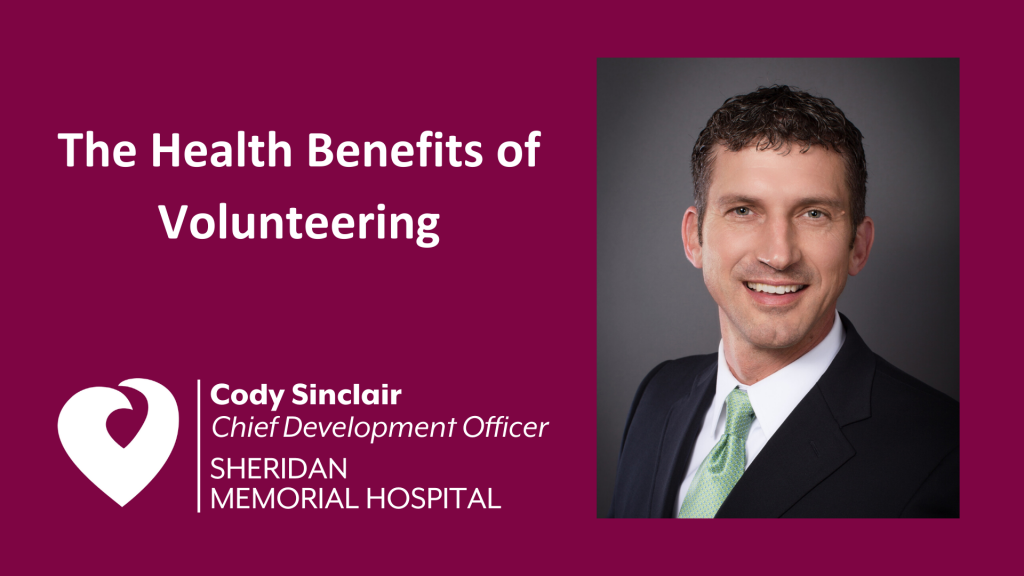
Regardless of the kind of volunteer, we truly appreciate their commitment of personal time and energy to make a difference in the lives of others. Many people volunteer with the intention to help those in need, most times not thinking about what’s in it for them. But there are health benefits associated with volunteering that are good for the mind and body. The Mayo Clinic and Franciscan Health System suggest that volunteering offers many health benefits from lowering stress to boosting self-confidence.
Reduce stress, anger, anxiety
Volunteering may enhance a person’s social networks to lower stress and reduce the risk of disease. It can create a sense of meaning and appreciation, which can have a stress-reducing effect. The social contact aspect of helping and working with others can have an effect on a person’s overall psychological well-being. Nothing relieves stress better than a meaningful connection to another person.
Decrease risk of depression
Volunteering leads to lower rates of depression because people are in regular contact with others. Volunteering increases social interaction and helps build a support system based on common interests — both of which have been shown to decrease depression.
Stay mentally, physically active
Volunteer activities help people stay physically and mentally active — getting people moving and thinking at the same time. Older volunteers tend to walk more, find it easier to cope with everyday tasks and stressors, are less likely to develop high blood pressure, and have better-thinking skills. Volunteering can also lessen symptoms of chronic pain and reduce the risk of heart disease.
Increase happiness
Volunteering gives a sense of purpose. Researchers have measured hormones and brain activity of volunteers and discovered that being helpful to others delivers pleasure. Human beings are hard-wired to give to others. The more we give, the happier we feel. The more meaning people feel in their lives, the more likely they are to stay healthy.
Make new friends
Volunteering helps people meet others and develop new relationships. One of the best ways to make new friends and strengthen existing relationships is to participate in a shared activity. Volunteering is a great way to meet new people with common interests as well as expand a person’s network.
We are so thankful to our incredible volunteers and to our amazing community for the outpouring of support we have received.
Cody Sinclair is the Chief Development Officer at Sheridan Memorial Hospital.
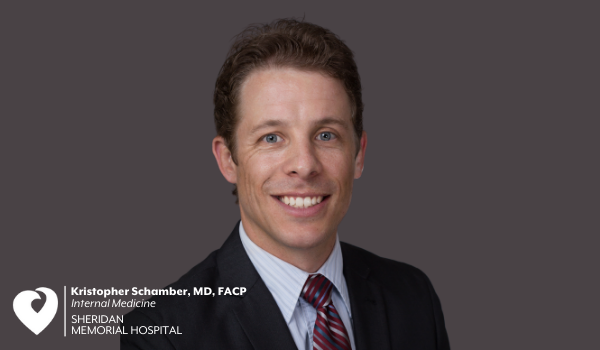
by Melanie Aksamit, Process Improvement Coordinator, and Kristopher Schamber, MD – both of Sheridan Memorial Hospital’s Internal Medicine Practice.
Tele-health. Tele-medicine. Zoom. These are terms that have been thrown around frequently in the last few months. Chances are you have either experienced one of these or know someone who has.
But what do the terms mean? Tele-health and Tele-medicine are synonymous terms given to medical care visits performed through the internet via video and audio software on a computer, smartphone, or tablet. These visits are also sometimes called virtual house calls or video visits. During these visits, you and your medical provider can see and hear each other throughout your appointment.
While a traditional in-person office visit cannot be fully replaced by telehealth visits, there are many medical conditions and appointment types that can be seen in this way. Medication follow-up, mental health, and chronic stable medical conditions can all be safely discussed during a video visit. Some conditions simply cannot be evaluated in a video visit. These include serious conditions like heart attacks, strokes, and breathing problems, or a condition that requires a physical examination. When you call to schedule an appointment, your care team will help you determine if you need to be seen in person.
During the current COVID-19 pandemic, a video visit can be a great way to see your medical provider, while staying safe in the comfort of your own home. The visits function the same basic way that your in-person visits do. A care team member will confirm your appointment, request a video visit in place of the standard office visit if appropriate, and review the necessary requirements to participate in a video visit. If you do not feel comfortable or do not have the technology to join a video visit, a telephone visit will be set up in its place. You will be sent an email containing the link to join the visit and detailed instructions on how to work the Zoom video visit program. On the day of your video visit, the office staff will call you prior to your appointment start time and confirm that you are ready, and assist you with getting online with your care team. Once it is confirmed that you are good to go, a nursing staff member will join you, and review the reason for the visit and confirm the medications you are taking. The medical provider will then join you as soon as they are finished with their prior appointment. Your provider will ask questions and discuss your concerns similar to a standard in-person visit. He or she may ask for home blood pressure measurements, or ask to view the problem area over the video, if appropriate to do so (for example, a skin rash, area of swelling, or even observe you walk). At the end of your visit, your provider will review your care plan as usual, and the nursing staff member will ensure all testing has been ordered and other medical visits have been scheduled.
A telehealth video visit can be a scary proposition when experiencing it for the first time. However, once you are connected it feels a lot like a regular office visit. If you struggle with the Zoom program when testing it prior to your visit, please call our office and we will be happy to help walk you through it. We also encourage you to have a family member or caregiver assist you, and if possible stay close by or join you during your visit.
Due to special circumstances with the COVID-19 pandemic, we are fortunate to provide this service to our patients. In the past, due to regulations, we have not been able to. If you access telehealth video visits and find the service useful and positive, please contact your local, state, and federal legislators to inform them of your experience so they might consider supporting modifications to telehealth regulations long term.
This month’s W.O.W Employee of the Month is the Women’s Clinic’s Gregg McAdoo, M.D., FACOG! Dr. McAdoo is motivated to maintain his health and wellness so that he can continue to do the activities that he loves.
“As we get older, one of the hardest struggles we have is being able to do the things that we enjoy doing. If you don’t maintain your health as much as possible you’re going to lose out on active lifestyle activities and you won’t get the most out of life. Being able to continue the activities I enjoy doing for as long in life as I can, is important to me,” said McAdoo.
Dr. McAdoo enjoys many outdoor activities including hunting and hiking.
“I enjoy active hunting with my dog: pheasant hunting, bird hunting, and elk hunting. Recently I’ve been hauling 50-pound bags of sweet feed to bait bears,” said McAdoo. “When you’re hunting and climbing the mountain you realize quickly if you haven’t maintained your health, our mountain is a humbling experience.”
When asked what advice he would give to others who are wanting to start a healthy lifestyle, he stressed the importance of balance and finding things you enjoy.
“I think picking things that you enjoy doing and will
continue doing is very important. If you don’t enjoy it and its too hard on
your body you won’t be able to continue to do it. Finding what you will do
regularly is more important than what it is,” said McAdoo.
He also has the same mentality when it comes to nutrition and finding a balance
that works for you.
“It’s about trying to balance. If kale is good for you but you don’t like it, you’re not going to keep eating it. It’s trying to find the things you enjoy and are willing to eat regularly. If you’re too rigid you’re not going to follow it. There has to be flexibility to it,” said McAdoo.
He also makes small changes to incorporate healthy habits
into his everyday life.
“Instead of reading and drinking coffee for an hour in the morning or watching
T.V. at night, go on a walk instead. You have to change and make different
decisions to stay active in life. It’s finding ways to exercise while spending
time with family, as well as finding ways to incorporate exercise and how you
eat into your life,” said McAdoo.
Dr. McAdoo says that for both activity and diet his son has been his best example.
“He’s been cooking his own meals for 6 years and rarely eats out because he’s worried about what it’s getting cooked in and how it’s prepared. As a teen he was getting me up to do P90X at 4 am before work,” said McAdoo. “I always ask myself, if he saw me eating it, would he approve?
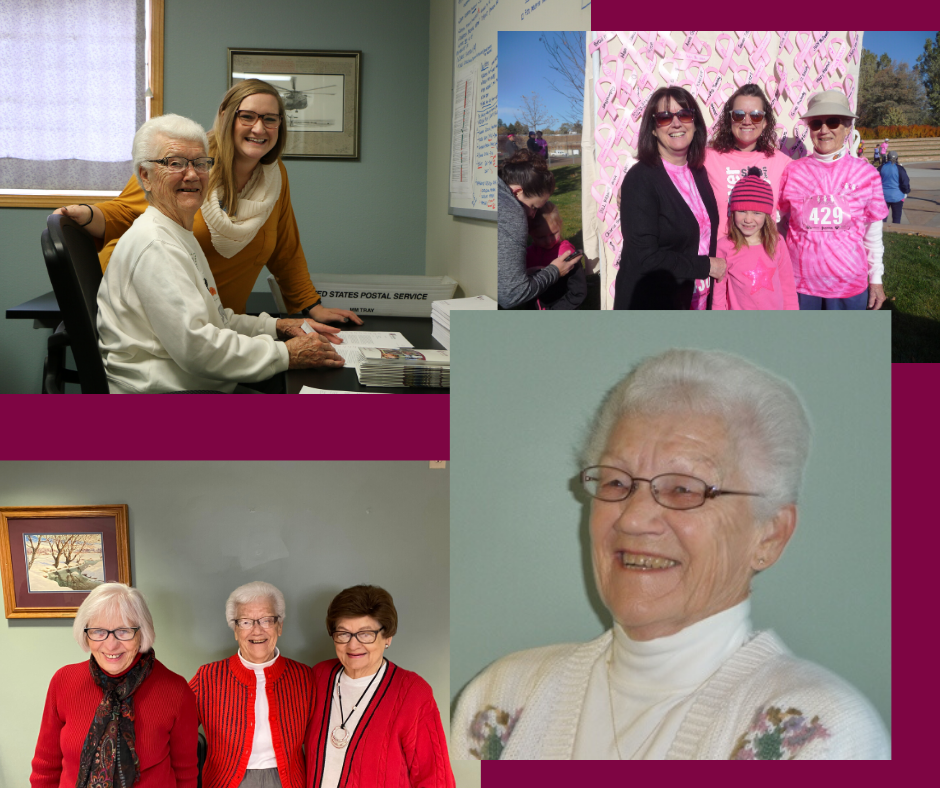
Many of our volunteers were very involved and well known as staff members before becoming SMH volunteers. They then want to stay active and involved with coworkers who have essentially become a staple or part of their lives. People become a family at Sheridan Memorial Hospital and that is hard to let go of.
“The hospital is in my blood. I just can’t leave. I didn’t want to work forever but now I can hang out and see people I know. Every time I’m working I see someone I know or used to work with,” said Jill Mitchell, a former Med Tech and current Auxiliary Board volunteer.
“I love the hospital and still wanted to be a part of it. It
was hard to think about not seeing people,” said Karen Steir, who served as a
nurse at SMH for 44 years. She retired on a Sunday and started volunteering on
a Monday.
“I guess my philosophy is that a medical community is always a tremendously
important entity in any community. I was always proud to serve in that capacity
and the people at the hospital. I am proud of the work we’re doing,” said Tom
Nance, who worked in Radiology for 40 years before becoming a volunteer.
The hospital has many different jobs for volunteers to fill their time and can
make adjustments for their schedules. As volunteers, former employees are able
to play an integral part in events that are near and dear to their hearts.
“I enjoy all the opportunities available like helping with the Kozy Korner, Surgical Waiting Room, Decorating, and the 5 Year Old Birthday Party,” Said Steir.
Employees who become volunteers are able to see and appreciate all of the changes SMH has made overtime.
“With the overall expansion we’ve experienced as a hospital I’ve seen a lot of change. I started here when it was one singular building. I remember, the Cafeteria entrance, 100 yards North of that was just tree line and pasture. Some brought lunch and would go out into the trees. Things have grown around us so quickly,” said Nance.
Volunteering is a great way for former employees to still be involved at a place they’ve grown to call home.
“If you want to have a volunteer job, the hospital is the best place to be. I wouldn’t trade it for anywhere else. I love getting to deliver papers and then going on to the Gift Shop to get to see people. It’s hard to just give up the place that you’ve been for so long. There’s a lot of new faces but it’s nice to get to be involved even when things are changing,” said Mitchell.
Sheridan Memorial Hospital was thankful to have these amazing individuals as employees and we are very grateful to have them as volunteers now.
“One thing I truly cherish about our volunteers is their desire to help others. They are one of our organization’s greatest ambassadors as some of them have been here longer than people who are retiring. Volunteers who were past employees tend to carry the rich tradition and history of our hospital with them in their daily interactions, while helping Sheridan Memorial Hospital thrive into the future. The stories they tell and the support they provide to me as their Coordinator is one of my favorite things about being here. I appreciate their dedication to SMH and reminds me every day to lead with pride and gratitude for the culture we have. I want to become just like them when I grow up, wanting to give my time and talents to a place that was a catalyst of my career and is considered my second home,” said Volunteer Coordinator, Jasmine Slater.
We can’t celebrate National Volunteer Month without honoring the amazing woman who has volunteered at SMH for 30 years, Barb Sare. We visited with Barb to discuss her inspiring volunteer experience.
After retiring in 1990, Barb’s volunteer experience began in the SMH Surgical Waiting room.
“The waiting room is where I started and still serve. When anything else comes up I’m more than happy to help. It has changed a lot over the years too, a tiny room has grown and changed, but the same core tasks remain,” said Sare.
The most rewarding part of volunteering for Barb has been the people.
“I always have been pretty good with people and it’s nice to be with families all the time. Sometimes nothing noteworthy happens and you don’t talk to people much. Other days you’re visiting all the time. I enjoy being around people and being there when/if they need you. Being in the public and doing a public service,” said Sare.
Barb not only supports SMH in the Surgical Waiting Room, but in Foundation efforts and events held each year. Barb has participated in The Link every year since its inception and has yet to walk alone.
“I would walk alone if I had to because I enjoy the event so much, but I’ve never had to! With children & grandchildren all across the country, it’s a special memory and fun tradition to get to walk alongside all of them at some point. Even my granddaughter living in Australia joined me one year,” said Sare. “One of my great-granddaughters was born in April and by October she was participating in her first Link Event at 6 months old. This past year, all 4 generations came back together to share in the event, with her as a second grader.”

“Volunteers like Barb make Sheridan Memorial Hospital the organization it is today. She is engaged and passionate and comes back each shift with a smile and willingness to help wherever she can. Individuals that are dedicated to serving our mission with kindness and respect is what most organizations dream of in a volunteer. Barb is all of that and more,” said SMH Volunteer Coordinator, Jasmine Slater.
Having just celebrated her 90th birthday last month, and 30 years of service to SMH, it is no secret why we seek advice from her on volunteering and living life to the fullest.
“If anything helps you as you age, I recommend keeping busy. It’s good for my health and good for me to be around people and keep up on things.”
Barb, Thank You for all you do to serve our community, patients, and staff at Sheridan Memorial Hospital. We are so lucky to be celebrating this year of milestones with you!
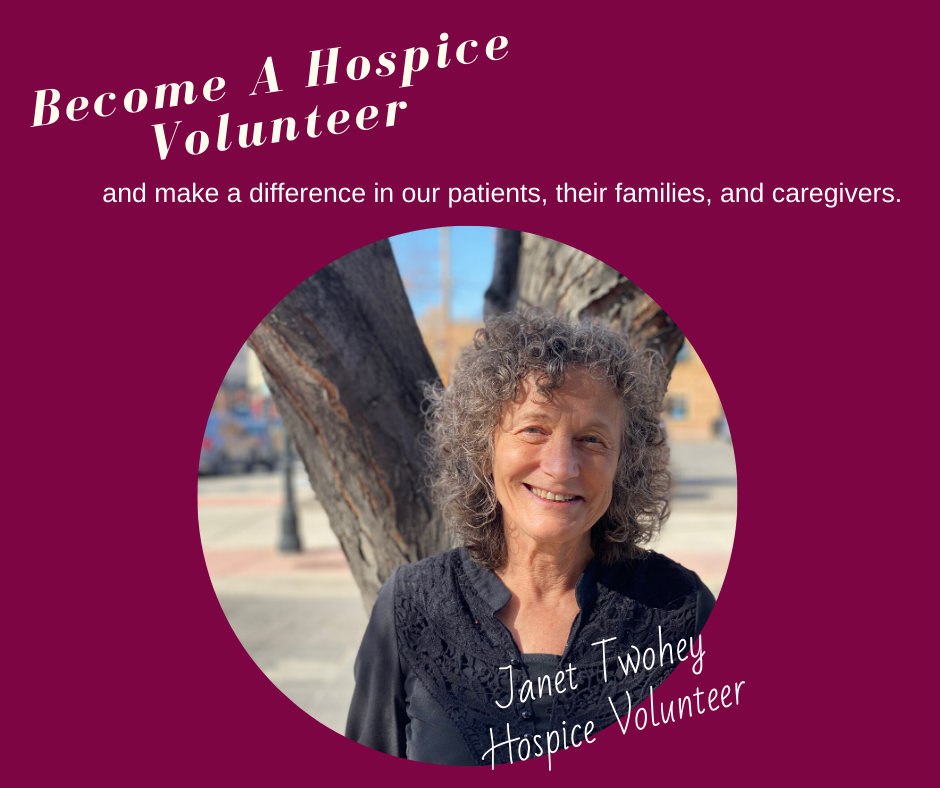
As we
celebrate all of our volunteers, we would like to recognize a group that serves
a very important purpose at SMH, our hospice volunteers. Hospice volunteers are
a pivotal part of our hospital team and our organization’s ability to provide
continuity of care throughout one’s life. We had a chance to visit with volunteer
Janet Twohey about her hospice volunteer experience and hope it helps you all
understand and appreciate their role as much as we do.
Janet was inspired to start her hospice volunteer journey for a reason that is
near and dear to heart.
“My father’s death is why I became a volunteer. I had just moved to Sheridan and he lived in California so I couldn’t be there very much. I was really grateful for all the people that came in and helped and took care of my father. After my father died I knew it was something that he would like so that’s what I did,” said Twohey.
Janet started in 2016 and her experience has been a rewarding and positive one.
“It’s been really positive and I’ve learned so much from the people the hospice patients. They have wonderful things to say and when they look at you when you’re saying or answering something and they just grin at you, It just feels great,” said Twohey. “Also the caregivers are wonderful. They love these people so much and they just want things to be ok for them. It can definitely be draining at times but by and large it has been wonderful.”
The process for becoming a hospice volunteer consists of lectures and interactive training. Janet emphasized the importance and need for hospice volunteers and how anyone can do it.
“You’re not expected to be an experience medical provider.
You’re really there to provide a break to the caregiver because they’re the ones
that frequently don’t have a chance to go out shopping or to take a walk by
themselves. You’re there to give them a moment where they’re not having to
worry about whether or not their loved one is ok,” said Twohey.
Janet is passionate about helping others and hopes that by doing this interview
more people will be inspired to become hospice volunteers.
“I believe if more people understood that it’s very doable, really needed, and
how rewarding it is that more people would do it. I would strongly encourage
anyone to do it. You don’t have to have any special expertise, you just have to
have the ability to be there,” said Twohey.
Our hospice volunteers are a unique group of individuals. Their ability to connect with patients and their families is truly remarkable and makes all the difference in one’s experience through the Hospice and the bereavement journey. Thank you, Janet! We appreciate everything you do for Sheridan Memorial Hospital, our patients, and their families!
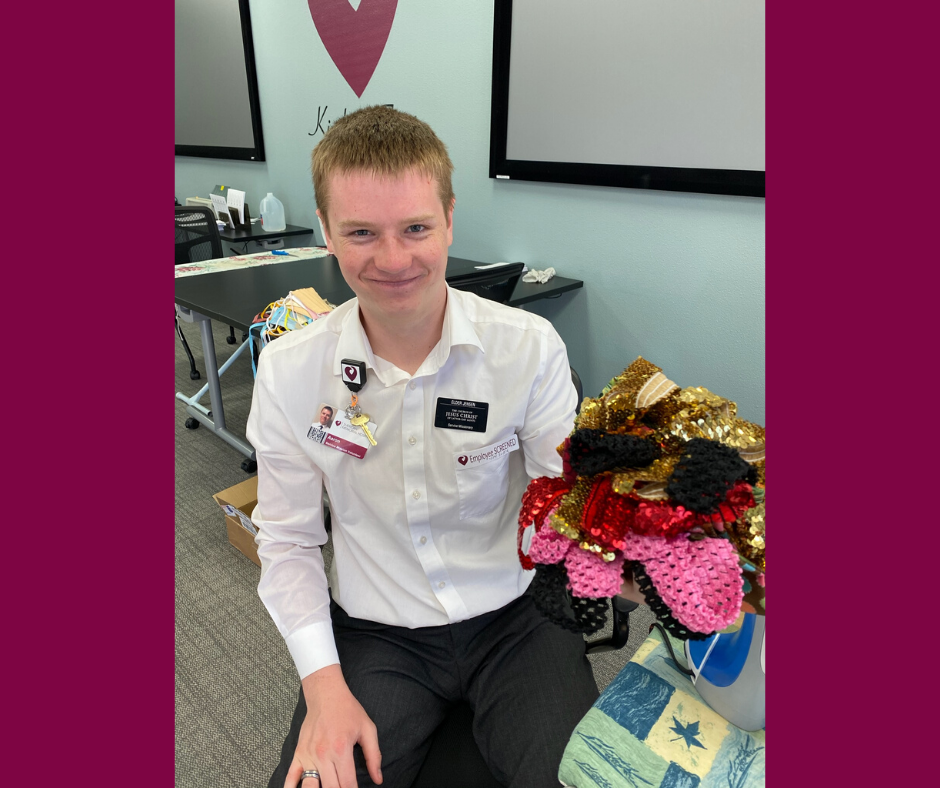
April is National Volunteer Month and Sheridan Memorial Hospital is thankful for all of our wonderful volunteers. This month we’re highlighting one of the newest members of the SMH volunteer family, Aaron Jensen.
After graduating from high school in 2019, Aaron chose SMH for his Service Mission.
“During a Service Mission you spend 2 years of your life going out and volunteering,” said Jensen. “You spend that time trying to be the best person you can be and helping people.”
Aaron wants to go to school to become a doctor and SMH seemed like a great place to get into the medical field.
“It always seemed like a nice place and I always enjoyed myself when I was there for personal reasons,” said Jensen. “It seemed like a good place to go where I could help and it has been wonderful.”
The culture of kindness has impacted him during his time at the hospital.
“They have this culture of kindness here and when I first started I thought it was more for the patients and visitors, but the longer I’ve been here I’ve realized that it’s for everyone. It’s one of the best parts about working here. Being new here can be stressful, the hospital is busy and there’s a lot going on, but everyone is really welcoming. Everyone is nice, smiles at you in the hallway, and makes it feel like this is a place you can call home and go to work at,” said Jensen.
There are many things that he enjoys about volunteering at SMH but just being able to help others has been his favorite part.
“Just being able to make people happy. It’s been nice to help lighten people’s loads and bring a little joy into people’s lives. It makes it feel worthwhile to know that I’m making people’s days a little bit brighter,” said Jensen.
When asked what he would tell someone who is considering volunteering at SMH his answer was simple, just do it.
“Do it. There are no cons and everyone is super understanding and they are really appreciative of any help that you can give,” said Jensen.
SMH is thankful to have Aaron as a part of our family and we can’t wait to see what he does during his time here.
“I’m looking forward to being able to become a part of the hospital, get to know people, and make friends,” said Jensen. “I want to make the patients and people who work here just a little bit happier.”
This month’s W.O.W Employee of the Month is Welch Cancer Center Pharmacist, Sarah Opitz. As a mom to three young girls, Sarah was motivated by her family to start her wellness journey.
“Family is huge for me. I wanted to set a good example for my family and show them what it looks like to maintain overall good health,” said Opitz. “I wanted to be active, exercise, and maintain a healthy weight so that I can be there for them.”
A few months ago, Sarah was motivated to make positive changes after experiencing what many mothers go through after nursing.
“Having young girls, I was nursing for a long time, and I used it to justify eating whatever I wanted because I could do it without gaining weight. Now that stage is over and I realized very quickly that my clothes were fitting tighter,” said Opitz. “Once I noticed I was putting on a few pounds I realized I needed to be more conscious of what I was eating and that I needed to be more active. Once I realized I could do better and should be better, I started to make a few changes.”
Sarah started by making small changes, including exercising and monitoring her portions.
“It wasn’t big and I didn’t really change my diet, I just started being more conscious of the amount I was eating. I also started going to the gym more often,” said Opitz.
She started making sure she had veggies and fruits with meals and paying attention to what was going on her plate.
Before she started making changes, Sarah relied on the activity she got around the house and with her family. She started by creating an exercise routine that fit her schedule.
“I had to find times in my schedule that would work for me. I go to the gym on weekends and Wednesday mornings when my girls are at daycare,” said Opitz.
After she started making time for the gym she started noticing the positive benefits of exercise.
“It helps my mood and my energy, it definitely perks me up,” said Opitz.
Like many others, Sarah’s wellness routine has been interrupted by COVID-19, but she’s found ways to adapt.
“Looking on the bright side, we know that Spring is just around the corner. With the warmer weather we can spend more time outside doing things,” said Opitz. “You’re supposed to stay at home, but that doesn’t mean you have to stay in your house. Bryan, the girls, and I have been able to get out a lot, going for walks, bike rides, and taking the girls on their scooters.”
When asked what advice she would give to others starting their wellness journey she discussed the importance of making time for yourself and simple changes.
“My advice would be that if you’re feeling overwhelmed, or you want things to be better, or you need more structure, just stop and think about simple changes you can make. Find a few minutes to relax or go to the gym,” said Opitz. “The hardest thing for me was just deciding to do it and start. Once I made the choice to start doing it, I found it wasn’t as hard as I thought.”
Sarah uses the MyFitnessPal app to log what she eats and to calorie count. The app has helped her keep her wellness routine.
“Just taking the time to do those entries was daunting. I use the MyFitnessPal app because it’s user-friendly, quick, and slick. It helps make time not a factor. The thought of having to make a change was difficult. “I like routine and liked the way things were so I was lax and I ate whatever and did whatever. I didn’t have a routine and I needed one,” said Opitz
“I have to make sure that I have time for myself, even if it’s just a few minutes, it helps me relax,” said Opitz. “I really enjoy reading but since we had kids time is short and hobbies have fallen by the wayside. I’ve made time to read again and I also read with my daughter before she goes to bed and I really enjoy it.”
As a mom, Sarah knows the impact of making time for yourself and the benefits that a healthy lifestyle can have.
“These changes haven’t made me the perfect mom but they have definitely helped,” said Opitz. “I still struggle with the everyday challenges of being a mom, but it has helped and I can tell a difference.”