Welcome to Sheridan Memorial Hospital
1401 West 5th St. Sheridan, WY — 307.672.1000

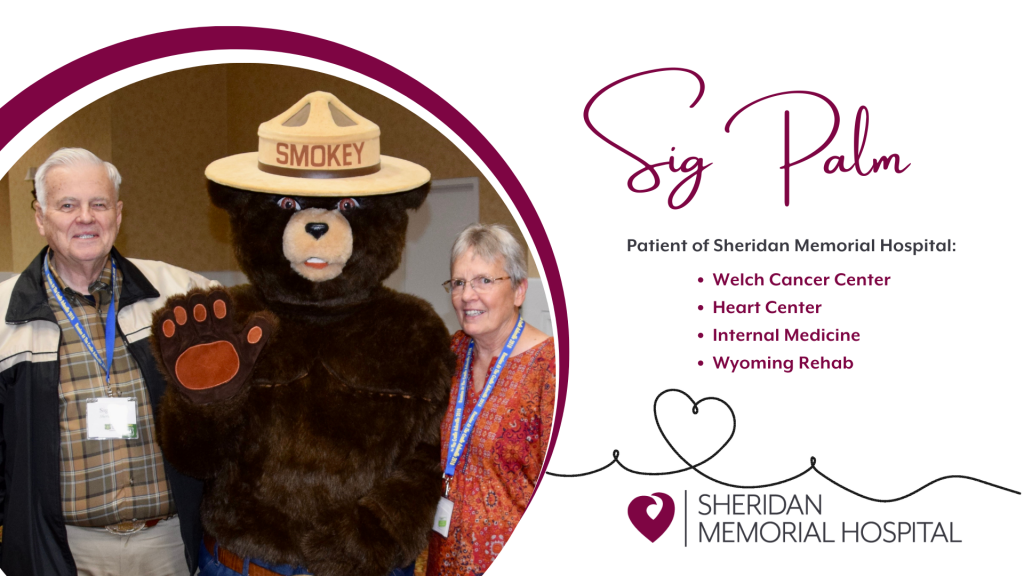
For most people, Sheridan, WY is a place to come when you want to get away from the crowds yet still crave the comforts of a small town. For Sig
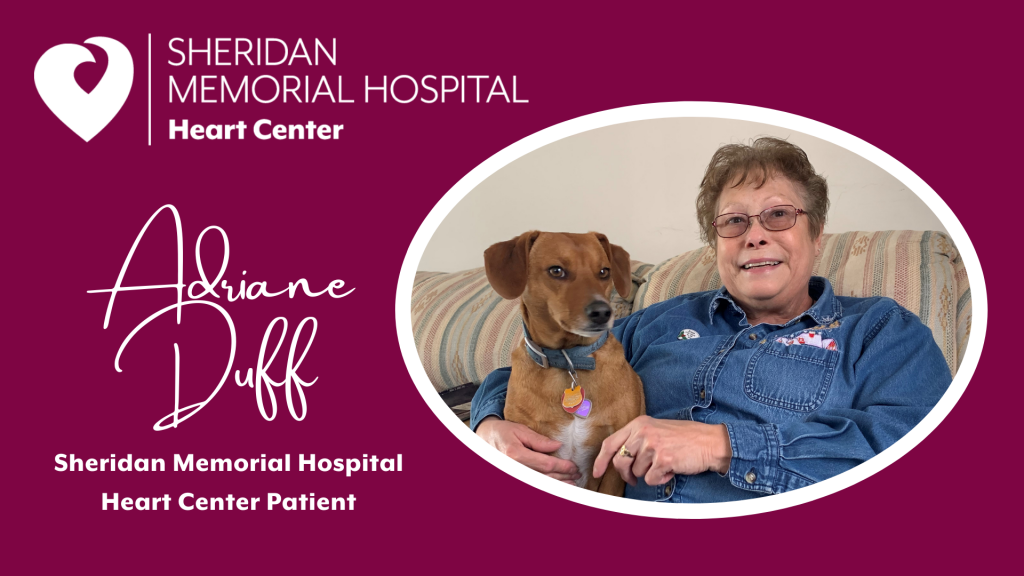
Adriane Duff isn’t the type of person to sit down and just tell you about her life and her healthcare history. In her own humble way, she wants to “help others” and in telling her story, she hopes to offer
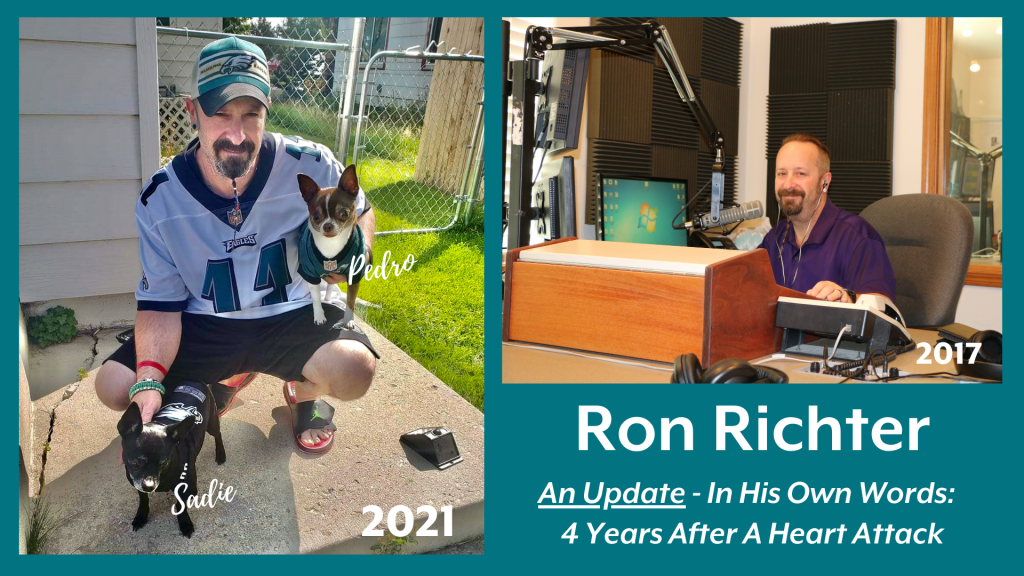
Ron Richter gives us an update on how he is doing over 4 years after his heart attack.
By Larry Certain   February 20, 2021, posted here with his permission. I feel fortunate to live in Sheridan County, and I am sure I'm not alone. Many of the nicest people live in our county, and a
Local Journalist, Historian Touts Caring Medical Staff Cardiology care at Sheridan Memorial Hospital is second to none according to local
Sheridan Memorial Hospital takes your health seriously. This inspiring story reminds us that if you think you may be having a heart attack...
“9-1-1, What Is Your Emergency?”“I need help! I just found my husband face down on the floor! He is blue

Find Out More

Heart Center
Phone: 307.675.4610
Fax:  307.675.4615
Outpatient Center
1333 West 5th St, Suite 103
Sheridan, WY 82801

Clinic Hours:
Mon – Thurs: 8am – 5pm
Most Fridays 8 am – 4pm
Closed daily noon – 1 pm for lunch.

For most people, Sheridan, WY is a place to come when you want to get away from the crowds yet still crave the comforts of a small town. For Sig Palm, the deciding factor to come to Sheridan was having local access to exceptional healthcare.

Sig’s first introduction to Sheridan came in 1967, while on a trip to meet with the forest supervisor and his primary staff. Sig was a newlywed, freshly off active duty in the Army, and brand new to the Forest Service. That day kicked off a pivotal Forest Service career spanning fifty-eight years and numerous states. While the bulk of his working years took him far away from Sheridan, he never forgot how at home he felt there. Unforeseen to him at the time, Sheridan would become the place he relied on to manage numerous health concerns ranging from minor to extensive.

Sig is no stranger to heart problems – both his maternal grandfather and his mother died of congestive heart failure. Around the age of 11, Sig realized he had inherited the same heart trouble. “I knew about it because I didn’t have the stamina that other kids did, like in PE.” So, it was of little shock to Sig when in 2012, on a Boy Scout trip to Yellowstone with his grandson, he went into congestive heart failure.

At that time, Sig and his wife Judi were living in Colorado Springs but contemplating a return move to Sheridan. “Sheridan is where we felt most at home. Our kids were born around here, and we kept in touch with our friends.” But for Sig and Judi, they couldn’t base their decision to move back solely on feelings – the scare on that Yellowstone Boy Scout trip made proximity to specialized healthcare the number one determinant in where they would live. Armed with a list of Sheridan doctors suggested by his physician in Colorado Springs, Sig set to work researching. “The most important thing to me at the time was the heart center and what it offered. I told them what I had going on, and Dr. Brennan came highly recommended.” What he found in researching Sheridan Memorial Hospital Heart Center sealed the deal – after decades away, they were coming home to Sheridan.

Since their move back to Sheridan, Sig has run the gamut with hospital specialties. From Cardiology, Orthopedics, and Wyoming Rehab to Internal Medicine and The Welch Cancer Center – he has been a patient of each. Sig recalls a conversation he had with Dr. Megan Ratterman, Oncologist at the Welch Cancer Center, when he was diagnosed with Multiple Myeloma. She said, “I won’t feel offended if you want a second opinion.” Sig thought about it and decided, “Nah. You know, I want to stick with the Sheridan team. I trust their counsel.”

Sig understands he has options for care. He has chosen to stay here at SMH. For Sig, the ability to receive the care he needs locally made all the difference. “Everyone I have ever came in contact with at the hospital has been just beyond wonderful.”

For more information about the many exceptional services offered at Sheridan Memorial Hospital, visit our website at www.SheridanHospital.org.

Adriane Duff isn’t the type of person to sit down and just tell you about her life and her healthcare history. In her own humble way, she wants to “help others” and in telling her story, she hopes to offer encouragement.
“I don’t want this story to be about me,” she says right up front. “I’m hoping that by telling my story this way, I can help others by encouraging them.”

When you hear her story, it’s doesn’t sound that different from many people you know. Except for the chemo, the radiation and don’t forget that bone marrow transplant in 1990. After being diagnosed with Hodgkin’s Lymphoma in 1989, rounds of chemo and radiation couldn’t eliminate the disease.

“That’s when they decided to try the bone marrow transplant,” she says. “Back then, that was highly experimental for anything other than leukemia.”

It must have worked, because she was healthy, other than a suppressed immune system which they told her would happen and would get worse the longer she lived.

Fast forward to 2014, it’s a Sunday morning, Adriane thought she was having an asthma attack.

“I was coming up the stairs in my home and I could feel my heart beating in my head. I sat down, took my pulse and thought, ummm, 40, that’s not a good pulse,” she says with a chuckle. “I told my husband we need to go to the ER.”

It was there, in the ER on that Sunday that Adriane’s experience with Sheridan Memorial Hospital (SMH) began.

“Dr. Brennan was there to see me in about 30 minutes, on a Sunday no less,” she exclaims. “He is a very sweet man. He has a heart for people and you can see it in how he cares for you.”

The diagnosis? A pacemaker needed to be installed to regulate her heart rate. But complications from radiation treatments years ago made that a struggle. The leads for the pacemaker were not able to be run through her veins which had been severely constricted due to the radiation treatments from years ago. Her chest would have to be opened up to install the device.

Adriane says she has been told by doctors she is a very unique patient.

“I guess they say that because I have survived a bone marrow transplant as long as I have,” she says with a big grin. “All these health issues can be traced back to that. I just keep working through whatever comes up and I’m very thankful to everyone who has helped keep me healthy.”

Adriane hopes she can encourage people by telling her story.

“There are so many people to thank. People from the Heart Center to Wyoming Rehab to the clinic, I can’t even name them all. They have all been just great and worked to find solutions for me.”

“The doctors have always been very good about working with me. If anything happens, I know they’ll take care of me. We have some very, very good health professionals here. They are here for the community and have our best interest at heart.”

Adriane is retired now and spends most of her days at home with her happy little dachshund, Carlin. She still has to be careful to not contract an infection, but says she gets out as much as she can, takes every necessary precaution and absolutely loves living in Sheridan.

9-1-1 HEART ATTACK

After his heart attack, Ron was given a second chance at life. He was determined not to waste it.

Update – Ron Richter – In His Own Words: 4 Years After a Heart Attack

I feel much better today than I did prior to my heart attack on January 17, 2017. I still have bad days, but the good days outnumber the bad ones tenfold. Although I feel much better, I do realize that I will be living with heart disease for the rest of my life.

Changes have been extensive, as a healthy diet and regular exercise have become part of my daily life. I’ve lost a lot of weight, initially around 70 pounds. I’ve gained about 10 of that back from lifting weights and what not, but I know the weight loss has helped my heart immensely and has also helped with my sleep apnea.

I make sure to limit my daily sodium intake and try and stay away from foods high in saturated fat, cholesterol and preservatives. My exercise routine includes a lot of bicycling and playing basketball, as they are both great forms of cardiovascular exercise, which of course is good for the heart and helps with my high blood pressure. Another change I’ve made is I’ve been smoke free since February of 2017. I smoked a pack to two packs of cigarettes a day for over 20 years. During my first visit to the Heart Center at Sheridan Memorial Hospital (SMH) following my attack, I asked Dr. Garcia what was the main reason for me having a heart attack at such a young age, and he said smoking…..that’s all I needed to hear. I haven’t touched a cigarette since. 

The hardest thing to change has probably been my diet. It was a little overwhelming at first, as I quickly realized that most, if not all of the food I had been eating had little, if any nutritional value, and was nowhere near heart healthy. Grocery shopping became an experience, as reading the nutritional content became the norm in an effort to limit my daily intake of sodium, cholesterol, and saturated fat. Now I know what to buy and what not to buy, so that part has become much easier.

Aside from my six-month check-ups at the SMH Heart Center, I really haven’t stayed in touch with the people that were responsible for giving me a second chance at life. While I may not keep in touch with any of them, I appreciate every single person that played a role in helping me stay on this planet a little longer. I appreciate them all, everyone from the EMT’s with Rocky Mountain Ambulance and Sheridan Fire-Rescue, to the team at the ER and Cardiac Cath lab, and of course, Dr. Garcia. Because without all of them, I most likely wouldn’t be writing these words today. 

As far as advice, if you think you may be a candidate for heart issues, talk with your doctor and make sure to check your blood pressure regularly. Keep an eye on your cholesterol levels and be proactive, not reactive about any and all issues regarding your heart health. 

Click below to see the original video from 2017 where Ron talks about the great care he received from the Sheridan Memorial Heart Center after his heart attack.

MEDICAL EXCELLENCE – right here at home

By Larry Certain   February 20, 2021, posted here with his permission.

I feel fortunate to live in Sheridan County, and I am sure I’m not alone. Many of the nicest people live in our county, and a large number of them are employed by Sheridan Memorial Hospital.
We can, I feel, be thankful for the fine hospital and exceptional personnel staff working there. Having never required them in an emergency; I can now tell you they are the best. Having just experienced my first and only (I hope), heart attack, I observed real professionalism at work.

From the minute my wife and I walked up to the emergency window, things happened like clockwork. That was at about 6 a.m., a week ago last Saturday and by Monday morning, I was wheeled out with stents in the ol’ ticker, and a new lease on life.

I can never express the feelings I have for the doctors, nurses and staff members of our fine hospital. But it would start with exceptional. Doctors Selde, Schamber were first on the scene. Then doctors Brennan and Garcia followed. And Dr. Garcia and his fine staff were unbelievable. They were so fast, efficient and so empathic. It was unbelievable. Their knowledge and professionalism, in my opinion, is beyond reproach. Thank you, from the bottom of my indentured heart.

And the nursing staff of the ICU was the best ever, also., and put up with a curmudgeon with no desire to be there, who was always tangled up in tubes. My heartfelt “thank you.” I love you too. And the other members of the support staff in the kitchen, blood draw and house keeping — thanks for making my stay more tolerable.

So any of you, readers, watch for the signs that you should stop shoveling snow and get to the hospital as quick as possible, so you won’t get a side trip like I did. Shortness of breath, like an elephant sitting on your chest, feeling like someone slugged you in the stomach and throwing up. You might not be as lucky as I was.

Larry Certain

Sheridan

Local Journalist, Historian Touts Caring Medical Staff

Cardiology care at Sheridan Memorial Hospital is second to none according to local journalist Pat Blair.
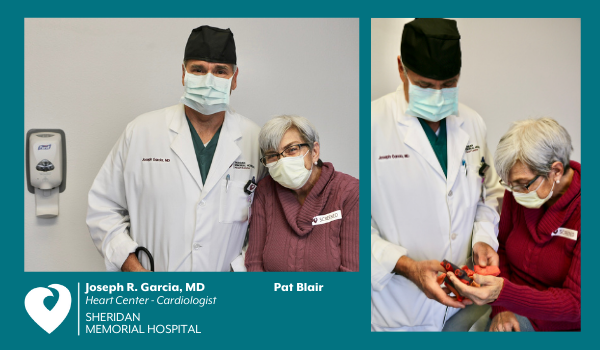
Pat Blair has experienced more than her share of maladies, from suffering a heart attack to getting hit by a car. Luckily for the energetic 73-year-old Sheridan resident, she has had the expertise and support of the health care professionals at Sheridan Memorial Hospital (SMH) to see her through each incident.

How does she sum up her encounters with numerous hospital departments? One word: Caring.

“They’re just a terrific bunch of very caring people,” Blair said. “It really does feel like patient-centered care.”

One evening in January 2016, Blair started feeling pain shooting from the shoulder to the knuckles of her left arm. Imagining she had pulled a muscle, she drove herself to the hospital’s urgent care clinic the next morning.

“A nurse came in and said, ‘You’re having a heart attack,’” Blair remembered. “And my first reaction was, ‘I can’t be having a heart attack. I don’t have time for it.’”

She reluctantly called her team at Sheridan Media, where she has long been a tireless reporter, to let them know she wasn’t “going to be in that day, to say the least.”

Fortunately, the heart attack was minor. Blair’s cardiology team at SMH changed her medications and kindly provided her with information, resources, and support for eating well. She dedicated herself to following their advice and subsequently lost 40 pounds.

This was not Blair’s first foray into heart health. She failed her first stress test in the 1990s and was sent to a hospital in Billings for cardiac catheterization, or a heart cath, in which a thin, hollow tube is inserted into a large blood vessel to examine how well one’s heart is working, a procedure that was not yet available in Sheridan.

While discharging Blair, a nurse told her that the person she lived with should keep careful watch over her, as there were risks in the immediate recovery period. However, but for two dogs and a cat, Blair lived alone.

“The nurse said, ‘Well, just keep an eye on the site, and if you start bleeding, call the ambulance,’ and sent me home,” Blair recalled.

After her employer dropped her off at home, Blair spent an uncomfortable, sleepless night.

“I knew that if anything started happening, I was completely on my own,” she said.

This experience is in stark contrast to Blair’s heart cath at Sheridan Memorial Hospital 20-plus years later. After an inconclusive stress test in January 2020, she was offered the procedure, which has been available at SMH since the Heart Center and Cath Lab opened in 2013.

When SMH cardiologist Dr. Joseph Garcia learned that Blair lived alone, he suggested she stay at the hospital overnight after the procedure, so the on-call doctors and nurses would be able to monitor her in case of any issues.

“Totally different experience,” Blair said. “Everybody here was just very, very attentive, very caring. When I did have to get up in the middle of the night, like to go to the bathroom or something, there was always somebody there.

“I felt much more secure. It was just a greater comfort for me.”

Blair experienced another major incident in October 2019. After reporting on a Sheridan County Commission meeting at the courthouse, she stepped off of the curb by the activated pedestrian crossing button and was struck by a car.

The accident was disorienting.

“I kind of remember the impact, and I remember picking myself up off the street,” Blair said. “…And I remember kind of registering that I was bleeding.”

An ambulance took her to the hospital’s ER, where she was given seven staples on her head and examined for the significant bruising on her left hip and right knee. Testing showed no broken bones or concussion, fortunately.

A few weeks later, however, she awoke to searing pain in her left hip, where she was hit by the car. Back in the ER, Dr. Luke Goddard diagnosed bursitis. At his urging, Blair underwent several weeks of physical therapy.

Pat Blair at the Outpatient Center

Beyond the initial visit, each incident has included follow-up appointments and calls, further cementing Blair’s appreciation for her local hospital. From MRIs to ultrasounds, she has experienced a number of medical tests “that I could very happily have gone my entire life without having to deal with. But I’m really glad that if I had to deal with it, you know, this hospital was a good place. I felt very comfortable, very secure, very much taken care of and cared for.”

Today, Blair is feeling well. Her heart is checked every six months, and her injuries from the car have fully healed. For any incidents to come, she is comforted to know that Sheridan Memorial Hospital is steadfastly there for her, with the team’s high standard of care and culture of kindness.

Sheridan Memorial Hospital takes your health seriously. This inspiring story reminds us that if you think you may be having a heart attack… don’t wait and don’t take the chance. Call 9-11. It just may save your life.

MEDICAL EXCELLENCE – right here at home

Sheridan Memorial Hospital Cardiology Patient Stories

“9-1-1, What Is Your Emergency?”“I need help! I just found my husband face down on the floor! He is blue in the face and not breathing!” These were frantic words spoken by Nancy Naus, on Sunday, April 19, 2015, after she investigated strange sounds coming from the room where her husband, 68 year old Michael Naus, had been working on his computer. When she discovered him lying on the floor, blue in the face and bleeding from the fall, she immediately grabbed her cell phone and dialed 9-1-1.

Though Nancy had never trained in cardio-pulmonary resuscitation (CPR), common sense told her that she had to initiate some form of CPR if Michael were to have any chance of surviving. Nancy began administering a ratio of 30 chest compressions to two breaths on Michael. She also cried out for her mother, who was living in the family home, to take over the 9-1-1 call. Nancy continued CPR until Emergency Medical Services (EMS) personnel arrived on scene.

Controlled frenzy ensued. Within minutes, the EMS crew took over CPR and attached pads to Michael’s chest to analyze his heart rhythm. At two different intervals, paramedics delivered electrical shocks to correct Michael’s abnormal heart rhythm using an automated external defibrillator (AED). Since Michael wasn’t breathing on his own, they inserted a tube to open his airway and improve their ability to manually deliver breaths. CPR continued as the ambulance raced to the hospital, sirens blaring.

Communication between paramedics and Sheridan Memorial Hospital’s Emergency Department readied William Selde, MD and the nursing team for Michael’s arrival. Dr. Selde quickly assessed Michael’s condition. After confirming a pulse and spontaneous circulation, Dr. Selde’s next course of action was to stabilize Michael’s blood pressure and start him on a ventilator to pump more oxygen-rich air into Michael’s lungs. He then ordered an electrocardiogram (EKG) to get a reading on Michael’s heart.

The EKG confirmed Dr. Selde’s suspicions; Michael had suffered a massive heart attack. At that point, cardiologist Joseph Garcia, MD and internal medicine physician David Walker, DO were called to intervene in Michael’s care.

As the clock ticked on, Michael’s life continued to dangle by a thread and Nancy and her family were left keeping a constant vigil of prayers. Nancy was overwhelmed with grief as Michael was given no better than a 20% chance of surviving.

“I prayed to God that He give Michael back to me as he was or take him,” she remarked.

While the heart catheterization team prepped Michael for a coronary intervention procedure, Dr. Walker and Dr. Garcia hastily worked side by side.

Dr. Walker made sure that Michael was adequately oxygenated, a task made more serious and challenging by the broken ribs Michael had sustained during CPR. (Broken ribs are a common consequence of CPR.) He then used a paralyzing medication to keep Michael sedated and motionless during the heart procedure.

Michael’s body temperature was also being deliberately cooled to a hypothermic state using ice packs. (Induced therapeutic hypothermia is necessary in certain cases of cardiac arrest because cooling the body’s temperature for several hours reduces the risk of brain cell damage and tissue injury.)

During the heart procedure, Dr. Garcia used a balloon catheter to inflate the blocked arteries of Michael’s heart and insert stents (tubes that are inserted into the blood vessels to keep them open). Again, Michael’s broken rib cage complicated the procedure and increased the risk involved. Once Dr. Garcia had restored the blood flow to Michael’s heart, he inserted an intra-aortic balloon pump, which is a mechanical device used to assist the heart in pumping blood, to further stabilize him. Still, Michael’s life remained in perilous condition. He was not out of the woods by any means.

If Michael survived, he would definitely need prolonged care on a ventilator and it was still uncertain whether he had suffered any brain damage due to the oxygenation complications of CPR. With those two things in mind, doctors began making arrangements for Michael to be transferred by air ambulance to the Billings Clinic. Nancy followed along, making the journey to Billings by car.

After arriving at the Billings Clinic, doctors there explained the increased odds of Michael having another heart attack and speculated about the possibility of him having lasting neurological side effects. Nancy was encouraged to consider signing a “Do Not Resuscitate” (DNR) order, in case Michael’s heart stopped beating again.

“That was absolutely horrible for me,” Nancy described. Too emotional to make the difficult decision on her own, she sought the advice of her three grown sons and closest friends. It was with a feeling of unsettled reluctance that she ultimately signed the DNR order. Deep down in her heart, Nancy firmly believed she would have the miracle she and her Christian support group were praying for.

As minutes turned into hours and hours turned into days, the odds and hope that Michael would survive gradually grew.

Michael spent the next three weeks hospitalized in the Billings Clinic. Ten of those days were spent in the intensive care unit (ICU). After he regained consciousness, doctors determined that Michael had not suffered any loss of brain function. Nancy’s prayers had been answered.

The recovery process was slow. On top of his hospitalization, Michael was moved to St. Vincent’s New Hope Rehabilitation Center for nine days. Intensive physical therapy treatment was necessary to regain his strength after being bed-ridden for so long.

“The first memories I have of this entire ordeal began during my stay at New Hope,” recalled Michael. However, that might not be all bad considering what he had been through.

Michael returned to Sheridan but that was not the end of his need for medical care. Rehabilitation continued with Sheridan Physical Therapy for another six weeks. Two weeks into physical therapy treatments he was also enrolled in the Cardiac Rehab program at Sheridan Memorial Hospital.

As of late, Nancy and Michael have resumed their prior routine of walking daily. “I am blessed to be alive,” Michael acknowledges.

Looking back, Nancy and Michael admit that signs of a heart attack were present a few weeks before his event. Michael had complained of tightness in his chest, but they attributed it to the vitamins he was taking and ruled out the possibility of it being heart related.

“Also playing a role was that age-old mind set of thinking long and hard before going to the doctor. The high cost of health care and insurance deductibles also make you think twice,” Nancy said. “The lesson we learned has been a painful one,” she added.

“My advice: if you have chest pain get to the emergency department and get it checked out right away!” Michael recommended.

Michael’s survival is nothing short of a miracle. The three Sheridan Memorial Hospital physicians involved in Michael’s care will humbly give Nancy credit for saving Michael’s life. Had Nancy not started CPR, Michael absolutely would have died. (According to the American Heart Association, nearly 400,000 out-of-hospital cardiac arrests occur annually in the United States. Performing Hands-Only CPR can double or even triple a victim’s chance of survival.)

But Michael’s survival also depended on the quick action of local, highly skilled volunteer and paid EMS crews, expertly trained physicians and nurses, and Sheridan Memorial Hospital having the most advanced systems and technical capabilities available.

“The overall medical response to the circumstances surrounding Michael’s case was nothing less than textbook perfect from start to finish,” said Dr. Garcia. “The level of medical personnel and services we have available in a community this size are truly amazing.”

“Michael’s incident serves as an important reminder to the community about the critical value of recognizing and acting on the signs and symptoms of a heart attack and learning CPR,” affirmed Dr. Walker.

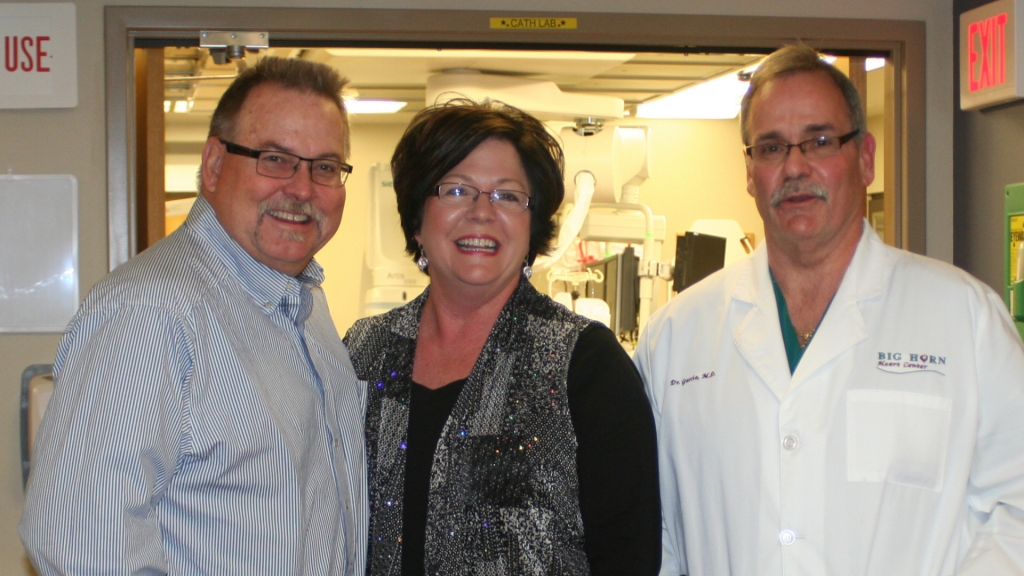
Nancy and Michael Naus want to acknowledge and thank everyone involved in Michael’s care. Michael’s medical journey crossed paths with the following entities:

  • 9-1-1 Dispatch
  • Rocky Mountain Ambulance
  • Goose Valley Volunteer Fire & Rescue
  • Sheridan County Fire & Rescue
  • Sheridan Memorial Hospital:
  • Emergency Department
  • Cath Lab
  • ICU
  • Cardiac Rehab
  • Guardian Air Ambulance
  • Billings Clinic
  • St Vincent Healthcare New Hope Rehabilitation Center
  • Sheridan Physical Therapy