Phone: 307.674.6022
1585 West 5th Street
Sheridan, WY 82801
Hours:
Mon – Fri: 8 am – 5 pm
Closed Major Holidays
After-Hours:
On-Call Provider 307.674.6022
Welcome to Sheridan Memorial Hospital
1401 West 5th St. Sheridan, WY — 307.672.1000
Phone: 307.674.6022
1585 West 5th Street
Sheridan, WY 82801
Hours:
Mon – Fri: 8 am – 5 pm
Closed Major Holidays
After-Hours:
On-Call Provider 307.674.6022
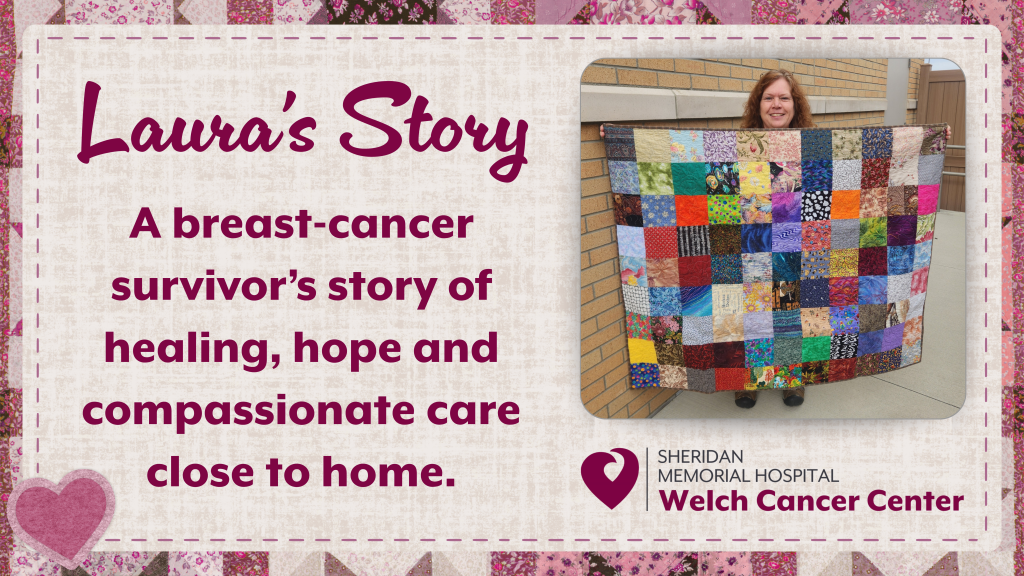
In November 2020, as the world reeled from the effects of the COVID-19 pandemic, Laura Holsinger’s life changed in a far more personal way. Just days after discovering a small, rapidly growing lump in her breast, she underwent a mammogram, ultrasound and biopsy at Sheridan Memorial Hospital. Soon after, Holsinger’s care team confirmed her worst fear: stage two breast cancer.
Up until that point, Holsinger had never faced any major health concerns.
“I’d never spent a night in the hospital or broken a bone, and my family had no history of breast cancer,” she said. “And then boom — all this craziness happened.”
Holsinger had a lumpectomy with Dr. Sara Maguire, MD, FACS, to remove the lump. After surgery, part of the tissue was sent to a lab for an Oncotype DX test — a genomic test that examines the activity of specific genes within cancer cells to estimate how aggressive the cancer might be and how likely it is to spread. Based on the test results, patients receive a score that helps determine whether the potential benefits of chemotherapy outweigh its side effects. For women younger than 50, a score of 25 or lower suggests a low risk of recurrence, meaning chemotherapy is unlikely to provide significant benefit. For women older than 50, a score of 20 or lower indicates the same.
Holsinger’s score was 67.
“Dr. Maguire said it was the highest score she’d seen since joining the hospital,” she recalled.
Holsinger started chemotherapy at the Welch Cancer Center on Feb. 1, 2021. Due to COVID-19 restrictions at the time, patients were not allowed to have visitors or loved ones accompany them to appointments.
“I drove myself to and from appointments,” Holsinger explained. “I was grateful I could get treatment here in town, so then I didn’t have to drive out of town by myself while I wasn’t feeling well.”
Although Holsinger felt grateful to receive care close to home, the experience proved far from easy.
“The only appointment I could bring my husband to was the one where we decided my course of treatment,” Holsinger said. “I can’t tell you how terrified I was the first time I went in for chemo, being surrounded by nurses in what looked like hazmat suits because the medicine was so strong, and realizing they were about to put it in my body.”
Despite her initial fear, behind those layers of protective equipment were compassionate caregivers ready to comfort and reassure her every step of the way.
“I appreciate the nurses at the Welch Cancer Center so much,” Holsinger reflected, tears welling in her eyes. “I can’t even describe how comfortable they made me feel, especially knowing I was there alone. They knew I was going through probably the most awful period of my life up to that point, and they were focused on making it the best experience they could despite everything. And they did a really, really good job at that.”
Providing comfort during a patient’s most vulnerable moments is something the nurses at the Welch Cancer Center understand deeply. One nurse reflected on how meaningful it is to support patients through those first, often overwhelming days of treatment.
“I’ve always enjoyed being a patient’s nurse on their first infusion day, so I can give them a sense of security and genuine compassion,” said Lori Karajanis, RN, Oncology Nurse Navigator at the Welch Cancer Center. “It’s what we would all want if it were us in that chair. That is the best part of nursing, in my opinion.”
That compassion made a lasting impression on Holsinger. One of Holsinger’s favorite memories happened on her very first day of treatment. A nurse asked what her favorite colors were, and Holsinger said she preferred “true” colors—more natural, earthy tones.
The nurse disappeared for a few minutes and returned with several other nurses, each holding a handmade quilt donated by a local quilting club. Holsinger chose the quilt that matched the earthy colors she described earlier, and the nurses laughed. It turned out that the nurse who asked about her favorite colors had a knack for picking patients’ favorite blankets—and, as the others joked, she always “won.”
Smiling at the memory, Holsinger added, “That was really nice. Really fun. I didn’t tattle on her. I let her have her glory.”
Her appreciation extended well beyond that single moment and beyond the nursing staff. Holsinger spoke highly of the entire Welch Cancer Center team and the way each person contributed to her care.
“The physicians were always reasonable,” she said. “You’re not just a number to them. You can express your concerns to the providers at the Welch Cancer Center and they listen to you. They talk it out with you and reason on it. Dr. Megan Ratterman, DO, was very good at that. Even over the phone, her voice is so caring and concerned. It’s like talking with a family member.”
That sense of compassion is no accident. It’s woven into the culture of the Welch Cancer Center—something in which the team takes immense pride. Welch Cancer Center Manager Megan Ripley, RN, OCN, explained how deeply teamwork and empathy shape the patient experience.
“Our team demonstrates exceptional compassion for patient-centered care, and teamwork is at the heart of everything we do,” she said. “Patients can truly feel the positive impact of a cohesive and positive work environment when they receive care in our facility.”
Holsinger received chemotherapy from early February through the end of April 2021, followed by 20 rounds of radiation throughout May. Through it all, she worked hard to stay positive.
“My family was terrified,” she admitted. “I was terrified, but I tried really, really hard the whole time to stay positive, because I truly believe the mind can help the body heal.”
Now, five years after her diagnosis and recovery, Holsinger still faces moments of uncertainty. A recent blood test and mammogram have raised concerns that she and her care team continue to monitor closely. Yet even as she faces these challenges, Holsinger does so with remarkable resilience.
“I’m not trying to be paranoid, just proactive,” she said. “And if I have to go through it again, I’m glad I’m here and can go back to the Welch Cancer Center, because I trust them completely. It’s convenient that they’re right here in town, and they’re the best people I know for the job.”
Today, Holsinger is part of Sheridan Memorial Hospital’s Environmental Services and Laundry teams. Recently, she had the opportunity to clean the Welch Cancer Center for the first time since her treatment.
Inspired by the compassion she experienced firsthand at the Welch Cancer Center, Holsinger now gives back by donating a portion of her paycheck to support care there as an Employee Partner of the Sheridan Memorial Hospital Foundation.
“It’s my little way of giving back,” she said.
For Holsinger, being a cancer survivor means more than overcoming an illness. It means gaining a new perspective on life.
“This experience gave me so much empathy,” she explained. “And things aren’t as earth-shattering as they used to be, because you’ve already been through the earth-shattering part. You know you can handle everything else.”
Holsinger has also found purpose in supporting others going through similar experiences.
“I’ve sat with a friend during her first day of chemo because I know how scary it is,” she said. “I was able to encourage her and tell her, ‘You’re going to be OK. I’ve been through this, and I’m still here.’”
For those currently fighting cancer, Holsinger offered simple but powerful advice:
“Just fight, stay positive and kick cancer’s butt.”
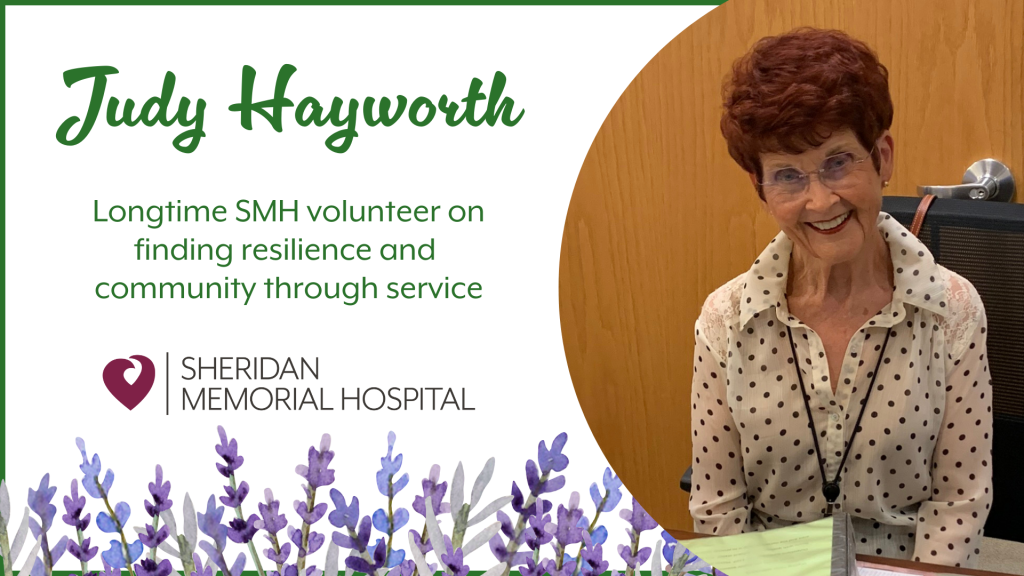
For Judy Hayworth, Sheridan Memorial Hospital represents more than just a place for treatment—it provides strength, healing and community. Recovering from her fifth bout with cancer, Judy continues to approach life with resilience and gratitude, not only for the care she has received but also for the opportunity to give back to the very institution and community that supported her throughout her journey.
Judy was first diagnosed with stage 4 colon cancer in 2008, followed by stage 1 colon cancer in 2018, and then faced recurring tongue cancer three times in 2023 and 2024. Throughout those years, she received various treatments at Sheridan Memorial Hospital, and she speaks highly of the compassionate, wraparound care she received.
From surgery performed by Dr. Barry Mangus at Big Horn Surgical to remove part of her colon to Ear, Nose & Throat specialist Dr. Cheryl Varner discovering her tongue cancer, chemotherapy and radiation at the Welch Cancer Center to speech therapy with Wyoming Rehab, Judy is well-versed in Sheridan Memorial Hospital and its services.
“I think it’s wonderful that people come from Gillette, Buffalo and other communities to receive care here,” Judy said. “Sheridan Memorial Hospital has a wonderful reputation, and people know they’ll receive good care. We are very fortunate to have the quality of care that we do here. I had a mammogram last Sunday at SameDay Health & Imaging, and when I left, I told somebody, ‘I would go there any time!’ Everyone there is so nice and efficient.”
Despite her health challenges, Judy found a meaningful way to channel her gratitude—through volunteer work at Sheridan Memorial Hospital and in the broader Sheridan community.
Judy joined Sheridan Memorial Hospital as a volunteer shortly after overcoming colon cancer in 2009, providing companionship and comfort to those waiting in the surgical waiting room for their loved ones undergoing surgery.
“Many times, especially with younger people who haven’t experienced having a loved one in the hospital before, they can be very upset,” Judy explained. “I always try to comfort them because it can feel overwhelming. I like that I can help them, even just a little bit, during those times.”
In addition to her work in the surgical waiting room, Judy also serves as a member of the Sheridan Memorial Hospital Auxiliary, a group of individuals who come together to support the hospital’s mission, staff and patients. The Auxiliary’s efforts include fundraising and volunteering their time through initiatives such as Trees of Love and the annual 5-Year-Old Birthday Party. They also help spread holiday cheer by decorating Christmas trees throughout the hospital and its clinics each holiday season and assist with mailings for the hospital, among other important initiatives.
“The Auxiliary is a wonderful organization,” Judy praised. “They tune into what’s important and where there’s a need, and I love that.”
Judy and her daughter, Heidi, also enjoy participating in the Sheridan Memorial Hospital Foundation’s Link – Partners in Pink annual run/walk each year.
Outside of Sheridan Memorial Hospital, Judy stays just as busy, volunteering as a Court Appointed Special Advocate, a meal room attendant at The Hub on Smith and an usher and ticket taker at the WYO Performing Arts & Education Center. In recognition of her dedication, Judy received the 2023 AARP Wyoming Andrus Award, which honors the state’s top volunteer over age 50, and was named the 2024 Sheridan College Distinguished Alum.
Judy looks forward to volunteering again after taking a break from December 2023 to March 2024 to recover from tongue cancer. When asked what she would say to someone considering volunteering at Sheridan Memorial Hospital, Judy encouraged them to do it.
“It doesn’t have to be in the surgical waiting room,” she said. “It could be in the gift shop or taking newspapers around. You feel that your time is rewarded for being here. I just love it, the way everyone treats each other. I would say you’ll find it very enjoyable.”
April is National Volunteer Month. If you would like to learn more about Sheridan Memorial Hospital’s volunteer program or share an experience you have had as or with one of our volunteers, please contact Jasmine Slater at jasmineslater@sheridanhospital.org or 307.675.2620.
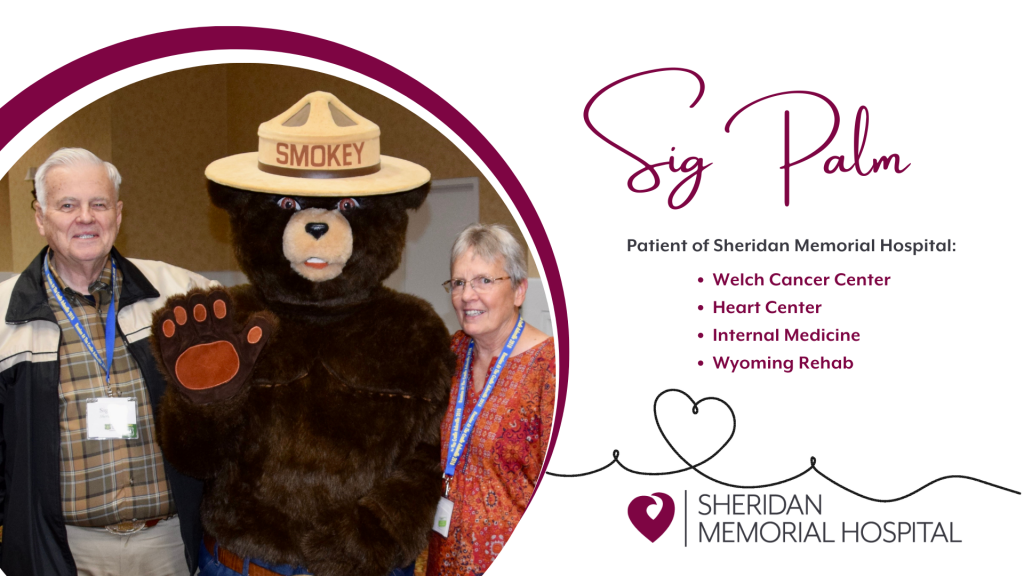
For most people, Sheridan, WY is a place to come when you want to get away from the crowds yet still crave the comforts of a small town. For Sig Palm, the deciding factor to come to Sheridan was having local access to exceptional healthcare.
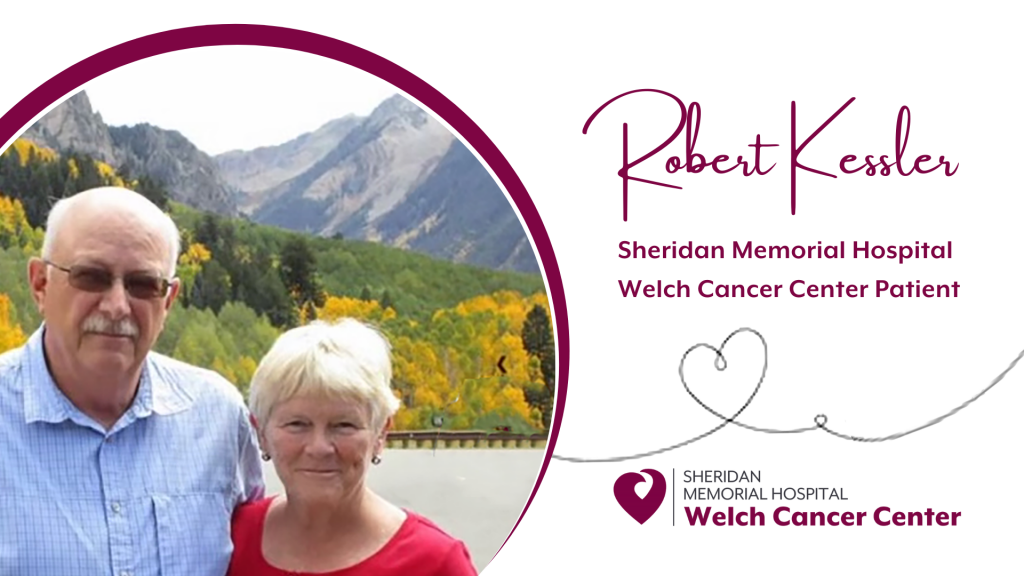
Sig’s first introduction to Sheridan came in 1967, while on a trip to meet with the forest supervisor and his primary staff. Sig was a newlywed, freshly off active duty in the Army, and brand new to the Forest Service. That day kicked off a pivotal Forest Service career spanning fifty-eight years and numerous states. While the bulk of his working years took him far away from Sheridan, he never forgot how at home he felt there. Unforeseen to him at the time, Sheridan would become the place he relied on to manage numerous health concerns ranging from minor to extensive.
Sig is no stranger to heart problems – both his maternal grandfather and his mother died of congestive heart failure. Around the age of 11, Sig realized he had inherited the same heart trouble. “I knew about it because I didn’t have the stamina that other kids did, like in PE.” So, it was of little shock to Sig when in 2012, on a Boy Scout trip to Yellowstone with his grandson, he went into congestive heart failure.
At that time, Sig and his wife Judi were living in Colorado Springs but contemplating a return move to Sheridan. “Sheridan is where we felt most at home. Our kids were born around here, and we kept in touch with our friends.” But for Sig and Judi, they couldn’t base their decision to move back solely on feelings – the scare on that Yellowstone Boy Scout trip made proximity to specialized healthcare the number one determinant in where they would live. Armed with a list of Sheridan doctors suggested by his physician in Colorado Springs, Sig set to work researching. “The most important thing to me at the time was the heart center and what it offered. I told them what I had going on, and Dr. Brennan came highly recommended.” What he found in researching Sheridan Memorial Hospital Heart Center sealed the deal – after decades away, they were coming home to Sheridan.
Since their move back to Sheridan, Sig has run the gamut with hospital specialties. From Cardiology, Orthopedics, and Wyoming Rehab to Internal Medicine and The Welch Cancer Center – he has been a patient of each. Sig recalls a conversation he had with Dr. Megan Ratterman, Oncologist at the Welch Cancer Center, when he was diagnosed with Multiple Myeloma. She said, “I won’t feel offended if you want a second opinion.” Sig thought about it and decided, “Nah. You know, I want to stick with the Sheridan team. I trust their counsel.”
Sig understands he has options for care. He has chosen to stay here at SMH. For Sig, the ability to receive the care he needs locally made all the difference. “Everyone I have ever came in contact with at the hospital has been just beyond wonderful.”
For more information about the many exceptional services offered at Sheridan Memorial Hospital, visit our website at www.SheridanHospital.org.
Robert Kessler has led a full life for sure. He has lived in Buffalo, WY, since 1964. He has been in the Navy, run his own business in Buffalo, and then went back to school for a teaching degree and taught school in Ranchester and Buffalo for 20 years. To say he is always on the move is an understatement.
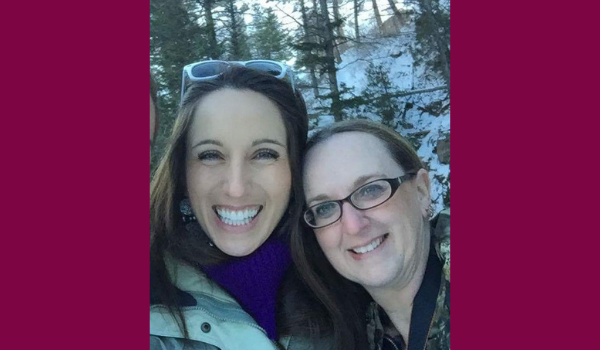
But in 1972, Robert “broke his knee” and a little lump developed behind his knee that never went away. Then, recently while traveling in Australia, his knee became very painful. Once home, he went to the VA Hospital in Sheridan and in May of 2019 received a diagnosis of soft tissue sarcoma (cancer) in that lump.
After radiation and surgery, additional cancer was found in the lymph nodes of his thigh . That’s when the chemotherapy started.
“It was a pretty tough regimen and I know now why people hate chemo,” Robert stated. “You get to a point where you wonder if it’s worth it.”
After receiving the first round of chemo in Salt Lake City, Robert was able to transition his care to the Welch Cancer Center (Welch) in Sheridan for the next round.
“It’s 30 minutes away instead of eight hours,” Robert said, “and it meant a lot.”
Robert started the second regimen at the Welch in 2020 after a PET scan revealed the first round had not done its job. Having his treatment close to home made it much more palatable.
“This time, I was able to be home and that was very helpful and comforting,” he said.
However, after the second round of chemo, he was told by his doctors in Salt Lake that the cancer was still progressing and the prognosis was dim.
“I asked them how long I had, and they told me 12 months. So I started to get my affairs in order, as they say, to make sure my family was taken care of. I even bought a stone and put my name on it. I cried all the way home from Salt Lake,” Robert said.
Lucky for Robert, shortly after that hard-to-swallow conversation, a new drug hit the market. Robert and his cancer care teams agreed it would be good to try.
“And after visiting with Dr. Ratterman, it was determined I could get the treatment at the Welch,” he added. “The coordination between the team in Salt Lake and the Welch was amazing. Very professional.”
The new treatment began in October of 2020 and the following April, another PET scan revealed a significant improvement, so additional treatment was in order. Another scan after that showed even more improvement.
“We pretty much have it on the run, but cancer is diabolically sneaky,” Robert said. “This coming February, I will have my 17th treatment of the new drug regimen. We will keep going as long as it keeps working and my immune system continues to tolerate it.”
There are a few lingering effects from all the cancer care, but he says things are good now, “I feel good and it isn’t slowing me down. I do everything I used to do, only a little slower. I have no after-effects from the treatments. After my last infusion, we got in the car and drove to Arizona.”
Robert has high praise for the teams that continue to keep him going. He says the coordination of care between all the teams was professional and the level of respect was very evident. He adds that he felt the knowledge base of the Welch team was great and he never had to wait for an answer.
“The level of care at the Welch was fantastic and I would encourage anyone needing cancer care to visit with the team at the Welch,” he said emphatically.
With a little chuckle, he adds, “They have done a great job of keeping me alive two years after my expiration date. But in all seriousness, I have nothing but glowing respect and admiration for Dr. Ratterman and Nurse Practitioner Nina Beach and the whole team of nurses at the Welch. I always feel like they are treating one of their own family when I see them. They are very caring people and they never treated me as if I was going to die.”
Anyone wanting to learn more about services provided at The Welch Cancer Center please visit https://www.sheridanhospital.org/medical-services/welch-cancer-center/ or call 307.674.6022.

It was pure chance that Denise Townsend’s breast cancer was discovered early. She didn’t have any symptoms, her lump was not detectable through a physical exam and she had not been getting annual mammograms.
Cathy Wilson, a nurse practitioner at the Sheridan Health Center, was treating Denise for giardiasis, an infection in the small intestine.
“As part of my check-up, Cathy asked me when I last had a mammogram,” says Denise. “I told her it had been twelve years.”
Denise’s mammogram detected a suspicious looking mass; but it took an ultrasound test and a breast biopsy to confirm she had a tumor.
“When they ask you to come in to the office to discuss the results of your mammogram, you know that it is not going to be good news,” says Denise. “I was a bit in shock. All I could think was, oh no, it’s really cancer. Oh no, what am I going to do?”
“When I stopped into the Welch Cancer Center, I was amazed by the beautiful building; but the people inside were even more amazing,” says Denise. “I spoke with Kim, the receptionist and Nina Beach, the nurse practitioner. I explained that I had just been diagnosed with cancer and didn’t know what to do. Everything was happening so fast. Then, I began to cry.”
Denise was feeling completely overwhelmed and rightly so. She was told she had cancer on a Thursday and was scheduled for lumpectomy surgery the following Monday. Arrangements were made for Denise to meet with the hospital social worker right away. The two talked for a couple hours about her situation and the resources that were available. While Denise still couldn’t see light at the end of the tunnel, she was feeling somewhat better.
Once treatment started, Denise would go on to face other emotional challenges, like losing her hair, which reached down past her derriere.
“I had been thinking about a new hairdo before my diagnosis,” says Denise. “I just wasn’t planning on going bald!”
Denise’s cancer treatment included surgery, chemotherapy and radiation therapy. Along with treatment, she endured all of the emotional and physical characteristics that go along with it. At one point, she had to fight her way back to health from an inflamed pancreas. It caused her to be admitted to the ICU for a few days and came close to taking her life.
“Throughout my medical care at Sheridan Memorial Hospital, I was never treated like a number,” says Denise. “I am grateful for all of the assistance I was offered and compassionate care that I received from Dr. Greg Marino, Nina Beach and Dr. Shaun Gonda, plus all of the nurses and technicians.”
Another person who played a significant and very supportive role during Denise’s treatment was her daughter, Shara, who moved to Dayton just to help her mother out.
“My daughter is the number one reason that I emotionally survived this journey,” says Denise. “She helped me to stay positive and keep my sense of humor. She taught me how to network on the Internet, so that I could reach out to other cancer victims.”
Fortunately for Denise, her cancer was caught early, so her prognosis is good. Life is back on track for the most part. She has developed new friendships. She has renewed confidence and a stronger, more positive outlook.
“I’m still not certain of what the future has in store for me,” says Denise. “Though, I do know that I want to share my cancer journey in a way that helps others. I also want to encourage women to GET SCREENED! 1 in 8 women will be diagnosed with breast cancer in their lifetime. Those are not good odds. The ONLY way to survive cancer is through early detection.”
Denise goes on to say, “Cancer is scary; but you are NOT alone. There are so many resources out there that you can tap into. Don’t be afraid to reach out. It’s things like having cancer that help you discover what you are really made of. You also realize how many people there are out there that really do care. My motto is Fighting Forward, the rest I leave in God’s hands.”
If anyone can compare cancer services in Sheridan, Wyoming years ago to what is available today, it is Geraldine and Larry Roberts. Geraldine had three occurrences of cancer in her right breast in a span of 15 years. The first diagnosis resulted in chemotherapy and radiation treatment, the second involved a mastectomy and this last time consisted of another round of chemotherapy and radiation.
When they talk about their journey, Larry and Geraldine agree, “We both had cancer.” Geraldine may have been the one diagnosed with breast cancer, but cancer definitely affected both of their lives. So, they tackled Geraldine’s cancer in the same manner they did in 35 years of marriage – as partners.
Geraldine’s job as the patient was to get better, while Larry filled the role of caretaker. Larry worked full time and took care of the housekeeping, cooking, laundry and yard. He helped manage Geraldine’s care by accompanying her to all of her clinic and treatment appointments and keeping a careful account of the treatment details, blood pressure, weight and medications.
“To accomplish the additional work load you have to set priorities, do only those things that are truly important,” Larry said. “The extra work is easy when you love the person you are caring for.”
The caretaker needs to take care of himself, by eating right and getting sufficient rest,” reminded Geraldine. This is something too often neglected. “Yes dear,” Larry surrendered.
During the first bout of cancer, Geraldine had not mentally prepared to be so sick with nausea. Nothing tasted good. “Milk even tasted sour!” Geraldine proclaimed. “Larry tried every food imaginable, including ice cream! The only thing I somewhat enjoyed was fried potatoes. So we ate fried potatoes for six months,” she grinned. When this last cancer was discovered, Geraldine was pleasantly surprised to learn there are now special drugs available to help with nausea. It made her treatment much more bearable.
Out of love, Larry is the one who shaved Geraldine’s head both times radiation and chemotherapy caused her hair to begin falling out in clumps. “It’s best just to get it over with,” says Geraldine. “But, the first time he shaved my head, I cried when I looked in the mirror. I hadn’t known what to expect. It was such a shock. There weren’t wigs available back then like there are today. I didn’t want to go out in public until a neighbor was nice enough to make me a bonnet to wear.” The second time Larry shaved Geraldine’s head she had an assortment of wigs and hats to choose from, including a Harley Davidson do-rag that Larry surprised her with!
When you lose a breast, you feel like you are no longer a whole person. You don’t want to undress in front of your husband. In fact, the first time I looked at myself in the mirror, after the mastectomy, I just screamed.” At the time, Larry went immediately to Geraldine’s side, “I reminded her that I didn’t marry a boob!” Geraldine quipped back, “But, I did!” They both laughed. In reality though, Larry’s reaction made all the difference in the world to Geraldine and getting a fitted bra and breast prosthesis made her feel even better.
“Learning to cope with cancer is a real challenge, it changes how you perceive life,” explained Geraldine. “Life becomes all the more precious when it is at risk. It teaches you to realize what is truly important and to let go of what isn’t. You come to fully appreciate each new day and the happiness it can bring.”
Geraldine’s advice is to “take one day at a time but also identify something you will have to look forward to in the future – after treatment is over. Above all, if you need help, ask for help. Don’t suffer in silence.”
Having her cancer care anywhere but Sheridan Memorial Hospital’s Welch Cancer Center was never a thought for consideration. Geraldine remarked, “I have great faith in our hospital system. I had received good care here in the past and all of the services I needed were available right here. There was no need to look elsewhere.”
Geraldine now marvels at the changes that have taken place throughout her entire cancer journey, from the first cancer treatment she received in a house (the Partridge House) in 2000 compared to her second treatment course which took place at the Welch Cancer Center this past year. “The differences are dramatic,” observes Geraldine. She is in awe of the new facility and the new equipment, and extremely impressed by the exceptionally trained and compassionate nursing staff. She appreciates the way Dr. Fehir and Dr. Marino put her at ease with their personalized care and compassion.
“The one thing that hasn’t changed over the years is how special the staff is,” Geraldine says warmly. “They treat you the same way you would expect to be treated by your family.”