
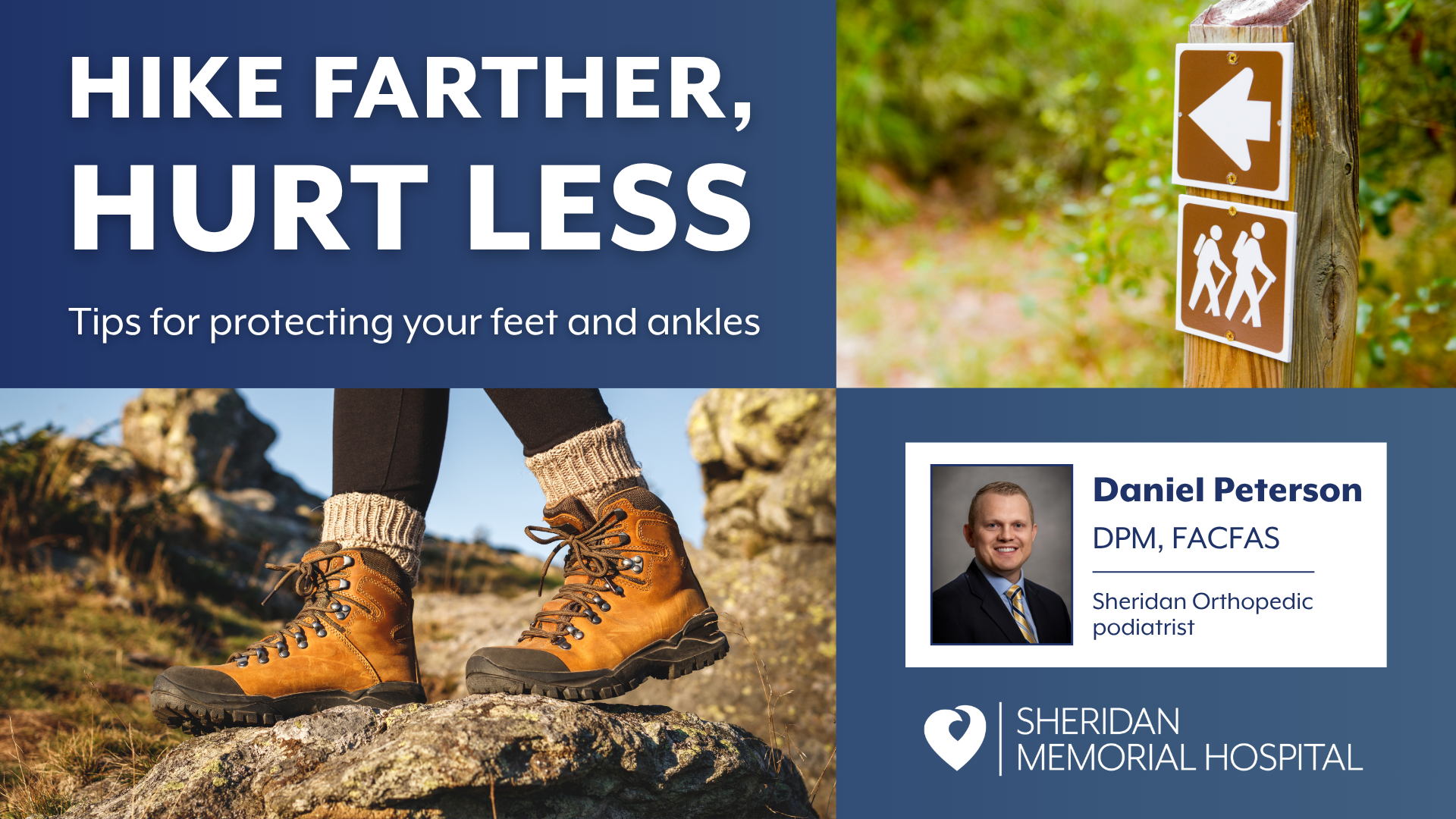
By Daniel Peterson, DPM, FACFAS, a podiatrist at Sheridan Orthopedic Associates.
Many outdoor enthusiasts are familiar with the following situation: You decide to test out your new hiking boots on a pleasant afternoon hike, but after an hour on the trail, the sound of birdcalls and scent of wildflowers are overshadowed by a rapidly intensifying stinging sensation on your heel. You try to push through the discomfort, only to remove your sock and discover a painful blister. Your hike is cut short, and you’re forced to turn back to the trailhead.
Hiking is a great way to stay active and enjoy some of the most beautiful scenery our state has to offer. However, the uneven terrain, unpredictable trail conditions and long distances that make hiking so exciting can also increase the risk of foot and ankle injuries, from blisters and sore muscles to more serious conditions such as sprains, fractures and plantar fasciitis.
The good news is that many hiking-related foot and ankle discomforts and injuries are preventable. With the right gear, proper preparation and smart trail habits, you can stay comfortable and pain-free on hikes for miles to come.
Optimize your footwear and socks
A sturdy, properly fitting pair of hiking boots is the foundation of foot and ankle injury prevention on the trail. Equally important — and often overlooked — are the socks you wear. When paired with the right boots, quality hiking socks help create a friction-free environment that keeps your feet dry, comfortable and protected throughout your hike.
Look for hiking boots with rigid shanks — supportive inserts located between the midsole and outsole — or rock plates, which help protect the bottoms of your feet from sharp rocks and reduce foot fatigue on uneven terrain. Boots with firm ankle support and grippy tread can also improve stability and traction, helping reduce the risk of slips, falls, twists and ankle sprains on the trail.
The right socks work in partnership with your hiking boots to keep your feet dry and reduce friction, helping prevent painful blisters and other common foot problems on the trail. Moisture-wicking materials, such as merino wool and synthetic blends, draw sweat away from the skin, reducing moisture buildup that can increase the risk of blisters. Socks with seamless toes help eliminate pressure points, while strategically placed cushioning absorbs impact and enhances comfort without adding unnecessary bulk.
Prepare your body for each hike
While proper footwear and quality socks are essential, preparing your body for each hike is equally important for keeping your outdoor adventures safe, comfortable and enjoyable mile after mile.
Strong, flexible ankles are less likely to roll or suffer injury on uneven terrain. Simple exercises such as calf raises, heel walks and balance drills can help build strength, stability and resilience when incorporated into your regular fitness routine. Additionally, spending just 5–10 minutes warming up and stretching before and after a hike can improve flexibility, enhance mobility and help reduce your risk of injury.
Practice smart trail habits
Practicing smart trail habits, such as knowing your physical limits, staying mindful of trail conditions and carrying appropriate first aid supplies, is essential for keeping hiking safe, enjoyable and injury-free throughout the summer.
Not all hiking trails are created equal, so choose one that matches your fitness level and any existing health conditions. If you are new to hiking, consider starting with well-maintained, beginner-friendly trails and gradually progressing to more challenging terrain as your strength and endurance improve. Listen to your body throughout each hike and take breaks as needed, especially on longer or more strenuous trails.
Take your time when navigating challenging terrain and obstacles such as loose rocks, tree roots and steep inclines. Taking shorter steps can help maintain balance and control on uneven ground, while trekking poles can provide additional stability and reduce strain on your ankles, knees and hips, particularly during steep descents.
Just as it is important to rest when your body needs it, it is equally important to address foot and ankle problems before they worsen. Pay attention to warning signs such as pain, swelling or persistent soreness, and do not ignore symptoms that continue after your hike. Addressing minor issues early can help prevent more serious injuries and keep you on the trail all season long.
Carrying basic first aid supplies is also a smart precaution, especially when hiking in remote areas with limited access to medical care. Items such as moleskin, athletic tape, bandages and antiseptic can help you manage common hiking-related issues, including blisters, minor cuts and ankle discomfort, until more comprehensive treatment is available if needed.
Recognize when to seek professional help
While most hiking-related foot and ankle pain and discomfort can be managed with the right gear, proper preparation and smart trail habits, certain symptoms and conditions may require professional evaluation. Persistent pain that does not improve with rest, ongoing numbness or swelling that continues after activity may indicate a more serious problem.
If food or ankle pain is limiting your ability to enjoy the outdoors, Dr. Daniel Peterson and the team at Sheridan Orthopedic Associates can help identify the cause of your symptoms and develop a treatment plan tailored to your needs. Visit sheridanortho.com or call the clinic at 307.674.7469 to see how Sheridan Orthopedic can help you get back to lacing up your hiking boots and hitting the trail.