
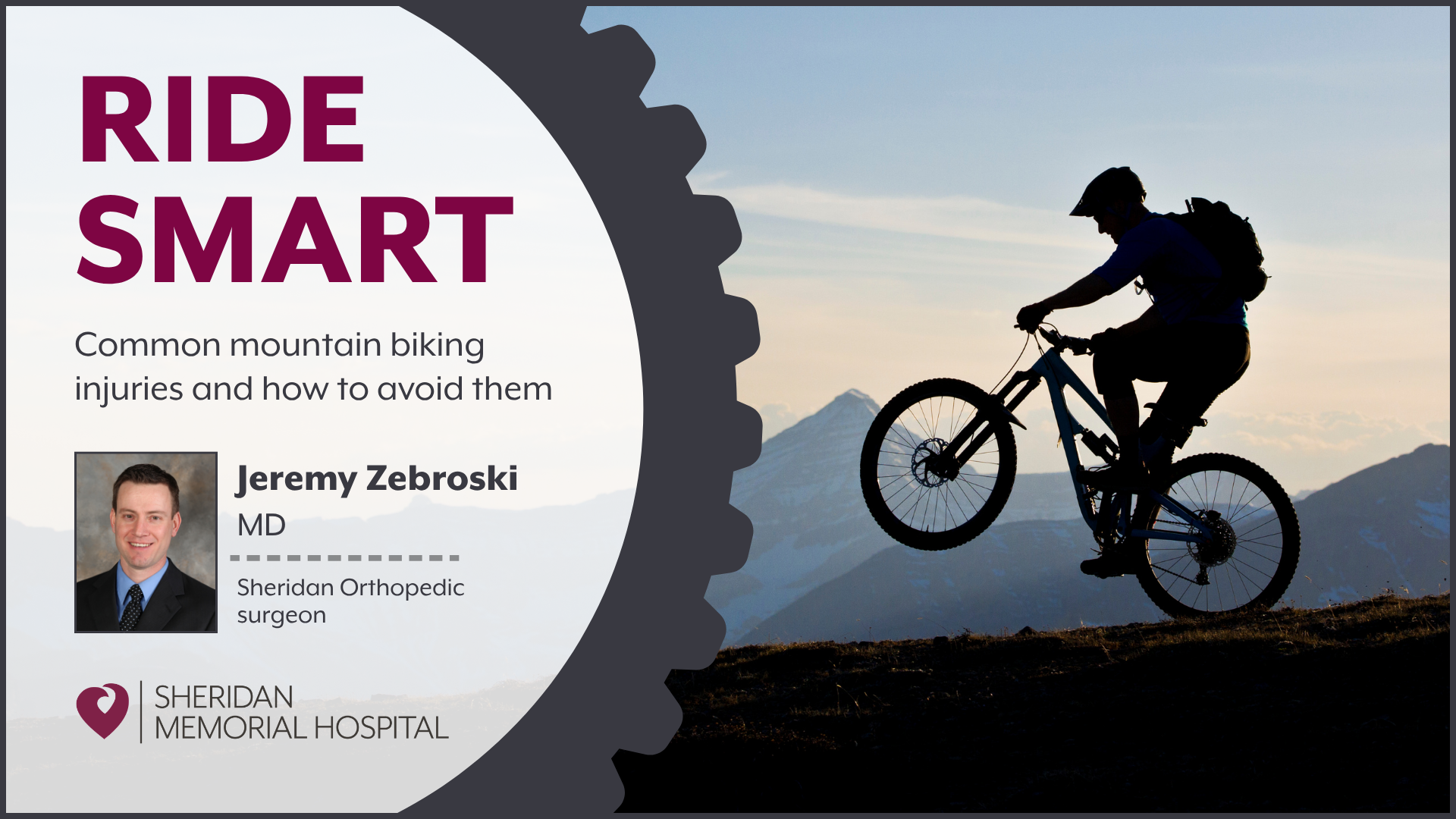
By Jeremy Zebroski, MD, an orthopedic surgeon at Sheridan Orthopedic Associates.
The sun is shining and trails have dried out, which means Wyoming’s mountain biking season is in full swing.
Mountain biking offers various health and fitness benefits and gives riders access to some of the most beautiful places in our state. However, like any outdoor sport, it’s not without its risks. From minor cuts and scrapes to more serious injuries like fractures and concussions, accidents are a reality of the sport for riders of all skill levels.
Understanding some of the most common mountain biking injuries and learning how to reduce risk can help riders stay safe on the trail and make the most of their time outdoors.
Common mountain biking injuries
Upper extremity injuries
Riders often instinctively use their arms and hands to break a fall, which means shoulders, collarbones, wrists and hands are particularly vulnerable during crashes.
One of the most common injuries is a clavicle fracture, or broken collarbone, which often occurs when a rider is thrown over the handlebars or lands directly on their shoulder. Acromioclavicular (AC) joint injuries are also frequently seen and occur when ligaments connecting the collarbone to the shoulder blade are stretched or torn during a direct impact to the shoulder.
Wrist and hand injuries are also common among mountain bikers. Riders can experience an ulnar collateral ligament injury, commonly known as “skier’s thumb,” when they fall onto an outstretched hand. Scaphoid fractures, which involve one of the small bones in the wrist, are another common injury.
Concussions and other traumatic brain injuries
Mountain bikers often ride through terrain filled with hazards such as trees, rocks and other riders. A crash involving a direct blow to the head can result in a concussion or other traumatic brain injury.
Concussions range from mild to severe and should never be taken lightly. Symptoms include headache, dizziness, nausea, difficulty concentrating and sensitivity to light or noise. The effects of a concussion are not always immediately apparent, so riders should seek medical evaluation after any significant head injury and avoid returning to the trail until they have been properly assessed.
Overuse injuries
While scrapes and fractures can occur during falls, overuse injuries develop gradually over time due to repetitive stress or improper bike fit. These injuries commonly affect the knees, lower back and hands, leading to issues such as chronic pain, inflammation and nerve compression.
Staying safe and reducing risk of injury
Wear the right gear
Wearing protective gear is one of the most important steps you can take to stay safe on the trail. A properly fitted helmet can significantly reduce the risk of serious head and brain injuries. Make sure your helmet fits securely, has a buckled chinstrap and meets recognized safety standards.
In addition to a helmet, riders should also wear appropriate protective gear, such as gloves, knee pads and elbow pads, to help reduce the risk of injury during a fall.
Check your bike and body before each ride
Before hitting the trail, take a few minutes to inspect your bike and make sure your brakes, tires and chain are in good working condition. A quick pre-ride check can help identify potential mechanical issues before they become safety hazards.
It’s also important to prepare your body for the ride ahead. Spending just 10 minutes warming up and stretching can improve flexibility, increase mobility and help reduce the risk of injury.
Finally, pay attention to how your body feels throughout your ride. Proper body positioning is essential for maintaining stability and control on the trail. Periodically changing your riding position can help reduce stress on the same joints and muscle groups, lowering your risk of overuse injuries. Knowing when to take a break, turn around or call it a day can go a long way toward ensuring a safer and more enjoyable ride.
Ride within your limits
Match your skill level and experience to the trail. Avoid feeling pressured to tackle terrain that is beyond your comfort zone or abilities. If you encounter a section of trail that feels too challenging, it’s OK to get off your bike and walk.
Master the art of falling
While avoiding crashes is always the goal, knowing how to react when a fall is unavoidable can help reduce your risk of injury. Instead of instinctively reaching out with your hands to break your fall, learn how to “tuck and roll.” This technique may help you walk away from a crash with a few scrapes and bruises rather than a more serious injury.
When to seek care
Even when you take all the necessary precautions, crashes and injuries can still happen on the trail. If you experience a head injury, lose consciousness, have symptoms of a concussion or have bleeding that does not stop after several minutes of direct pressure, call 911 or seek medical attention immediately at an emergency department or urgent care facility.
If you suspect you have suffered a fracture, experience persistent muscle or joint pain while riding or notice swelling, weakness or joint instability after a fall, the team at Sheridan Orthopedic Associates can diagnose the cause of your symptoms and develop a personalized treatment plan to help you recover and get back to the trails safely.
To learn more or schedule an appointment, visit sheridanortho.com or call 307.674.7469.