
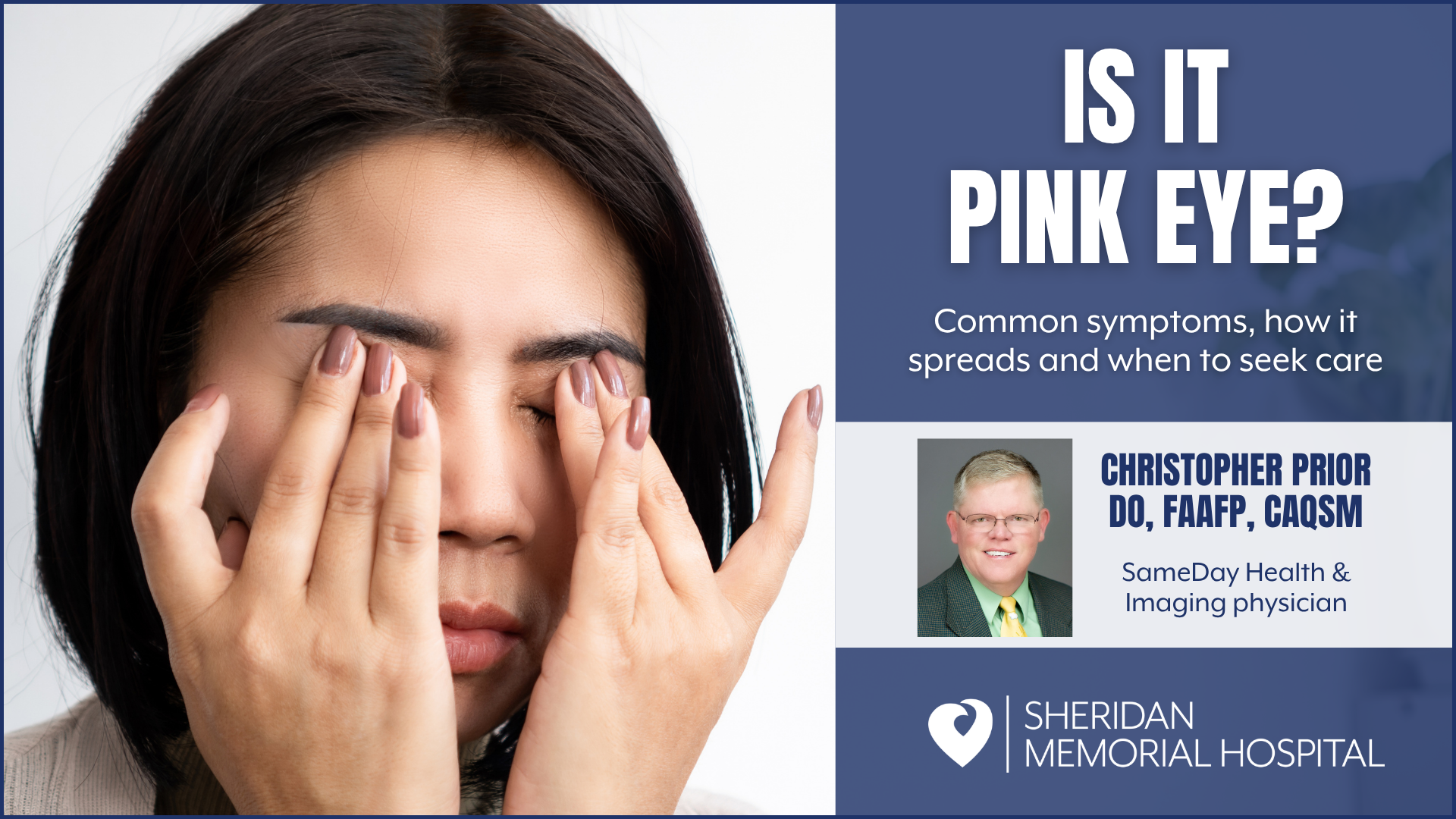
By Christopher Prior, DO, FAAFP, CAQSM, a physician at Sheridan Memorial Hospital’s SameDay Health & Imaging clinic.
You just woke up. You stretch and try to open your eyes only to find that they are sticky, crusty and irritated.
After making your way to a bathroom to splash water on your face and wash off the gunk, you wonder, “Is it pink eye?”
Understanding what pink eye is, how it spreads, and when treatment is needed can help you protect others and feel better faster.
“Pink eye” is the common name for conjunctivitis, which means the thin layer covering the white part of your eye has become inflamed. While the symptoms may look similar, there are several different causes of pink eye, and treatment depends on what caused yours.
Pink eye symptoms can affect one or both eyes and may start suddenly. Symptoms can include:
- Red or pink appearance of the eye
- Itching or irritation
- Gritty or burning sensation
- Excess tearing
- Discharge that may be clear, white, yellow or green
- Crusting along the eyelids, especially after sleep
- Swollen eyelids
The most common type of conjunctivitis is viral pink eye, which often shows up with a cold or other respiratory illness. It is highly contagious and tends to spread easily from person to person.
Bacterial pink eye is caused by bacteria and may produce thicker yellow or green drainage that can leave your eyelids crusted shut when you wake up. This is more common in children, but adults can get it too.
Allergic conjunctivitis is triggered by allergens like pollen, dust or pet dander. The good news is, allergic conjunctivitis is not an infection and therefore does not spread to others.
The challenge in figuring out what is causing these conditions is that they can look very similar. If the main complaint is intense itching — especially in both eyes — I’m more likely to think allergies. If the eye feels sore, burns or has significant drainage, an infection becomes more likely.
Viral and bacterial pink eye both spread through touch, for example someone rubs an infected eye, touches a phone, keyboard or doorknob, and another person touches that surface before rubbing their own eye. Frequent handwashing and avoiding shared towels or washcloths are two of the best ways to prevent spread.
Viral pink eye usually clears on its own with time. Artificial tears, cool compresses and good hygiene can help relieve symptoms while the eye heals. Bacterial pink eye may require prescription antibiotic eye drops, while allergy-related symptoms often improve with antihistamine eye drops or allergy medication.
Most cases of pink eye improve without any long-term problems, but there are times when you should seek medical care. If you’re experiencing significant eye pain, blurred vision, sensitivity to light, worsening symptoms or you wear contact lenses and develop a red eye, it’s important to be evaluated promptly.
A proper diagnosis can help determine whether you need treatment, how long you might be contagious and when it’s safe to get back to work or school. Because it is hard to tell which type of conjunctivitis you have without an exam, it is safest to avoid close contact, sharing of personal items or toughing your eyes until symptoms improve or you seek treatment.
This article originally appeared in The Sheridan Press on July 3, 2026.