
After years of living with pain, severe fatigue and symptoms that made everyday life increasingly difficult, Lisa Silcox started to believe she would simply have to endure it.
“I thought, ‘Well, I’m just going to have to live with this. I’m just going to have to tough it out,’” she said.
About eight years ago, Silcox learned through an ultrasound that she likely had adenomyosis, a condition in which tissue that normally lines the uterus grows into the muscular wall of the uterus. However, she said she left the appointment with more confusion than clarity.
“The doctor that diagnosed me didn’t really explain it very well to me,” she said.
Over the years, Silcox sought care from several providers, but she often felt her symptoms were dismissed or minimized.
“Some doctors would say, ‘I don’t think you have adenomyosis,’ or suggest different medications or birth control,” Silcox said. “I just felt like nobody was really explaining what was going on.”
Silcox, who works long shifts as a registered nurse at Sheridan Memorial Hospital’s long-term care facility, Sheridan Green House, said the condition began affecting both her physical health and quality of life. She experienced chronic lower back pain, abdominal pressure, severe fatigue caused by anemia and heavy bleeding that made everyday activities stressful and unpredictable.
“It made my job much harder,” she said. “I was on my feet for 12-hour shifts, and it was getting very difficult.”
At one point, Silcox said she became so accustomed to the discomfort and exhaustion that she assumed it was simply part of getting older.
“I thought maybe I just needed to lose weight or that this was normal,” she said. “I didn’t realize how much of it was connected to the condition.”
When her symptoms eventually became too severe to ignore, Silcox scheduled an appointment with Dr. Lindsay Capron, an obstetrician and gynecologist at Sheridan Memorial Hospital’s Women’s Clinic.
Even then, she admitted she was nervous after feeling dismissed by physicians so many times before.
But from her very first appointment, Silcox said Dr. Capron approached her concerns differently.
“She was so confident and felt like such an advocate,” Silcox recalled. “I could tell she was advocating for me.”
According to Silcox, Dr. Capron took the time to thoroughly explain adenomyosis, review diagnostic imaging with her and walk through both surgical and non-surgical treatment options.
“She didn’t force me into surgery,” Silcox said. “But she was honest in saying, ‘I truly feel confident that surgery is going to be the thing that turns everything around.’”
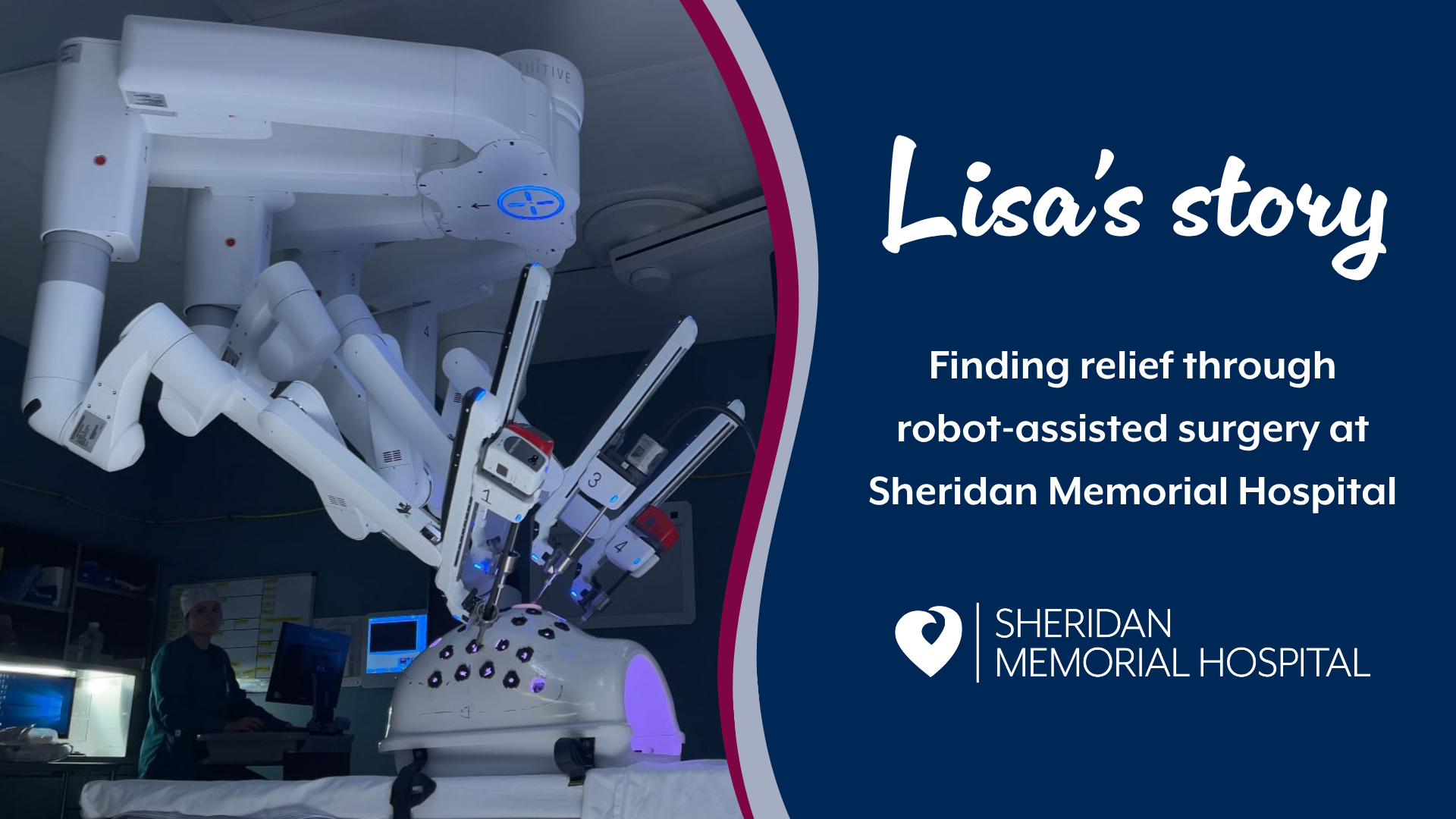
Dr. Capron ultimately recommended a robot-assisted hysterectomy using the da Vinci surgical system, a minimally invasive surgical platform designed to allow for greater precision, smaller incisions and shorter recovery times.
The shorter recovery timeline became an important factor in Silcox’s decision, especially because she did not have extensive time off saved.
“I almost didn’t believe her when she explained the recovery time,” she admitted.
Leading up to surgery, Silcox said she still felt nervous, but also informed and reassured.
“Dr. Capron walked me through everything — pre-op, post-op, the risks, the recovery,” Silcox said. “I just knew I was going to be taken care of.”
She described her surgical experience at Sheridan Memorial Hospital as supportive from start to finish, from pre-admission testing to the nursing care she received after surgery.
“They did blood work, an EKG and other tests to make sure I was safe for surgery,” Silcox recalled. “On the day of my surgery, it was very important to me that my daughter and husband were there when I woke up, so the nurses made sure that happened, which was very reassuring. Any pain or nausea I had after surgery was taken care of very quickly.”
Following surgery, Silcox said her pain was far more manageable than she had anticipated. She only needed Tylenol and ibuprofen for a few days and was able to return to light-duty work after just two weeks. She also experienced minimal bleeding after surgery and was surprised by the small size of her incisions.
“The incisions are so tiny. I had four tiny incisions about this big,” she said, holding up her fingers to indicate the approximately inch-long incisions. “They healed really well.”
By six weeks post-operation, Silcox had resumed normal activities. Her chronic back pain disappeared shortly after surgery. She also noticed improvements in her energy levels, digestive health and overall comfort.
Now, nine weeks after surgery, Silcox said she feels like a different person.
“I feel lighter,” she said. “It just feels like my body isn’t fighting itself anymore. I feel better now than I did before my surgery.”
Looking back, Silcox said she wishes she had not spent so many years suffering in silence or fearing surgery.
“I was so fearful of having a hysterectomy,” Silcox reflected. “Now I feel like I will be the healthiest version of myself as an adult that I’ve ever been.”
Today, she hopes sharing her story encourages other women to advocate for themselves and seek answers when something does not feel right.
“If it’s been recommended, I would say 100% to get the surgery,” Silcox said. “It’ll be worth it.”
If you’re struggling with pain or symptoms that make everyday life difficult, the experienced team at Sheridan Memorial Hospital’s Women’s Clinic is here to help you find answers and guide you toward safe, effective treatment options. Call or text the clinic at 307.672.2522 or click here to learn more.