Listen as Dr. Joshua Scott Highlights SMH’s 100th Robotic Surgery Milestone.
Welcome to Sheridan Memorial Hospital
1401 West 5th St. Sheridan, WY — 307.672.1000
Listen as Dr. Joshua Scott Highlights SMH’s 100th Robotic Surgery Milestone.

To learn more about Dr. Joshua Scott, the hospital’s Big Horn Surgical practice, and the Robotic-Assisted Surgery Program at Sheridan Memorial Hospital, visit the respective link or visit SheridanRoboticSurgery.com and Robotic-Assisted Surgery FAQs.

Congratulations to Marcus Schneck, Clearmont Elementary School 5th Grader. He is the Sheridan Memorial Hospital Christmas Card Art Contest winner, whose spectacular artwork is showcased on the 2023 hospital Christmas card.
Sheridan Memorial Hospital would like to thank all of the talented area 3rd, 4th, and 5th graders who submitted their artwork this year. Students were asked to create a design that captured the theme “A Blessed Christmas.”
All of the entries are on display now through the holiday season in the lobby at Sheridan Memorial Hospital.
Come see all of the incredible artistry and imagination for yourselves! Merry Christmas!
Bonnie Brester had a rough year. Her husband, Mark, died in July 2022, and about six months later, Brester received a breast cancer diagnosis that would change not only her outlook on life but where she would call home.
Brester began treatment for the cancer in January, but about three days after one of her chemotherapy treatments her condition quickly declined.
“I had developed neuropathy and I was going to have to learn to walk all over again,” Brester said. “I needed emotional support. I needed physical therapy. I needed a place that could care for me throughout the day.”
While she had lived in Billings, Montana, with her husband prior to his passing, Brester knew her new situation wouldn’t allow for that independence. She moved to Sheridan and began receiving care in Sheridan Memorial Hospital’s Transitional Care Unit, which provides a recuperative and supportive place to heal following injury, surgery or serious illness. For Brester, Sheridan Memorial Hospital’s TCU meant she could be closer to family because her son, Dusty, and his wife, Jamie, live in Sheridan.
“I can’t say enough about all the great people at Sheridan’s TCU unit,” Jamie Brester said. “My mother has been in TCU twice for short amounts of time and just recently, my mother-in-law spent approximately 90 days there.”
“…Having her in Montana and us down here was not an option,” Jamie Brester said of her mother-in-law. “Bonnie was released to the TCU in July after Billings providers had told us to start looking at hospice options.
“When she got to Sheridan, chemotherapy had taken so much out of her she could not walk or eat and was not comprehensive most of the time. We thought we were going to lose her,” Jamie Brester added. “Once she got to Sheridan, everything changed. Bonnie started to feed herself, started physical therapy and really started to live again.”
The new TCU space at Sheridan Memorial Hospital opened in the fall of 2022, after several years of planning and construction. The new space, located on the second and third floors of the original 1954 hospital, includes 20 private suites for those needing time, space and help in healing.
“The first year has been full of celebrations, lessons, growth and achievements,” said Ashlee Winne, TCU manager. “I really enjoy seeing the progress the patients make. They come in sometimes at the hardest times of their lives and by the time they leave are often in better condition and spirits than before whatever illness or injury brought them to TCU. It really is a blessing to watch each patient’s individual journey.”
Now open for more than one year, TCU has served more than 188 individuals.
Bonnie Brester spent 100 days in TCU, relearning the skills she would need to live at home. She relearned how to walk. She practiced balance that would allow her to reach for a glass out of the cupboard and conduct daily personal hygiene. She worked hard to build the strength needed to get in and out of vehicles and step over and onto curbs.
“Everybody was so enthusiastic and so patient with me,” Brester said. “One of the first times I was able to walk with my walker, there were several nurses there cheering me on. It was a whole cheering section just for me.”
Patients on the TCU have an entire team of healthcare professionals available to help in the healing process. The team includes nurses, nurses’ aides, physical therapists, occupational therapists, speech therapists, nurse practitioners, doctors, case managers and more.
Thanks to that team, Bonnie Brester said she feels ready to live with Dusty, Jamie and their family in Sheridan.
“The people here at TCU have really given me a lot of support and a lot of good therapy,” Brester said. “The biggest thing I had to learn was to believe in myself, that I could do this. It was hard for me, but everyone was so encouraging. They wouldn’t let me go home if they weren’t sure I was ready.”
Jamie Brester said their family owes Bonnie Brester’s progress to the staff at SMH.
“Bonnie has been back home for a few weeks now, but misses her connections from the hospital,” she said. “She made friends with just about everyone there. I really believe the environment allowed her to thrive and she became determined to win at this game called life.”
Listen to Dr. Jason Ackerman as he discusses Sheridan Memorial Hospital’s Addiction and Internal Medicine Clinic. Gain insights into alcohol use disorder, its prevalence, factors influencing alcohol addiction, available treatments, the feasibility of discontinuing alcohol consumption, and the potential for immediate improvement upon cessation. Explore these topics and more with Dr. Ackerman by clicking below.

Learn more at Sheridan Memorial Hospital Addiction and Internal Medicine Clinic or
call today for an appointment at 307.675.2674.
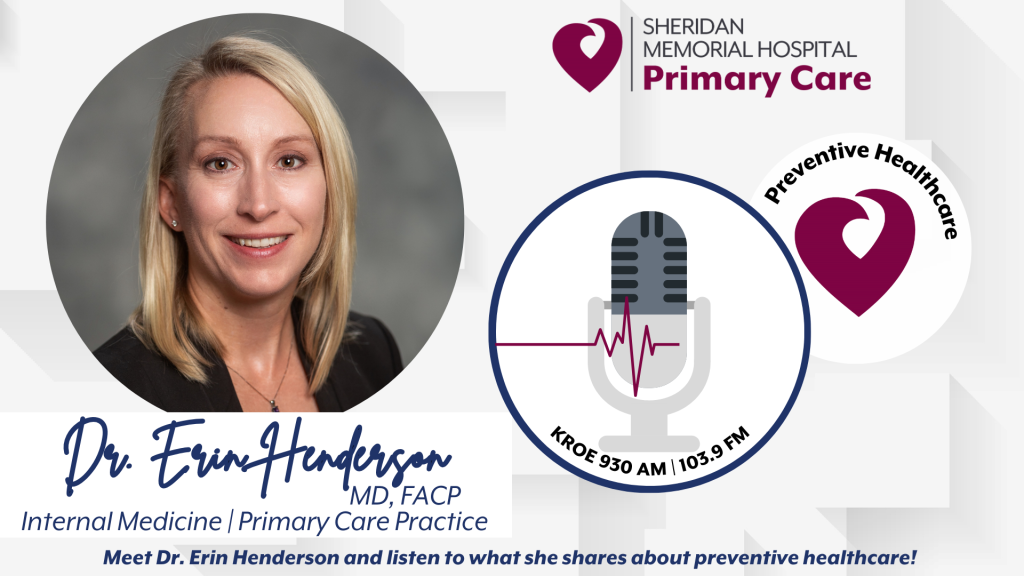
While she hails from just outside Minneapolis originally, Dr. Erin Henderson said she thrives in small communities where she can get to know people and find connection.
She’ll begin that work as a new internal medicine physician at Sheridan Memorial Hospital’s Primary Care Practice this month.
Henderson and her family moved to Sheridan late in the summer of 2023, just in time for her 7-year-old son to start second grade in Sheridan County School District 2.
Henderson found herself in the West after securing a summer position in a lab at National Jewish Health in Denver. She enjoyed the Rocky Mountains so much, she transferred to finish her undergraduate degree and attend medical school in Denver.
From there, she completed her residency at Exempla Saint Joseph Hospital and is a fellow with the American College of Physicians.
When the opportunity opened up in Cortez, Henderson said she took it as it allowed her to see patients in a hospital setting, in nursing homes and in private practice. The COVID-19 pandemic altered the landscape for health care, prompting Henderson and her husband to make a change. Her husband had spent some of his childhood in Sheridan and when the family visited the area they knew it would be the right fit.
Henderson’s husband left his job in IT for family reasons and now works as a paraprofessional for SCSD2. Henderson said her family enjoys hiking, camping, skiing and spending time together. Cooking and playing piano are also favorite activities of the family.
As Henderson settles into her new role at Primary Care, she said she looks forward to seeing a broad array of patients. Having an internal medicine focus means Henderson will focus on caring for adults, particularly those who have more complex medical issues.
While she initially planned to specialize in hematology and oncology, she noted that most patients she would have seen in those specialty areas already have a diagnosis. She enjoys working with patients to determine the root cause of health issues and create a treatment plan. The problem-solving and investigation are aspects of medicine she particularly enjoys.
“I like figuring it out,” Henderson said. “I like helping patients figure it out. It’s been really fulfilling and I love to take care of patients while getting to know them and their families.”
In her time working in the small Cortez community, Henderson said she also developed strengths in rheumatology, osteoporosis and endocrinology care.
In addition to working with patients, Henderson said she looks forward to working with the cohesive medical team at Sheridan Memorial Hospital, which always aims to deliver excellent, patient-centered care.
To make an appointment with Dr. Henderson, call 307.675.2690. To learn more about the Hospital’s Primary Care team: https://www.sheridanhospital.org/medical-services/clinics/primary-care/.
By David Nickerson, MD – Medical Director of Sheridan Memorial Hospital’s Urgent Care
While early this month, we all enjoyed the cooler temperatures of fall without all of the snow and ice, as Wyomingites we know the elements will be upon us soon.
With wintry weather comes an increased opportunity for injury. While some slips and falls may seem inevitable, there are ways to decrease your chances of falling and limit injury if you do catch that perfect patch of ice and lose your balance.
Wear proper footwear. While this bit of advice can help avoid injury throughout the year, in the winter months it becomes even more critical. Choose shoes with chunky treads or utilize removable traction footwear like Yaktrax or ice cleats.
Take small steps. Think like a penguin. You may feel silly, but when walking on packed ice or snow, small, shuffling steps can increase your balance and therefore decrease the risk of falling.
Keep your hands free. While we all want to make as few trips as possible to carry those groceries indoors, having your hands full of bulky or heavy items can both decrease your ability to balance and keep you from breaking your fall if you do slip. If you do fall and try to catch yourself, be sure to keep your knees and elbows bent to avoid any additional injuries from bracing your fall.
Be aware of your physical limitations. While those 6 inches of snow look pretty and fluffy from the comfort of your living room, it can wreak havoc on backs, shoulders and other muscles when on the end of a shovel. Take breaks and try to push the snow as much as you can rather than lift it.
Wear the proper gear. Whether protecting fingers from frigid temperatures with gloves or wearing a helmet to guard your face and head from a fall while skiing, make sure you have the proper gear no matter what the outdoor activity.
Be aware of problem areas. Large parking lots with high traffic, areas near gutters, and inclined pavement or sidewalks are often surprisingly icy and are some of the most common locations of falls requiring medical attention.
Not all winter injuries are avoidable. After all, we never know what Mother Nature will throw at us. If you do sustain a winter-related injury, the degree of injury may determine where you seek medical treatment.
For example, if you suspect a broken bone or are in serious pain 24-48 hours after a fall, seek medical attention at an urgent care facility. Other common, minor injuries urgent care providers can diagnose and treat include sprains, scrapes and cuts that need stitches. If you’ve bumped your head, urgent care facilities can also evaluate for concussions.
For more severe injuries – for example if you are experiencing chest pain, trouble breathing, trouble speaking or understanding speech, severe bleeding or loss of consciousness – head straight to the emergency department for treatment.
While winter in the Mountain West offers plenty of opportunity for outdoor recreation, basic precautions can help you avoid some of the most common seasonal injuries.
To learn more about the hospital’s Urgent Care Clinic and Dr. Nickerson see: Urgent Care – Sheridan Memorial Hospital (sheridanhospital.org)
By Emily Denney, DO – SMH Primary Care
As a patient there is one question you should be asked every time you see a provider: “What medications are you taking?” Often what providers are really trying to learn is what prescriptions and over-the-counter (OTC) medications, supplements, vitamins, tinctures and herbals you are taking. This question and its answers are really a big deal.
Medication dosing errors, confusion due to medications with similar names as well as supplement use can be some of the leading causes of adverse events for patients. In this growing age of multispecialty care, patients visiting multiple facilities, increasing numbers of medications and OTC supplements, the question of “What are you taking?” becomes more and more important. Every year hundreds of thousands of adverse events occur because of medication errors. More specifically, according to the New England Journal of Medicine, it is estimated that more than 20,000 emergency department visits per year are attributed to adverse events related to dietary supplements. These visits result in more than 2,000 hospitalizations annually.
Some medications have similar names, but have different uses, and there are supplements for every medical condition. It is easy to get confused with medications because of similar names such as hydroxyzine, hydralazine, and hydrochlorothiazide (three medications with very different purposes). I have had patients who thought they were taking their blood pressure medication only to realize that they had been taking another medication entirely.
Supplements, in moderation, can be a healthy tool to augment prescribed medications and support long-term health. Particularly in situations where our diet can’t meet our nutritional needs. Supplements, while considered safe on their own, can have dangerous interactions and/or side effects with some medications. St. John’s Wort, for example, is a supplement used for mood disorders, but it can cause dangerous interactions with multiple cardiac medications and antidepressants. Even vitamin D, a supplement that is frequently encouraged by most providers (including me), can interact with blood pressure medications. And if you take thyroid medication, taking calcium, magnesium or iron within four hours can weaken it. Turmeric can increase the risk of bleeding with blood thinners. Milk thistle, if taken with insulin, can dangerously lower your blood sugar.
As far as vitamins — I always think of my grandmother. She would read magazines and order supplements that were advertised to cure whatever health issue she was concerned about that day. Along with many others, she once ordered a vitamin oxygen supplement. I am still not sure what this really was or where she found it. It is also important to know where you are getting your supplements from as they are not regulated by the Food and Drug Administration, so quality standards can vary. If you aren’t sure about a supplement, ask your pharmacist or contact your doctor.
So, what can you do to help prevent adverse effects of medications and supplements interacting?
As a patient, bring in an updated list of the medications and supplements you take, or just bring all your medications to your appointments. Knowing exactly what you take can help reduce these adverse events and help your doctor provide the best care possible.
Dr. Emily Denney is a physician with Sheridan Memorial Hospital Primary Care. Prior to working in Sheridan, Denney worked in primary care for more than five years in rural Montana.
To learn more about the hospital’s Primary Care Clinic and Dr. Denney see: https://www.sheridanhospital.org/medical-services/clinics/primary-care/
UPDATE 01/08/2026: The free Moms Supporting Moms group will meet on the first and third Monday of subsequent every month at 5:30 p.m. at the Sheridan Memorial Hospital Primary Care community conference room.
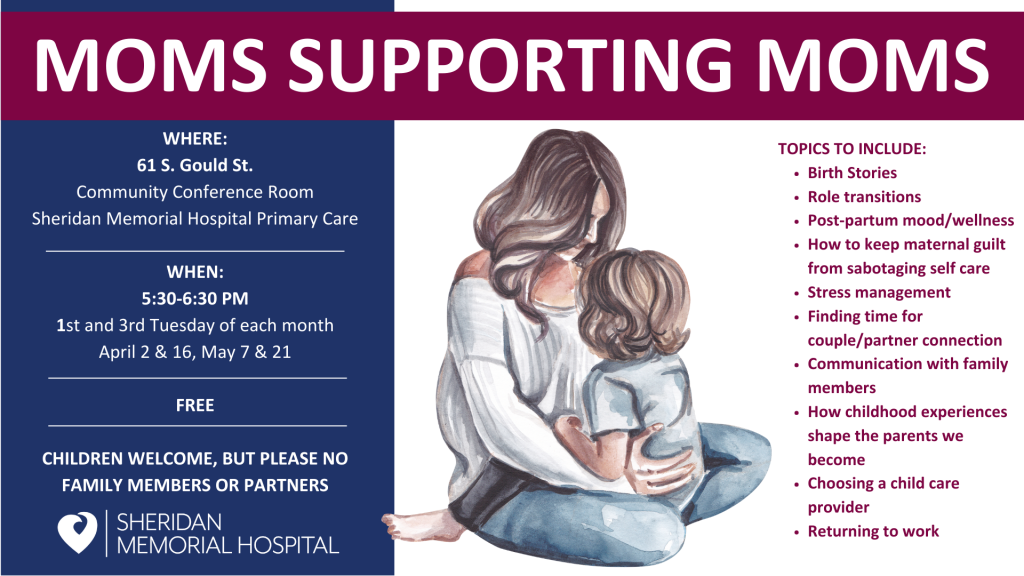
Healthcare providers at Sheridan Memorial Hospital and its clinics often hear from patients about the emotional and physical challenges mothers and families experience after welcoming a new child.
Bringing home a new baby often brings joy, and sometimes new parents also experience feelings such as anxiety, sadness and being overwhelmed. These feelings can be isolating and difficult to manage.
In order to support new mothers, Sheridan Memorial Hospital has partnered with other community entities to organize Moms Supporting Moms, a facilitated peer group that will meet the first and third Wednesday of each month from 5:30-6:30 p.m. at Sheridan Memorial Hospital’s Primary Care community conference room, located at 61 S. Gould St. The first meeting will be Nov. 15.
This group aims to empower new mothers and improve understanding of all the feelings that accompany welcoming a new child. Facilitators will offer new ways of coping, effective discussion, sharing of experiences and an opportunity to meet other new moms.
Topics the group plans to cover include birth stories; role transitions; postpartum mood and wellness; how to keep maternal guilt from sabotaging self-care; stress management; finding time for couple/partner connection; communication with family members; how childhood experiences shape the parents we become; choosing a child care provider; returning to work; and more.
Children are welcome, but organizers ask that no family members or partners attend the Moms Supporting Moms group.
There is no fee to participate.
Partners for the Moms Supporting Moms group include Sheridan Memorial Hospital, Willow Creek Counseling and Sheridan County Public Health.
To learn more about the new Moms Supporting Moms facilitated peer group, call
Sheridan Memorial Hospital Primary Care at 307.675.2690.
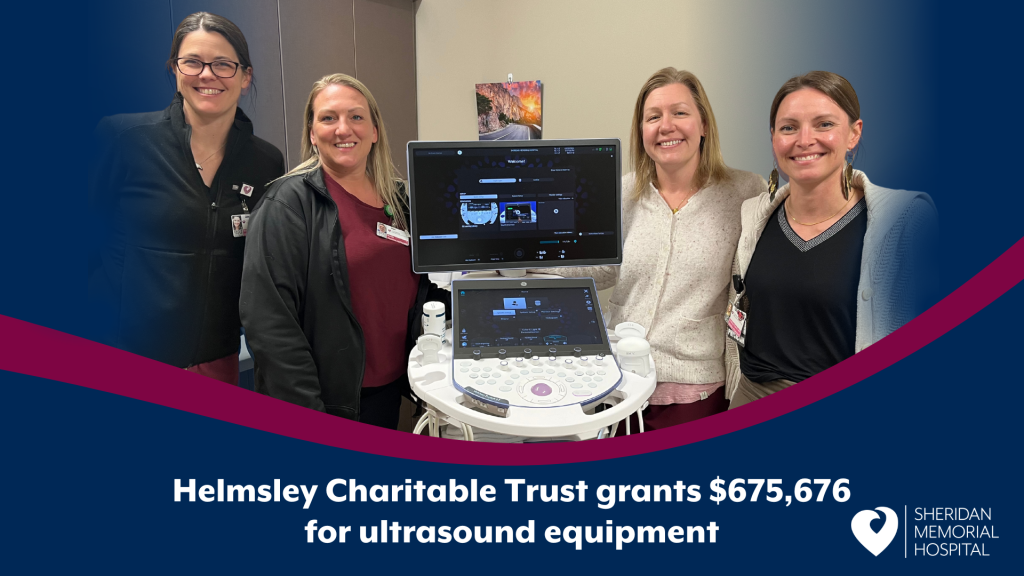
Thanks to the generous legacy gift from the Lorraine S. Husman Trust, the Sheridan Memorial Hospital Foundation Board approved $425,700 to fund a new Nuclear Medicine Camera for Sheridan Memorial Hospital.
What is a nuclear medicine camera?
A nuclear medicine camera is a device that uses a special gamma camera and a computer to create images of tissues, bones, and organs to help detect abnormalities or diseases inside the body. The Nuclear Med Camera is used to care for more than 700 patients every year for heart studies, bone scans, and other organ function tests.
Leaving a Legacy: The Lorraine S. Husman Trust
The original gift from The Lorraine S. Husman Trust in 2012 helped create the Cath Lab and continues to support dialysis, cardiac care, and other areas of greatest need at Sheridan Memorial Hospital. Lorraine and her three siblings focused on giving back to the community and ensuring people have access to the best healthcare possible. “No amount of money can replace your health” is something Lorraine would often say in conversation. All three appreciated the care that doctors and medicine provided, especially in their later lives. They all lived long and – by every measure – successful lives. Certainly, through thoughtful planning and preparation of this gift, they hoped the same for others.
The tradition of healthcare philanthropy helps to ensure the technology and equipment necessary is available for our expert physicians and care teams, which allows them to provide excellent patient care for our community. The Sheridan Memorial Hospital Foundation is grateful for Lorraine’s generous gift that made the purchase of this equipment possible.
If you would be interested in learning more about a planned gift for the future or making a charitable contribution to your hospital, don’t hesitate to contact the Sheridan Memorial Hospital Foundation at 307.673.2418.
To get the most up-to-date Foundation information and learn more about gift opportunities, visit sheridanhospital.org/foundation.
Saturday, October 21st, the Sheridan Memorial Hospital Foundation hosted The Link – Partners in Pink, its 15th annual run/walk to raise awareness and funding for cancer care and healing in our community. During the beautiful fall day, more than 500 participants, volunteers, and cancer survivors were in attendance at Whitney Commons Park wearing their pink and infectious smiles to support this event and the fight against all cancers.
The event proceeds of over $55,000 will support the Comfort Care Program at Sheridan Memorial Hospital’s Welch Cancer Center (WCC). The program at the WCC is overseen by the Director of Continuous Improvement – Tommi Ritterbusch. With the help of Tommi and her team, funds are made available to cancer patients facing all cancer types and help provide them with the most comfortable experience during their cancer journey. “No cancer journey is the same, but these funds and the incredible teams within our organization and WCC are here to ensure that each patient is supported throughout their diagnosis,” shares Chief Development Officer Cody Sinclair.
Every year there are amazing partners for the Link Partners in Pink. Shelley Kinnison and her Born in a Barn (BIAB) team donated $13,000 to The Foundation’s efforts through the mimosas sold at their annual BIAB weekend this year. Thanks to the sharing of their “why” and passion for this project, BIAB has contributed $35,000 to comfort care and the efforts of the WCC and their comfort care funds.
Another great example is The Sheridan Hawks Jr. Hockey Club, which hosts a “Hawks Hockey Fights Cancer” weekend, which includes puck drops from survivors and their annual Jersey Auction with special cancer awareness jerseys. We appreciate their efforts not only during this weekend but also when the entire team walks a Virtual Race together during their away weekend, donning their Pink Shirts & raising awareness for the cause, and becoming invested in the community they temporarily call home.
The Link-Partners in Pink volunteers & Foundation Staff thank all those who participated, sponsored, made a donation, and volunteered their time. Major sponsors of this year’s event include Ebzery Family Foundation, First Federal Bank & Trust, First Interstate Bank, Century 21, BHJ Realty, Intermountain Health – St. Vincent’s, Kennon Products, Only Co., Powder River Heating & AC, and Range. Thanks to our caring supporters, participants, and sponsors, cancer education and prevention resources are now more accessible to our community.
For more information about the WCC’s Patient Comfort Care, please contact The Foundation at 307.673.2418 or the Welch Cancer Center directly at 307.674.6022.
Sheridan Memorial Hospital is once again seeking a design for its 2023 Christmas Card. The hospital is accepting entries from 3rd, 4th and 5th Grade students in Sheridan County, Wyoming. Artwork provided by students will be judged by a committee and the overall winner’s design will be used on the card sent out in December 2023. The winner’s name will be printed on the back side of the Christmas Card. In addition to recognition on the card, the winner will receive a $50 cash prize. All entries will be displayed in the windows at the hospital throughout the Christmas season.
“Please help us spread the word to local 3rd – 5th grade students. Each year we get a wide variety of incredible artwork and we can tell the kids work really hard to create our special card. It’s very difficult to select a winner,” according to Cecile Pattison, Community Relations.
The theme of the 2023 Christmas card is “A Blessed Christmas.”
Entries are due on Monday, November 27th and can be dropped off or mailed to the hospital’s main entrance at 1401 West 5th Street, Sheridan, Wyoming 82801.
Sheridan Memorial Hospital (SMH) recently completed its 2023-2026 Strategic Plan, which outlines the organization’s focus areas and growth initiatives for four years.
SMH gathered input from the community through processes such as the Community Health Needs Assessment, other research and day-to-day interactions. That data was utilized alongside feedback from SMH staff, stakeholders and leadership to develop the Strategic Plan.
The 2023-2026 Strategic Plan identifies four priority areas for strategic initiatives – SMH employees, services, facilities and models of operation.
“The things that we’ve identified as growth opportunities came out of multiple layers of discussions with the community and within the hospital,” said Mike McCafferty, CEO of SMH. “The strategic plan highlights where we intend to invest our resources over the next four years in order to best position the hospital for the future while also taking care of the immediate needs of our community.”
SMH leadership noted hospital employees are the organization’s greatest resource, and therefore have identified investment in principle-based culture and engagement as one strategic growth initiative. In addition, developing community support for workforce housing will aid not only the hospital as it recruits and seeks to retain new employees, but the community as a whole as it continues to grow.
SMH will also continue evaluating the services it offers. Among the hospital’s priorities are development of a behavioral health system of care and clinical infrastructure. Plans and fundraising for that project have already begun. In addition, the hospital will continue utilizing information gathered through the Community Health Needs Assessment completed earlier this year to evaluate additional services needed in the community.
Development of virtual care outreach for primary and specialty care clinics was also identified as a strategic initiative, and several clinics have already implemented texting with patients as a convenient option. Sheridan Memorial Hospital Urgent Care also utilizes telemedicine appointments for patients, reducing time needed to travel to and from appointments and providing a convenient option for care.
Several facilities projects have also been identified in the SMH 2023-2026 Strategic Plan. They include development of behavioral health facilities; an ambulatory procedures suite for colonoscopy and endoscopy; and a renovation and reorganization of the surgical services suite.
“We want to ensure patients have the best experience possible when receiving services at Sheridan Memorial Hospital,” McCafferty said. “Having top-notch facilities is part of ensuring a quality experience for anyone in the community who visits us.”
SMH has for years utilized proven management strategies to ensure a culture of continuous improvement. As part of the 2023-2026 Strategic Plan, SMH will continue working to ensure effective execution and deployment of strategic priorities while also improving consumer-based digital connectivity and communication that allows providers to meet patients where they are.
McCafferty said the teams at SMH will evaluate 2023-2026 Strategic Plan after two years to ensure the hospital is on track to meet its goals and to assess whether the priorities outlined in the strategic plan remain the community’s top priorities.
Ever since high school, Dr. Allison Dawson has known Sheridan boasts something special. Now, as she begins seeing patients in Sheridan Memorial Hospital’s Internal Medicine Clinic, Dawson said she’s excited to call Sheridan home.
“In high school, I remember coming to Sheridan to compete,” Dawson said, adding that she attended Cheyenne Central High School. “Even back then I always thought Sheridan was the prettiest part of the state.”
Dawson joined the team at Sheridan Memorial Hospital in October. She specializes in internal medicine and is trained in palliative care and hospice medicine. Palliative care aims to treat not only the health condition a person faces, but the symptoms of that condition as well, with the goal of increasing the individual’s quality of life. Similarly, hospice care focuses on the care, comfort and quality of life for a person approaching the end of their life.
Dawson’s family history informed her decision to pursue those specialties. When Dawson was just 9 years old, her mother passed away. She had been diagnosed with breast cancer and died within one year of the diagnosis.
“Watching her suffering and the challenges she faced, it made me believe there has to be a better way,” Dawson said.
While initially Dawson had dreamed of becoming an Olympic diver, an injury late in her high school career prevented that pursuit. Dawson switched gears, spending a few years in Hawaii and Las Vegas before attending undergraduate school in Laramie then joining the WWAMI program for medical school. She completed her residency in Chicago, working at both Cook County Hospital and Rush University Medical Center. Following residency, she completed a fellowship at the University of Texas Southwestern Medical Center for palliative care and hospice.
“I knew I wanted to come back to Wyoming,” Dawson said. “I never thought it was fair that just because we live here, a more rural state, that we don’t have access to every type of healthcare that we need.”
She added that if she can bring her knowledge and experiences to Wyoming and help even one person, the hours of training and traveling for medical school would prove worth it.
WWAMI – a multi-state medical education program that includes Washington, Wyoming, Alaska, Montana and Idaho – requires its students to return to their home states for at least three years following graduation, boosting the number of primary care physicians in rural states. Dawson interviewed around Wyoming, but said Sheridan stood out for its beauty and sense of community – both inside SMH and more broadly.
“I want community in my workplace and my life,” Dawson said. “Sheridan presented the opportunity to have both and while I was interviewing it was clear the providers at Sheridan Memorial Hospital not only worked well together but enjoyed what they do and the people with whom they work.”
Having worked in large hospitals, Dawson said she looks forward to getting to know the patients in a facility like SMH.
“I hope that in time they see me as somebody they can trust, that they can come to with issues or problems and know that I will do what I can to help them, both medically and just as a person,” she said.
Outside of the office, Dawson enjoys spending time with her husband, Logan, and their 1-year-old son. The family spends time camping, hiking, skiing and snowboarding. In addition, especially in the winter months, Dawson enjoys baking.
To make an appointment with Dr. Dawson or learn more about Sheridan Memorial Hospital’s Internal Medicine, go to https://www.sheridanhospital.org/medical-services/clinics/internal-medicine/ or call 307.675.2650.
Having worked in both a large metropolitan healthcare system and a rural Indian Health Service facility, Dr. Zachary Zemore has seen the extremes when it comes to levels of access communities have to healthcare.
He hopes to bring his experience and knowledge from both sides to the team at Sheridan Memorial Hospital, where he began work as a hospitalist Oct. 2. A hospitalist is a physician who specializes in providing and managing the care and treatment of hospitalized patients.
“I’ve worked in systems where patients had access to every specialty imaginable to the opposite, where resources were scarce and you provided the best care for patients you could given existing resources,” Zemore said. “In Sheridan, I’m looking forward to being able to spend more time with patients and provide a continuum of care with the resources available at Sheridan Memorial Hospital and in the community.”
Zemore credits his interest in medicine to the time he spent in high school and college volunteering as a firefighter and emergency medical technician. He said he learned a lot in those years, including that he enjoyed both the variety in the workday and the ability to help people. Seeking more structure to his career, Zemore opted to major in biomedical engineering for his undergraduate degree knowing he intended to attend medical school.
Zemore earned his medical degree from Virginia Commonwealth University School of Medicine before completing residencies in both emergency medicine and internal medicine. Excited to try something new, Zemore and his wife, Natalie, who is also a physician, explored various regions that offered the outdoor activities they enjoy.
The duo landed in Hardin, Montana, where Zemore worked for the Indian Health Service Crow/Northern Cheyenne Hospital as an emergency medicine and hospitalist physician. His wife works in Billings, Montana.
Zemore said he looks forward to getting to know patients and prides himself on understanding a patient’s journey from the emergency department or intake through the hospital stay and discharge.
“Understanding the entire patient journey and experience helps me, as a provider, to understand the individual and provide the best care possible,” Zemore said.
In addition to his role as a hospitalist at Sheridan Memorial Hospital, Zemore serves as the medical director for Big Horn County, Montana, emergency medical services.
When not working or volunteering, Zemore and his wife enjoy exploring the outdoors hunting, fishing and hiking with their two dogs, Ollie and Bowzer. Come winter, the young family also plans to spend time skiing and snowshoeing.
To get the most up-to-date information and learn more about Sheridan Memorial Hospital physicians, visit sheridanhospital.org/find-a-doctor.
It’s that time of year. The school year is underway, days have become cooler and flu season has begun. While scheduling time to receive your flu shot may seem like one more task to complete during a busy time of year, local healthcare providers emphasize the benefits of receiving the vaccination.
“We know that this time of year in particular, families are busy with activities,” said Dr. Benjamin Widener, a Sheridan Memorial Hospital rheumatologist. “But being sick takes away far more time from all of those activities than the time it takes to schedule and get your flu vaccinations.”
The flu vaccine prevents millions of illnesses and flu-related doctor visits each year. Multiple studies have also shown the flu vaccination can reduce the severity of illness for those who have been vaccinated but still get sick. This means the vaccination can reduce the risk of flu-related hospitalizations as well.
“When considering whether the flu shot is right for you or your family, one consideration is also those with whom you spend your time,” Dr. Widener said. “If you spend a lot of time with individuals at high risk for severe cases of the flu, like grandparents or pregnant family members, a vaccination can help not only protect you, but those you love.”
The flu vaccination is an important preventative tool for people with certain health conditions such as those with heart disease, chronic lung disease or diabetes. Flu vaccinations can also protect pregnant people from flu during and after pregnancies and protect their infants from flu in the first few months of life.
Flu shots are available at any Sheridan Memorial Hospital clinic including Internal Medicine, Primary Care and Urgent Care, as well as at most local pharmacies and Sheridan County Public Health. Most insurance plans cover the cost of vaccinations, so flu vaccinations can often be received without incurring any out-of-pocket expenses.
Sheridan Memorial Hospital and its clinics will also offer COVID vaccinations as they become available.
To schedule your flu vaccination with a Sheridan Memorial Hospital clinic, call your provider or ask for the vaccination at your next scheduled appointment.
By Jason Ackerman, MD – Sheridan Memorial Hospital Addiction and Internal Medicine Clinic
September is National Recovery Month. I hope this column is helpful to you in understanding addiction and recovery.
Mr. B is a polite, quiet carpenter with a slow southern drawl. The work he does is intricate and precise, his services are in such demand that he can barely take days off and is considering expanding his company. He and his wife are looking toward buying their first home soon. But, he is quite certain he would not be here without a life-saving medication that helped him overcome his addiction.
He moved to Sheridan 5 years ago. He had been using various drugs since he was 13, and that had become a way of life for him. Prescription opioids were his drug of choice, but he would use heroin and methamphetamines or anything else he could find. A brief stint in prison was not enough to stop using. But his wife had also struggled with substance use and had moved to Sheridan to be with family. She managed to get sober with the help of a medication called buprenorphine; she had done so well that he decided to follow her and see if he could get things turned around.
After the first week of buprenorphine treatment, he had completely stopped using opiates. He had no cravings, no desire to use them. Within the first year, he had also stopped using marijuana and even kicked his cigarette habit. The substances that had been his way of life for nearly 20 years were now a thing of the past. Triggers that would have previously sent him spiraling were dealt with, coped with, and forgotten. He went from barely holding down jobs to starting his own company.
Buprenorphine is a medication used to treat opioid use disorder (OUD). It eliminates withdrawal symptoms for patients who are coming off of drugs. By binding to the same opioid receptors in the brain that are targeted by opioids like oxycodone and heroin and fentanyl, buprenorphine can also reduce or eliminate cravings. This allows patients with OUD to stop using the drugs that have come to rule their lives.
Our medical understanding of addictions and substance use disorders has come a long way in the last 10 years or so. Fortunately, with the increased knowledge and understanding of the disease process of addiction, more treatments are emerging. Unfortunately, not everybody has access to or is offered treatment. In the current fentanyl epidemic, there have been measures enacted and pushes to make treatment more understood and available at nearly every level. Unfortunately, overdose deaths across the country continue to climb.
While addiction is a terrible, destructive disease, many afflicted people are too ashamed to seek treatment. Others aren’t aware that there are medications that can help them in recovery. And others are contemplating making the change but waiting for a nudge in the right direction. For people suffering from addiction, whether it is opioids or alcohol, or even stimulants like methamphetamine, the first step in recovery can be making an appointment with a trusted doctor and asking about available treatments.
To learn more about the Addiction and Internal Medicine Clinic at
Sheridan Memorial Hospital, click on the link or call 307.675.2674.
While Joe Wright has held leadership positions professionally and in volunteer organizations, service has remained his focus. Wright will bring that mindset to his new position as Chief Operating Officer at Sheridan Memorial Hospital, a role he began in September.
Wright describes himself as a servant leader, a philosophy in which leaders focus on the growth and well-being of employees and other stakeholders to build stronger organizations.
“If your actions inspire others to dream more, learn more, do more and become more, you are a leader,” Simon Sinek wrote in “Leaders Eat Last: Why Some Teams Pull Together and Others Don’t,” one of Wright’s favorite leadership books.
Wright joins Sheridan Memorial Hospital after spending more than 13 years at Kennon Products in Sheridan. He served as the CEO of Kennon for the last eight and a half years and before that as executive vice president. Prior to working at Kennon Products, Wright was business manager and section leader for UPS.
While Wright said leaving Kennon was a difficult decision, the mission of the hospital is important to him. He has served on the Sheridan Memorial Hospital Board of Trustees from 2019 until accepting the role of COO. He is also a past board member for The Sheridan Memorial Hospital Foundation.
“In the end I was interested in the challenge of a new role and in having the opportunity to impact my community in a broader way,” Wright said of his new role. “I have a steep learning curve but am very excited to take this challenge on. I’m probably most excited about getting to know the people at SMH and how I can help them serve our community.”
Wright is a professional engineer, having earned his degree in industrial engineering from Montana State University. He is a graduate of Stanford University’s Executive Leadership Program through Stanford’s Graduate School of Business.
He and his family have been in Sheridan since 2010. His wife, Alyssa, is a nursing instructor at Sheridan College. His son, Austin, is 26 and has special needs. He loves football and Wright said Austin has helped shape the person he is today.
“He’s an inspiration and constant reminder of the power of perspective,” Wright said.
Wright’s daughter, Gabi, is a senior at Sheridan High School. He described her as intelligent and compassionate.
“I’m excited to see the positive impact she makes in the future,” Wright said.
Outside of work, Wright said he loves flying as a private pilot and spending time in the outdoors, including hunting, fishing and an annual pilgrimage into the Cloud Peak Wilderness with his daughter. He also enjoys golf and sports.
In his new role as COO, Wright will oversee facilities, grounds keeping, nutritional services, environmental services, materials and supply chain.
To learn more about the Sheridan Memorial Hospital leadership team, see sheridanhospital.org/about-us/leadership-team/.
The Sheridan Memorial Hospital Foundation staff and Board of Directors are excited to announce new board members and roles for the coming year. Ryan Franklin and Dr. Joshua Scott bring unique expertise and strong commitment to The Foundation’s mission and support for our rural hospital. Richard Garber joins them as the liaison and representative of the Sheridan Memorial Hospital Board of Trustees.
Ryan Franklin, a newly appointed board member, is a Wyoming native who returned to his roots after serving in the Navy and completing college. With more than 30 years of experience in sales, construction and real estate, Ryan brings extensive community knowledge to The Foundation. In his leisure time, he enjoys engaging in outdoor activities such as hunting and fishing.
Richard Garber will continue his tenure as the Sheridan Memorial Hospital Board of Trustee Representative. He has contributed to numerous initiatives since his work with The Foundation began in 2018. Richard consistently demonstrates a passion for the vision and mission of The Foundation and Sheridan Memorial Hospital. His never ending dedication and support make him an exceptional member of the team.
Dr. Joshua Scott, a newly appointed Physician Representative, will serve as The Foundation’s representative for the medical staff. His commitment to improve healthcare outcomes and ensure excellent patient care, along with decades of expertise make him a great fit for the position.
The Foundation is grateful for the involvement and contributions of Ryan Franklin, Richard Garber and Dr. Joshua Scott, along with the other members of The Foundation Board: President Rob Johnson, Vice President Sue Belish, Secretary Vicki Jorgenson, Treasurer Chuck Burgess and at-large directors Dr. Bill Doughty, Rosemary Rieder and Wendy Smith. Their diverse backgrounds and dedication to service will strengthen efforts to provide exceptional healthcare to all those in need.
The Foundation staff looks forward to the year ahead with a passionate team of kind, caring individuals who work with our organization.
“We are so fortunate to have such engaged and dedicated board members,” Chief Development Officer Cody Sinclair said. “It is a pleasure to work with this team as we focus on our goals and objectives over the next year.”
To get the most up-to-date information and learn more about the
Foundation Board of Directors,
visit sheridanhospital.org/foundation or call
Director of Donor Relations – Ada Kirven at 307.673.2417.
By Kristopher Schamber, MD, FACP – Medical Director, SMH Primary Care
There are a number of different respiratory diseases and associated treatments in adults, though a few are much more common than others. Here’s a look at six common respiratory diseases, their symptoms, causes and treatments.
COPD is caused by damage to the lung tissue and the airways into and through the lungs, typically from tobacco smoke or exposure to substances such as coal dust, silica dust, welding fumes and caustic chemicals. There is a rare genetic disorder by the name of alpha-1 antitrypsin deficiency that can also cause this disease. Typical symptoms include shortness of breath, cough with phlegm and tightness or heaviness in the chest. COPD flares occasionally and can be triggered by tobacco smoke, wildfire smoke, pollen and other allergens, strong odors, cold air, pneumonia or bronchitis. Treatment includes cessation of smoking, oxygen if needed, and inhaled medications. Smoking cessation and oxygen use are the only things that prolong life in this disease, and everything else is geared toward symptom improvement and preventing hospitalization.
Asthma is a lung disease similar to COPD in which the airways are inflamed. It is caused by a combination of genetic and environmental factors, including smoke and others. Asthma tends to be more severe in younger patients and can be very dangerous very quickly. It is treated similarly to COPD. Triggers are also very similar to COPD.
Pneumonia is a term that indicates infection in the lungs. Pneumonia is caused by many different bacteria (staph, strep and others) and viruses (influenza, RSV, rhinovirus, COVID and others). Pneumonia can occur randomly, but certain factors increase the risk, including underlying lung disease like COPD, asthma or cystic fibrosis; history of childhood lung infections; or a depressed immune system from medications or certain medical conditions. Treatment is tailored to the specific cause. For example, antibiotics are used to treat bacterial pneumonia. Only a few viral pneumonias have specific treatments, including influenza and COVID. Treatment may also include oxygen, if needed, inhalers and fluids to help treat dehydration. Certain types of pneumonia can be prevented with vaccination. The most common type of bacterial pneumonia has a vaccine that is given typically after the age of 65. There are also COVID and influenza vaccinations that can help prevent pneumonia from these viruses.
Lung cancer is most commonly associated with tobacco smoke and coal dust in this country. However, it can occur without these risk factors. A person with lung cancer may have no symptoms early in the disease process. Symptoms, when present, include cough, shortness of breath, chest pain, fevers, chills, sweats, weight loss and others if the cancer has spread to other areas of the body. Screening for lung cancer occurs primarily in adults age 50–80 who have smoked one pack per day or more for 20 years or more, and who are currently smoking or quit within the last 15 years. Coalminers also have access to specific lung cancer evaluation through the NOWCAP Black Lung Clinic.
Pulmonary embolism, or blood clots in the lungs, occur primarily in people who had recent surgery, long travel without any movement (more than three hours), active cancer, leg injuries, estrogen or testosterone therapy or blood clotting disorders. Symptoms include shortness of breath, chest pain particularly with deep breathing, and a racing heart. Pulmonary embolism is diagnosed with a CT scan and is treated with blood thinning medications.
Pulmonary edema, or fluid in the lungs, occurs primarily as a consequence of heart failure. When a heart pump is not working, fluid backs up into and around the lungs. Symptoms include shortness of breath, especially with activity and lying down to heavy chest, and cough. Treatment includes diuretics (“water pills”) and treatment of the underlying heart disease.
If you are on oxygen for a lung or a heart condition, it is important that you follow certain safety procedures. You should not smoke or be near any open flame, including campfires or cooking sources. Do not use electrical appliances such as hair dryers, curling irons, heating pads or electric razors. Use only cotton sheets to limit static electricity. Do not use aerosol sprays near the oxygen unit; do not use petroleum-based products or ointments as these are flammable; and do not use alcohol-based hand sanitizers. Also, always have a fire extinguisher nearby.
To learn more about the hospital’s Primary Care Clinic and Dr. Schamber, go to their webpage: https://www.sheridanhospital.org/medical-services/clinics/primary-care/