Welcome to Sheridan Memorial Hospital
1401 West 5th St. Sheridan, WY — 307.672.1000

News and Community

Hospice volunteering takes a special kind of person who is flexible, doesn’t take things personally, has good self-awareness, good
Newsworthy stories about pharmaceutical misuse and abuse can add an extra layer of complexity to our daily doctor-patient
National Volunteer week falls in April of each year and provides an opportunity for organizations to celebrate the impact of their selfless and inspirational Volunteers. At Sheridan Memorial Hospital (SMH),
Robert Kessler has led a full life for sure. He has lived in Buffalo, WY, since 1964. He has been in the Navy, run his own business in Buffalo, and then
It may not be the most glamorous subject, but talking about colorectal cancer saves lives. Unlike many cancers, we have effective tools to help
Sheridan Memorial Hospital (SMH) has been recognized as one of the Top 100 Rural &
Each year, Sheridan Memorial Hospital (SMH) employees find ways to give back to the
Rose Leonard, Sheridan Memorial Hospital night shift Respiratory Therapist recently received the Presidential Volunteer Service Award (PVSA)
On Wednesday, December 8, 2021, Sheridan Memorial Hospital employees celebrated their contributions to the hospital’s Foundation with
The Cardiopulmonary Rehabilitation staff at Sheridan Memorial Hospital are excited to announce the opening of a new rehabilitation
Adriane Duff isn’t the type of person to sit down and just tell you about her life and her healthcare history. In her own humble way, she wants to “help others” and in telling her story, she hopes to offer
On December 20, 2021, Sheridan Memorial Hospital received a special Christmas delivery of handmade quilts from Love in Stitches, a local
We often look at the New Year as an opportunity to make changes within our lives in some way, shape, or form.  That change could be financial, personal growth, how free time is spent, or a
How do you measure a year? Perhaps you are one of the 237 new donors we welcomed to The Foundation in a matter of 365 days.
The holidays can be a joyful time, filled with laughter, fun, and togetherness. However, the holidays can bring despair to those who have lost
Congratulations to 4th grader Acey Stalick from Big Horn Elementary, 4th grader Mara Trentacosti from Highland Park Elementary and 5th grader Ashland Schneider from Meadowlark Elementary.
Providing care for patients in their own home, has shown to be a very effective way to treat many ailments and post-operative situations.

By Cindy Baker, Hospice Social Worker & Volunteer Coordinator

Hospice volunteering takes a special kind of person who is flexible, doesn’t take things personally, has good self-awareness, good boundaries, and is able to stand present in hard situations. These traits came to the forefront as we moved through the last two years of the pandemic. Our hospice at least doubled the number of patients we usually have had, and many of these families wanted to use volunteers.

Volunteers who were vulnerable themselves and/or had vulnerable loved ones at home at first stepped back for a time. A minor force of five volunteers stepped up to help out families, often taking on multiple families, which is not the norm when volunteering for hospice. Managing screening, masks, infection control and the unknown took an amazing amount of maneuvering. Little by little, as the pandemic settled in, more volunteers came forward as they felt comfortable about keeping themselves and their hospice families as safe as possible while providing respite.

I saw a level of resiliency and determination in our volunteers that I hadn’t really appreciated before. They didn’t blink an eye about having to learn how to use PPE, “just show me how it’s done” and they understood our staff and the whole health care system was on a major learning curve. And still is. I know of some hospices where the volunteers were not able to provide much respite during the height of the pandemic, and I feel like our hospice never broke its stride with our incredible volunteers and staff.

Our dedicated hospice volunteers provide respite for families so loved ones can run errands, have lunch with a friend, take a nap, or even take a walk several times a week. Many of our hospice families are fiercely independent. It’s not easy to accept help from others, especially if one has always been the caregiver. Laboring out of life can be as challenging as laboring into life. It can be messy, hard and an incredibly sacred time.

I’m in my 26th year as a hospice volunteer coordinator, and I still feel the reward of training volunteers, hopefully giving them the tools they need, introducing them to our families, and then stepping into the background to let them build relationships. Our hospice volunteers give me hope for a better world. One where people give when it’s hard. Stand steady when it’s hard and love anyway.

Follow the link to find out more about our Hospice program: https://www.sheridanhospital.org/medical-services/hospice/

By Erik Smith, MD – physician at Sheridan Memorial Hospital’s Emergency Department
Newsworthy stories about pharmaceutical misuse and abuse can add an extra layer of complexity to our daily doctor-patient interactions in the emergency department.

Take these real exchanges for example:

Doctor to patient: Your heart is stuck in a very fast, abnormal rhythm. The treatment is to shock it back into a normal rhythm. Since this is uncomfortable, we will briefly sedate you with a medication called propofol.

Patient: Wait. Propofol? Isn’t that the “Michael Jackson drug?”


Doctor to patient: There is a very good chance you broke several bones around your ankle. Let’s get some xrays and start an IV so we can give you some pain medication.

Doctor to nurse: Would you please start an IV and give 50 micrograms of fentanyl.

Patient: Fentanyl? Oh no… not that dangerous drug. Absolutely not!

Doctor: It sounds like you keep up on the news…


Medications such as ketamine, propofol, and certainly fentanyl have been to blame for many tragic deaths over recent years, giving them infamous notoriety. The CDC, for example, reports as much as ⅔ of the 100,000 overdose deaths over a 12 month period ending a year ago are believed to be due to fentanyl. This has caused some in the general public to perceive these pharmaceuticals as very dangerous drugs of abuse without legitimate utility, similar to schedule I drugs like methamphetamine or heroin. Unlike methamphetamine and heroin, however, these agents are very commonly used class II and III medicines. They are used on a daily basis in every emergency department and operating room in the country. Chances are if you broke a bone, ruptured a vessel in your brain, or suffered a bad burn, you would be given fentanyl in the emergency department. If you needed further sedation, you would be given ketamine or propofol.

Is Fentanyl dangerous?

Fentanyl can be compared to fire. When in a fireplace, fire can bring warmth, comfort, and security. It can even save your life. When blazing through a structure or neighborhood, however, fire can have catastrophic effects on property and life.

Recreational, or otherwise abused, fentanyl is certainly dangerous. It is classified as an opioid, similar to morphine or oxycodone. It is more potent than other opioids. Therapeutic doses are in micrograms and the lethal dose is considered to be around 2 milligrams. The adverse effects that contribute to death are shallow breathing (respiratory depression) and low blood pressure (cardiovascular collapse). Abuse potential is relatively high as there is a dependence formed with prolonged use. Withdrawal can be very uncomfortable. One trend that has contributed to the increase in unintentional deaths is the addition of unknown quantities of fentanyl to other substances. Drugs or counterfeit pills obtained on the street could have lethal doses of fentanyl added.

Fentanyl, when administered appropriately in the emergency department, on the other hand, is actually safe and preferred over similar pain medications. It is fast acting and has less side effects than other opioids. It is even frequently given by nasal spray to children who need quick pain management, typically following trauma. It was developed over 60 years ago and has been used extensively in healthcare facilities for decades. Fentanyl is a preferred pain medication for paramedics as well.

Many safety precautions are in place when fentanyl is given by a professional. Nurses and paramedics verify the dosing and administer from small vials or prefilled syringes. For an errant high dosing to occur, multiple vials would be required, which would raise warning flags. Patients are typically monitored closely following administration. Equipment to assist with breathing and reversal medication (naloxone) are on hand if there are any signs of adverse effects.

My twofold recommendation:

  1. Fentanyl associated deaths are beyond epidemic levels and continue to rise. If you, or someone near you, use recreational drugs or opioids beyond the recommendation of a physician, please consider quitting. The Addiction Medicine Clinic through Sheridan Memorial Hospital may be of help. Also, consider keeping naloxone (Narcan) on hand if you or someone near you is at high risk of opioid overdose.
  2. If you have the misfortune of seeing us in the emergency department, there is a good chance that a newsworthy medication will be ordered. You are encouraged to discuss any medication choice, especially if a certain medication makes you uncomfortable. Please know, however, that the medications that we use are considered standard of care, typically proven safe over decades of testing and use.

Learn more about our Emergency Department and services by following the link:  https://www.sheridanhospital.org/medical-services/emergency/


National Volunteer week falls in April of each year and provides an opportunity for organizations to celebrate the impact of their selfless and inspirational Volunteers. At Sheridan Memorial Hospital (SMH), our volunteers are the heart of our organization. Every service given to our hospital is another chance to provide excellent patient-centered care to everyone in our community.

People choose to volunteer, all over the world, for numerous reasons. Many will tell you it’s great to get involved in your community and feel a part of something after retirement. It’s a beautiful opportunity to give back to the place you call home. Volunteering allows you the space to fuel your passions and share your favorite pastimes with others. You can learn new things, develop new skills, meet new people. It will get you out of the house, help you build a routine, and give you something else to look forward to throughout the day. It can help those of all ages learn the value of philanthropy in their community. Volunteering can be anything you want it to be when doing it in the right space for you.

At SMH, we are lucky enough to work alongside unique, talented, and genuine volunteers who serve as irreplaceable resources to our organization. We are gifted with a group of individuals dedicated to SMH and the health and wellness of our entire community. Our volunteers make an effort to create an environment of comfort and cultivate a Culture of Kindness in everything they do, and it wouldn’t be possible without them.

It is humbling to work alongside so many selfless individuals who choose to take the time to serve their community through numerous volunteer activities. I am fortunate to have the opportunity to get to know these individuals, sharing in their experiences, learning about their loved ones, and I’m honored to be part of their stories.

Our volunteers are part of our culture, our patient experience, our family. Their friendly greetings and genuine smiles, kind hearts, and overwhelming support for all those they encounter are what complete the heart of Sheridan Memorial Hospital. We appreciate the smiles in their eyes, their welcoming demeanor and feel their warm presence in the hallways of our hospital. The past few years have taught us how truly invaluable our volunteers are.

Thank you for every book you’ve donated to our newborn babies. We appreciate all of the shelves you’ve stocked with trendy and unique inventory in our Kozy Korner Gift Shop, so we are the best dressed, and our homes and offices stay well decorated. We are grateful for all the Blood Drives you continue to coordinate, ensuring our blood supplies are stocked and replenished when SMH patients and neighbors need them.

We are thankful for every tiny patient you comforted with your scrubby bears before and after surgery, every 5-year-old you have celebrated in the last 62 years (including over 130 children at this year’s drive-by event), and every time you guided us to our next appointment or relocated office on our hospital’s growing campus.

Our team can’t even begin to count how many people you’ve gifted a piece of home with the cards you’ve sold visitors for our patients, a kind note or the sweet tooth you cured with our favorite candy bar in the late afternoons.

Thank you for joining us for all the meetings and phone calls, being present, sharing your thoughts and ideas, and all the events you have attended because you, too, believe in medical excellence – right here at home.

It’s impossible to measure how many times you’ve warmed our hearts and hallways, the number of people who have been positively affected by your generosity, and it’s incomprehensible where Sheridan Memorial Hospital would be without you.

To learn more about Sheridan Memorial Hospital’s volunteer program go to www.sheridanhospital.org/community/volunteer-opportunities/ or contact Jasmine Slater at jasmineslater@sheridanhospital.org or call 307.675.2620

Robert Kessler has led a full life for sure. He has lived in Buffalo, WY, since 1964. He has been in the Navy, run his own business in Buffalo, and then went back to school for a teaching degree and taught school in Ranchester and Buffalo for 20 years. To say he is always on the move is an understatement.

But in 1972, Robert “broke his knee” and a little lump developed behind his knee that never went away. Then, recently while traveling in Australia, his knee became very painful. Once home, he went to the VA Hospital in Sheridan and in May of 2019 received a diagnosis of soft tissue sarcoma (cancer) in that lump.

After radiation and surgery, additional cancer was found in the lymph nodes of his thigh . That’s when the chemotherapy started.

“It was a pretty tough regimen and I know now why people hate chemo,” Robert stated. “You get to a point where you wonder if it’s worth it.”

After receiving the first round of chemo in Salt Lake City, Robert was able to transition his care to the Welch Cancer Center (Welch) in Sheridan for the next round.

“It’s 30 minutes away instead of eight hours,” Robert said, “and it meant a lot.”

Robert started the second regimen at the Welch in 2020 after a PET scan revealed the first round had not done its job. Having his treatment close to home made it much more palatable.

“This time, I was able to be home and that was very helpful and comforting,” he said.

However, after the second round of chemo, he was told by his doctors in Salt Lake that the cancer was still progressing and the prognosis was dim.

“I asked them how long I had, and they told me 12 months. So I started to get my affairs in order, as they say, to make sure my family was taken care of. I even bought a stone and put my name on it. I cried all the way home from Salt Lake,” Robert said.

Lucky for Robert, shortly after that hard-to-swallow conversation, a new drug hit the market. Robert and his cancer care teams agreed it would be good to try.

“And after visiting with Dr. Ratterman, it was determined I could get the treatment at the Welch,” he added. “The coordination between the team in Salt Lake and the Welch was amazing. Very professional.”

The new treatment began in October of 2020 and the following April, another PET scan revealed a significant improvement, so additional treatment was in order. Another scan after that showed even more improvement.

“We pretty much have it on the run, but cancer is diabolically sneaky,” Robert said. “This coming February, I will have my 17th treatment of the new drug regimen. We will keep going as long as it keeps working and my immune system continues to tolerate it.”

There are a few lingering effects from all the cancer care, but he says things are good now, “I feel good and it isn’t slowing me down. I do everything I used to do, only a little slower. I have no after-effects from the treatments. After my last infusion, we got in the car and drove to Arizona.”

Robert has high praise for the teams that continue to keep him going. He says the coordination of care between all the teams was professional and the level of respect was very evident. He adds that he felt the knowledge base of the Welch team was great and he never had to wait for an answer.

“The level of care at the Welch was fantastic and I would encourage anyone needing cancer care to visit with the team at the Welch,” he said emphatically.

With a little chuckle, he adds, “They have done a great job of keeping me alive two years after my expiration date. But in all seriousness, I have nothing but glowing respect and admiration for Dr. Ratterman and Nurse Practitioner Nina Beach and the whole team of nurses at the Welch. I always feel like they are treating one of their own family when I see them. They are very caring people and they never treated me as if I was going to die.”

Anyone wanting to learn more about services provided at The Welch Cancer Center please visit https://www.sheridanhospital.org/medical-services/welch-cancer-center/ or call 307.674.6022.

By Sara C. Smith Maguire, MD, FACS, of Sheridan Memorial Hospital’s Big Horn Surgical Practice

It may not be the most glamorous subject, but talking about colorectal cancer saves lives. Unlike many cancers, we have effective tools to help decrease the development of colorectal cancer and identify its presence at an earlier stage.

The risk of colorectal cancer increases with age, with more than 90% of the cases we see being diagnosed in people age 50 or older. Most colorectal cancers are diagnosed in people who do not have a family history of colon cancer. There are many factors that are associated with an increased risk of colorectal cancer. Some of these risk factors are related to lifestyle choices and are therefore modifiable. Maintaining a healthy weight, being physically active, not smoking or chewing tobacco, avoiding heavy alcohol intake and eating a balanced diet that limits intake of red or processed meat can all help decrease your risk of colorectal cancer.

Some risk factors can’t be changed. Colorectal cancer is more common as we age. It is also more common in people with a personal history of adenomatous colorectal polyps or a previous colon cancer. Being diagnosed with an inflammatory bowel disease, particularly ulcerative colitis, increases your risk.

Colorectal cancer may cause symptoms as it grows. These symptoms include seeing blood in or on your stool, unintentional weight loss, a change in bowel habits and weakness or fatigue caused by a low blood count.

Screening is the practice of looking for cancer or pre-cancer in individuals without symptoms. Screening is incredibly effective when it comes to colorectal cancer because from the time the first abnormal cells start to develop, it takes on average 10-15 years for those cells to become a colorectal cancer. Screening is one of our most effective tools for preventing colorectal cancer because it allows us to identify precancerous polyps and identify people who would benefit from more frequent screening. Screening can also identify small cancers that aren’t yet big enough to produce symptoms.

There are several screening tools for colorectal cancer, including colonoscopy which allows us to both find polyps and remove them at the same time. Talking to your doctor about your risk factors can help identify the most effective and appropriate screening test for you. In general, screening is recommended between the ages of 45 and 75, though there are reasons to start earlier or stop later for some people.

If you are 45 or older, it’s time to talk to your doctor about Colorectal Cancer Screening.  It can save your life.  If you have questions,  the staff at Big Horn Surgical would be happy to assist you – call 307.673.3181.

Sheridan Memorial Hospital (SMH) has been recognized as one of the Top 100 Rural & Community Hospitals in the country for 2022 according to the Chartis Group. This is the seventh year in a row SMH has earned this honor.  Over 800 hospitals were included in the study with the Top 100 list developed using the Chartis Rural Hospital Performance INDEX®. The index assesses performance utilizing 37 independent indicators across eight pillars of performance including Inpatient Market Share, Outpatient Market Share, Quality, Outcomes, Patient Perspective, Cost, Charges and Finance.

Mike McCafferty, SMH Chief Executive Officer said “this honor is directly attributable to the expertise and commitment of our medical staff, our clinical care teams, and all of our supporting staff in all aspects of our health system.  The culture that they create through our shared principles of respect for every individual, our focus on continuous process improvement and alignment across all areas of service, shapes the environment to provide value for our patients.  Their commitment to these principles helps us to continually strive for operational excellence.”

According to a release from the Chartis Group, hospitals making the list serve as a benchmark for other rural facilities across the country. Michael Topchick, National Leader of The Chartis Center for Rural Health, had this to say about the hospitals making the list, “Despite unprecedented adversity, rural providers continue to display resiliency and a steadfast commitment to their communities. Honoring the Top 100 is one of the highpoints of our year. We are delighted to recognize the exceptional performance and innovation of this year’s recipients, particularly in light of the extraordinary challenges facing America’s rural health safety net.”

The Chartis Rural Hospital Performance Index® is a trusted source for measuring and monitoring performance across a variety of areas impacting hospital operations and finance for rural hospitals and healthcare systems across the country.

***

*Notes – All data used in this study is publicly available through the Centers for Medicare and Medicaid Services (CMS).

By Lisa Mohatt, MS PT, CWS, CLT, Physical Therapist with Sheridan Memorial Hospital’s Wyoming Rehab

The term “Pelvic Floor Health” encompasses several important functions.  It relates to urinary and bowel dysfunctions, including incontinence, pain anywhere in the pelvic area, pain or problems during and after pregnancy, and problems related to prostate cancer and surgery in men.

Urinary incontinence affects over 200 million people worldwide and is considered a public health problem.  “Stress Urinary Incontinence” can result from weak muscles in the bottom of the pelvis – the pelvic floor muscles – that are not strong enough to withstand sudden increases in abdominal pressure, such as with coughing, sneezing, jumping, and other exertions.  “Urge Urinary Incontinence” occurs before a person is able to reach the bathroom, usually before a strong urge is felt.  Eating and drinking a lot of bladder irritants and not enough water, as well as overtight pelvic floor muscles, can cause this incontinence.  Some people may have one or both of these types of incontinence, referred to as “Mixed Urinary Incontinence.”  Physical therapists trained in pelvic health can determine the underlying factors of each type of incontinence by assessing lifestyle, medical history, and musculoskeletal factors and tailor a program accordingly.  Most patients find this rehab extremely effective, empowering them to have control over a problem previously thought of as “normal” after a certain age, surgery, or childbearing.

Pelvic pain affects up to 25% of women in their lifetime.  This type of pain affects primarily younger women and then women around menopause and can be from many different causes.  Physical therapists trained in treating pelvic pain will look at past medical history, lifestyle, posture/ergonomics, and any contributing musculoskeletal factors.  Many women avoid seeking help with pelvic pain since it can be debilitating, frustrating, life-changing, and emotional.  Physical therapy can help with a private, individualized program that aims to help women gain control over this pain and be able to self-manage or eliminate it.

Bowel dysfunctions, specifically fecal incontinence, can affect up to 15% of people and up to a whopping 46% in nursing homes.  Most people do not discuss this with their physicians unless directly asked due to embarrassment.  Pelvic health physical therapists trained in bowel dysfunctions can help minimize this embarrassing issue with sensory training, pelvic floor muscle training/strengthening, behavioral modifications, dietary education, and other strategies aimed to increase awareness and control.

Lastly, benign prostate hypertrophy, prostatitis, and prostate cancer can all lead to urinary incontinence and erectile dysfunctions.  This can affect up to 44% of men in the U.S.  Physical therapy can help with pelvic floor muscle training, modalities to encourage muscle contractions, lifestyle/behavioral changes, education and use of external devices, as well as education before any surgical interventions.

Pelvic health physical therapy plays a role in a multidisciplinary team approach to treating pelvic problems in both women and men.  It’s important to realize that treatment for pelvic problems is available and can be very effective and empowering.

Ask your medical provider for a referral to Wyoming Rehab to start managing this today!  Or give us a call at 307.674.1632 to find out more.

Each year, Sheridan Memorial Hospital (SMH) employees find ways to give back to the community. 

“Our community is so supportive of our hospital.  Our staff recognizes this and although 2021 was another year filled with uncertainty, long hours, PPE, and lack of social connection due to COVID-19, our people still found ways to contribute.  I am so proud of our staff,”  according to Cody Sinclair, SMH Chief Development Officer

Here are some of the various efforts that hospital staff and departments participated in or initiated this past year.

SMH Foundation Employee Partner Program – over 475 employee partners raised nearly  $50,000 in 2021 to toward multiple equipment upgrades, directly enhancing the comfort and care for patients in numerous departments at SMH. Over the past 19 years, SMH employee partners have contributed over $550,000 to projects at our community hospital.

Patient Access and Admissions Department – collected food for the Salvation Army shelves over the holidays.

Patient Accounts Department – conducted a food and toy drive for Christmas. Food was donated to the People Assistance Food Bank and toys were donated to Toys for Tots.  

Internal Medicine Practice – Employees provided gifts for 55 children of patients in the Addiction Medicine Clinic for Christmas.

All SMH Employees – Specific Fridays throughout the year are designated as “Jeans Friday” at SMH. Employees are encouraged to donate $5 for the privilege of wearing jeans on that day and $2,500 was raised from this effort. The funds were distributed among the following causes:

  • The Link Partners in Pink – for comfort and care for Welch Cancer Center patients and families
  • Sheridan Media Christmas Wish Campaign
  • Salvation Army

Did you know that breast cancer is one of the few cancers where early detection can literally be the difference between life and death? Yet, Wyoming ranks among the worst in the nation for breast cancer early detection screenings. Add to that, every single day a Wyoming resident is diagnosed with breast cancer, according to the Department of Health. Enter the Wyoming Breast Cancer Initiative (WBCI).

Started in 2016, WBCI is one of the only non-profits in Wyoming solely dedicated to increasing early detection, decreasing late-stage diagnosis, and supporting breast cancer survivors. Through year-round fundraising efforts, WBCI raises, then disperses funds to local Wyoming programs through grants. WBCI Community Grants are awarded to programs that provide services in one of four funding priority areas: education and awareness, screening and early detection testing, patient navigation and providing support to breast cancer patients and survivors.

The Sheridan Memorial Hospital Foundation is proud to announce it has been chosen as a recipient of a 2022 WBCI Community Grant to provide vital services to the Sheridan community through Sheridan Memorial Hospital’s Welch Cancer Center (WCC). The grant was written and approved to provide patient navigation services throughout diagnosis, treatment and survivorship, personalized essential care for breast cancer patients, and dedicated funds for the WCC’s Breast Boutique. The boutique is an experience complete with compassionate highly trained staff who provide post breast cancer care options including post-op camisoles, breast prosthesis, and bra fittings in a comfortable, private setting. All of the services in the boutique are free of charge.

According to Foundation Director of Donor Relations, Ada Kirven, “We are extremely grateful to receive this successful grant notification. The additional funding plays a major role in allowing the WCC to grow and expand the reach for early breast cancer detection and treatment for better patient outcomes. We want to encourage screening and then work to change the Wyoming breast cancer statistics. Our patients and their families are appreciative to have personalized, exceptional breast cancer care close to home and in a comfortable, safe environment with providers they trust at the WCC.”

Cara Nett, Wyoming Breast Cancer Initiative’s Board President, states, “Since WBCI started, we have granted nearly seven hundred thousand dollars to local Wyoming projects. It’s truly incredible when you stop to think about it. Our funds don’t come from big foundations or businesses, they really come from local Wyoming residents and businesses, many of who have felt the devastation of breast cancer personally. Nothing makes us more proud than knowing we are being good stewards of our donors’ hard earned money. The Welch Cancer Center Navigation Program and Breast Boutique serve as only one example of eighteen other projects in Wyoming we are able to fund. Every funded project brings us closer to our mission of increasing early detection, decreasing late-stage diagnosis and supporting those in the fight of their lives.”

Anyone wanting to learn more about services provided at The Welch Cancer Center and The Breast Boutique should visit https://www.sheridanhospital.org/medical-services/welch-cancer-center/ or call 307.674.6022. To learn more about the Wyoming Breast Cancer Initiative and how you can help support breast cancer projects in Wyoming, please visit www.wyomingbreastcancer.org or like WBCI on social media.

Rose Leonard, Sheridan Memorial Hospital night shift Respiratory Therapist recently received the Presidential Volunteer Service Award (PVSA) Bronze Medal.  She received a letter signed by President Biden along with her bronze medal and certificate.  This past year Rose gave 101.34 hours of service as a volunteer for CHAPS Equine Assisted Services, a local organization whose mission is to provide high-quality equine therapies for youth, adults and veterans with physical, mental, social and/or psychological disabilities.  We are so proud of you, Rose! Please join us in thanking Rose for her dedication to volunteering and congratulating her for her earned Presidential Bronze Medal for Volunteering.

T.R. and Emily Shelby spent many wonderful years in Sheridan, where T.R. worked as an engineer for the railroad and Emily served the Sheridan Veteran’s Administration (VA) Hospital as a pharmacist. Back then, they gave to the community in various ways, including the design and construction of Westview Health Care Center and other significant business development in Sheridan. T.R. recently returned to live in our community and reached out to the Sheridan Memorial Hospital Foundation about a special memorial gift for his wife, Emily, who passed away in November 2020. T.R. wanted to share this gift with the community by giving the proceeds of several personal auctions to the Welch Cancer Center and the hospital’s Transitional Care Unit, which is set to open in 2022.

Emily treasured her time with the people she loved, especially her wonderful family and friends. These shared times and the memories made will stay with her loved ones, and T.R.’s generosity will continue her legacy here in Sheridan County. In addition, T.R. also set up a special memorial with the proceeds from several local auctions to ensure Emily’s priceless treasures could stay here in Sheridan, and T.R. is grateful to those in Sheridan who bought many of the items. The last part of the auction was an amazing collection of ancient Chinese furniture and wooden sculptures. Thanks to the generosity of T.R. and his friends, several of these beautiful Chinese pieces were purchased and donated directly to The Foundation for display in the hospital.

The Shelbys continue their strong tradition of giving through T.R.’s recent matching gift. He is proud to support our local hospital, and he realizes the importance and value of having excellent healthcare close to home. The proceeds of the auctions, along with an additional gift from T.R., total $100,000. The Foundation is grateful for this generous gift and the heartfelt way that T.R. reached out to make a difference in something he believes is crucial – support for rural healthcare. As a matching gift, all donations to the Welch Cancer Center will be matched dollar for dollar until T.R.’s  goal of $100,000 is reached. Questions may be directed to The Foundation by calling 307.673.2417. Thank you, T.R.!

To get the most up to date Foundation information and learn more about the matching gift opportunity from T.R. Shelby, visit sheridanhospital.org/foundation.

On Wednesday, December 8, 2021, Sheridan Memorial Hospital employees celebrated their contributions to the hospital’s Foundation with their traditional partner breakfast and plenty of holiday cheer.  In 2021 over 475 staff members participated in this unique philanthropic program and donated nearly $50,000 through biweekly payroll deductions. 

In 2004 the idea for Partner giving program began with a few faithful employees.  It has steadily increased year over year with new employees and our culture of kindness. Over the past 18 years, Partners have contributed over half a million dollars toward patient care improvement projects at your community hospital.  Annually in December, The Foundation hosts a holiday breakfast to honor and celebrate the Employee Partners.  During the event, Partners vote to fund a strategic project in the hospital’s area of greatest need, with the monies accumulated over the past year. 

This year, the hospital’s Employee Partners voted, and will put their contribution toward multiple equipment upgrades, directly enhancing the comfort and care for patients in numerous departments at SMH. The equipment purchases include patient recliners, transport chairs, a patient portable lift system, and new Stryker Stretcher.

“We are so grateful for our employee’s each and every day,” expresses Chief Development Officer Cody Sinclair. “This funding opportunity is just another example of how our employees care deeply for our patients, their comfort, and the overall community we live in. Their kindness and care is what makes this program and SMH so rewarding to be a part of.”

For more information about The Foundation, please contact our team at 307.673.2418 or visit sheridanhospital.org/foundation.

By Cassie Mullins, RN, BSN –Sheridan Memorial Hospital Cardiopulmonary Rehab Supervisor

The Cardiopulmonary Rehabilitation staff at Sheridan Memorial Hospital are excited to announce the opening of a new rehabilitation space.  The 3,000 square-foot facility provides the space and equipment to aid in the treatment of patients with cardiac and pulmonary diseases.  The new space allows patients to access an abundance of cardiovascular equipment, including treadmills, recumbent bikes, ellipticals, an arm ergometer as well as a full complement of weight training equipment.  With several pieces of seated cardiovascular equipment, we can accommodate patients along a broad spectrum of needs and abilities.

Our compassionate and knowledgeable team of registered nurses, respiratory therapists, and exercise physiologists all set the stage for patients to reach their full potential in this spacious, modern facility located on the lower level of the main hospital building. 

We’ve been working on this move for some time and believe the new space will allow us to serve more patients more comfortably.

We have two different programs that work hand in hand – Cardiac Rehab, for those with heart disease, and Pulmonary Rehab, for those with lung disease.  We also offer a maintenance program for patients who have completed their sessions but wish to continue using our facility to exercise and have the support of our staff.

Cardiac Rehab

Cardiac Rehab is a medically supervised exercise program designed to improve a person’s cardiovascular health if they have experienced a heart attack, heart failure, angioplasty, or heart surgery.  In cardiac rehab, patients see other people like themselves exercising, socializing, and learning how to manage their heart disease.  We monitor heart rate and rhythm with a heart monitor worn during exercise and check vital signs before, during, and after exercise.  This information ensures that staff can see how the person’s heart reacts to physical activity in real-time.  We work with patients to encourage a slow and safe increase in physical activity.  In addition to exercise, at Sheridan Memorial Hospital’s Cardiac Rehab program, we also provide education on cardiac disease, exercise safety, a heart-healthy diet, stress management, and medications.

Pulmonary Rehab

Pulmonary Rehab is also a supervised education and exercise program designed to help people with chronic lung diseases such as COPD, Pulmonary Fibrosis, and, more recently, those experiencing ongoing breathing issues after a COVID-19 diagnosis.  Patients in Pulmonary Rehab participate in an exercise program designed to strengthen the muscles involved in breathing and in moving.  They also begin an education program focused on learning how to better manage their lung condition.

The Patient’s Perspective

Tom McClain has been in the program since 2019.  After completing his cardiac rehab sessions, he has continued to participate in the maintenance program, logging over 200 sessions in the last two years.  He has also participated in the educational classes offered to patients in the Pulmonary Rehab program.

Considering himself one of our “regulars,” Tom says:  “I come twice a week.  Socialization is really important to me – there is a group of us who come at the same time, and it makes exercising fun.  We have a lot in common and encourage each other to do our best.  I live alone and really look forward to spending time here.”

Tom adds, “What I particularly like about the hospital program is that there is always a nurse who monitors me – taking my blood pressure and checking my oxygen levels as I go about my workout.  It’s comforting to have a professional on hand, observing me and making sure I’m doing ok.   Besides that, I’m on oxygen, and it is so convenient that I can just plug my oxygen line into the wall as I exercise.”

Tom has seen many changes and likes the new larger space.  “Particularly in the pandemic – it’s great that we can spread out.  While most of the equipment is the same, there are some new machines I can try out.  I have been able to work on strengthening my shoulder in addition to my regular workouts.”

Tom is committed to his health, and exercise is important to him, so committed in fact that he doesn’t just work out at the hospital – he goes to the Y three times a week as well.  Going to both the Y and the hospital’s Cardiopulmonary area are just part of his weekly routine.

The Caring Staff

Because our patients come so often, the Cardiopulmonary staff really gets to know each individual.  A typical program runs from 18-36 sessions, so we learn a lot about our patients: their likes and dislikes, what they care about, and the goals they have.  This also helps us develop a plan together with the patient, to reduce their risk of developing worsening heart disease.  It can also help us provide continued encouragement for the individual to accomplish a health goal like quitting smoking.  If our patients don’t show up, we call to check on them and encourage them to continue their workouts. 

A physician order is required to participate in cardiac or pulmonary rehab.  If you have had a heart attack, heart failure, or heart surgery, or if you have a chronic lung condition, ask your doctor if you could be eligible to be enrolled in cardiac or pulmonary rehab.  For more information, call Cardiopulmonary Rehab at Sheridan Memorial Hospital 307.672.1062.

Adriane Duff isn’t the type of person to sit down and just tell you about her life and her healthcare history. In her own humble way, she wants to “help others” and in telling her story, she hopes to offer encouragement.

“I don’t want this story to be about me,” she says right up front. “I’m hoping that by telling my story this way, I can help others by encouraging them.”

When you hear her story, it’s doesn’t sound that different from many people you know. Except for the chemo, the radiation and don’t forget that bone marrow transplant in 1990. After being diagnosed with Hodgkin’s Lymphoma in 1989, rounds of chemo and radiation couldn’t eliminate the disease.

“That’s when they decided to try the bone marrow transplant,” she says. “Back then, that was highly experimental for anything other than leukemia.”

It must have worked, because she was healthy, other than a suppressed immune system which they told her would happen and would get worse the longer she lived.

Fast forward to 2014, it’s a Sunday morning, Adriane thought she was having an asthma attack.

“I was coming up the stairs in my home and I could feel my heart beating in my head. I sat down, took my pulse and thought, ummm, 40, that’s not a good pulse,” she says with a chuckle. “I told my husband we need to go to the ER.”

It was there, in the ER on that Sunday that Adriane’s experience with Sheridan Memorial Hospital (SMH) began.

“Dr. Brennan was there to see me in about 30 minutes, on a Sunday no less,” she exclaims. “He is a very sweet man. He has a heart for people and you can see it in how he cares for you.”

The diagnosis? A pacemaker needed to be installed to regulate her heart rate. But complications from radiation treatments years ago made that a struggle. The leads for the pacemaker were not able to be run through her veins which had been severely constricted due to the radiation treatments from years ago. Her chest would have to be opened up to install the device.

Adriane says she has been told by doctors she is a very unique patient.

“I guess they say that because I have survived a bone marrow transplant as long as I have,” she says with a big grin. “All these health issues can be traced back to that. I just keep working through whatever comes up and I’m very thankful to everyone who has helped keep me healthy.”

Adriane hopes she can encourage people by telling her story.

“There are so many people to thank. People from the Heart Center to Wyoming Rehab to the clinic, I can’t even name them all. They have all been just great and worked to find solutions for me.”

“The doctors have always been very good about working with me. If anything happens, I know they’ll take care of me. We have some very, very good health professionals here. They are here for the community and have our best interest at heart.”

Adriane is retired now and spends most of her days at home with her happy little dachshund, Carlin. She still has to be careful to not contract an infection, but says she gets out as much as she can, takes every necessary precaution and absolutely loves living in Sheridan.

On December 20, 2021, Sheridan Memorial Hospital received a special Christmas delivery of handmade quilts from Love in Stitches, a local non-profit. The handmade blankets were specially made for newborns and children who may have to visit the hospital for various reasons. The Pediatric and Emergency Departments distribute the blankets to their young patients.

Love in Stitches has delivered these soft and cuddly handmade quilts to many throughout our community since 2014. The collaboration with Sheridan Memorial Hospital has been appreciated by so many over the years. The quilters love this project and according to Penny Covalt, “We hope kiddos enjoy and that the soft, cuddly quilts bring comfort to those in need.” 

Penny said, “Love in Stitches plans to continue the project. As long as there are kids in need and we can sew, we’ll make our deliveries. With this delivery, we have given over 150 quilts to Sheridan Memorial Hospital—it’s a great partnership!” According to Lynn Grady, Director of Critical Care, the staff at the hospital agree, “The generosity and time these remarkable women spend to make a difference for our patients is incredible. The quilts bring comfort and smiles during a stressful time and, they are so appreciated.”

Visit sheridanhospital.org or call The Foundation for information about how you can make a difference for a family in need, 307.673.2418.

By Jordan McCoy MS, RDN, LD
Registered Dietitian Nutritionist at Internal Medicine
and
Whitney Weborg PT, DPT
Physical Therapist at Wyoming Rehab

We often look at the New Year as an opportunity to make changes within our lives in some way, shape, or form.  That change could be financial, personal growth, how free time is spent, or a health-related change.  If you are making changes to your health in the New Year, make 2022 the year of ADDING rather than subtracting!

If you’re planning to make a fitness goal, you’re already taking the first step towards making a change. What if, instead of making weight loss goals, we make goals centered around feeling strong, capable, and confident? What if we make goals with the simple purpose of ADDING joy to our lives? This year, We challenge you to table that ambiguous weight loss goal. Take a moment to think about an activity that you would like to do this year that seems out of reach to you right now. Your goal may be to be able to push your grandchild’s stroller to the park and play for an hour, or maybe to be able to get onto the floor to play with them. Maybe your goal is to complete a 5k or the Big Horn Mountain Run. Other examples include completing a hike in the mountains or being able to climb the stairs at War Memorial Stadium to watch a game. Whatever meaningful goal you choose, make sure it ADDS to your life.

If you are ADDING a health and fitness goal to 2022, you should also look to ADD in quality food choices to properly fuel for them.  Over the next few months, focus on ADDING whole foods that are nutrient-rich rather than calorie-rich and nutrient-poor.  ADD whole foods in their natural forms such as meats, vegetables, fruits, naturally occurring carbohydrates such as sweet potatoes, regular potatoes, quinoa and rice (not instant), wholesome dairy products, and healthy fats.  By focusing on ADDING these foods to your daily intake, you most likely will minimize some of the more unhealthy processed foods.  So, where do you start?  Start by ADDING in a whole, nutrient-rich protein at breakfast, such as 2% or 5% Greek yogurt or two scrambled eggs.  ADD in hard-boiled eggs or ADD a handful of raw almonds to a daily snack, rather than the vending machine choice of the day.  Soon, by ADDING in some of these higher-quality foods, your food choices will transform into those nutrient-dense and real foods!

Happy New Year!  Make the year 2022 a year of ADDING health, fitness, and quality food to your daily life.

Interested in learning more? Ask your primary provider about your healthcare concerns and if you could benefit from meeting with a registered dietitian.  If you don’t have a primary provider, check out Sheridan Memorial Hospital’s Internal Medicine practice or call: 307.675.2650

Do you need help with ADDING a fitness goal?  Learn More about Wyoming Rehab and their services by following the link: https://www.sheridanhospital.org/wyomingrehab  or call: 307.674.1632

How do you measure a year? Perhaps you are one of the 237 new donors we welcomed to The Foundation in a matter of 365 days. You might be behind one of the 6,292 total gifts received throughout the 12 months, to support excellent patient centered care for your neighbors, friends, and family. You may also be part of with the $4.4 million (and counting) in generous contributions to Transform Transitional Care for your community hospital. Last year could be measured in countless ways but, at The Sheridan Memorial Hospital Foundation, we measure the year in infinite gratitude.

The past year has been a remarkable one for all of us to reflect on. Be it personal or professional; we have faced our own set of challenges that could not have been anticipated 2 years ago. But together, we are now able to identify silver linings, learn from the past, and move forward with gratitude for all that we have been given in time, love, health, and hope for the future. 

The Sheridan Memorial Hospital Foundation and Hospital team members had a year we will never forget. The work of our board, donors, and volunteers allows support for exceptional staff, departments, and services at your community hospital. Our donors continue to support opportunities, innovation, and patient-care experiences with their generosity. The nature of these services shifts and changes day-to-day for our teams, but we appreciate the opportunity each day to come to work and support the people who choose SMH for their healthcare needs. Our supporters’ tireless efforts are what made it possible for our teams to take care of each – bump, scrape, scan, screening, teleconsultation, birth plan, heart palpitation, allergy shot, common cold, broken bone, and emergency call – on top of all involved in caring for our COVID patients.

An organization’s annual report is meant to share with each of you the contributions received throughout the last fiscal year and how those funds have been put to work. The Foundation’s Gratitude Report is a mere snapshot into the previous 12 months and all of the lives our donors positively change because of their kind and caring actions. 

Our Foundation Staff recognizes that in no way could we incorporate all stories to completely capture the outpouring of support, kindness, and generosity we are surrounded by. We take this opportunity to share some of the life-changing efforts, the remarkable tales, and the infinite gratitude we feel for you, our donors, who’ve filled our hearts and hallways over the last 365 days and now into the New Year. Thank you for being a part of our story. 

We invite you to share in our full 2021 Gratitude Report by experiencing it here.

Sheridan Press Senior Page Column

December 2021

By:

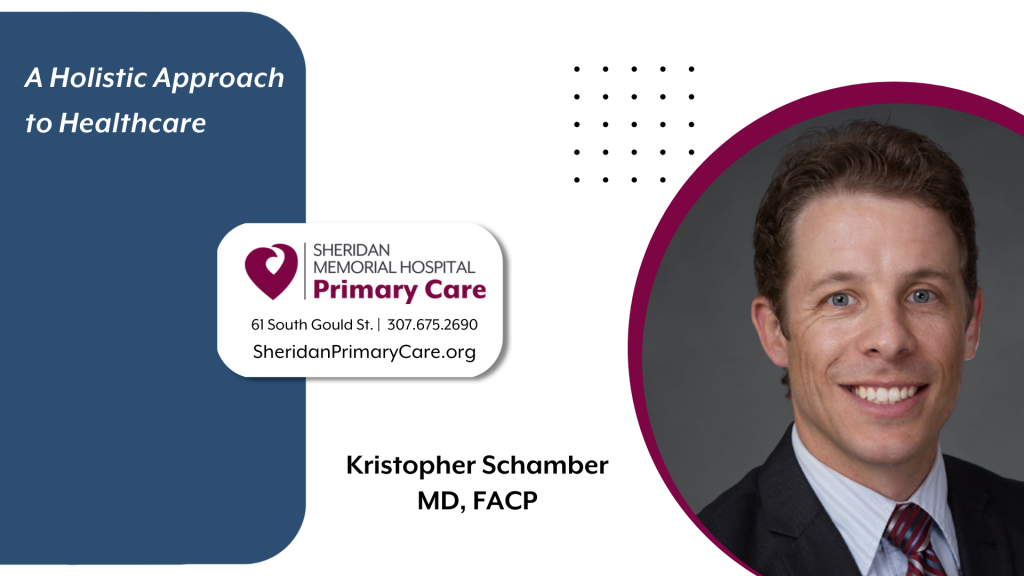
Kristopher Schamber, MD FACP, is a physician with Sheridan Memorial Hospital Internal Medicine and medical director of the SMH Hospice Program. 

and

Cindy Baker is the social worker and bereavement counselor for the SMH Hospice Program and owns a wellness studio where she teaches Ayurveda and yoga.

The holidays can be a joyful time, filled with laughter, fun, and togetherness.  However, the holidays can bring despair to those who have lost loved ones around the same time, are alone, suffering from chronic mental health disorders, struggling with money or illness, and many other situations.

First and foremost, depression is a real disease, just like high blood pressure, diabetes, or any other medical illness.  Depression is not a weakness.

One can experience a short bout of depression or develop new or worsening clinical depression.  

It is important for us all to recognize the symptoms of depression in ourselves and others.  Admittedly, it is often easier for others to see one’s depression.  Depression is more than simply a down or depressed mood.  There are often physical or cognitive symptoms as well, and can include: hopelessness; feeling bad about yourself – or that you are a failure or have let yourself or your family down; little interest or pleasure in doing things; trouble falling or staying asleep, or sleeping too much; feeling tired or having low energy; poor appetite or overeating; trouble concentrating; lack of attention; moving or speaking so slowly that other people noticed; and being forgetful.  

If you are experiencing depression, whether it just came up or is long-standing, be sure to seek out help.   In general, treatment consists of counseling with a licensed professional, medications, or a combination of the two.  Medications are typically reserved for more severe or longer-lasting cases. And medications do not take effect immediately, and in fact, can take many weeks or months for effect.  Counseling, or therapy as it may be called, may have a more immediate effect and can be used when a difficult occasion such as a holiday, anniversary of a death or significant trauma, or similar event may come up for a short period of time.  

If a holiday or anniversary is approaching, it can be helpful to plan something to do on that day to commemorate, acknowledge it or even distract.  It could be something familiar or entirely different, such as planning a hike, planting a tree, lighting a candle, journaling, spending time with a friend who understands, or even scheduling an extra appointment with your therapist. Be sure to practice self-care, making a point to do the things that bring you joy or relieve stress:  take a walk, exercise, call your family and friends, connect with an old friend, or do other activities.

Some people may feel so depressed and helpless that they believe the only way out is to take their own life.  Be sure to tell love-ones or close friends how you feel so they can help support you through the difficult time. Be as honest as you can about how you are feeling, even if suicidal.  This should include a safety plan so that you and your close confidants know what to do if your depression is severe enough that you are considering ending your life.  A safety plan should include consideration of who you call first.  This can include 911, the Wyoming Suicide Prevention Hotline, your primary doctor, the ER, or others.  Ideally, this should include at least one emergency service (i.e., the ER) and a close confidant who knows you and your illness well, one who can stay with you until emergency services arrive, and who can tell your story if you are unable to do so.

If you are supporting someone with depression, your main job is to support and not necessarily heal.  You should recognize that what they are feeling is real and let them know you understand. Our natural instinct is to fix, and often someone who is depressed instead needs a friend who can be a listening presence for their emotions and thoughts to be heard and validated. Make sure you have a clear understanding of their safety plan and confirm that you are a support for them.

Congratulations to 4th grader Acey Stalick from Big Horn Elementary, 4th grader Mara Trentacosti from Highland Park Elementary and 5th grader Ashland Schneider from Meadowlark Elementary. They are the Sheridan Memorial Hospital Christmas Card Art Contest winners and will have their spectacular artwork showcased on the 2021 hospital Christmas card.

Sheridan Memorial Hospital would like to thank the 62 talented area 3rd, 4th, and 5th graders who submitted their artwork this year. Students were asked to create a design that captured the theme “Showing Kindness This Christmas.”

All of the entries are on display now through the holiday season in the windows of the hospital’s downtown offices at 61 South Gould Street. Come see all of the incredible artistry and imagination in person for yourselves or view in the video below.

By: Ann Aksamit, BSN, RN, CHPN — Home Care and Hospice Manager

Providing care for patients in their own home, has shown to be a very effective way to treat many ailments and post-operative situations. In the last year, Sheridan Memorial Hospital (SMH) Home Care clinicians took care of 245 patients making 4,865 visits to patient homes with great results.

Each November, we celebrate the millions of nurses, home care aides, therapists, social workers, chaplains and volunteers who make a remarkable difference for the patients and families they serve. These heroic caregivers play a central role in our health care system and in homes across the nation.

To recognize their efforts, we call upon all Americans to commemorate the power of caring, both in the home and in their local communities, and join with SMH Homecare and Hospice and the National Association for Home Care & Hospice (NAHC) by celebrating November as National Home Care and Hospice Month.

I can’t say enough about our caring, dedicated home care staff – they do so much for our patients – going above and beyond every day.  During the past 20 months they have tirelessy traveled throughout our community caring for people in their homes.

Home care is the preferred patient setting for health care since the home is the best setting for providing health care to increasing numbers of patients. Not only can care be provided less expensively in the home, but evidence also suggests that home care is a key step toward achieving optimal health outcomes for many patients.  Studies show that patients who have home health visits have improved quality of care.  These visits can also reduce hospitalizations due to chronic conditions or adverse events.

Home Care services are high-tech and the workers are very skilled.  An added benefit is that the home tends to be a more relaxed, less restricted environment where patients can feel comfortable and more in control.

Home Care Services through SMH

SMH Home Care provides care tailored to an individual’s needs.

Some of our skilled services include-

  • Skilled Nursing and Home Health Aide services:
    Pain and symptom management, medication management, IV infusion therapy, central line care, wound and ostomy care, observation and assessment of the patients’ condition, training and education for patients and their families.
  • Physical and Occupational Therapy:
    Assisting home care patients to attain their maximum level of safety and independence. Therapy can follow orthopedic surgery or be done after an acute, chronic illness when a person becomes weak or experiences a decline in functional status
  • Speech Therapy:
    For patients with speech and swallowing problems and cognitive therapy, this can be follow-up after a stroke or other brain injury.

To receive SMH Home care, individuals must meet certain eligibility requirements to qualify for insurance coverage. Patients may also elect to private pay for Home Care services. A person’s eligibility and individual circumstances will be assessed to determine the appropriate level of home care services.

Home care services may be requested by: physicians and healthcare providers, patients, family members, friends, representatives of other healthcare service providers, as well as hospital discharge planners and case managers.

Home care services are often covered by Medicare, Medicaid, and Commercial Insurance while the patient qualifies for the skilled service.

Hospice Services through SMH

When a person has a serious illness or disease and is nearing the end of life’s journey, hospice care can be the support needed. Hospice care focuses on assuring the quality of life that remains rather than providing treatment to prolong life.

When treatment goals change from cure to relief of symptoms, SMH Hospice is here to take care of you and your family. If the time comes for you or your loved one to need hospice services, you can expect a high level of compassion from our staff and volunteers. The services we offer include:

  • Basic medical care with a focus on pain and symptom control
  • Assistance with medication, medical supplies & equipment as needed and appropriate
  • Support with the psychological, emotional, and spiritual end-of-life aspects
  • A break (respite care) for caregivers, family, and others providing care
  • Bereavement support & counseling

For more information about these services, go to our website or call our Home Care and Hospice team at
307-672-1083.