

Welcome to Sheridan Memorial Hospital
1401 West 5th St. Sheridan, WY — 307.672.1000

Health and Wellness

The Sheridan Memorial Hospital (SMH) Foundation

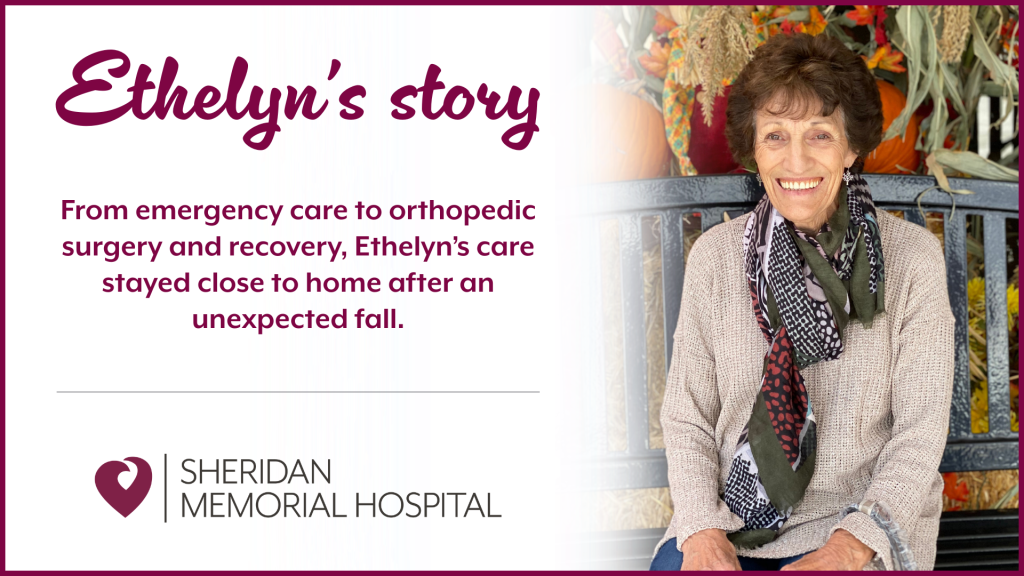
The 2025 holiday season took an unexpected turn for Ethelyn St. John when a simple walk into a friend’s home outside of Dayton ended in a serious injury. As she and two friends headed inside for Thanksgiving dinner, one friend lost her balance and fell backward, knocking St. John to the ground.

Family quickly gathered to help, initially focusing on St. John’s friend, who was bleeding from a head wound. When a friend asked St. John if she could stand, she realized she couldn’t.

“It didn’t really hurt at that moment,” she recalled. “It just felt like there was nothing there.”

Soon, both women were on their way to Sheridan Memorial Hospital’s Emergency Department. While her friend’s head injury initially drew attention, an X-ray quickly revealed the seriousness of St. John’s injury: a shattered hip.

That diagnosis set in motion a swift and efficient chain of events.

“They admitted me and got me into a hospital room right away,” St. John explained. “I saw Dr. Brian Laman quickly, and my surgery was scheduled for the next day.”

St. John was able to stay in Sheridan for her entire surgery and recovery process, surrounded by familiar faces and supported by her family in town, as well as her children, who flew in from Arizona and Oklahoma to be by her side.

Dr. Laman, an orthopedic surgeon at Sheridan Orthopedic Associates, performed St. John’s hip replacement.

“He did a good job,” St. John shared. “He got me in and out pretty fast, and he was so positive about it. He acted like I’d get up off the operating table, get in my car and head home.”

After surgery, St. John moved to Sheridan Memorial Hospital’s Transitional Care Unit (TCU), where she focused on recovery and rehabilitation through occupational and physical therapy with Lexie Prosinski, MOTR/L, and Tiffany Sutton, DPT, PT. During her therapy sessions, St. John practiced walking up and down stairs, built confidence in her movement by walking the hallway while tossing a ball back and forth with her caregivers and learned how to safely get in and out of a car.

That final milestone came full circle for St. John, who volunteers with the hospital’s Auxiliary, which helped fund the car simulator she used during therapy.

St. John’s confidence in her care was reinforced by long-standing relationships at Sheridan Memorial Hospital. During her stay, her primary care provider—Internal Medicine physician Dr. Hannah Hall—stopped by while on duty, and hospital staff members St. John recognized from her 17 years of volunteering checked in on her.

Despite receiving care across multiple service lines, St. John said the transition between departments felt smooth and well-coordinated.

“It didn’t feel strange at all,” she said. “Everything felt seamless.”

Today, St. John admits she’s a bit impatient to be fully back to normal, but she’s staying active, considering chair-based exercise classes and continuing to build strength.

Despite the unexpected nature of her injury, St. John looks back on her experience with gratitude. When asked if she would recommend Dr. Laman, her answer was clear.

“Yes,” she said. “Everyone I know who’s broken a hip, he’s done their surgery. He’s busy, but he’s very kind. Very nice.”

For St. John, receiving expert orthopedic care close to home meant healing faster—and staying connected to the family and community she loves, right here in Sheridan.

When injuries interrupt your life, Sheridan Orthopedics is here to help you get back on your feet. Learn more at sheridanortho.com.

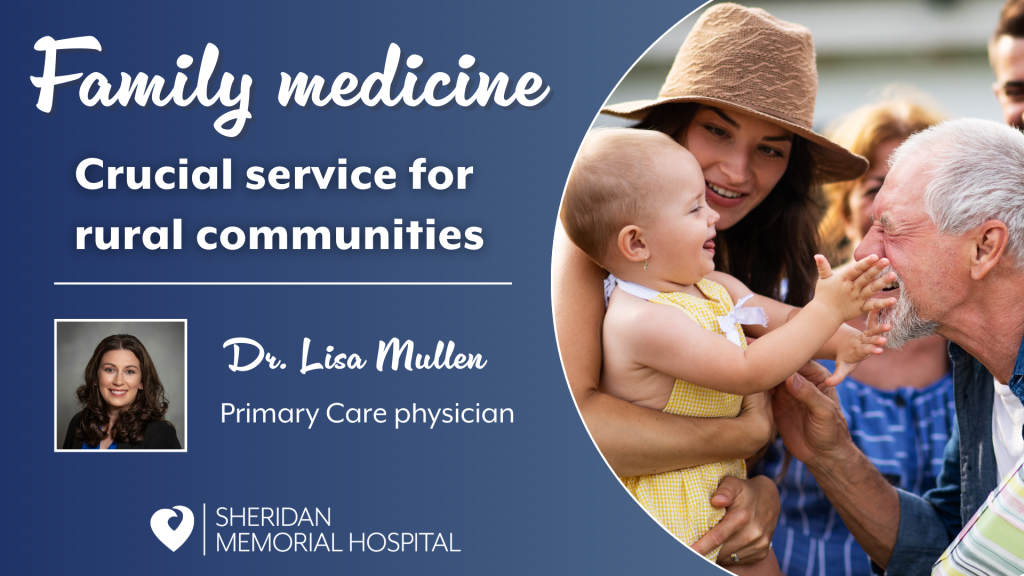
Family medicine delivers comprehensive, lifelong care by treating patients of all ages and addressing a wide range of health needs. Rather than focusing on a single condition or stage of life, family medicine physicians care for individuals and families over time, often serving as a patient’s first — and most consistent — connection to healthcare. At Sheridan Memorial Hospital, family medicine anchors care for many patients across the region.

Family medicine physicians complete medical school followed by three years of residency training dedicated specifically to family medicine. That training equips them to care for children, adults and older adults, and to address preventive care for all ages, women’s health, pediatric care, mental health, chronic disease management and acute illness or injury. This broad preparation allows family medicine physicians to adapt to patients’ changing needs throughout life.

“Family medicine lets us care for the whole person, not just a single problem,” said Dr. Lisa Mullen, a family medicine physician with Sheridan Memorial Hospital Primary Care. Mullen joined the SMH team in 2025 after practicing medicine in Johnson County for several years. “We often care for multiple generations within the same family, which helps us understand health in a much broader context.”

Family medicine is one type of primary care, alongside internal medicine and pediatrics. Pediatricians focus on children, and internists care for adults. Family medicine bridges those specialties by caring for patients from birth through older adulthood. As a result, many families choose one provider who can care for parents and children alike, creating continuity that strengthens trust and communication.

In rural communities, Mullen says, family medicine plays an especially important role. Limited access to specialists in some areas means family medicine physicians often evaluate symptoms, manage ongoing conditions and determine when specialized care is necessary. They also help patients navigate referrals, travel and follow-up care, reducing barriers that can delay treatment.

“In rural healthcare, family medicine physicians rely on broad training and strong clinical judgment,” Mullen said. “We help patients understand their options and guide them to the right level of care when it’s needed.”

Preventive care forms the foundation of family medicine. Family physicians actively promote wellness through cancer screenings, immunizations, routine checkups and conversations about lifestyle, nutrition and physical activity. Because they care for patients over many years, they can recognize patterns, identify risks early and adjust recommendations as patients age.

Family medicine also emphasizes relationship-based care. Long-term relationships encourage honest conversations and shared decision-making. Rather than addressing every concern in a single visit, family physicians build care plans over time, allowing patients to move at a pace that feels manageable and informed.

“Healthcare works best when patients feel heard and supported,” Mullen said. “Family medicine gives us the time and continuity to build that trust.”

Caring for entire families allows family medicine physicians to consider genetics, shared environments and life circumstances that influence health. This perspective strengthens prevention efforts and helps physicians advocate for patients within an increasingly complex healthcare system.

At Sheridan Memorial Hospital, family medicine physicians provide preventive care, acute visits for illness or injury, chronic disease management, pediatric services and women’s health care. Providers at Sheridan Memorial Hospital’s Primary Care clinic, including Dr. Mullen, are currently accepting new patients and welcome individuals and families looking for a trusted place to begin — and continue — their healthcare journey.

To learn more about Dr. Lisa Mullen, visit sheridanhospital.org or click below to listen to her recent appearance on Sheridan Media’s Public Pulse.

At Sheridan Memorial Hospital, serving the community with excellent, patient-centered care often goes far beyond medications, appointments and surgeries. It’s made possible through mentorship, teamwork and generations of shared experience among staff.

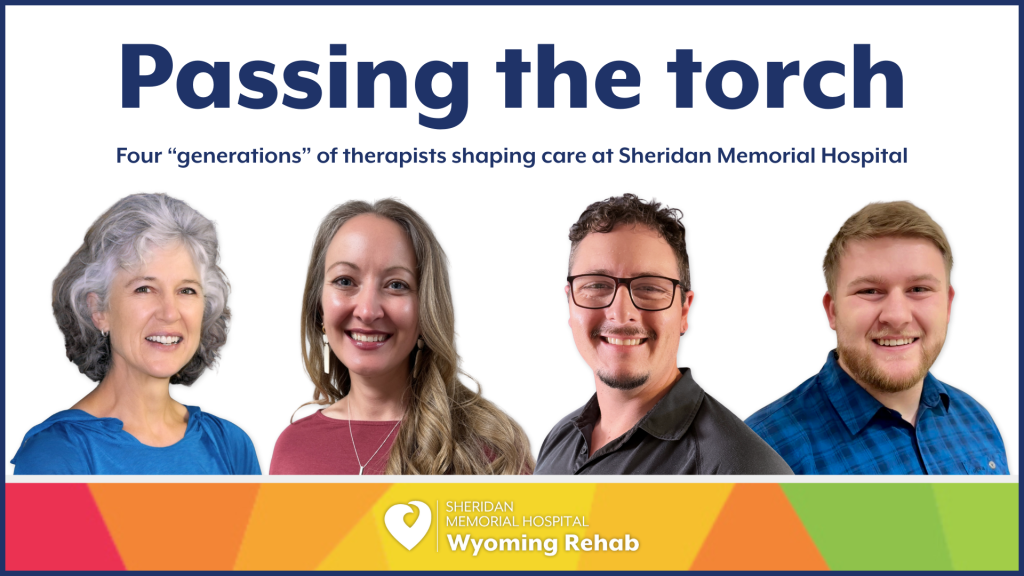
Within the Wyoming Rehab team, four “generations” of therapists—Lisa Mohatt, MS, PT, CWS, CLT; Tiffany Sutton, DPT, PT; Justin Bridger, DPT, PT, CSCS; and Dawson Eppe, PTA—represent more than two decades of learning, teaching and passing the torch.

All four are Sheridan natives. Each left to pursue their education and, in time, returned home—bringing with them not only skills and knowledge, but also a commitment to mentorship that continues to shape the culture and expertise of Sheridan Memorial Hospital’s outpatient and inpatient rehabilitation teams.

“We’ve been teachers for each other, and now we’re colleagues,” said Sutton, who has been a physical therapist on the hospital’s Transitional Care Unit (TCU) for the past eight years. “It’s kind of a weird coincidence.”

The mentorship story begins with Mohatt, a physical therapist at Wyoming Rehab’s outpatient clinic, who mentored Sutton when she was a student therapist. Years later, Sutton mentored Bridger, helping him log observation hours and writing a recommendation letter for his application to physical therapy school. Bridger then stepped into that same role for Eppe, mentoring him through his final clinical rotation as he earned his physical therapist assistant license from Laramie County Community College.

Today, Sutton and Eppe work side by side on the TCU floor, while Bridger and Mohatt support patients in Wyoming Rehab’s outpatient clinic—sometimes even treating those who have graduated from Sutton and Eppe’s care.

“It’s been super fun to connect with Tiffany as a colleague and have conversations with her as an equal,” shared Bridger, who has been with Wyoming Rehab since July 2024. “It’s pretty much unheard of to have four generations of therapists in the same organization. I can see how Lisa influenced Tiffany, how Tiffany influenced me and now how I’ve influenced Dawson.”

Each mentor shaped their successor in different ways. Mohatt exposed Sutton to every corner of the field—from outpatient rehabilitation to home health, wound care, and even aquatics. Bridger recalled how Sutton taught him to maintain high standards and recognize that patients are capable of far more than they often realize. When Bridger mentored Eppe, he emphasized adaptability and compassion.

“One of the things Justin hammered into me was that you have to be able to go from rehabbing a hip to, within 30 seconds, switching to a neurological mindset to rehab a stroke,” reflected Eppe, a physical therapist assistant on the TCU floor for the past three years. “His other big lesson was to lead with compassion. You can go from working with a patient having the best day of their life to another having the worst day of their life, and you have to be able to regulate your emotions and meet each patient where they’re at.”

Bridger remembered his time mentoring Eppe fondly, explaining that his goal was to help Eppe see every patient as a unique individual.

“Dawson was able to capture that lesson and make it his own,” Bridger said. “I’m sure he doesn’t treat every patient exactly the way I do—but that’s the point. Take a lesson and make it your own.”

That culture of sharing knowledge and making it one’s own goes both ways. When Eppe joked that he’s still waiting for the day Sutton or Bridger tell him they’ve used one of his exercises, Sutton laughed.

“Are you kidding?” she replied. “I use your hip hinge trick all the time!”

Bridger added that he’s learned something from every student, and that many times, it isn’t clinical knowledge he takes away from mentoring, but insight into different ways to approach and solve problems.

Mohatt agreed, noting that mentorship benefits both teacher and student.

“Mentoring has shown me that each generation has so much to offer, and how important it is to encourage that continued growth so physical therapists can keep helping people more effectively,” Mohatt explained.

The culture of mentorship extends beyond the workplace. Eppe is currently helping Sutton’s daughter recover following hip surgery—a full-circle moment for them both.

And as Eppe begins mentoring his own students, the legacy continues.

“It’s very humbling when you’re asked to teach the next generation,” he said. “When I’m teaching someone, that’s when I feel like I’m at the top of my game, because I have to keep up with the new things students are learning in school, while also showing them what the standard is. It also reminds you how awesome your job is.”

Sutton agreed, adding that growth and curiosity are key to lasting success in the field.

“The moment you think you know it all is when it’s time to hang up your hat,” she said.

Mohatt added that physical therapists play a vital role in a patient’s overall healthcare journey.

“It’s important for physical therapists to truly care about people and their health,” she said. “We need to understand our role in helping patients get better—not just physically, but mentally, as well.”

Together, this multi-generational approach to mentorship and healthcare creates more than professional growth. It fosters a positive, collaborative work environment and strengthens patient care. When knowledge, philosophy and compassion are intentionally passed from one therapist to the next, patients benefit from consistent, thoughtful care throughout their healthcare journey.

“Through community and mentorship, we become more than individuals,” Bridger said. “Through mentorship, we learn our own biases and reframe our thinking, which not only helps the next generation, but also improves care for our patients.”

Learn more about the exceptional care provided through Wyoming Rehab and the TCU at sheridanhospital.org/medical-services/rehabilitation-services/ and sheridanhospital.org/medical-services/transitional-care/.

Are you ready to take the next step in your career and join a workplace that values mentorship, growth and community? Visit sheridanhospital.org/about-us/careers/ to explore current job opportunities and apply today.

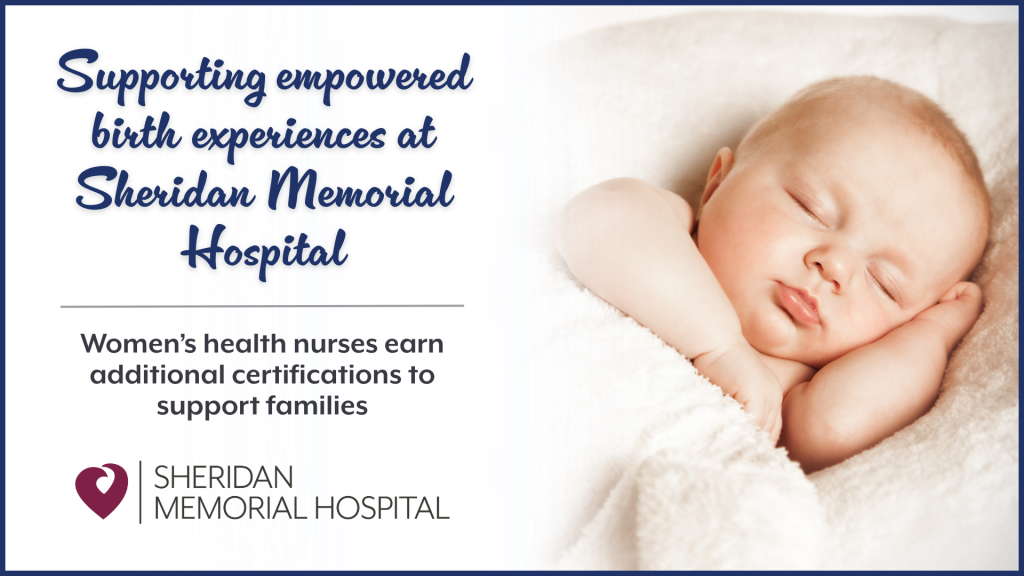
For decades, Sheridan Memorial Hospital’s Women’s Health nurses have guided families as they welcome new babies. Now, two of those nurses—Jeanna Duncan, MSN, RNC-OB, SpBCBP, and Cassie Aust, RN, CLC, SpBCBP—bring an added level of expertise to labor and delivery as Sheridan Memorial Hospital’s first Certified Birth Professionals.

Together, Duncan and Aust represent more than 40 years of combined experience in Sheridan Memorial Hospital’s Women’s Health and Labor and Delivery department. Duncan joined Sheridan Memorial Hospital in 2001 after working in hospitals in Riverton and Lander. Aust began as a certified nursing assistant in the Women’s Health department in 2009 and has spent the last 16 years caring for laboring mothers while growing into her nursing career.

Their decision to become Certified Birth Professionals stemmed from a shared desire to strengthen their skills and better support both their patients and fellow team members.

“Women are so powerful, and sometimes we forget what our bodies are capable of,” Aust said. “When we work with the pregnant body and certain positions, balance, and relaxation, it helps support the labor process. I’m passionate about helping women feel strong and empowered during birth.”

Sheridan Memorial Hospital’s manager of Women’s Health and Pediatrics, Kim George, BSN, RN, RNC-OB, praised Duncan and Aust’s motivation to pursue certification, noting that it reflects a broader commitment to excellence within the department.

“I am so proud of Jeanna and Cassie for pursuing certification as birth professionals,” George said. “Their dedication to continuing education strengthens our labor and delivery services and reinforces our hospital’s commitment to excellence. Ongoing professional development allows our nursing team to grow as leaders, mentors and advocates for our patients, ensuring we deliver safe, compassionate and high-quality care.”

The certification, earned through Spinning Babies’ intensive program, is designed to facilitate empowered birth experiences by focusing on physiologic birth and teaching evidence-based techniques that support balance, positioning and movement during labor. Rather than viewing labor challenges as problems to be fixed, the Spinning Babies approach helps create space and alignment in the body to support the natural process of birth.

“It’s not that the baby is in the wrong position,” Aust explained. “It’s about helping them find their way into the world by working with the mother’s body.”

The certification process included extensive online coursework, followed by a four-day, hands-on training in Portland, Oregon, alongside midwives, doulas and nurses from across the country.

“It was fun to see everyone’s knowledge and experience all in one room,” Duncan recalled. “Everyone brought different experiences, and we learned so much from each other.”

Since earning their certification, both nurses have already utilized their new skills at the bedside and shared techniques with coworkers.

“It’s fun because everyone’s excited about it,” Aust said. “We troubleshoot together. We try different things.”

Sometimes, those small adjustments make a big difference.

“It’s really simple stuff,” Duncan added. “But it can prevent hours of labor interventions.”

Aust shared an example of a recent patient whose labor had stalled, leaving the patient feeling increasingly anxious. To help, Aust guided the patient through a side-lying release—a Spinning Babies technique designed to address pelvic imbalance and create space for the baby to move into a more optimal position, which can contribute to more efficient labor progression.

Aust also used a technique known as “The Jiggle,” in which a caregiver gently applies small, rhythmic movements to the patient’s lower back, hips or pelvis. This technique is used to help improve balance and relaxation in the pregnant body.

Duncan and Aust are the first Certified Birth Professionals at Sheridan Memorial Hospital.

“It’s something we’re really proud of,” Aust said. “There’s a movement toward helping women have the birth experience they’re hoping for in a way that feels natural and supported.”

Beyond physical techniques, the certification places strong emphasis on informed consent and patient autonomy.

“This didn’t just teach positioning,” Duncan said. “It reinforced that this is the mother’s body and her birth experience. We’re here to support her—not make decisions for her.”

For Aust, an empowered birth experience means ensuring mothers understand their options and feel confident in their choices.

“The training encouraged us to take the time to get informed consent and empower mothers to know that they can do this,” she said. “We’re here to guide and support them so the experience is one they ultimately feel good about.”

Duncan added that families can explore resources—such as spinningbabies.com—ahead of time, come prepared with questions and engage more deeply in their care.

For expectant families, this certification means their care team at Sheridan Memorial Hospital is committed to learning, growth and individualized, compassionate support.

“We’re excited about this,” Aust said. “We’re passionate about this work, and we will continue keep learning and be there for our patients.”

To learn more about Sheridan Memorial Hospital’s Women’s Health services, visit sheridanhospital.org/medical-services/womens-health/.

When robotic-assisted surgery was introduced at Sheridan Memorial Hospital in 2022, it represented a bold investment in the future of local healthcare. At the time, three surgeons began using a single robotic system to perform advanced minimally invasive procedures — bringing cutting-edge surgical technology closer to home for patients who previously may have needed to travel for that level of care.

Just a few years later, that investment has grown into something even more meaningful.

Today, the hospital proudly offers two state-of-the-art robotic-assisted surgical systems, led by eight specially trained surgeons across multiple specialties. This expansion reflects not only the success of the program, but also the growing demand from patients seeking the benefits of robotic-assisted surgery — right here in their own community.

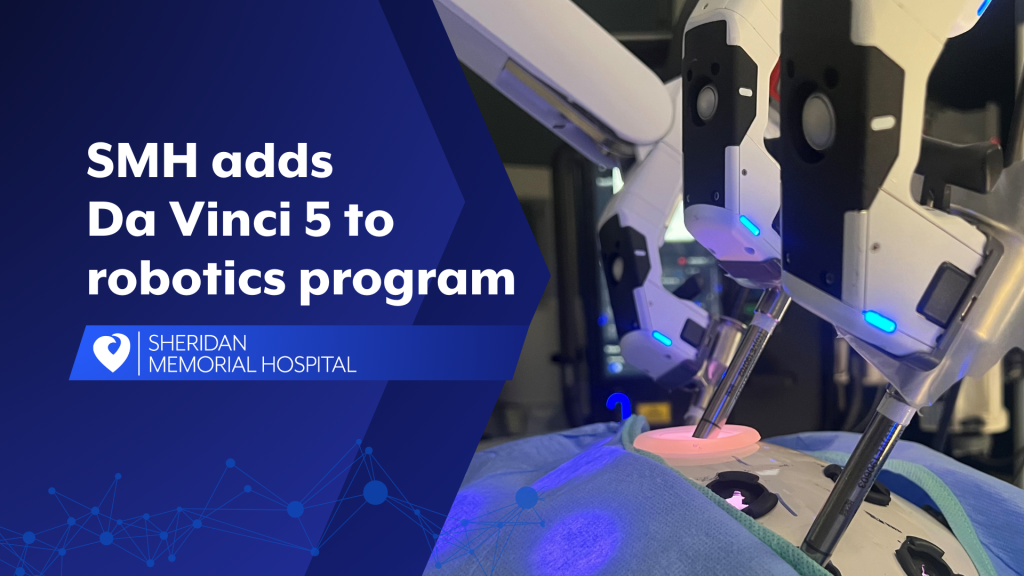
The growth was driven by both clinical outcomes and utilization. Prior to expansion, the hospital’s original robotic system — a da Vinci Xi — was being used at nearly 80 percent capacity, a clear signal that the program had outgrown its initial footprint. In response, hospital leadership made a strategic decision: upgrade the original system to the newest da Vinci 5 platform and add a second robotic system to better serve patients and healthcare providers alike.

Robotic-assisted surgery allows surgeons to perform complex procedures through small incisions using enhanced visualization, precision instruments and advanced control. The da Vinci 5 system offers improved ergonomics, refined instrumentation and advanced technology designed to support surgeon performance while maintaining a strong focus on patient safety.

At SMH, robotic-assisted systems are now used for a wide range of procedures, including general surgery, urologic surgery, gynecologic procedures, colorectal surgery and other minimally invasive interventions. These systems support procedures such as hernia repairs, gallbladder removal and hysterectomy, as well as bariatric and urologic procedures — all of which benefit from precision and minimally invasive approaches.

For patients, the advantages are significant. Robotic-assisted surgery often means smaller incisions, less blood loss, reduced pain, shorter hospital stays and faster recovery times. Many patients are able to return to normal activities sooner, with fewer complications and improved overall surgical experiences. Just as important, patients can access this level of advanced care without leaving their community, close to family, support systems and trusted providers.

For surgeons, the technology enhances dexterity and visualization, translating to more precise movements and improved access in complex anatomical areas. The result is a collaborative environment where technology supports clinical expertise — never replacing it, but elevating it.

The expansion of robotic-assisted surgery is more than a technology upgrade; it is a reflection of the hospital’s ongoing commitment to delivering excellent, patient-centered care. By investing in advanced surgical systems and expanding the team of trained surgeons, the hospital continues to meet the evolving needs of the community while ensuring patients receive care that is both modern and compassionate.

What began in 2022 with three surgeons and one system has become a thriving surgical program—one that demonstrates how innovation, when paired with community values, can transform healthcare close to home.

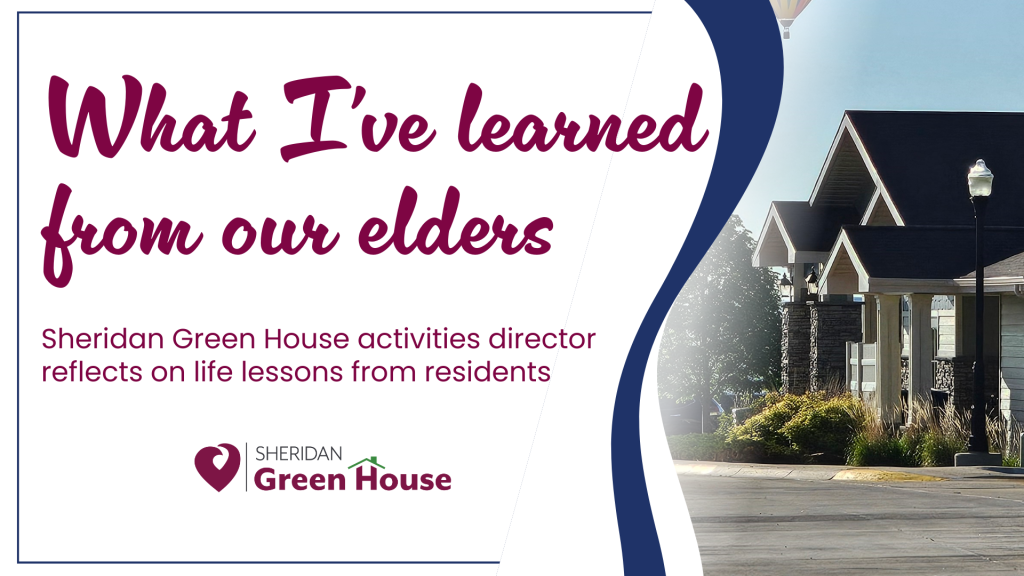
Kim DeGraw is the activities director at Sheridan Green House, a long-term care facility operated by Sheridan Memorial Hospital.

Before beginning work as an activities director at Sheridan Green House, I held the same assumptions many people do. Growing older means fewer choices and less freedom. Our bodies protest and our minds tire, so aging must mean a gradual stepping back from the life you once knew. What the elders I work with have taught me, though, is that none of that has to be true.

Aging is about redefining your purpose, not abandoning it.

The elders I see day in and day out want to contribute. They want to set the table, rinse a dish, fold laundry, share a story, teach a card game or offer advice. These may seem like small tasks, but they matter. Purpose doesn’t disappear with age — it just looks a little different.

Elders have also shown me independence is a spectrum. Freedom maybe used to feel like driving on back roads with the windows down, but now it centers around decisions like when to wake up, what to eat, where to sit or how to spend the afternoon. Often elders have more freedom to spend their time how they choose than younger generations in the throes of raising families and working.

While I often remind elders that movement matters, nobody is expecting a marathon. Activity can mean walking, hallway bowling or simply getting up to join a conversation. Staying active, it turns out, is less about the activity itself and more about engagement with the world around you.

This is why mental stimulation is just as important. One of my favorite discoveries has been how powerful curiosity remains later in life. When we explore other cultures, listen to unfamiliar music or talk about places someone has never been, something sparks. Learning doesn’t have an expiration date.

Social connection may be the most powerful lesson of all. Nearly every day, I see meals transform as conversations help bridge the past and present. A single story recalls memories in others and creates a sense of belonging among friends. While so many of us eat meals while scrolling our phones or working at our desks, elders take the time to connect.

There is no denying, though, that aging brings change and often loss. Loss of mobility, loss of memory, loss of loved ones. But elders have taught me about resilience, and shown how much better they adapt when supported. Humor helps, too.

Perhaps the most surprising lesson has come from watching generations connect. Children sitting with elders, reading books, listening to stories, asking questions — these moments matter more than most. Children remind elders that their lives, their memories and their voices carry weight. And elders teach younger generations empathy, patience and perspective.

While these are all important lessons – about independence, activity, social connection, resilience and relevance – the primary thing elders have taught me is that life doesn’t narrow with age unless we let it. Connection, curiosity and joy are available at every stage of life — if we choose to make space for them.

That’s a lesson worth carrying with us, no matter our age.

Hear more from the team at Sheridan Green House. The team appeared on Sheridan Media’s Public Pulse in December. Listen here:

Written by Josie Fagerland, BSN, RN, RNC, a nurse on the Women’s Health and Pediatric Units at Sheridan Memorial Hospital.

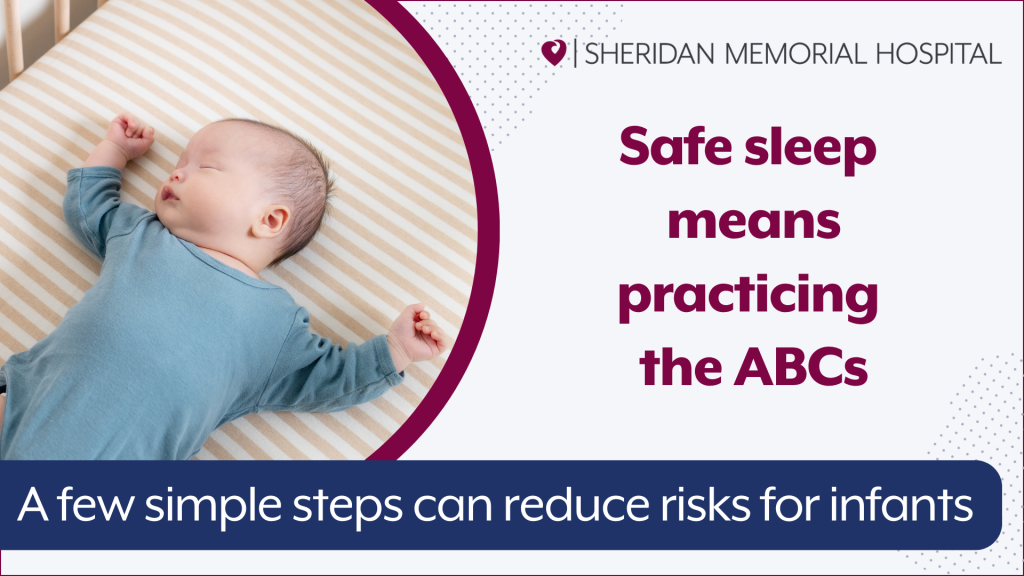
Parents, grandparents, babysitters and caregivers play a vital role in infant safety. The team at Sheridan Memorial Hospital encourages families to carry the same evidence-based habits home to protect their baby every day.

For us, this means following the ABCs (Alone, Back, Crib):

  • Alone: Your baby should sleep without pillows, blankets, toys or bumpers in their sleep space.
  • Back: Always place your baby on their back for naps and nighttime sleep.
  • Crib: Use a firm sleep surface with a fitted sheet in your child’s crib.

Once a baby can roll from back to front independently, they may remain in the position they choose —but they still need a safe, uncluttered sleep space.

 Creating a safe sleep environment

A few simple steps can dramatically reduce risks for infants while they sleep.

  • Use a firm mattress with no gaps.
  • Keep the room smoke-free.
  • Maintain a comfortable temperature — not too warm.
  • Use sleep sacks instead of loose blankets.
  • Offer a pacifier at sleep time if your baby accepts one.

While car seats, swings, baby carriers and slings are helpful for travel or awake time, they are not safe for routine sleep. If your baby falls asleep in one, move them to a safe sleep surface as soon as possible.

Preventing drops, falls at home

One of the most common causes of infant drops is caregiver fatigue. If you feel sleepy — during late-night feedings, for example — place your baby safely in the crib before resting. Never risk falling asleep with your baby in your arms or on a couch or chair.

  • Always sit before picking up your baby if you feel tired or unsteady.
  • Never transfer a sleepy infant between people unless both caregivers are fully alert and prepared.
  • Keep floors free of clutter, cords or tripping hazards.

Healthcare providers work through safe sleep education with parents when they are admitted for the birth of their child, throughout their stay at the hospital and again before discharge. Women’s health and pediatric healthcare providers are also available to answer questions about safe sleep practices, but infant safety is a community effort. When families, healthcare providers and caregivers work together and share safe sleep knowledge, we prevent injuries before they happen — and help every child sleep safely.

For more information on community safe sleep resources, local classes or hospital education materials, families are encouraged to contact Sheridan Memorial Hospital’s Women’s Health Department. Together, we can ensure every baby has the safest start in life.

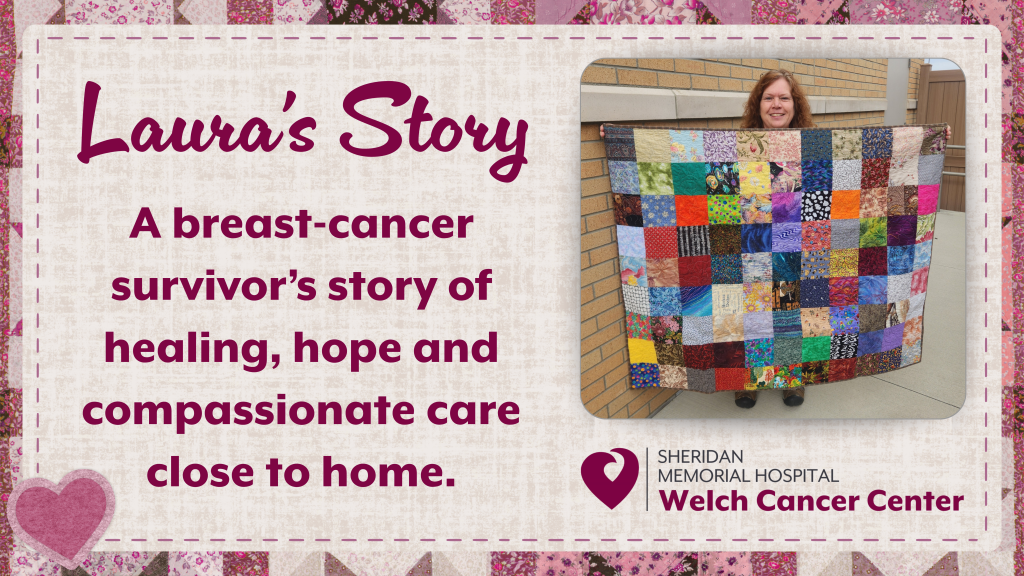
In November 2020, as the world reeled from the effects of the COVID-19 pandemic, Laura Holsinger’s life changed in a far more personal way. Just days after discovering a small, rapidly growing lump in her breast, she underwent a mammogram, ultrasound and biopsy at Sheridan Memorial Hospital. Soon after, Holsinger’s care team confirmed her worst fear: stage two breast cancer.

Up until that point, Holsinger had never faced any major health concerns.

“I’d never spent a night in the hospital or broken a bone, and my family had no history of breast cancer,” she said. “And then boom — all this craziness happened.”

Holsinger had a lumpectomy with Dr. Sara Maguire, MD, FACS, to remove the lump. After surgery, part of the tissue was sent to a lab for an Oncotype DX test — a genomic test that examines the activity of specific genes within cancer cells to estimate how aggressive the cancer might be and how likely it is to spread. Based on the test results, patients receive a score that helps determine whether the potential benefits of chemotherapy outweigh its side effects. For women younger than 50, a score of 25 or lower suggests a low risk of recurrence, meaning chemotherapy is unlikely to provide significant benefit. For women older than 50, a score of 20 or lower indicates the same.

Holsinger’s score was 67.

“Dr. Maguire said it was the highest score she’d seen since joining the hospital,” she recalled.

Holsinger started chemotherapy at the Welch Cancer Center on Feb. 1, 2021. Due to COVID-19 restrictions at the time, patients were not allowed to have visitors or loved ones accompany them to appointments.

“I drove myself to and from appointments,” Holsinger explained. “I was grateful I could get treatment here in town, so then I didn’t have to drive out of town by myself while I wasn’t feeling well.”

Although Holsinger felt grateful to receive care close to home, the experience proved far from easy.

“The only appointment I could bring my husband to was the one where we decided my course of treatment,” Holsinger said. “I can’t tell you how terrified I was the first time I went in for chemo, being surrounded by nurses in what looked like hazmat suits because the medicine was so strong, and realizing they were about to put it in my body.”

Compassionate care team

Despite her initial fear, behind those layers of protective equipment were compassionate caregivers ready to comfort and reassure her every step of the way.

“I appreciate the nurses at the Welch Cancer Center so much,” Holsinger reflected, tears welling in her eyes. “I can’t even describe how comfortable they made me feel, especially knowing I was there alone. They knew I was going through probably the most awful period of my life up to that point, and they were focused on making it the best experience they could despite everything. And they did a really, really good job at that.”

Providing comfort during a patient’s most vulnerable moments is something the nurses at the Welch Cancer Center understand deeply. One nurse reflected on how meaningful it is to support patients through those first, often overwhelming days of treatment.

“I’ve always enjoyed being a patient’s nurse on their first infusion day, so I can give them a sense of security and genuine compassion,” said Lori Karajanis, RN, Oncology Nurse Navigator at the Welch Cancer Center. “It’s what we would all want if it were us in that chair. That is the best part of nursing, in my opinion.”

That compassion made a lasting impression on Holsinger. One of Holsinger’s favorite memories happened on her very first day of treatment. A nurse asked what her favorite colors were, and Holsinger said she preferred “true” colors—more natural, earthy tones.

The nurse disappeared for a few minutes and returned with several other nurses, each holding a handmade quilt donated by a local quilting club. Holsinger chose the quilt that matched the earthy colors she described earlier, and the nurses laughed. It turned out that the nurse who asked about her favorite colors had a knack for picking patients’ favorite blankets—and, as the others joked, she always “won.”

Smiling at the memory, Holsinger added, “That was really nice. Really fun. I didn’t tattle on her. I let her have her glory.”

Her appreciation extended well beyond that single moment and beyond the nursing staff. Holsinger spoke highly of the entire Welch Cancer Center team and the way each person contributed to her care.

“The physicians were always reasonable,” she said. “You’re not just a number to them. You can express your concerns to the providers at the Welch Cancer Center and they listen to you. They talk it out with you and reason on it. Dr. Megan Ratterman, DO, was very good at that. Even over the phone, her voice is so caring and concerned. It’s like talking with a family member.”

That sense of compassion is no accident. It’s woven into the culture of the Welch Cancer Center—something in which the team takes immense pride. Welch Cancer Center Manager Megan Ripley, RN, OCN, explained how deeply teamwork and empathy shape the patient experience.

“Our team demonstrates exceptional compassion for patient-centered care, and teamwork is at the heart of everything we do,” she said. “Patients can truly feel the positive impact of a cohesive and positive work environment when they receive care in our facility.”

Treatment & path forward

Holsinger received chemotherapy from early February through the end of April 2021, followed by 20 rounds of radiation throughout May. Through it all, she worked hard to stay positive.

“My family was terrified,” she admitted. “I was terrified, but I tried really, really hard the whole time to stay positive, because I truly believe the mind can help the body heal.”

Now, five years after her diagnosis and recovery, Holsinger still faces moments of uncertainty. A recent blood test and mammogram have raised concerns that she and her care team continue to monitor closely. Yet even as she faces these challenges, Holsinger does so with remarkable resilience.

“I’m not trying to be paranoid, just proactive,” she said. “And if I have to go through it again, I’m glad I’m here and can go back to the Welch Cancer Center, because I trust them completely. It’s convenient that they’re right here in town, and they’re the best people I know for the job.”

Today, Holsinger is part of Sheridan Memorial Hospital’s Environmental Services and Laundry teams. Recently, she had the opportunity to clean the Welch Cancer Center for the first time since her treatment.

Inspired by the compassion she experienced firsthand at the Welch Cancer Center, Holsinger now gives back by donating a portion of her paycheck to support care there as an Employee Partner of the Sheridan Memorial Hospital Foundation.

“It’s my little way of giving back,” she said.

For Holsinger, being a cancer survivor means more than overcoming an illness. It means gaining a new perspective on life.

“This experience gave me so much empathy,” she explained. “And things aren’t as earth-shattering as they used to be, because you’ve already been through the earth-shattering part. You know you can handle everything else.”

Holsinger has also found purpose in supporting others going through similar experiences.

“I’ve sat with a friend during her first day of chemo because I know how scary it is,” she said. “I was able to encourage her and tell her, ‘You’re going to be OK. I’ve been through this, and I’m still here.’”

For those currently fighting cancer, Holsinger offered simple but powerful advice:

“Just fight, stay positive and kick cancer’s butt.”

For more information about the Welch Cancer Center, visit welchcancercenter.org or call 307.674.6022.

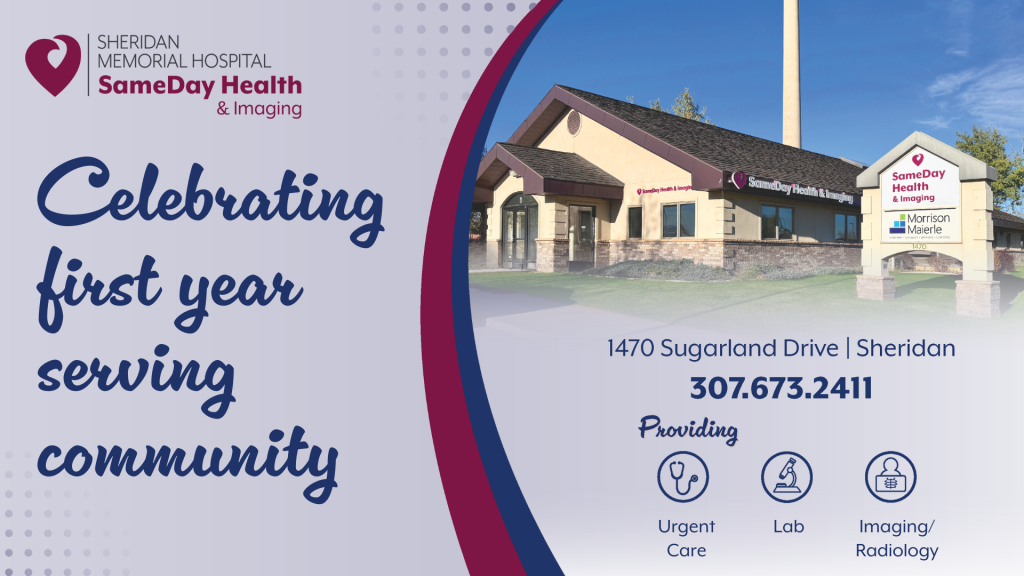
SameDay Health & Imaging will celebrate its one-year anniversary this December — marking a full year of delivering excellent, patient-centered care to the Sheridan community. Since opening its doors in December 2024, SDHI has become a trusted resource for convenient healthcare in one of the area’s busiest hubs.

A year of accessible, high-quality care

In its first year, SameDay Health & Imaging has continued to expand access to essential outpatient services, including:

  • Urgent Care for non-emergent injuries and illnesses

  • Convenient laboratory draws with minimal wait times

  • Walk-in X-Rays

  • DEXA bone density scans

  • Screening mammographies

Designed with convenience in mind, SDHI has grown into a welcoming, efficient healthcare destination where individuals and families know they can receive timely, compassionate service.

Anniversary week celebration

To thank the community for its support, the Sheridan Memorial Hospital Foundation will help host a special anniversary celebration during regular business hours Dec. 1-6, 2025.

Throughout the week:

  • Snacks will be available for patients and visitors.

  • Guests may enter daily drawings for complimentary wellness laboratory draws.

  • At the end of the week, all entries will be included in a grand-prize drawing for a DEXA scan, also generously provided by the Sheridan Memorial Hospital Foundation.

These giveaways are a small way of saying thank you to the community, which has supported SDHI over the past year.

Supporting holiday traditions, community giving

As part of its anniversary and holiday celebrations, SameDay Health & Imaging will also serve as a Toys for Tots drop-off location. Community members are invited to bring new, unwrapped toys to the clinic— conveniently located near one Sheridan’s busiest shopping hubs — helping brighten the season for children throughout the region.

SDHI is also proud to participate in the Sheridan County Chamber of Commerce Christmas Stroll. Festive decorations will help usher in the holiday season and the clinic will display a selection of artwork submitted by local students for Sheridan Memorial Hospital’s annual Christmas card art contest — giving visitors a joyful look at the creativity and talent within our community.


Looking Ahead

As SameDay Health & Imaging celebrates its first year, we are grateful for the opportunity to serve Sheridan and the surrounding communities. We look forward to many more years of providing high-quality, convenient care — seven days a week.

For more information about services or holiday activities, please visit SameDay Health & Imaging or call the clinic directly.

By Regan Palmer, manager of the financial advocate team at Sheridan Memorial Hospital.


Open enrollment is here again, and the healthcare marketplace is undergoing rapid changes.  Between comparing plans, understanding subsidies and making sure your insurance aligns with your or your family’s medical needs, the process can be confusing.

That’s where financial advocates can make a meaningful difference. As members of Sheridan Memorial Hospital’s Financial Advocate team, we have been following everything closely, so you don’t have to.

One major change has been the expiration of the enhanced tax credits that many families relied on last year. While this shift caught many off guard, there are still ongoing conversations about whether assistance could be extended. We are monitoring it closely and will keep you informed.

Despite this uncertainty, the role of financial advocates hasn’t changed. We are here to help you sort through the details and understand your options, all at no cost. Financial advocates stay current on all marketplace updates so we can explain things clearly and in a way that’s useful.

If you’re weighing premiums, trying to understand how a deductible affects your budget, or wondering if a different plan is a better fit, we can walk you through it. We will help review coverage, explain out-of-pocket costs and talk through your insurance questions. We always encourage individuals to consider the following questions:

  • What will my total yearly healthcare cost be—including premiums, deductibles, and copays?
  • Can I realistically afford the deductible if something unexpected happens?
  • How much do I typically spend on healthcare in a year, and which plan aligns with that?
  • Do I have ongoing health conditions that require predictable care?
  • Is my preferred hospital or clinic in-network?

Depending on your personal circumstances, financial advocates can also discuss what other needs you may consider when determining your health care coverage.

We know this process can be overwhelming, especially as the rules change. That’s why we’re here: to make it manageable and help you feel confident in your decisions.

If you are unsure where to start or have questions about the recent changes, reach out to our team at 307-675-4620. We are always available to help and will continue keeping an eye on everything as it develops.

There is a lot going on this year, but you don’t have to sort through it alone. We are here to support our community through the entire open enrollment season.

Learn more about our Patient Financial Advocate team here: Patient Financial Advocate – Sheridan Memorial Hospital in Sheridan, Wyoming

By Sarah Sommers, a diabetes education coordinator and outpatient dietitian with Sheridan Memorial Hospital.

Every November we recognize Diabetes Awareness Month and World Diabetes Day, which was celebrated this year Nov. 14, 2025. Diabetes occurs when the body either doesn’t produce enough insulin or cannot effectively use the insulin it makes, known as insulin resistance. Insulin is a hormone that helps blood glucose enter the body’s cells to be used for energy. When this process doesn’t work properly, glucose guilds up in the blood stream and can lead to serious health complications such as heart disease, kidney damage, nerve damage and vision problems

There are several types of Diabetes including Type 1, Type 2, Gestational Diabetes, and Prediabetes. According to the Wyoming Department of Health, about 8.1% of Wyoming adults have been diagnosed with diabetes, and this number is higher at 10.8% of adults in Sheridan County. Statewide, it is estimated that one in three adults have prediabetes, a condition in which blood glucose levels are higher than normal but not yet high enough to be diagnosed as diabetes. Without lifestyle changes, many individuals with prediabetes will develop Type 2 Diabetes later in life.

While genetic factors play a big role in the development of all kinds of diabetes, both prediabetes and diabetes are increasing in prevalence. Fortunately, much can be done to decrease the risk of these chronic diseases. Reducing the risk of developing diabetes is possible by making regular lifestyle changes. These include:

  • Exercise: The target for exercise to reduce the risk of diabetes is 150 minutes of physical activity each week. Physical activity both increases insulin sensitivity and decreases blood glucose levels.
  • Maintain a healthy weight: If you are overweight, losing just 5% of your body weight can reduce your risk of developing diabetes. For someone who weighs 200 pounds, that is only a 10-pound weight loss.
  • Choose nutritious foods: A healthy diet can make a big impact in reducing diabetes risk. Dietary strategies to reduce diabetes risk include:
  • Limiting sugar-sweetened beverages such as soda and juices
  • Including more non-starchy vegetables like leafy greens, broccoli and cucumbers
  • Cutting back on sweets and desserts
  • Consuming more healthy fats such as those found in olive oil, avocado, nuts and fatty fish
  • Reducing processed meat consumption including bacon, sausage and hot dogs.

If you are already living with diabetes, following your treatment plan including taking prescribed medication is key to maintaining glycemic control and preventing complications. You can also contact your primary care provider or a local diabetes educator for personalized guidance on nutrition, activity, self-monitoring of glucose and medication management. To learn more about diabetes visit the American Diabetes Association website at www.diabetes.org.

Ultrasound is a safe, painless imaging tool that helps providers evaluate many different organs and soft tissues throughout the body. Sheridan Memorial Hospital offers comprehensive diagnostic ultrasound services — not limited to pregnancy — to support the diagnosis and treatment of a wide range of medical concerns. Using high-frequency sound waves and no radiation, ultrasound provides clear, real-time images that help guide your care with confidence.


What Is an Ultrasound?

An ultrasound (sonogram) uses sound waves to create live images of internal organs, blood vessels and soft tissues. A small handheld device called a transducer sends sound waves into the body and captures the echoes that bounce back, creating detailed images on a screen.

Ultrasound is extremely versatile and commonly used to assess the abdomen, pelvis, thyroid, heart, blood flow and musculoskeletal system.

Why You Might Need an Ultrasound

Your provider may order an ultrasound to evaluate symptoms or conditions such as:

  • Abdominal & Digestive Concerns
    • Gallbladder disease

    • Liver abnormalities

    • Pancreatic issues

    • Kidney stones or kidney disease

    • Abdominal pain or swelling

  • Vascular (Blood Flow) Issues
    • Suspected blood clots (DVT)

    • Carotid artery disease

    • Poor circulation or varicose veins

    • Aneurysm screening or monitoring

  • Pelvic Concerns (Non-obstetric)
    • Uterine or ovarian issues

    • Pelvic pain

    • Prostate conditions

  • Thyroid or Neck Issues
    • Thyroid nodules

    • Enlarged lymph nodes

    • Salivary gland concerns

  • Musculoskeletal Injuries
    • Tendon or ligament tears

    • Soft tissue masses

    • Joint pain or swelling

  • Guidance for Procedures
    • Ultrasound is frequently used to guide biopsies, injections and other minimally invasive procedures with precision.

Because ultrasound does not use radiation, it is safe for repeated or follow-up imaging as needed.

What to Expect During Your Ultrasound

Ultrasound exams are comfortable, noninvasive and typically last 20–45 minutes, depending on the area being evaluated.

  • Before Your Exam – Preparation varies based on the type of ultrasound:
    • You may be asked to fast for abdominal exams.

    • You may be asked to drink water before pelvic imaging.

    • Your technologist will explain any specific instructions in advance.

  • During the Exam
    • A warm gel will be applied to the skin to help transmit sound waves.

    • The technologist will gently move the transducer over the area being examined.

    • You may be asked to change positions or hold your breath briefly for clearer images.

    • The process is painless, and images appear on the screen in real time.

  • After the Exam
    • You can return to normal activities immediately.

    • A radiologist will interpret the images and send a report to your provider.


Ultrasound Services at Sheridan Memorial Hospital

We offer a full range of diagnostic ultrasound capabilities, including:

  • Abdominal, renal, and hepatobiliary ultrasound

  • Vascular and carotid ultrasound

  • Thyroid and soft tissue ultrasound

  • Pelvic ultrasound (non-obstetric)

  • Musculoskeletal ultrasound

  • Ultrasound-guided procedures and biopsies

  • Emergency and inpatient ultrasound

  • Advanced technology for high-resolution imaging

Our ultrasound team includes skilled sonographers and board-certified radiologists who are dedicated to providing clear, accurate results with compassion and professionalism.

For additional information on ultrasounds offered through the Sheridan Memorial Hospital Women’s Clinic, click HERE.

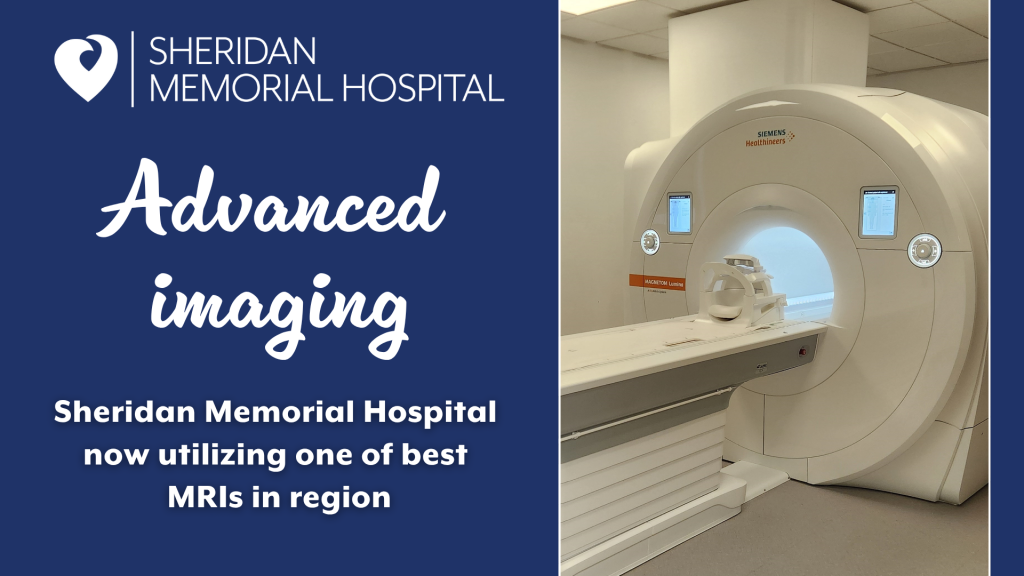
Sheridan Memorial Hospital has introduced a new 3 Tesla (3T) MRI machine, doubling the magnetic strength of its current system and bringing cutting-edge imaging capabilities typically found in large medical centers to the Sheridan community.

Sharper images, shorter scan times
Medical Imaging Manager Stephanie Williams and Radiologic Technologist and Radiology Practitioner Assistant Chris Bilyeu recently joined Sheridan Media’s Public Pulse to discuss the benefits of the new MRI. The hospital’s existing 1.5 Tesla MRI has long delivered excellent results, but the new 3T MRI produces images that are clearer and more precise — especially for brain, joint and small-structure studies.

“The images we get from this new machine are incredible,” Williams said. “When you’re looking at ligaments in a knee or small lesions in the brain, the detail is so crisp that radiologists can make more confident diagnoses.”

The 3T MRI also offers faster scan times — cutting many procedures from 30 minutes down to about 15 or 20 — which is especially beneficial for patients who experience anxiety or claustrophobia during scans.

“That extra magnetic strength pulls protons back into alignment faster,” Bilyeu explained. “That means shorter exams and a more comfortable experience for our patients.”

Expanding access to high-quality care
The addition of another MRI system allows the hospital to accommodate more patients and reduce wait times. With two scanners now operating — the new 3T MRI and the existing 1.5T — scheduling delays will be shortened from several days to as little as one or two.

“Our goal is to make imaging as accessible and seamless as possible,” Williams said. “The new MRI helps us meet growing demand while continuing to deliver the best quality of care right here at home.”

Local expertise, immediate results
Sheridan Memorial Hospital is among the few rural facilities in the region with radiologists on-site, meaning nearly all scans are read the same day. This immediate interpretation allows physicians to move quickly from diagnosis to treatment planning.

“Having our radiologists right here is a tremendous advantage,” Williams said. “If our technologists or providers have questions, they can walk down the hall and get answers right away. That’s a level of collaboration you don’t always find in larger systems.”

Investing in the future of imaging
As imaging technology evolves, Sheridan Memorial Hospital continues to invest in advancements that improve accuracy, comfort and early detection.

“We’re very fortunate to have the same equipment used in major hospitals,” Williams said. “From mammography and CT to MRI, our technology allows us to provide the highest level of care — without our patients needing to travel.”

Bilyeu added, “Catching disease early changes lives. This new MRI gives us sharper tools to do that — right here in Sheridan.”

By Keshia Strauch is a mammography technician at Sheridan Memorial Hospital.

October always carries deep meaning for many in our community. It is recognized nationally as Breast Cancer Awareness Month, and each year on the third Friday of October we observe National Mammography Day. This year, that day falls on Friday, Oct. 17.

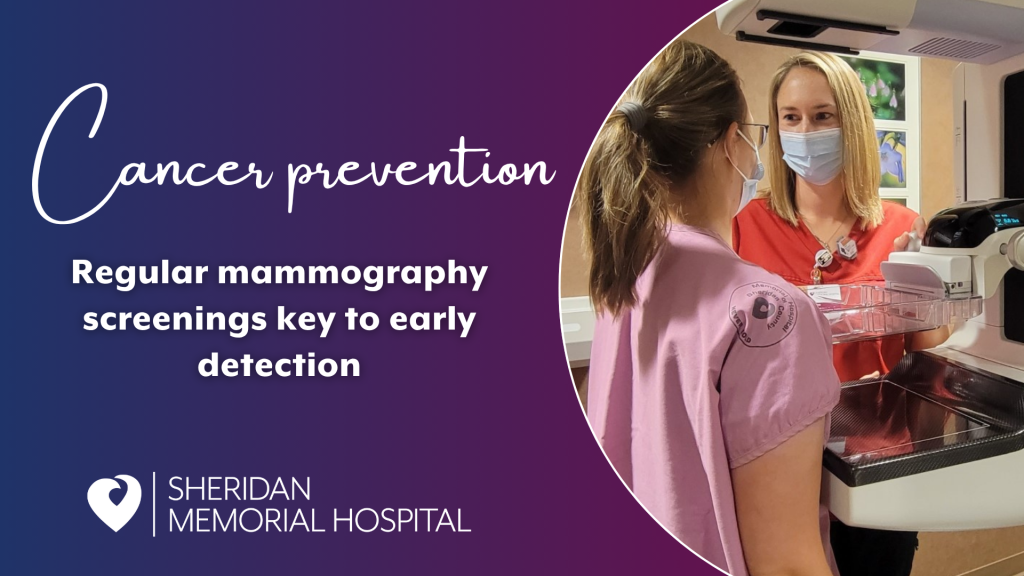
As a mammography technologist at Sheridan Memorial Hospital, I am reminded daily of the importance of early detection. Breast cancer does not always cause symptoms in its early stages, when it is most treatable. In fact, many cancers are found during routine mammograms before symptoms ever appear. That is why screening matters so much.

Recommendations around when to begin screening can vary, which can understandably cause some confusion. In general, women at average risk are encouraged to begin annual mammograms between the ages of 40 and 45, and continue through age 54. After that, women may choose to continue yearly or move to every other year. The American Cancer Society and the U.S. Preventive Services Task Force offer slightly different guidelines, but both emphasize the value of consistent screening. The most important step is to talk with your healthcare provider about what is best for you based on your personal risk factors.

While the idea of a mammography alone often elicits feelings of discomfort, advancements in technology and caring staff strive to make this process as comfortable and accessible as possible. Patients benefit from having local access to screening and fast results, without the need to travel out of town for care.

In addition to focusing on prevention and detection, October is also a time for us to come together in support of those affected by cancer. On Saturday, Oct. 18, the Sheridan Memorial Hospital Foundation will host The Link — Partners in Pink Run/Walk. This annual event raises vital funds to support cancer care at the Welch Cancer Center, including patient comfort programs and advanced equipment. Just as importantly, it is a day to honor patients, survivors and families in our community impacted by breast and other forms of cancer.

I encourage you to mark your calendar for both October events. Schedule your mammogram if you are due for one, and consider joining us at The Link. Together, these actions not only promote awareness, but also strengthen the circle of care and support that surrounds those facing cancer in Sheridan County and surrounding areas.

Early detection saves lives and community support helps carry us all forward.

In rural communities like those in Sheridan and Johnson counties, wide-open spaces and long dirt roads can make help feel far away, but a new behavioral health outpatient clinic at Sheridan Memorial Hospital has spent its first year proving that care can be both close to home and deeply personal.

Since opening in November 2024, the Behavioral Health Clinic at Sheridan Memorial Hospital has taken a systematic approach to breaking down barriers to mental health care. The clinic has helped clarify diagnoses, connect patients with community resources and reduce the number of involuntary holds related to mental health crises. These improvements are the result of specialized behavioral health expertise and strong partnerships with Sheridan Memorial Hospital’s primary care, emergency and hospitalist teams — alongside close collaboration with local mental health providers and law enforcement.

The small team — currently comprised of one psychiatrist, a licensed clinical social worker, medical administrative assistant and director — has seen more than 400 patients and has served as a resource for inpatient teams caring for patients in other areas of the hospital, including the Emergency Department.

Those efforts have resulted in many success stories, including examples of individuals proactively reaching out when they are struggling or “graduating” out of their need for direct care from psychiatrist Dr. Michael Kinney.

“We see a lot of chronic stress — people who can’t remember the last time they felt truly well,” psychiatrist Dr. Michael Kinney said. “PTSD, major depression and anxiety are common here, but they often show up as sleeplessness, pain, GI issues — a mystery that isn’t a belly problem so much as a brain problem.”

For many patients, that mystery has stretched across decades.

“When the right diagnosis clicks — PTSD, for example — treatment starts to make sense,” Kinney said.

The clinic team has deliberately built the new service as collaborative. Each morning begins with a team huddle to spot gaps in care or available resources and address them. Throughout the day, scheduled patient visits mix with consultations in the Emergency Department or follow-up phone calls. Kinney said two members of the team — care coordinator Kyle Seeley and the office’s medical administrative assistant — serve as the clinic’s glue, coordinating all of the moving parts with other providers, community resources, therapists and the patients.

Seeley, for example, will meet patients with behavioral health needs in the Emergency Department. He completes initial assessments, creates early connections with the clinic and helps to create plans for patients’ next steps, developing a safe plan for individuals and ensuring they connect with additional resources.

“With dozens of local therapists we can call, we’re often able to get people therapy appointments within days,” Seeley said. “If it’s not the right fit, we encourage people to let us know, stick with it, we’ll help find them the person they connect with for care.”

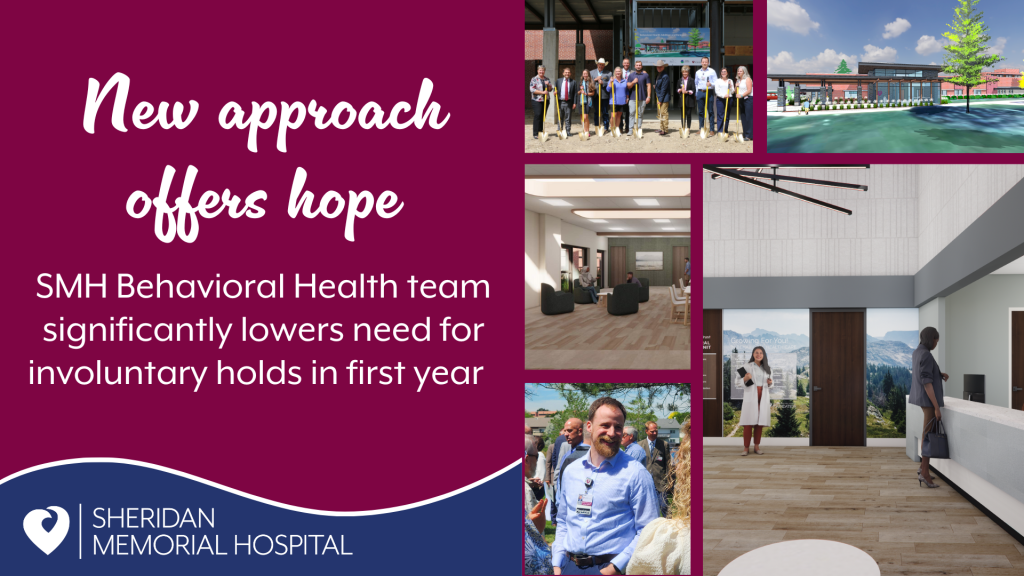
Early data suggests the team’s approach to caring for community members’ behavioral health needs is working. A review of the first year shows a 24 percent decrease in involuntary holds under Title 25 and a 46 percent decrease in the number of days behavioral health patients have been in the hospital at SMH. This data indicates individuals are receiving the right care at the right time to match their needs.

“The decrease in involuntary holds is a clear reflection of Sheridan Memorial Hospital’s culture and our commitment to improving behavioral health care,” said Brittany Goodvin, SMH director of behavioral health. “Patients are building trust in our team by having the opportunity to remain in Sheridan for their care. This progress comes from the collaborative efforts of our medical staff and leadership team, who have worked together to make the most of new resources in psychiatry and care coordination.”

The team has also supported patients’ journeys in voluntarily choosing other paths for care including outpatient plans, community support or, in some cases, inpatient behavioral health facilities.

“When people know we’re not going to automatically take away their ability to receive care close to home with the support of family and friends, their willingness to look at a wider list of treatment options really improves,” Kinney said. “Emergency holds are a last-resort safety measure I will use only if I think I need to prevent a permanent solution to a temporary problem.”

Through their work, the team at the SMH Behavioral Health clinic is also working to encourage western values aren’t only applied to others. Kindness and empathy are part of what makes Sheridan and Johnson counties special, but sometimes residents who are so welcoming and kind to others struggle to celebrate self-care and compassion.

As more patients reach out proactively and community curiosity about the clinic and the services offered continues to increase, the SMH Behavioral Health team is hopeful it will continue to turn the tide in normalizing behavioral healthcare as just another, standard part of healthcare.

Gaps in care remain, though. Wyoming lacks inpatient options for adolescents, residential programs for adults with severe mental illness and providers who specialize in different areas of psychiatry — for example, eating disorders or other issues. In addition, insurance nuances can complicate placements for those needing care.

Still, the Behavioral Health team at SMH credits the communities’ therapists and others willing to step up and offer things like rent or utility assistance, food and toiletries, etc. The network that has grown and strengthened in the last year is closing the distance to personalized behavioral healthcare when that distance once felt insurmountable.

While data has shown the early successes of the program, the opening of a new Behavioral Health facility at SMH will further the efforts already underway. Set to open in the fall of 2026, the Behavioral Health facility at SMH will include four levels of care — an outpatient clinic, behavioral health urgent care, crisis stabilization and inpatient care. Additional staffing, too, will ensure more care coordinators are available to see patients through their behavioral health journey and more support is available in our communities.

“We hear the successes,” Kinney said. “When people have a good experience, they tell their neighbors, they talk about it on social media. That’s how stigmas fade.”


To learn more about the Behavioral Health services at Sheridan Memorial Hospital, see sheridanhospital.org.

By Rebecca Franklund, MD, FACOG, a physician in the Women’s Clinic at Sheridan Memorial Hospital.

October brings crisp air, falling leaves and many fall traditions, but it is also a month of remembrance. Pregnancy and Infant Loss Awareness Month honors the families who grieve them. This month you may see parents place a white pumpkin on their porch, sometimes with their baby’s name, as a symbol of remembrance.

Loss takes many forms; miscarriage, stillbirth, molar or ectopic pregnancy, and other conditions can cause a pregnancy to end before or during birth. Preterm birth, birth defects, Sudden Infant Death Syndrome (SIDS) and other health conditions can cause infant death. Heartbreaking and often uncomfortable to discuss, these losses are not rare: one in four women will experience pregnancy or infant loss in their lifetime. As an OB/GYN, I see firsthand the depth of this grief. Each family’s journey is unique, and each loss deserves acknowledgment.

Supporting families begins with compassion. It is OK to say nothing at all if words feel impossible, and it is powerful simply to listen. Ask if it’s alright to use the baby’s name. Remembering milestones, such as due dates, birthdays or holidays can be done with a card or text and can mean more than you realize. On Oct. 15, communities around the world join in the “Wave of Light,” lighting candles at 7 p.m. to honor these children and their families.

This October, consider displaying a white pumpkin for a personal loss, wearing the pink-and-blue ribbon for friends and family or lighting a candle with the global community. By breaking the silence, we can ease the isolation and help families feel seen, heard and supported. Together, we can create space for remembrance, healing and hope.

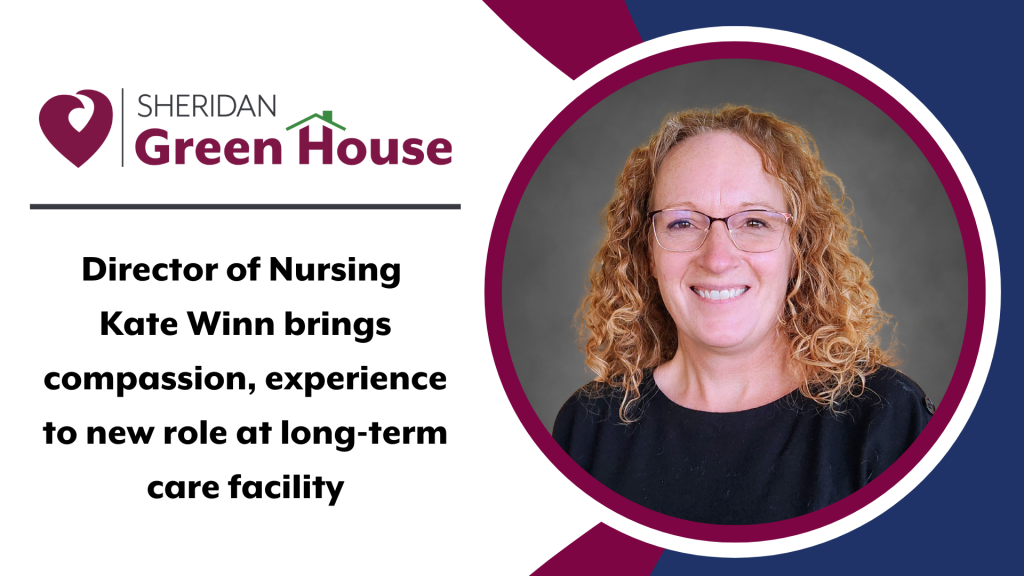
With over 20 years of nursing experience, Kate Winn, MSN, RN, brings expertise, a passion for elder care and a vision for creating a truly home-like environment where residents and caregivers feel supported in her new role as Director of Nursing at Sheridan Memorial Hospital’s long-term care facility, Sheridan Green House.

Over her 23-year nursing career, Winn has cared for patients in settings ranging from emergency departments to refugee health clinics and public health epidemiology. Her work has taken her across the country and around the world, from Oklahoma and Texas to Idaho and Washington state, where she served as an administrator for a dementia and geriatric psychology facility. Most recently, Winn worked as an account manager in long-term care pharmaceuticals before moving to Wyoming, where all six of her children live.

It was during her time working in infection prevention at a nursing home in Gillette that Winn discovered her passion for long-term care.

“I started working infection prevention as a nursing home, and that’s when I really began to fall in love with it,” she said. “You’re literally meeting people where they are. This is their home. And everything you do has an impact.”

To Winn, elder care is both underserved and underappreciated.

“These are the people who made us who we are,” she reflected. “We’ve done such a good job in modern medicine keeping people alive, but we don’t quite know what to do with people when they get old. We’ve gotten people into their 80s, 90s and 100s, but we don’t have a culture that really knows how to embrace that.”

For Winn, one of the most meaningful parts of her work is watching younger staff members interact with residents.

“To see the community of elders and staff interact — to see child-rearing advice, recipes and encouragement shared — is so special,” she said. “The elders have been through it before, so they’re able to offer life advice to the staff that work around them. Seeing generations intermingle is so healthy, and you don’t see that in many areas of healthcare or even in our society.”

Winn was drawn to work at Sheridan Green House because of its unique, cottage-style setting and its use of the Green House Model — an innovative approach to long-term care where elders live in home-like cottages and caregivers provide personalized support, home-cooked meals and meaningful daily routines and activities.

Winn credits Sheridan Green House’s Executive Director Tonya Carlson, BSN, RN, NHA, and former Director of Nursing Dawn Morgan, RN, for laying a strong foundation she’s eager to build upon.

“Because Tonya and Dawn rolled up their sleeves and really got after it, the pieces are all here now to build something that will work well for the elders, the staff and for the community,” Winn praised.

Winn’s main goal as Sheridan Green House’s director of nursing is simple:

“We should be a great place to work and a great place to live.”

Having lived in many rural communities, Winn understands the challenges of sustaining quality healthcare in small towns.

“I’ve seen rural hospitals fail and families drive hours just to see a doctor,” she explained. “For a hospital and nursing home to work together, it’s more than smart business. It’s touching. It means saying to our community, ‘We’ll be your home now.’ That matters.”

When she’s not at work, Winn enjoys spending time outside, collecting and polishing rocks, drawing, painting, writing, knitting and making her own collage paper. She’s also an avid reader, with favorites including “The Odyssey” and “A Tree Grows in Brooklyn”.

Winn describes herself as “approachable and a good listener” and someone who values honesty and trust.

“I can’t solve every problem,” she said. “But I’ll always try to at least bring us to an understanding.”

Sheridan Green House is comprised of four cottages, each with 12 rooms available for residents. If you or a loved one is considering long-term care, reach out to Sheridan Green House at 307.672.0600. For additional information, see sheridangreenhouse.org.

Sheridan Memorial Hospital provides fast, accurate CT scans, offering high-quality diagnostic imaging for emergency, inpatient and outpatient care.

What is a CT Scan?

A CT scan (Computed Tomography scan), sometimes called a CAT scan, uses specialized X-ray technology and computer processing to create detailed, cross-sectional images of the body. Unlike a traditional X-ray, a CT scan captures multiple images from different angles, producing clear, 3D-like views of internal organs, bones, blood vessels and soft tissues.

This makes CT one of the most efficient and reliable tools for diagnosing injuries, illnesses and medical conditions.

How a CT Scan differs from an MRI

CT and MRI are both advanced imaging options, but each serves a different purpose:

CT Scan

  • Uses low-dose X-ray technology

  • Extremely fast — ideal for emergencies

  • Excellent for viewing bones, lungs, abdomen, trauma, and internal bleeding

MRI

  • Uses magnetic fields and radio waves

  • Takes longer but provides greater soft-tissue detail

  • Best for imaging the brain, spine, joints and ligaments

Your provider will recommend CT or MRI based on your symptoms, medical history and what needs to be evaluated.

When you may need a CT scan

You may be referred for a CT scan if you’re experiencing symptoms or conditions such as:

  • Head injury, sudden severe headache or stroke symptoms

  • Chest pain, abdominal pain or unexplained discomfort

  • Bone fractures, joint injuries or spine concerns

  • Difficulty breathing, suspected pneumonia or lung nodules

  • Kidney stones or urinary issues

  • Cancer detection, staging or monitoring

  • Trauma or suspected internal bleeding

  • Guidance for medical procedures or biopsies

Because CT scans are fast and highly accurate, they are a vital part of emergency care and diagnostic imaging at Sheridan Memorial Hospital.


CT Scan Services at Sheridan Memorial Hospital

Our hospital offers a full range of CT imaging services in Sheridan, including:

  • State-of-the-art multi-slice CT scanners

  • Low-dose CT protocols to minimize radiation exposure

  • 24/7 CT availability for emergency and inpatient needs

  • Efficient outpatient CT appointments

  • Rapid scan times for quicker diagnosis

  • Expert interpretations by on-site board-certified radiologists

  • Close coordination with your provider for timely care planning

Whether you need a CT for an urgent condition or a scheduled evaluation, our Radiology team makes the process comfortable, efficient and reassuring.

Your local choice for CT scans

Having access to advanced imaging locally means you receive answers fast — without leaving Sheridan County. We’re committed to providing high-quality CT scans for adults and children, delivered with the compassion and attentiveness Sheridan Memorial Hospital is known for.

If your provider has recommended a CT scan, or you have questions about our imaging services, our team is here to help.

Schedule or learn more

Call 307.672.1045 to schedule your CT scan or speak with our Radiology team about what to expect.

Sheridan Memorial Hospital provides comprehensive mammography services offering both screening mammograms and diagnostic mammograms in a comfortable, supportive environment. Our experienced mammography technologists use advanced imaging technology to help detect breast cancer early — when it is most treatable.

Why choose Sheridan Memorial Hospital for your mammogram?

Early detection remains one of the most effective ways to reduce the risk of advanced breast cancer. Many breast cancers are first discovered through routine mammograms, even before symptoms appear.
Our goal is to provide accessible, high-quality mammography so patients can stay on top of their health without traveling out of town. Excellent, patient-centered care, close to home is our mission.

Benefits of choosing Sheridan Memorial Hospital include:

  • Convenient local mammogram appointments

  • Fast, reliable results from board-certified radiologists

  • Comfortable, patient-centered imaging experience

  • A skilled team dedicated to early detection and prevention

What is a screening mammogram?

A screening mammogram is a routine breast X-ray used to detect changes before symptoms develop. This is the most common type of mammogram and is recommended for individuals at average risk for breast cancer.

What to expect during your screening

A screening mammogram usually takes less than 20 minutes. Our team prioritizes comfort while using low-dose, high-resolution mammography to provide accurate imaging and timely results.

When is a diagnostic mammogram needed?

A diagnostic mammogram offers a more detailed breast evaluation. Your provider may order one if you have:

  • A lump or new area of concern

  • Breast pain or skin changes

  • An abnormal screening mammogram

  • Nipple discharge

  • A need for follow-up imaging

Diagnostic mammograms may include additional views or be paired with breast ultrasound for a thorough assessment.

Fast, accurate answers

Sheridan Memorial Hospital’s on-site radiologists review diagnostic images promptly so you and your provider receive clear, detailed information and a recommended plan for next steps. Having this service locally means quicker reassurance and reduced wait time.

Advanced breast imaging technology

Sheridan Memorial Hospital invests in modern mammography technology to improve comfort, clarity and early detection. Our imaging equipment produces high-quality, low-dose images designed to help radiologists detect subtle changes.

We offer two different locations for mammography screenings – one at the hospital’s Outpatient Center and the other at SameDay Health & Imaging. Both locations offer walk-in options for screening mammography.

Sheridan Memorial Hospital also boasts 3-D mammography, also known as digital breast tomosynthesis. This technology creates a series of detailed breast images that allow radiologists to examine tissue one layer at a time. This advanced technology improves the detection of early breast cancers — especially in women with dense breast tissue — and reduces the likelihood of being called back for additional imaging. By offering 3D mammography, Sheridan Memorial Hospital provides clearer, more accurate results and greater peace of mind for patients.


Schedule Your Mammogram in Sheridan

If you’re due for your annual breast cancer screening, or if you have a breast concern that requires a diagnostic mammogram, we are here to help.

Call 307.672.1045 to schedule your mammogram at Sheridan Memorial Hospital.
Early detection saves lives — schedule your mammogram today.

X-rays are one of the most common and trusted tools in medical imaging. At Sheridan Memorial Hospital, we offer quick, accurate X-ray services to help diagnose injuries, monitor medical conditions and support your overall care. With walk-in availability for many exams and experienced technologists on staff, our team makes the process simple, safe and efficient.

What Is an X-ray?

An X-ray is a painless imaging test that uses a small amount of radiation to create pictures of structures inside the body — most often bones, lungs, joints, and the abdomen. X-rays are typically the first imaging test ordered because they are fast, reliable and highly effective at identifying many common health issues.

Digital X-ray technology allows our radiologists to capture clear images instantly and share results with your provider quickly for faster diagnosis and treatment.

Why You Might Need an X-ray

Your healthcare provider may order an X-ray to evaluate a wide range of symptoms or conditions, including:

  • Injuries
    • Suspected fractures or broken bones

    • Sprains and joint injuries

    • Dislocations

    • Spine or neck concerns

  • Chest & Respiratory Conditions
    • Persistent cough

    • Chest pain

    • Suspected pneumonia

    • Lung infections or chronic lung disease

    • Rib injuries

  • Digestive & Abdominal Issues
    • Stomach pain

    • Signs of bowel obstruction

    • Swallowed objects

  • Monitoring Ongoing Conditions
    • Arthritis progression

    • Bone healing after a fracture

    • Chronic lung disease

Because X-rays are quick and widely available, they are often used as the first step in diagnosing a health concern.


What to Expect During Your X-ray

X-rays are simple, noninvasive and typically take less than 10 minutes.

  • Before the Exam
    • You may be asked to change into a gown, depending on the area of the body being imaged.

    • Remove jewelry or metal objects that could interfere with the image.

    • The technologist will position you carefully to get the views your provider needs.

  • During the Exam
    • You may be asked to stand, sit or lie on the exam table.

    • The technologist will step behind a protective barrier to take the image.

    • You may hear a brief clicking sound as the picture is taken.

    • Multiple views may be needed depending on the type of exam.

  • After the Exam
    • You can return to your normal activities immediately.

    • A radiologist will interpret the images and send results to your provider promptly.


X-ray Services at Sheridan Memorial Hospital

Our hospital offers a full range of digital X-ray services, including:

  • Walk-in imaging for many exams at three locations (SameDay Health & Imaging, Outpatient Center and the main hospital)

  • 24/7 availability for emergency care

  • Advanced digital X-ray technology for fast, high-quality images

  • Skilled technologists trained to ensure accuracy and patient comfort

  • Pediatric-friendly imaging for children and families

  • Seamless coordination with primary care, specialty providers, and urgent care clinics

Whether you’re dealing with a sudden injury or a chronic condition, our imaging team is here to provide clear answers quickly and compassionately.