Welcome to Sheridan Memorial Hospital
1401 West 5th St. Sheridan, WY — 307.672.1000

When it comes to running, efficient movement and injury prevention matter just as much as wearing a good pair of sneakers. Common running mistakes—
Sheridan Memorial Hospital’s Wyoming Rehab physical therapists, Justin Bridger and Lindsay

For many individuals, driving represents freedom. The skill allows you to explore, run
With temperatures in the 100s this week, many locals are looking to the mountains or
Summertime in Sheridan! Time for hikes, bikes, fishing, swimming, and all the outdoor recreation
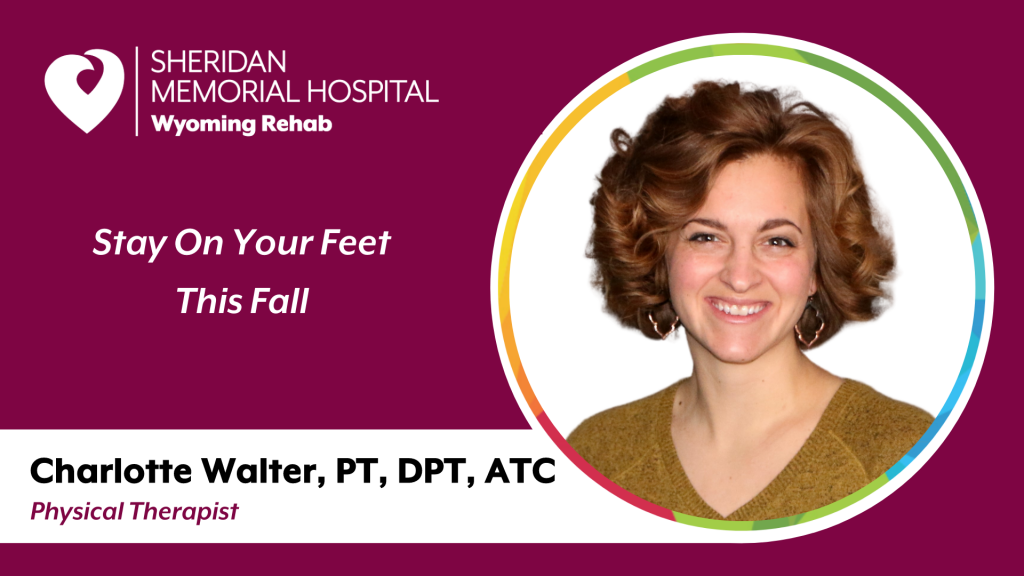
Listen to what Charlotte Walter, Physical Therapist
Anne Hinman was kind enough to leave this 5 star google review about Sheridan Memorial Hospital’s Wyoming Rehab:  “I could not have been happier
A patient tells us …  “I was diagnosed with Type II diabetes (or prediabetes) and my doctor told me to exercise. What now?” Bring told you have Type II
The challenges that come with a debilitating injury are more than physical.  The mental challenges of not being able to do things that came easy prior
We often look at the New Year as an opportunity to make changes within our lives in some way, shape, or form.  That change could be financial, personal growth, how free time is spent, or a
Wyoming Rehab’s Cancer Rehab Program is appropriate for anyone who has been diagnosed with cancer. Special considerations are made based on diagnosis.
More than one out of four older adults fall each year. These falls are NOT a normal part of aging and are serious and costly, causing broken bones
The fall season is rapidly approaching and for many Wyoming residents, that means hunting season.  Hunting with archery equipment
If 2020 knocked you off your fitness routine or reminded you of the importance of starting one, read on. A common barrier for individuals wanting
Wyoming Rehab's Licensed Physical Therapist Charlotte Walter describes her approach to creating individualized treatment plans to help each patient achieve their goals.
Celebrating Physical Therapist at Sheridan Memorial Hospital's Wyoming Rehab

Wyoming Rehab
Phone: 307.674.1632

135 North Gould Street
Sheridan, WY 82801

Hours:
Mon – Fri: 8:00 am – 5:00 pm
Sat-Sun: Closed

Peak Power is now Accelerate!
Summer sessions for athletes in grades 5-12 to level up their performance & prevent injury.
Click here for more information

When it comes to running, efficient movement and injury prevention matter just as much as wearing a good pair of sneakers. Common running mistakes—like excessive pelvic drop and overstriding—when they occur too frequently, place extra stress on the muscles and joints of the lower back, hips and knees. Over time, this added strain increases a runner’s risk for injury.

Wyoming Rehab’s C-Mill—an advanced piece of equipment resembling a treadmill available at only a few locations nationwide—integrates virtual reality to add variety to exercises, features a force plate to measure gait and adaptability and includes frontal and side cameras for in-depth analysis of walking or running patterns.

The C-Mill is a powerful tool for improving movement efficiency and reducing injury risk. While commonly used in stroke and traumatic brain injury rehabilitation, it also plays a vital role in performance training for athletes at all levels.

“It’s super cool equipment,” said Wyoming Rehab’s Lindsay Kinney, PT, DPT, COMT. “You record a 30-second video, and the C-Mill picks up on all of the weight-bearing, loading and any asymmetry that you can see with somebody’s strike or step length. It’s truly a one-of-a-kind device, and I feel lucky to have access to it.”

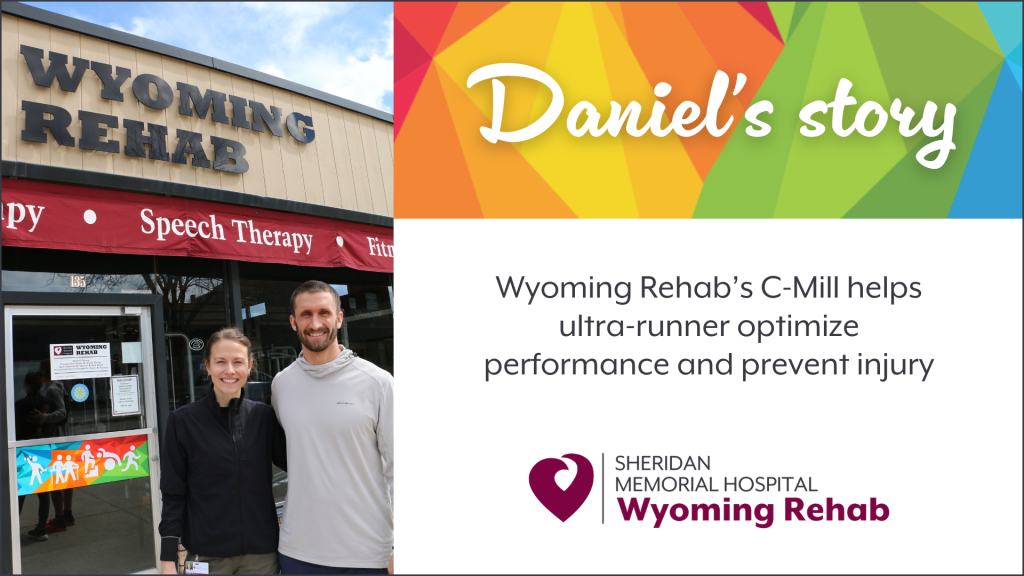
One person benefiting from the C-Mill’s technology is Daniel Katz, an avid runner and EMT with Wyoming Regional EMS. Daniel recently underwent a gait analysis with Wyoming Rehab using the C-Mill, and his experience highlights how understanding your body’s movement and making small adjustments can lead to significant long-term benefits.

Daniel, who has completed marathons, half-marathons and ultra-races, discovered his love for long-distance running during the COVID-19 pandemic. What started as a short-term challenge when his friend invited him to run a virtual marathon quickly became a lifelong passion.

“Until I was 25, I swore I would never be a distance runner,” Daniel said. “But halfway through the virtual race, I ended up loving it and haven’t stopped running since.”

Daniel now trains for the 2025 Bighorn Trail Run, scheduled for June 20–21, 2025. The course, which traverses the Little Bighorn and Tongue River areas of Bighorn National Forest, challenges even the most seasoned ultra-runners, with over 20,500 feet of ascent and 20,750 feet of descent. Daniel completed the 52-mile course last year, and this year, he and his wife plan to tackle the 32-mile course together.

Over time, Daniel’s training has evolved, focusing on building weekly mileage to match or surpass race distances, stacking long runs and following a nutrition plan that supports his endurance. He now incorporates the C-Mill into his training to elevate his performance.

A typical running gait analysis at Wyoming Rehab begins with a discussion about the runner’s injury history and current issues. Lindsay then conducts a full mobility and strength assessment in a treatment room, followed by a run on the C-Mill. Using insights from both the assessment and the C-Mill, she creates a personalized treatment plan that may include targeted strength training and gait re-training to improve running mechanics.

Daniel’s gait analysis revealed key insights into his running form. Video footage showed a pelvic drop of more than six degrees, suggesting reduced lateral hip strength. This kind of asymmetry commonly contributes to running injuries. To address this, Lindsay recommended exercises to strengthen the gluteus medius and hip rotators, as well as targeted training to help Daniel maintain a level pelvis while running.

Additionally, the distance between Daniel’s foot and center of mass indicated overstriding. To improve efficiency and reduce injury risk, Lindsay suggested cadence adjustments to bring his foot strike closer to his body.

“Catching these discrepancies now is powerful, as we can address them before they become problems in the future, especially when Daniel is packing in the miles during a training cycle for a race,” Lindsay said. “If he doesn’t fix these issues, somewhere else in the body must pick up the slack, overloading an area that might not be equipped to handle it.”

Daniel appreciated both the depth of insight and Lindsay’s passion for helping runners.

“What’s great about Lindsay is that you can find a lot of people who know their stuff, but she loves this stuff,” he said. “And she’s a runner, too.”

“Runners are unique—all we want to do is run,” Lindsay added. “Sustaining an injury that prevents us from being able to do that is demoralizing, especially if it we have to miss a race because of it. A personalized analysis is a helpful way in keeping us out running on the roads or trails and reducing one’s chances for overload injuries.”

Using the information gathered from Daniel’s running gait analysis, he and Lindsay now have a clear roadmap to improve his running mechanics and stay healthy for the long haul.

“I’m not setting out to be a top-of-the-world runner,” Daniel said. “But I do want to keep running for the next three to four decades. If I can be one of those old guys who still run marathons at 72 that would be awesome. This analysis will help me stay on track.”

Lindsay emphasized that the goal of gait analysis isn’t necessarily to change a runner’s stride, but to optimize their natural movement patterns.

“Everyone has their ‘signature’ moves,” she explained. “Everyone is so individualized. Using the C-Mill, we can identify factors that may predispose someone to injury and provide exercises to strengthen those areas, making their running gait as efficient as possible.”

For Daniel, the experience reinforced the importance of periodic assessments, even for healthy athletes.

“Any work you do when you’re healthy helps prevent injuries and accelerates your training,” Daniel said. “It’s like mental health—when you connect with a therapist while you’re healthy and not in crisis mode, the good work can actually be done.”

He also noted how the C-Mill helped him better understand his body’s needs.

“This will help people develop intuition about their bodies,” Daniel said. “People should listen to their bodies, and they can come in to do these assessments to learn how.”

Looking to enhance your performance and stay injury-free? Call Wyoming Rehab today at 307.674.1632 to schedule your free screening and receive personalized treatment recommendations for non-emergent impairments and injuries. Visit wyomingrehab.org to explore Wyoming Rehab’s full range of services.

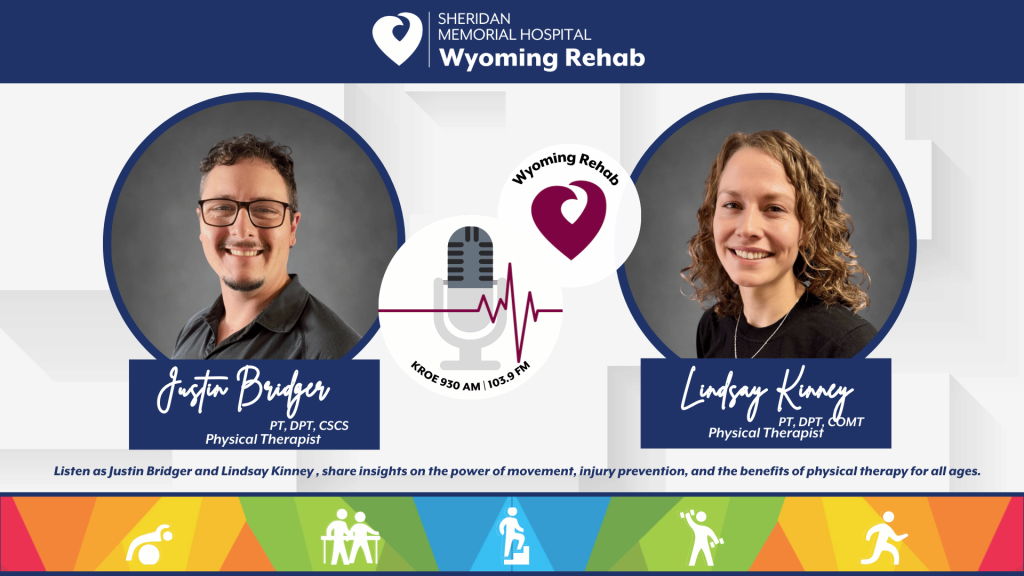
Wyoming Rehab’s physical therapists, Justin Bridger & Lindsay Kinney, joined Public Pulse to talk about the power of physical therapy in recovery, injury prevention, and overall well-being. From getting back on the trails after winter to helping patients overcome injuries, their message is clear—staying active is the key to lifelong health!

Listen now by clicking below!

Learn more about the many services provided through Wyoming Rehab by visiting https://www.sheridanhospital.org/medical-services/rehabilitation-services/

By Rachel Fields, OTC/L, CDRS — Occupational Therapist at Sheridan Memorial Hospital’s Wyoming Rehab.

A driving risk assessment can take the guesswork away

For many individuals, driving represents freedom. The skill allows you to explore, run errands, visit friends and live independently. For a variety of reasons, the ability to drive safely may change during the course of a lifetime. This could be due to a change in health (such as a stroke or neurologic condition), a medical procedure or disability or the onset of dementia.

Healthcare providers often see and care for patients who are not safe to drive and as such put themselves and others at risk. Having the conversation about safe driving with family members, or even with ourselves, often presents challenges though. The process of evaluating someone’s ability to drive has often felt subjective, and many individuals may not notice a decline in their own abilities. So how do you objectively evaluate a driver?

Having a driving risk assessment completed by a certified driver rehabilitation specialist can help eliminate the guesswork.

A driving risk assessment is an outpatient evaluation completed by an occupational therapist through facilities such as Wyoming Rehab. The evaluation looks at one’s vision, physical abilities and cognitive-perceptual abilities – all very important for driving. We take into account one’s medical history, insight and current driving habits. The evaluation typically takes about an hour to an hour and a half and it provides objective measures to help guide decisions regarding one’s risk when it comes to driving.

If someone is having difficulty with other activities of daily living, continued occupational therapy may be appropriate to improve on those movements and may help someone regain their ability to drive safely. But, more often, a medical diagnosis is permanent or progressive and may result in a permanent inability to drive. Occupational therapists and healthcare providers work closely with families and patients to optimize individuals’ independence while also focusing on safety for the individual, family and community.

Prior to tools like the driving risk assessment, physicians and other healthcare providers would rely on clinical assessments, which sometimes made a risk clear, but other times were harder to gauge in an office visit. Having a more dedicated evaluation by a specifically trained professional will ensure individuals are given the best chance of maintaining independence while also remaining safe.

If you have questions or concerns about your or a loved one’s ability to drive safely, ask your primary care or internal medicine provider for a referral to a rehabilitation service like Wyoming Rehab for a driving risk assessment and remove the guesswork from the conversation.

Learn more by listening below to what Primary Care Medical Director Dr. Kristopher Schamber and Wyoming Rehab Occupational Therapist Rachel Fields have to say on Public Pulse with host Floyd Whiting. 

Driving assessments now available at SMH. Hear what Kristopher Schamber, MD, FACP, and Rachel Fields, OTR/L, CDRS, have to say on Public Pulse radio.

Driving assessments now available at SMH. Listen to what Kristopher Schamber, MD, FACP, and Rachel Fields, OTR/L, CDRS, have to say on Public Pulse hosted by Floyd Whiting.

By Charlotte Walter, PT, DPT, ATC – Physical Therapist at Sheridan Memorial Hospital’s  Wyoming Rehab

Improve balance, core, cardio and endurance for the trail

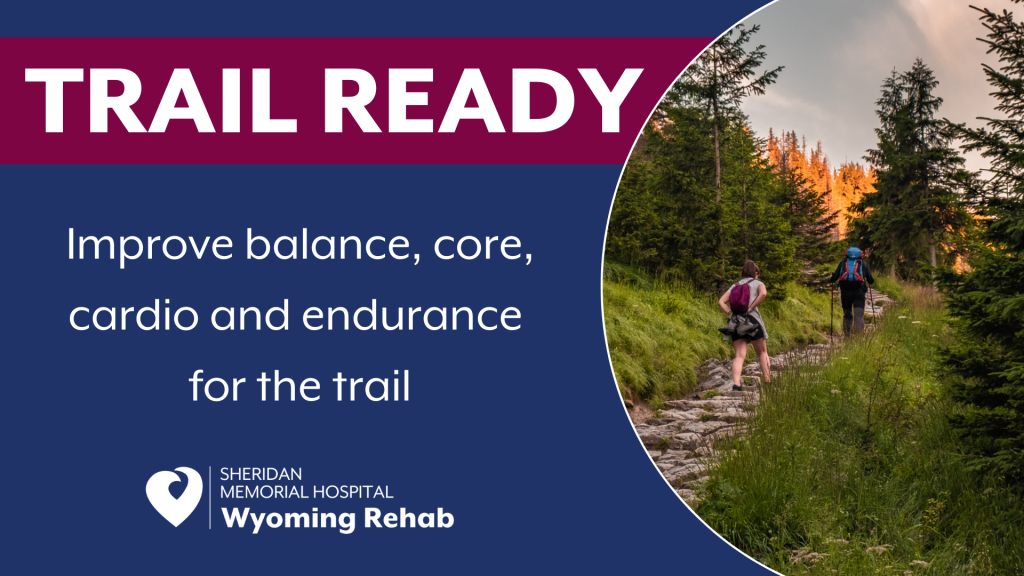
With temperatures in the 100s this week, many locals are looking to the mountains or made plans to head to higher elevations – and therefore cooler temperatures. While some aimed to lounge by favorites like Park Reservoir or other lakes, others took to the trails.

Injuries in the outdoors are common, but there are some basic exercises you can do to help build your bonafides for outdoor recreation. Here are a few tips to reduce injuries, increase strength and feel more confident on the trails.

Improve your balance.

Hiking, even on trails, can sometimes mean crossing a creek on slippery rocks or navigating rocks large and small. In order to build a more stable base on uneven terrain, strengthen your balance. Try standing on a foam pad or uneven ground with your feet closely aligned under you. Lift one foot just off the ground in front of you and move it from side to side, relying on your balance to keep from tipping over. This exercise can help build stability on a single leg. Lunges and single-leg squats are other exercises you can use to build muscle strength and balance.

Build your core.

Conquering a trail often takes a combination of endurance and strength, but core strength is sometimes overlooked when heading outdoors. Having a strong core can provide additional stability as you travel uneven ground. Exercises like side planks, bridges and others can help you feel stronger.

Endurance is key.

While strength in major muscle groups like your legs, core, shoulders and back can increase your ability to climb hills and scramble up boulders, strength isn’t the only factor to consider for outdoor fitness. Ensure your muscles are both strong and have the ability to take you far. You can build endurance by cross training, working in swim or gym workouts alongside your regular trail outings. Staying active in the off-season will help you stay sharp, too.

Do your cardio.

Short bursts of exercise focused on strength may help build the muscles in your legs, but slowly lengthening the time of your cardio exercise helps build your heart and lungs to handle longer outings and require shorter recovery times. When your systems work together in harmony to deliver oxygen to your muscles, your ability to handle those hills on the trail will grow and allow you to go even farther.

If you’re new to the trails or have pain when exercising, contact your healthcare provider to make a plan for physical rehabilitation and a training plan. The views are worth it.

Learn more about Wyoming Rehab services by following the link sheridanhospital.org/medical-services/rehabilitation-services/  Specific exercises and stretches from a qualified professional at Wyoming Rehab will alleviate and can prevent common health problems. Call Wyoming Rehab today to set up a free screening for non-emergent physical impairments or injuries – 307.674.1632.

By Charlotte Walter, PT, DPT, ATC – Pelvic Floor Physical Therapist at Sheridan Memorial Hospital’s  Wyoming Rehab

Embrace Outdoor Recreation and Overcome Pelvic Floor Dysfunction

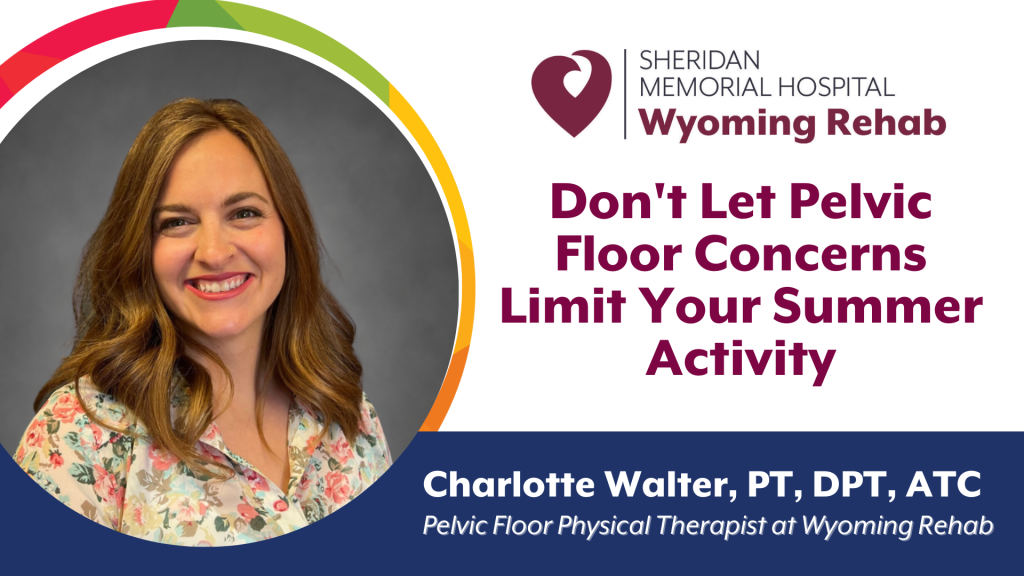
Summertime in Sheridan! Time for hikes, bikes, fishing, swimming, and all the outdoor recreation the area has to offer this time of year. But wait – are you shortening your hikes because you need to stay close to a bathroom? Are you not chasing your kids through the sprinkler because you might leak urine? Are you saying no to that fishing trip because you don’t want to worry about your bladder? Are you easing off your mountain biking because every time you hit a bump, you pee your pants?

Understanding Pelvic Floor Dysfunction: It's Common, Yet Treatable

If any of these situations sound familiar, you are not alone! Pelvic floor dysfunction such as urinary incontinence, bladder urgency, or pelvic pain is what I like to call “common not normal.” So many individuals suffer in silence because they are embarrassed to talk to their doctor or don’t think anything can be done about their pelvic floor symptoms. I’m here to tell you there is!

The Role of Pelvic Floor Physical Therapy: Restoring Balance

Pelvic floor physical therapy can address all of the symptoms above and more. Often these issues are related to a dysfunction of the pelvic floor muscles – the muscles may be tense and guarded, weak with poor endurance, or recovering from pregnancy or hysterectomy. It’s helpful to understand that your pelvic floor muscles are just like the muscles in your shoulder or your knee. Pelvic floor muscles are skeletal muscle: they contract or relax on your signal, and they can get stronger with appropriate stimulus and loading. They can also be affected after an injury during childbirth or surgery and need specific exercises to return to full function.

Exploring the Role of Pelvic Floor Muscles: How They Impact Your Quality of Life

Pelvic floor physical therapy is similar to other physical therapy. A pelvic floor physical therapist (PT) will ask questions about your symptoms, evaluate the muscles and structures involved, and work with you to create a treatment plan to achieve your goals. Unfortunately, since the topic and area involved can be sensitive, most people delay being seen by a PT. Over time symptoms can continue to get worse until they are significantly impacting your quality of life and limiting your activity.

Seeking Help: Why Pelvic Floor Physical Therapy Matters

Pelvic floor health is a specialty area, and not all physical therapists have this specific training. If you’re experiencing any of the symptoms described above, it’s important to see a pelvic floor PT who can fully assess and understand your symptoms.

Empowering Yourself through Pelvic Health Education in Sheridan

We are fortunate to have various pelvic health education opportunities offered in Sheridan, including the hospital’s prenatal class, YMCA prenatal workshop, YMCA infant/toddler workshop, and the YMCA Pelvic Health and Exercise workshop.

Take the First Step: Contact a Pelvic Floor PT for a Vibrant Summer

If pelvic floor dysfunction is limiting your summer movement, say “No more!” Contact a pelvic floor PT to keep your summer active and healthy.

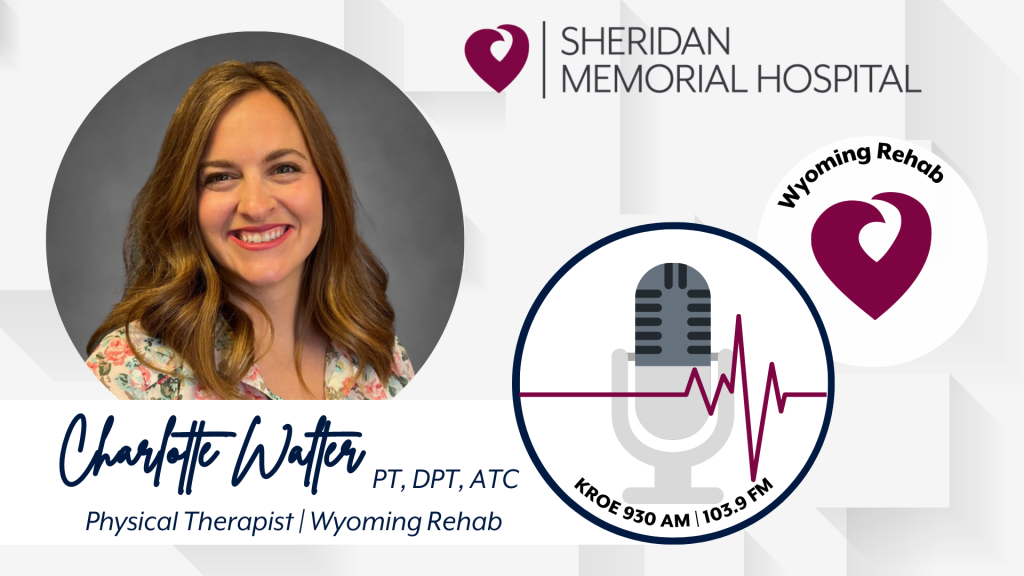
Listen to what Charlotte Walter, Physical Therapist at Sheridan Memorial Hospital’s Wyoming Rehab, shares about the many services and community partnerships through Wyoming Rehab


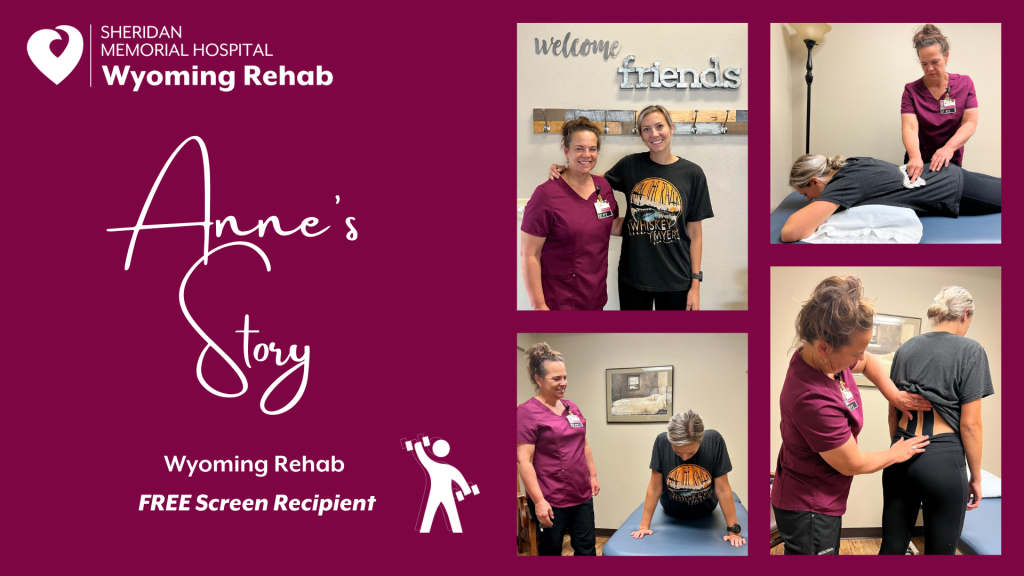
Anne Hinman was kind enough to leave this 5 star google review about Sheridan Memorial Hospital’s Wyoming Rehab:  “I could not have been happier with the treatment and personal care of this team!  I messed up my back and was in a lot of pain.  Jeanne was able to squeeze me in for a consultation and really took the time to figure out where my pain was coming from and how to treat it.  Highly recommend this clinic.”

Anne said a friend of hers recommended Wyoming Rehab – so she went to the hospital’s website and learned about the Free Screenings for non-emergent issues. 

“I am a bit embarrassed to say that I had begun lifting weights and was experiencing “very much” pain – I’m 27 and was scared that I had really done something bad to my back and I hoped that physical therapy might help.  It was awesome that Jeanne Brooks could fit me in the same day as I called Wyoming Rehab.

Jeanne checked out my back and walked me through some activities and motions that helped loosen up my back.  It was a lot more help than I was expecting on a screening visit. Jeanne also gave me a list of things that I could do on my own to help alleviate the pain and relax my back.

Jeanne also said that I was welcome to come back for more help if need be, but I am doing fine on my own now.  If I ever have an injury, I know I would go back to Wyoming Rehab.”

If you have nagging aches or pains, give Wyoming Rehab a call today to schedule a non-emergent free screening – 307.674.1632.


By Whitney Weborg, PT, DPT

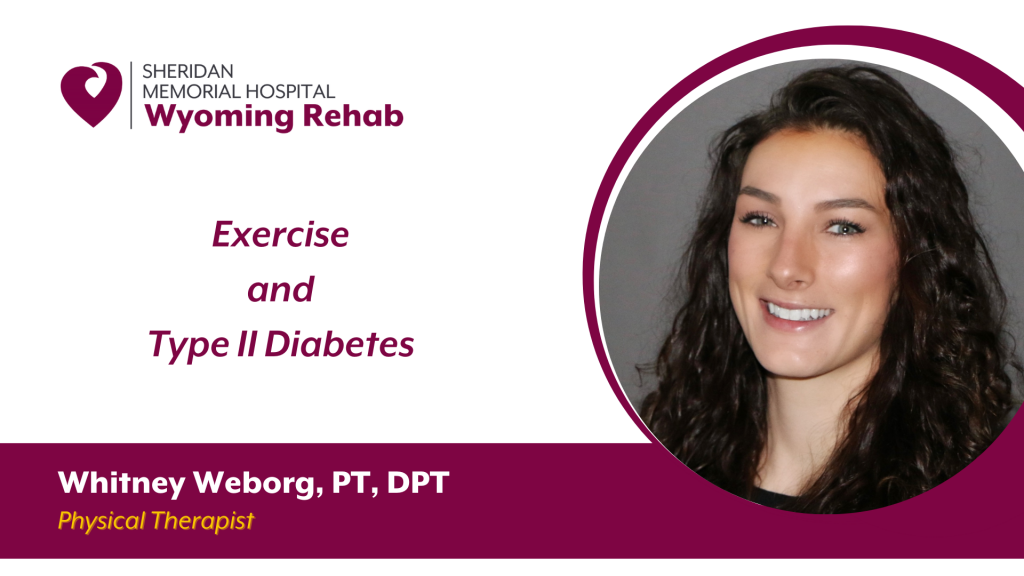
A patient tells us …  “I was diagnosed with Type II diabetes (or prediabetes) and my doctor told me to exercise. What now?” Being told you have Type II Diabetes can be daunting. We are happy to help people “ease” into exercise.

The Why – Studies show that exercise affects carbohydrate metabolism in both the short- and long-term. In the short-term, exercise can improve insulin sensitivity following a meal. In the long term, regular aerobic exercise can improve glycemic control, among other benefits. In fact, A1C may be reduced by 0.5-0.7 percentage points! In addition, some studies suggest that combining both resistance training and aerobic exercises could have an even more significant effect. Higher exercise intensity can also lead to larger reductions in A1C.

The How – Before we get into exercise recommendations, the best exercise is the one you enjoy and can maintain long-term. The American College of Sports Medicine (ACSM) recommends aerobic exercise and resistance training. When it comes to aerobic training, we should strive for 30 minutes of moderate-intensity exercise five days per week or 20 minutes of vigorous-intensity exercise 3 days per week. This might sound like a lot, but you don’t have to jump into it immediately. At Wyoming Rehab, we recommend a gradual build-up to allow your body to adapt to the new activity! When it comes to resistance training, ACSM recommendations are to train for at least two days a week and to work all major muscle groups to improve muscle strength and endurance.

Not sure how to get started? The ACSM has a helpful and informative website. You can check it out here: https://www.acsm.org/education-resources/trending-topics-resources/physical-activity-guidelines.

For more guidance on exercise and type II diabetes, call Wyoming Rehab today at 307.674.1632 to schedule a FREE screen. We can help you get started! 

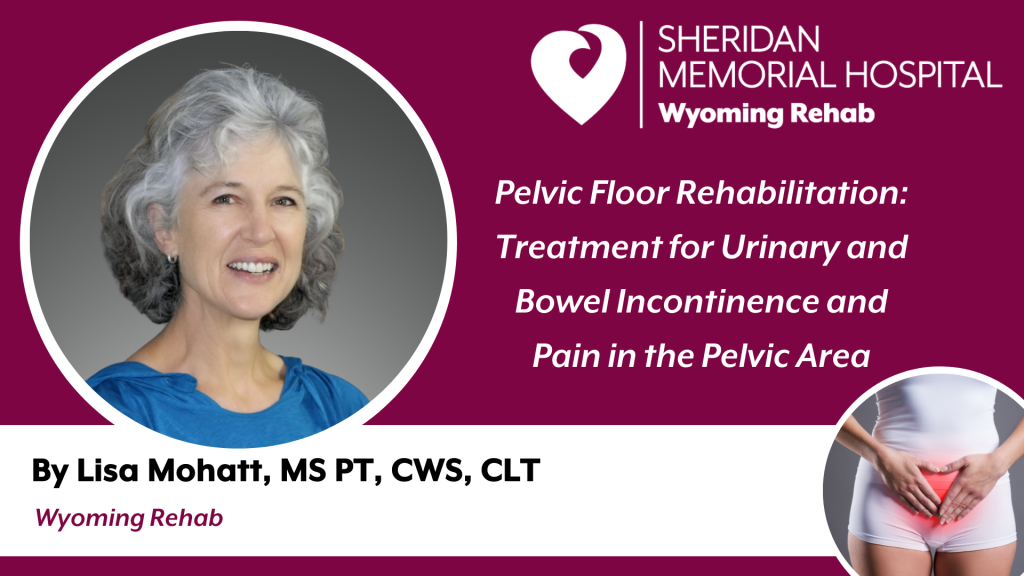
By Lisa Mohatt, MS PT, CWS, CLT, Physical Therapist with Sheridan Memorial Hospital’s Wyoming Rehab

The term “Pelvic Floor Health” encompasses several important functions.  It relates to urinary and bowel dysfunctions, including incontinence, pain anywhere in the pelvic area, pain or problems during and after pregnancy, and problems related to prostate cancer and surgery in men.
Urinary incontinence affects over 200 million people worldwide and is considered a public health problem.  “Stress Urinary Incontinence” can result from weak muscles in the bottom of the pelvis – the pelvic floor muscles – that are not strong enough to withstand sudden increases in abdominal pressure, such as with coughing, sneezing, jumping, and other exertions.  “Urge Urinary Incontinence” occurs before a person is able to reach the bathroom, usually before a strong urge is felt.  Eating and drinking a lot of bladder irritants and not enough water, as well as overtight pelvic floor muscles, can cause this incontinence.  Some people may have one or both of these types of incontinence, referred to as “Mixed Urinary Incontinence.”  Physical therapists trained in pelvic health can determine the underlying factors of each type of incontinence by assessing lifestyle, medical history, and musculoskeletal factors and tailor a program accordingly.  Most patients find this rehab extremely effective, empowering them to have control over a problem previously thought of as “normal” after a certain age, surgery, or childbearing.

Pelvic pain affects up to 25% of women in their lifetime.  This type of pain affects primarily younger women and then women around menopause and can be from many different causes.  Physical therapists trained in treating pelvic pain will look at past medical history, lifestyle, posture/ergonomics, and any contributing musculoskeletal factors.  Many women avoid seeking help with pelvic pain since it can be debilitating, frustrating, life-changing, and emotional.  Physical therapy can help with a private, individualized program that aims to help women gain control over this pain and be able to self-manage or eliminate it.

Bowel dysfunctions, specifically fecal incontinence, can affect up to 15% of people and up to a whopping 46% in nursing homes.  Most people do not discuss this with their physicians unless directly asked due to embarrassment.  Pelvic health physical therapists trained in bowel dysfunctions can help minimize this embarrassing issue with sensory training, pelvic floor muscle training/strengthening, behavioral modifications, dietary education, and other strategies aimed to increase awareness and control.

Lastly, benign prostate hypertrophy, prostatitis, and prostate cancer can all lead to urinary incontinence and erectile dysfunctions.  This can affect up to 44% of men in the U.S.  Physical therapy can help with pelvic floor muscle training, modalities to encourage muscle contractions, lifestyle/behavioral changes, education and use of external devices, as well as education before any surgical interventions.

Pelvic health physical therapy plays a role in a multidisciplinary team approach to treating pelvic problems in both women and men.  It’s important to realize that treatment for pelvic problems is available and can be very effective and empowering.

Ask your medical provider for a referral to Wyoming Rehab to start managing this today!  Or give us a call at 307.674.1632 to find out more.

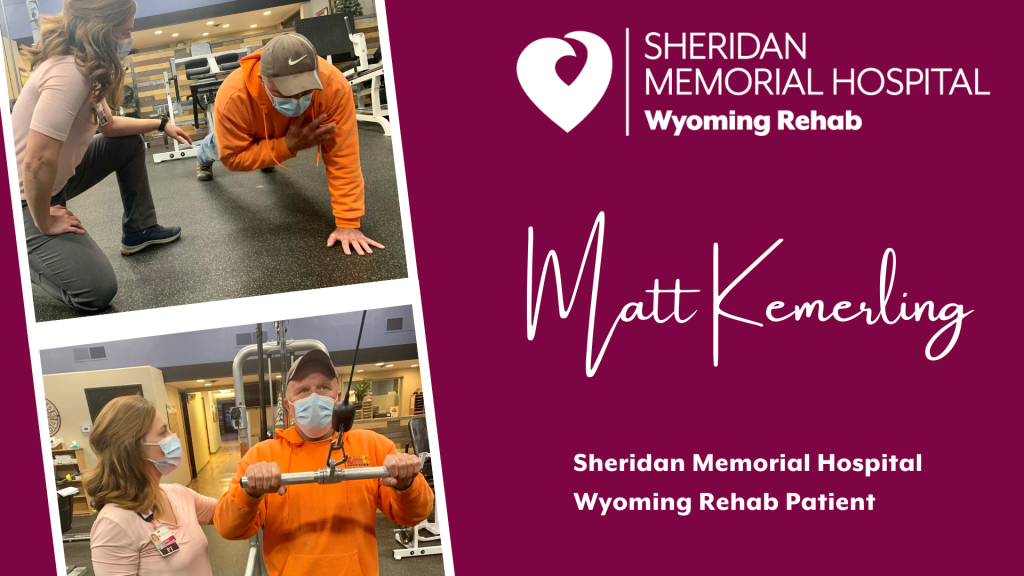
The challenges that come with a debilitating injury are more than physical.  The mental challenges of not being able to do things that came easy prior to the injury can be beyond frustrating. And the baby steps it sometimes takes to get back to “normal” can seem to take forever.
Matt Kemerling’s shoulder injury from a workplace mishap took him through some very challenging times. “I separated my biceps from my shoulder is how the doctor described it to me,” Kemerling stated. “The news that I had to have surgery just shattered me. But the doctor assured me that the surgery followed by a strong physical therapy regimen I could get back to normal.”

Kemerling admits his first thoughts about physical therapy were “that it’s a waste of time. I wasn’t a big believer in it.” But he was willing to give it a try and after the surgery he got to work with Charlotte Walter and Mike Duncan at Wyoming Rehab.

“I don’t think I could have been more fortunate to work with two people who fit my personality better,” Kemerling said. “I was super impressed with them both. They are super motivators and helped drive me to get done what I needed to get done.”

The regimen was three days a week to start and slowed to two days as progress was made.

“As we started doing therapy at the (Wyoming Rehab) facility and I did my homework, I saw improvements and that was a huge factor in my motivation,” Kemerling added. “Just the way Charlotte and Mike listened and talked to me really raised my spirits and helped with the mental aspect of dealing with this injury. That was so important.”

Kemerling was impressed with Walter and Duncan’s approach to therapy, the way they kept his goals in front of him and how they were invested in his success.

“The relationships I developed with the team at Wyoming Rehab were amazing and it was a little sad when I was done with my therapy and had to tell Charlotte and Mike good-bye,” Kemerling said. “It was an awesome experience, with a very professional team and I would recommend them to anyone.”

Learn more about Wyoming Rehab services by following the link sheridanhospital.org/medical-services/rehabilitation-services/  Specific exercises and stretches from a qualified professional at Wyoming Rehab will alleviate and can prevent common health problems.  Call Wyoming Rehab  today to set up a free screening for non-emergent physical impairments or injuries – 307.674.1632.

By Jordan McCoy MS, RDN, LD
Registered Dietitian Nutritionist at Internal Medicine
and
Whitney Weborg PT, DPT
Physical Therapist at Wyoming Rehab

We often look at the New Year as an opportunity to make changes within our lives in some way, shape, or form.  That change could be financial, personal growth, how free time is spent, or a health-related change.  If you are making changes to your health in the New Year, make 2022 the year of ADDING rather than subtracting!
If you’re planning to make a fitness goal, you’re already taking the first step towards making a change. What if, instead of making weight loss goals, we make goals centered around feeling strong, capable, and confident? What if we make goals with the simple purpose of ADDING joy to our lives? This year, We challenge you to table that ambiguous weight loss goal. Take a moment to think about an activity that you would like to do this year that seems out of reach to you right now. Your goal may be to be able to push your grandchild’s stroller to the park and play for an hour, or maybe to be able to get onto the floor to play with them. Maybe your goal is to complete a 5k or the Big Horn Mountain Run. Other examples include completing a hike in the mountains or being able to climb the stairs at War Memorial Stadium to watch a game. Whatever meaningful goal you choose, make sure it ADDS to your life.

If you are ADDING a health and fitness goal to 2022, you should also look to ADD in quality food choices to properly fuel for them.  Over the next few months, focus on ADDING whole foods that are nutrient-rich rather than calorie-rich and nutrient-poor.  ADD whole foods in their natural forms such as meats, vegetables, fruits, naturally occurring carbohydrates such as sweet potatoes, regular potatoes, quinoa and rice (not instant), wholesome dairy products, and healthy fats.  By focusing on ADDING these foods to your daily intake, you most likely will minimize some of the more unhealthy processed foods.  So, where do you start?  Start by ADDING in a whole, nutrient-rich protein at breakfast, such as 2% or 5% Greek yogurt or two scrambled eggs.  ADD in hard-boiled eggs or ADD a handful of raw almonds to a daily snack, rather than the vending machine choice of the day.  Soon, by ADDING in some of these higher-quality foods, your food choices will transform into those nutrient-dense and real foods!

Happy New Year!  Make the year 2022 a year of ADDING health, fitness, and quality food to your daily life.

Interested in learning more? Ask your primary provider about your healthcare concerns and if you could benefit from meeting with a registered dietitian.  If you don’t have a primary provider, check out Sheridan Memorial Hospital’s Internal Medicine practice or call: 307.675.2650

Do you need help with ADDING a fitness goal?  Learn More about Wyoming Rehab and their services by following the link: https://www.sheridanhospital.org/wyomingrehab  or call: 307.674.1632

By Charlotte Walter, PT, DPT, ATC – Physical Therapist at Sheridan Memorial Hospital’s Wyoming Rehab

Sheridan Memorial Hospital’s Wyoming Rehab provides a variety of rehabilitative services – each tailored to the patient’s specific needs.

In this post, we focus on Cancer Rehab: a comprehensive treatment approach aimed at improving the function of individuals who are experiencing cancer.

Wyoming Rehab’s Cancer Rehab Program is appropriate for anyone who has been diagnosed with cancer. Special considerations are made based on diagnosis (e.g. breast, colon, lung) as necessary. To determine an appropriate starting point for therapy, we conduct a thorough evaluation of strength, balance, flexibility, gait, endurance, pain and fatigue levels.  Then to further individualize the patient’s therapy program, we discuss current levels of function, goals and concerns with the patient and their care team as needed.

In the past, patients with cancer were told: “go home and take it easy.” This is no longer the case. More and more, research shows that exercise is an essential component of cancer treatment.  Supervised, structured exercise programs have shown increases in aerobic capacity, leg strength, bone mineral density at the spine, and lean body mass when compared with individuals who have not had this type of care/rehab. Exercise is a safe and effective addition to a patient’s cancer treatment plan.

Research also shows that individuals benefit from targeted exercise prior, during, and following cancer treatments. Therapy prior can increase functional strength and endurance before undergoing an intense cancer treatment regimen. Therapy during can enhance cancer treatment approaches, tolerance to treatment, and reduce cancer-related fatigue. Therapy after can rebuild muscle strength, develop compensation strategies around neuropathy or limb loss, manage lingering pain, reduce cancer-related fatigue, and prevent recurrence.

Individuals who have completed or who are currently undergoing cancer treatments may also experience difficulty with recall, memory or focus: also known as “chemo brain.”  Our speech therapists can perform a cognitive evaluation to determine deficits and create a treatment plan to help ease some of these symptoms.

If you feel you would benefit from this specialized program at Wyoming Rehab, consult with your physician.  Learn more about Wyoming Rehab’s Cancer Rehab HERE Or call 307.674-1632.

By Charlotte Walter, PT, DPT, ATC – Physical Therapist at Sheridan Memorial Hospital’s Wyoming Rehab

Falls Prevention Awareness Day is coming on September 22,  and I’d like to take this opportunity to remind folks why falls prevention is so important. According to the Centers for Disease Control and Prevention (CDC), more than one out of four older adults – those 65 and older – fall each year. These falls are serious and costly, causing broken bones or head injury. In fact, falls are the most common cause of traumatic brain injuries. Falls can lead to reduced mobility, decreased independence, and an increased fear of falling, all of which profoundly affect an individual’s quality of life. However, less than half of people who do fall tell their doctor.
Falls are not a normal part of aging and can be prevented. Four key steps to falls prevention include speaking to your doctor, staying active, getting your eyes checked and making your home safer.

As mentioned above, many people who fall do not tell their doctor. However, your physician plays a crucial role in keeping you safe. They can evaluate your risk for falling, review your medications to see if any may cause dizziness or drowsiness, and offer suggestions for vitamin D supplementation, seeing a physical therapist, or seeing a podiatrist if needed. Another concern to bring up to your doctor is how frequently you get up at night to use the bathroom. Research shows that individuals that get up more than 2-3 times per night have a significantly higher risk of falling. Your doctor may suggest medications or pelvic floor physical therapy to help address this.

Simply staying active can play a major role in fall prevention. Older adults should engage in regular, intentional physical activity that builds balance, strength, and flexibility. Unfortunately, the COVID-19 pandemic put most in-person exercise classes on hold, but many offerings through the Hub on Smith and the YMCA have returned. Online exercise class options via Zoom are also being offered. Contact these organizations for more information on current class schedules. Keep in mind that physical activity does not have to happen inside a gym. Strength training can be performed using objects around the home. Clear some space and dance to your favorite music to get your heart rate up. Exercise videos can be found on YouTube. Sheridan residents are fortunate to have an abundance of trails and parks available for walking, bicycling and hiking. Gardening and yard work are also forms of physical activity that don’t require exercise equipment. In short: sit less, move more.

If health conditions or physical limitations are preventing you from being physically active, ask your doctor about physical therapy. Physical therapists are highly trained health care professionals with expertise in movement and exercise. Physical therapy is not just for after a surgery or injury, but also an excellent way to prevent injury, falls or deconditioning. A physical therapist can evaluate your strength, balance and endurance and create an individualized plan to help meet your goals for physical activity. Not sure of where to start? Wyoming Rehab provides a free screening for individuals looking for treatment recommendations that do not require a physician referral. Don’t let a small barrier become a wall that continues to limit your physical activity.  

When was the last time you had your eyes checked? Quality of vision is important to provide your brain with accurate information about your position in space. Conditions like cataracts and glaucoma limit your vision. If your eyeglass prescription is outdated or no longer appropriate, that can negatively affect your balance ability. The current recommendation is to have your eyes checked by an eye doctor at least once a year.

Another way to prevent falls is to make your home safer. Take a look around and ask yourself the following questions: Are there papers, shoes, books, or other objects on the stairs? Is a stairway light bulb burnt out? Are there handrails on both sides of the stairs? Are there throw rugs on the floor? When you walk through a room, do you have to walk around furniture? Is your step-stool sturdy? Is the light near the bed hard to reach? Is there a clear path from the bedroom to the bathroom? Is the tub or shower floor slippery? Do you need support when getting off the toilet or out of the shower?  It’s time to consider these and other obstacles that can intensify someone’s fall risk in their own home.

Some easy tweaks can make a big difference.  Want to learn more? Some excellent online resources include the CDC, National Council on Aging and National Institute on Aging websites. Here, you can find articles, action plans, infographics, exercise suggestions, exercise videos and more information on staying active and preventing falls.

Here in Sheridan, we are lucky to have many resources available to older adults, both in-person and online. Take the steps to keep yourself safe, active, and healthy this fall!

Do you have a condition or impairment preventing you from reaching the recommended amounts of physical activity? Don’t continue to put your health at risk. Find out how physical or occupational therapy may help. Reach out to Wyoming Rehab at 307.674.1632 if you would like to schedule a FREE Screen/Treatment Recommendation for a Non-Emergent Physical Impairment or Injury.

Learn More about Wyoming Rehab and their free screenings for non-emergent physicial impairments or injuries by clicking HERE or following the link https://www.sheridanhospital.org/medical-services/rehabilitation-services/

By Mike Duncan, Physical Therapy Assistant III at Sheridan Memorial Hospital’s Wyoming Rehab

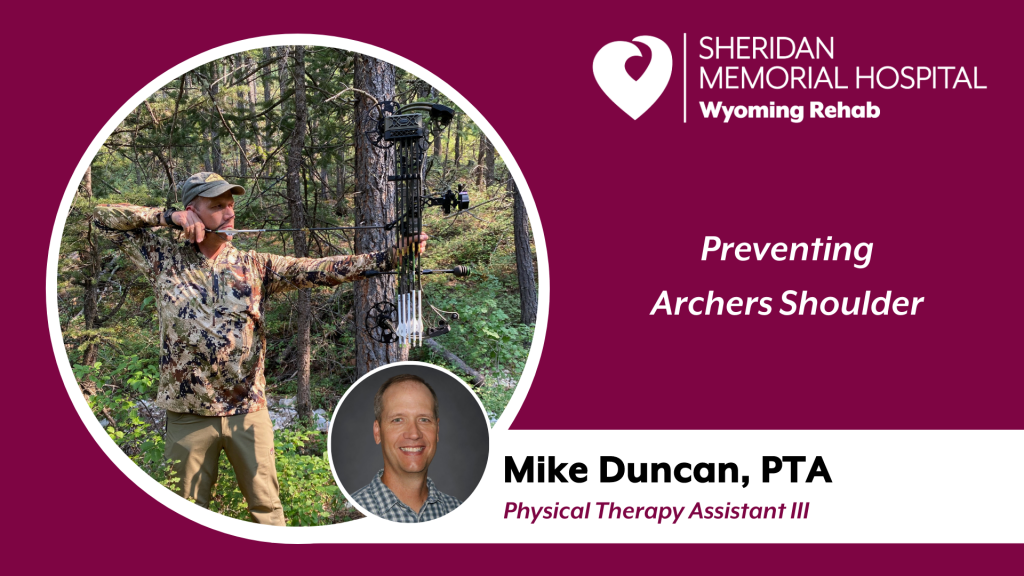
The fall season is rapidly approaching and for many Wyoming residents, that means hunting season.  Hunting with archery equipment or bow hunting thrills many Wyoming hunters.
Archery is truly an amazing sport.  Saxton Pope summarized it perfectly when he said this, “Here we have a weapon of beauty and romance. He who shoots with a bow, puts his life’s energy into it. The force behind the flying shaft must be placed there by the archer. At the moment of greatest strain he must draw every sinew to the utmost; his hand must be steady; his nerves under absolute control; his eye keen and clear. In the hunt he pits his well-trained skill against the instinctive cunning of his quarry. By the most adroit cleverness, he must approach within striking distance, and when he speeds his low whispering shaft and strikes his game, he has won by the strength of arm and nerve. It is a noble sport.”

If you think about the basic actions of shooting a bow – pull back with the fingers or wrist and arm, rotate through the shoulder, hold, and release – it probably becomes clear why upper extremity conditions are some of the most commonly diagnosed injuries among bow hunters. The drawing back of the strings demands a lot from the smaller muscles of the rotator cuff, forearm, wrist, and fingers. Plus, repetitive target practice to improve aim, timing, and other hunting skills can easily result in chronic pain or injury from overuse, referred to as Archers shoulder.

Injuries to the rotator cuff are archery’s most common problem. The rotator cuff is a complex system of muscles and tendons in your upper arm that is used to draw a bow and to raise and rotate your arm. Rotator cuff injuries include tendinitis, bursitis, and, in severe cases, a rotator cuff tear.  Tendonitis is a condition that results from the rotator cuff tendons becoming irritated or damaged.  Bursitis involves the fluid-filled “pillow” that acts as a cushion between the rotator cuff tendon and shoulder blade, which may become irritated or inflamed.  A torn rotator cuff tear may put you out for the season but is not always easy to diagnose.  Symptoms include having trouble lifting, raising your arm, pain when moving, shoulder weakness, or a clicking sound in your shoulder when moving it. If you have any of these symptoms, stop shooting and seek competent medical advice. Through skilled rehabilitation, most archers recover and resume shooting upon completing physical therapy.

Specific exercises and stretches from a qualified professional at Wyoming Rehab will alleviate and can prevent the common conditions associated with Archers shoulder and return you to the range or to the hunt.  Call us today to set up a free screening for non-emergent physical impairments or injuries – 307.674.1632.

Learn more about Wyoming Rehab services by following the link sheridanhospital.org/medical-services/rehabilitation-services/

By Charlotte Walter, PT, DPT, ATC – Wyoming Rehab

If there’s one thing we can all agree on, it’s that 2020 was not the year we expected. Increased stressors and disrupted schedules are often accompanied by decreased exercise consistency and other poor health habits. Once bumped off the wagon, it can be difficult to dust ourselves off and clamber back up. If 2020 knocked you off your fitness routine or reminded you of the importance of starting one, read on.

A common barrier for individuals wanting to start an exercise routine is joint pain or stiffness. Luckily, exercising the right way has actually been shown to decrease these symptoms. To avoid flaring up joint pain, it is important to start smart. Take an honest assessment of your current exercise levels – if you are not currently exercising at all, jumping into a six-days-a-week-60-minutes-a-day high-intensity exercise program will cause a significant increase of joint loading. Instead, start by incorporating low-impact cardiovascular activities such as walking, dancing, cycling, swimming, cross-country skiing, or rowing with gradual increase in duration.
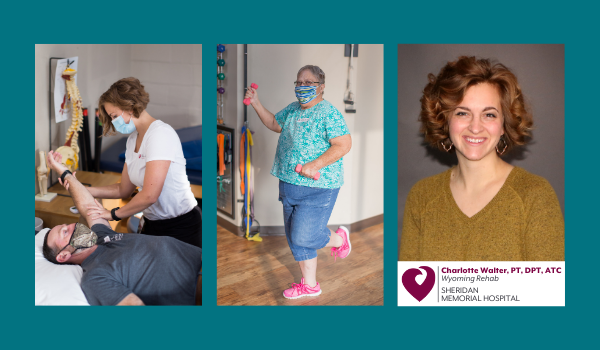
Strength training is another joint-friendly activity that strengthens the muscles surrounding the joint, which in turn will support the joint and reduce joint stresses. Good news is you don’t need a full gym set-up to get a good workout! Using bodyweight, resistance bands, or free weights can still load muscle groups enough to induce strength gains. No free weights around the house? Get creative with empty milk or water jugs filled with water, sand, or rocks.

Flexibility exercises are an excellent complement to aerobic and strength training activities. Moving a joint through its full available range of motion encourages circulation of joint fluid and helps to reduce joint stiffness. Gentle stretching or yoga routines are a great way to work this in.

Keep in mind, exercise is just a piece of the fitness puzzle. An effective workout is hard to achieve if you are short on sleep, hydration, or nutrition. Start smart and make small, sustainable changes that will have a long-term positive impact on your health. Additional sources of information about physical activity can be found from the CDC, the American Heart Association, the Department for Health and Human Services, and others.

Does all of this sound great, but you’re unsure of where to start? As with any new exercise program, you should consult your doctor to address any medical concerns that could limit exercise before beginning. If you have medical clearance but are stumped by persistent pain, previous injury, or balance concerns, take advantage of your knowledgeable sports medicine and orthopedic therapy team at Wyoming Rehab! Our therapists offer FREE screens and treatment recommendations on non-emergent physical impairments or injuries. Don’t let those aches and pains hold you back. The therapists at Wyoming Rehab can help guide you in the right direction to get your 2021 on track.

Armed with the right knowledge and a desire to improve our levels of health, there’s no reason to not make 2021 the comeback year we all need.

Find out more about what Wyoming Rehab can do for you:  https://www.sheridanhospital.org/medical-services/rehabilitation-services/

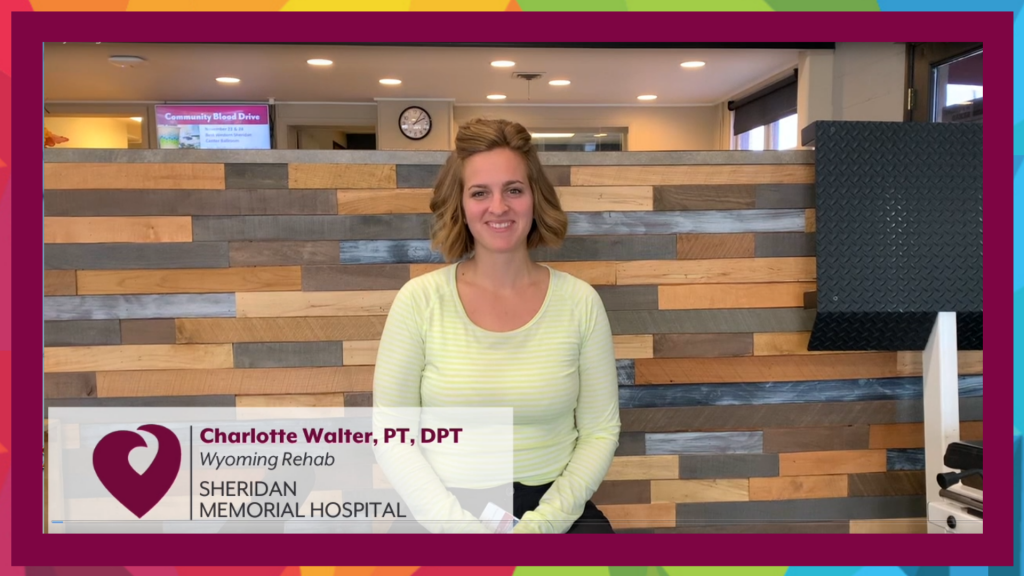
Wyoming Rehab’s Licensed Physical Therapist Charlotte Walter describes her approach to creating individualized treatment plans to help each patient achieve their goals. In this video, she highlights a treatment plan she created for Pat Hall, who came to Wyoming Rehab with concerns of balance and mobility.
Do you have a condition or impairment preventing you from reaching the recommended amounts of physical activity? Don’t continue to put your health at risk. Find out how physical or occupational therapy may help. Reach out to Wyoming Rehab at 307.674.1632 if you would like to schedule a FREE Screen/Treatment Recommendation for a Non-Emergent Physical Impairment or Injury.

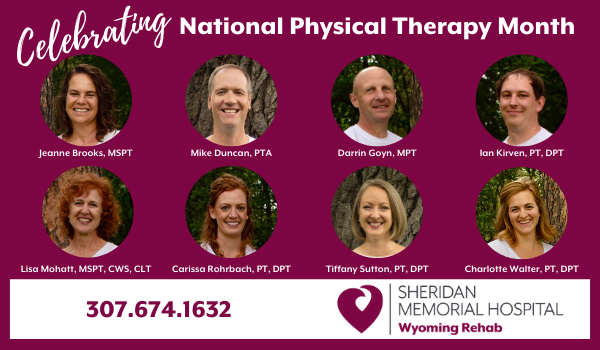
October is National Physical Therapy Month.  Did you know that Wyoming Rehab provides FREE Screens and Treatment Recommendation on Non-Emergent Physical Impairments/Injuries?  The therapists at Wyoming Rehab want to provide you with some tips for living a healthier life.

Physical activity can significantly impact your long-term health. A study published in the July 2020 edition of the British Medical Journal reported that physical activity is key.

People who regularly get 150 minutes of moderate exercise or 75 minutes of vigorous exercise per week, along with 2 days of strength training, are more likely to live a longer, healthier life.

Here are some simple examples to help you get the exercise you need…

Moderate intensity: you can talk but not sing during the activities such as:

  • Walking briskly
  • Water aerobics
  • Bicycling slower than 10 miles per hour on primarily level terrain
  • Doubles tennis

Vigorous intensity: you cannot say more than a few words without having to pause to take a breath during activities such as:

  • Race walking, jogging, or running
  • Swimming laps
  • Bicycling over 10 miles per hour with hills
  • Singles tennis
  • Aerobic dancing
  • Hiking uphill or with a heavy backpack

Strength training: two days per week involves exercises specifically-designed to fatigue muscle groups using weights or other resistance.   You can also use your body weight for resistance by doing push-ups, pull-ups, crunches, leg squats or push-ups against a wall.

Do you have a condition or impairment preventing you from reaching the recommended amounts of physical activity? Don’t continue to put your health at risk! Find out how physical or occupational therapy may help.
Reach out to Wyoming Rehab at (307) 674-1632 if you would like to schedule a FREE Screen/Treatment Recommendation for a Non-Emergent Physical Impairment or Injury.