
Welcome to Sheridan Memorial Hospital
1401 West 5th St. Sheridan, WY — 307.672.1000

When it comes to running, efficient movement and injury prevention matter just as much as wearing a good pair of sneakers. Common running mistakes—
At Sheridan Memorial Hospital, orthopedic care, rehabilitation and interdepartmental collaboration come together to deliver exceptional patient
During their annual meeting on July 23, 2024, The Sheridan Memorial Hospital (SMH)
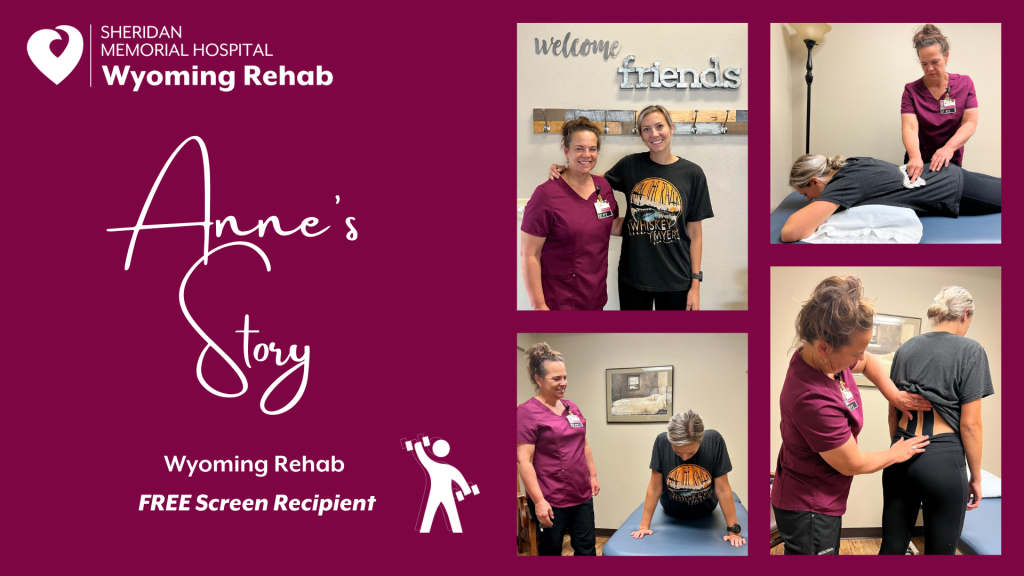
Anne Hinman was kind enough to leave this 5 star google review about Sheridan Memorial Hospital’s Wyoming Rehab:  “I could not have been happier
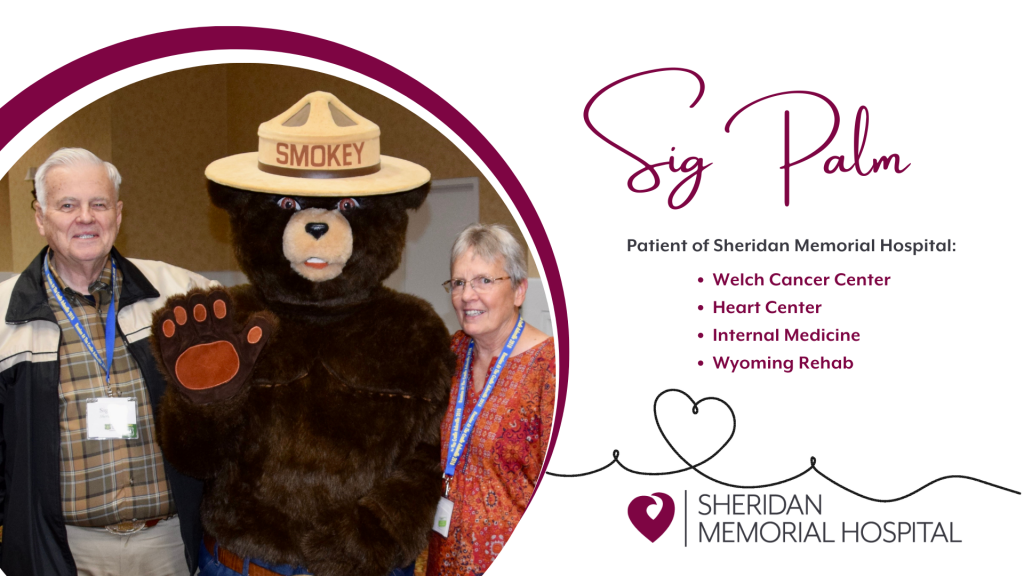
For most people, Sheridan, WY is a place to come when you want to get away from the crowds yet still crave the comforts of a small town. For Sig
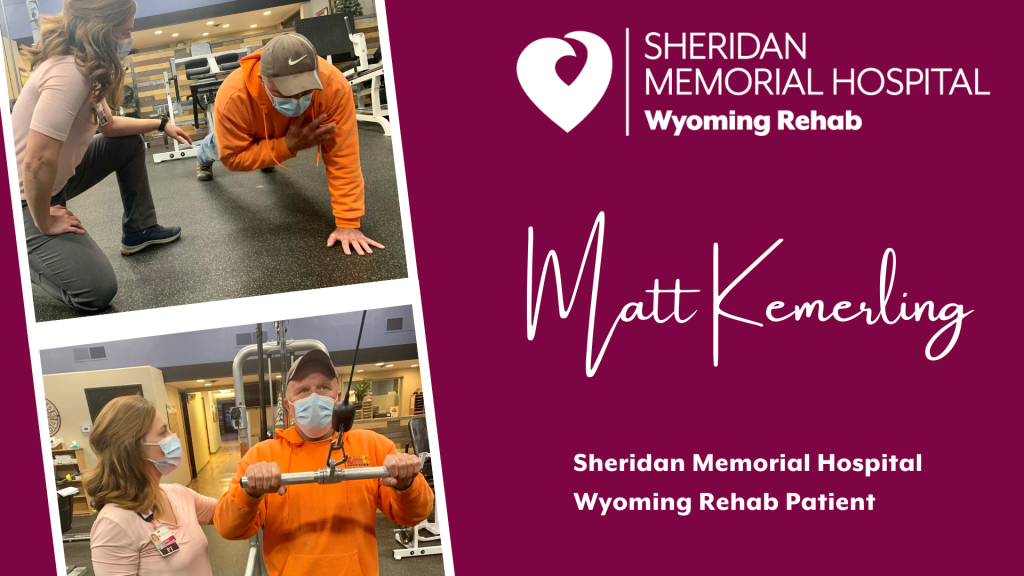
The challenges that come with a debilitating injury are more than physical.  The mental challenges of not being able to do things that came easy prior
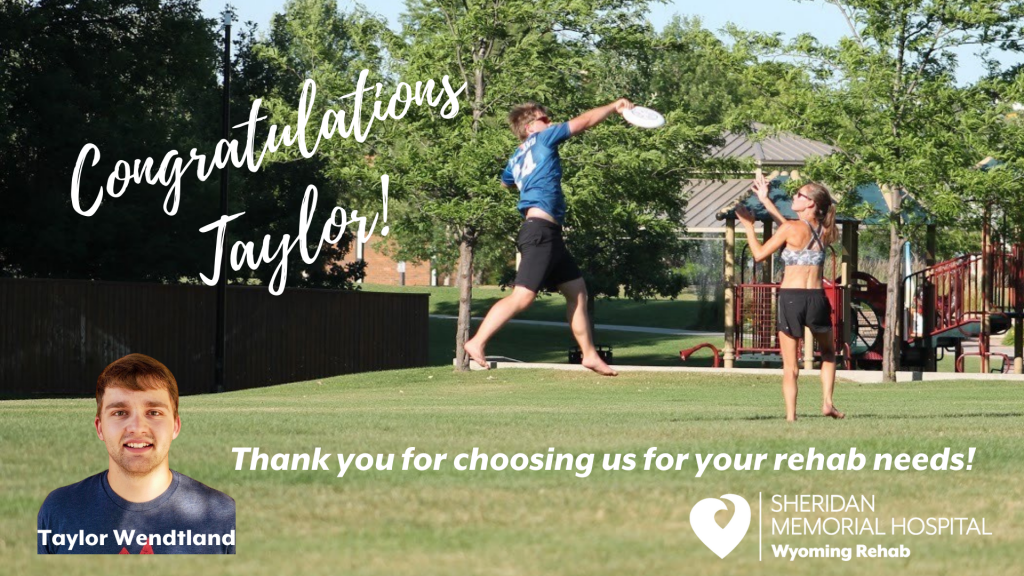
Taylor Wendtland came to Wyoming Rehab after living with moderate to severe low back pain for nearly 10 years. The pain affected his ability to participate
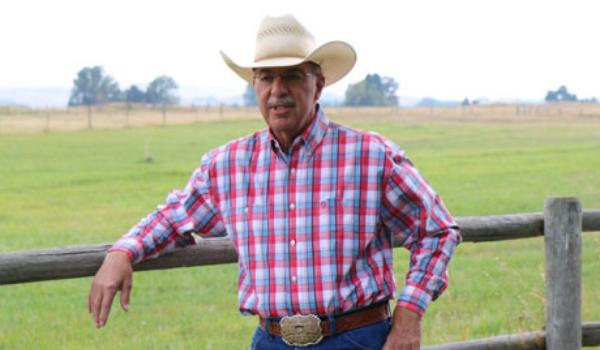
“The one thing I wanted most after the horse riding accident was to be able to get back to roping.”

Wyoming Rehab
Phone: 307.674.1632

135 North Gould Street
Sheridan, WY 82801

Hours:
Mon-Wed-Fri: 7:00 am – 5:00 pm
Tues-Thurs:  8:00 am – 5:00 pm
Sat-Sun: Closed

Peak Power is BACK!
Summer sessions for athletes in grades 5-12 to level up their performance & prevent injury.
Click here for more information

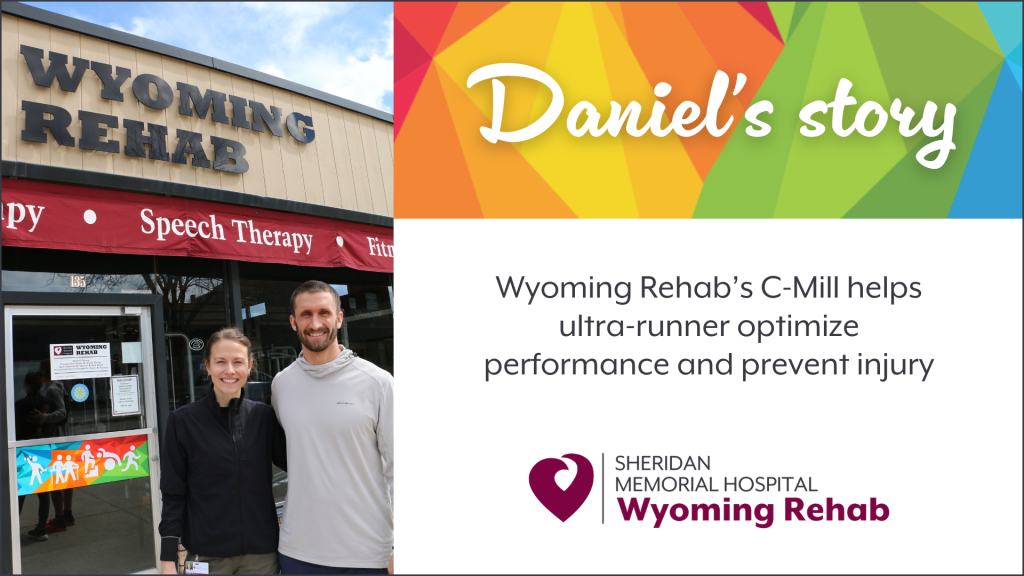
When it comes to running, efficient movement and injury prevention matter just as much as wearing a good pair of sneakers. Common running mistakes—like excessive pelvic drop and overstriding—when they occur too frequently, place extra stress on the muscles and joints of the lower back, hips and knees. Over time, this added strain increases a runner’s risk for injury.

Wyoming Rehab’s C-Mill—an advanced piece of equipment resembling a treadmill available at only a few locations nationwide—integrates virtual reality to add variety to exercises, features a force plate to measure gait and adaptability and includes frontal and side cameras for in-depth analysis of walking or running patterns.

The C-Mill is a powerful tool for improving movement efficiency and reducing injury risk. While commonly used in stroke and traumatic brain injury rehabilitation, it also plays a vital role in performance training for athletes at all levels.

“It’s super cool equipment,” said Wyoming Rehab’s Lindsay Kinney, PT, DPT, COMT. “You record a 30-second video, and the C-Mill picks up on all of the weight-bearing, loading and any asymmetry that you can see with somebody’s strike or step length. It’s truly a one-of-a-kind device, and I feel lucky to have access to it.”

One person benefiting from the C-Mill’s technology is Daniel Katz, an avid runner and EMT with Wyoming Regional EMS. Daniel recently underwent a gait analysis with Wyoming Rehab using the C-Mill, and his experience highlights how understanding your body’s movement and making small adjustments can lead to significant long-term benefits.

Daniel, who has completed marathons, half-marathons and ultra-races, discovered his love for long-distance running during the COVID-19 pandemic. What started as a short-term challenge when his friend invited him to run a virtual marathon quickly became a lifelong passion.

“Until I was 25, I swore I would never be a distance runner,” Daniel said. “But halfway through the virtual race, I ended up loving it and haven’t stopped running since.”

Daniel now trains for the 2025 Bighorn Trail Run, scheduled for June 20–21, 2025. The course, which traverses the Little Bighorn and Tongue River areas of Bighorn National Forest, challenges even the most seasoned ultra-runners, with over 20,500 feet of ascent and 20,750 feet of descent. Daniel completed the 52-mile course last year, and this year, he and his wife plan to tackle the 32-mile course together.

Over time, Daniel’s training has evolved, focusing on building weekly mileage to match or surpass race distances, stacking long runs and following a nutrition plan that supports his endurance. He now incorporates the C-Mill into his training to elevate his performance.

A typical running gait analysis at Wyoming Rehab begins with a discussion about the runner’s injury history and current issues. Lindsay then conducts a full mobility and strength assessment in a treatment room, followed by a run on the C-Mill. Using insights from both the assessment and the C-Mill, she creates a personalized treatment plan that may include targeted strength training and gait re-training to improve running mechanics.

Daniel’s gait analysis revealed key insights into his running form. Video footage showed a pelvic drop of more than six degrees, suggesting reduced lateral hip strength. This kind of asymmetry commonly contributes to running injuries. To address this, Lindsay recommended exercises to strengthen the gluteus medius and hip rotators, as well as targeted training to help Daniel maintain a level pelvis while running.

Additionally, the distance between Daniel’s foot and center of mass indicated overstriding. To improve efficiency and reduce injury risk, Lindsay suggested cadence adjustments to bring his foot strike closer to his body.

“Catching these discrepancies now is powerful, as we can address them before they become problems in the future, especially when Daniel is packing in the miles during a training cycle for a race,” Lindsay said. “If he doesn’t fix these issues, somewhere else in the body must pick up the slack, overloading an area that might not be equipped to handle it.”

Daniel appreciated both the depth of insight and Lindsay’s passion for helping runners.

“What’s great about Lindsay is that you can find a lot of people who know their stuff, but she loves this stuff,” he said. “And she’s a runner, too.”

“Runners are unique—all we want to do is run,” Lindsay added. “Sustaining an injury that prevents us from being able to do that is demoralizing, especially if it we have to miss a race because of it. A personalized analysis is a helpful way in keeping us out running on the roads or trails and reducing one’s chances for overload injuries.”

Using the information gathered from Daniel’s running gait analysis, he and Lindsay now have a clear roadmap to improve his running mechanics and stay healthy for the long haul.

“I’m not setting out to be a top-of-the-world runner,” Daniel said. “But I do want to keep running for the next three to four decades. If I can be one of those old guys who still run marathons at 72 that would be awesome. This analysis will help me stay on track.”

Lindsay emphasized that the goal of gait analysis isn’t necessarily to change a runner’s stride, but to optimize their natural movement patterns.

“Everyone has their ‘signature’ moves,” she explained. “Everyone is so individualized. Using the C-Mill, we can identify factors that may predispose someone to injury and provide exercises to strengthen those areas, making their running gait as efficient as possible.”

For Daniel, the experience reinforced the importance of periodic assessments, even for healthy athletes.

“Any work you do when you’re healthy helps prevent injuries and accelerates your training,” Daniel said. “It’s like mental health—when you connect with a therapist while you’re healthy and not in crisis mode, the good work can actually be done.”

He also noted how the C-Mill helped him better understand his body’s needs.

“This will help people develop intuition about their bodies,” Daniel said. “People should listen to their bodies, and they can come in to do these assessments to learn how.”

Looking to enhance your performance and stay injury-free? Call Wyoming Rehab today at 307.674.1632 to schedule your free screening and receive personalized treatment recommendations for non-emergent impairments and injuries. Visit wyomingrehab.org to explore Wyoming Rehab’s full range of services.

A Sheridan couple’s journey through Sheridan Memorial Hospital’s continuum of care

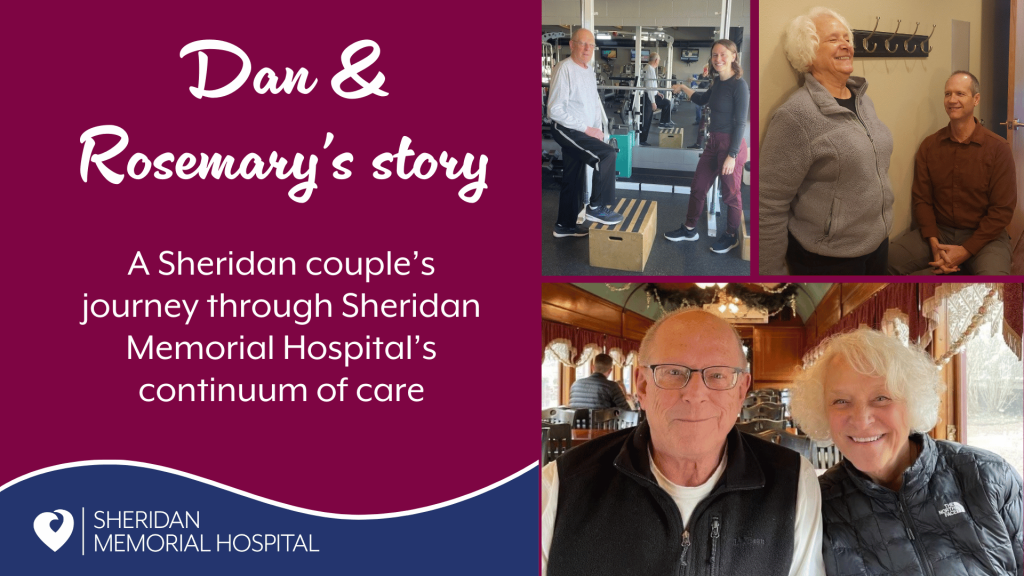
At Sheridan Memorial Hospital, orthopedic care, rehabilitation and interdepartmental collaboration come together to deliver exceptional patient outcomes. Dan and Rosemary Rieder are living examples of the hospital’s commitment to ensuring patient care across the organization is a seamless experience.

Dan struggled with joint pain and arthritis, which significantly impacted his daily life, making even routine tasks like grocery shopping difficult and preventing him from getting restful sleep.

“I could barely get in the car after grocery shopping, my knee was so stiff,” Dan shared. “And my shoulder was grinding, losing flexibility and causing pain. In both cases, they got so uncomfortable that the only real solution was to replace both joints.”

Dan’s wife, Rosemary, encouraged him to seek treatment at Sheridan Orthopaedic Associates after her own positive experience with Dr. Brian Laman, who performed a minor arthroscopic procedure for her. Her trust in the team’s expertise gave Dan confidence in their care, leading him to undergo a reverse total shoulder replacement with Dr. Justin Steinert in November 2023, followed by a knee replacement with Dr. Brian Laman in November 2024.

When Dan’s medical history—specifically his use of blood thinners for an artificial heart valve—led to complications during and after his shoulder surgery, the staff at Sheridan Memorial Hospital collaborated to provide comprehensive care. This included managing excessive bleeding and the need for a blood transfusion following an emergency room visit due to dangerously low hemoglobin levels. These coordinated efforts ensured Dan’s safety and supported Rosemary as his caregiver, while preventing similar complications in future procedures.

Dan and Rosemary were deeply appreciative of the care he received.

“When I was admitted to the hospital following my shoulder surgery, Dr. Steinert was there right away to check on my situation. He didn’t have a responsibility for my care, but he still came in to see how I was doing. I was also impressed because the CNAs and other nurses. The CNAs were kind and caring and the nurses would come in and do things that nurse don’t have to do. They would clean up my dishes, take out the trash and straighten my sheets. They just generally cared about my comfort,” Dan said.

Following Dan’s hospital stay after his shoulder surgery and in preparation for his upcoming knee surgery with Dr. Laman, his care team collaborated to develop a proactive plan to prevent similar complications. Dr. Laman worked closely with Jason Otto, PA-C and Registered Nurse Barb Shumaker from Sheridan Memorial Hospital’s Internal Medicine clinic to implement a strategy known as “bridging.” This approach involved transitioning Dan from blood thinners to anticoagulants through a series of twice-daily injections for 10 days before surgery. By carefully managing his medication in this way, the team aimed to reduce the risk of complications and ensure a smoother recovery after Dan’s knee replacement.

As Dan’s caretaker following his previous surgery and in anticipation for the upcoming one, Rosemary said she was thankful for being included in the process.

“They always gave me the information I needed,” Rosemary said. “Many times, when you’re the one receiving care, doctors will only talk to you. I found that, in Dan’s case, when a doctor came in, they not only talked to him, but also to me, and I found that comforting.”

This proactive strategy proved successful, and Dan’s knee replacement surgery was completed without additional complications. He is now pleased with the results of both surgeries and demonstrates the progress he has made, easily stretching and bending his arm over his head.

“With my shoulder, I had difficulty maneuvering in certain ways, but now, being able to do this…” Dan said, demonstrating his ability to stretch and bend his arm over his head. “Being able to reach behind my back to put on my belt is great. The cooperation between departments, the surgeons and everyone involved worked really well.”

Post-surgical rehabilitation was essential to Dan’s recovery, and Sheridan Memorial Hospital’s Wyoming Rehab provided the physical therapy necessary to restore strength and function to his knee. Physical therapist Lindsay Kinney worked with Dan to achieve his goal of straightening his knee to 0 degrees and flexing it to at least 120 degrees.

“They take you from where you begin, knowing where you want to end up, and walk you through the stages of gaining more flexibility and strength,” Dan explained.

In the end, Dan was able to flex his knee to between 124 and 126 degrees.

Dan is not the only one who has benefited from Wyoming Rehab’s care. Rosemary had previously received treatment for vertigo at Wyoming Rehab, and she is currently undergoing physical therapy for nerve pain in her neck and arms. She echoed her husband’s appreciation for the team, particularly physical therapist Lindsay Kinney.

“I’m no sooner home from my appointment, and there’s a notice that my notes have been updated in the patient portal,” Rosemary shared. “And I think Lindsay is amazing. She has so much knowledge about nerves, and she explains everything so I understand why she’s doing what she’s doing. When she’s pulling on my head, I know there’s a reason for it. I may walk in with pain, but after Lindsay does some of the exercises with me, she’ll ask, ‘How’s your pain?’ and I’ll say, ‘I don’t have any.’”

For Rosemary and Dan, the key takeaways from their experiences with both the surgeries and rehabilitation were the importance of staying on top of health concerns and consistently working on improvement.

“I think the challenge for anyone who has an issue is accepting that issue for what it is and getting the help you need,” Rosemary said. “Don’t wait, because then the problem becomes larger. We have great people at the hospital, so I think not letting something get the best of you is probably more important than anything. Get the help you need. I feel like I’m getting the help I need because some of my pain is already starting to ease up.”

“My knee still gets grouchy at times, especially because of the weather, but I know that I am also continuing to work on it,” Dan shared. “It’s a long, slow process, and when I went into Wyoming Rehab in the beginning, they made it pretty clear that it was going to be challenging, but that’s necessary in order to get to the end. They let me know that right away. I felt the challenge was pushing beyond the pain a little bit, but the reward came when they’d measure my progress, so you were constantly encouraged that you were getting somewhere. So, yeah, it’s hard, but you’ll be glad you didn’t let it go.”

“Except your other shoulder and other knee,” Rosemary joked, amidst her husband’s mock shushing. “But we don’t talk about that. I told him to just give me a couple more months before he decides to do all this again.”

For more information about Sheridan Orthopaedics and Wyoming Rehab, please visit sheridanortho.com and wyomingrehab.org.

Sheridan Memorial Hospital Foundation celebrates new and outgoing directors on the SMH Foundation Board

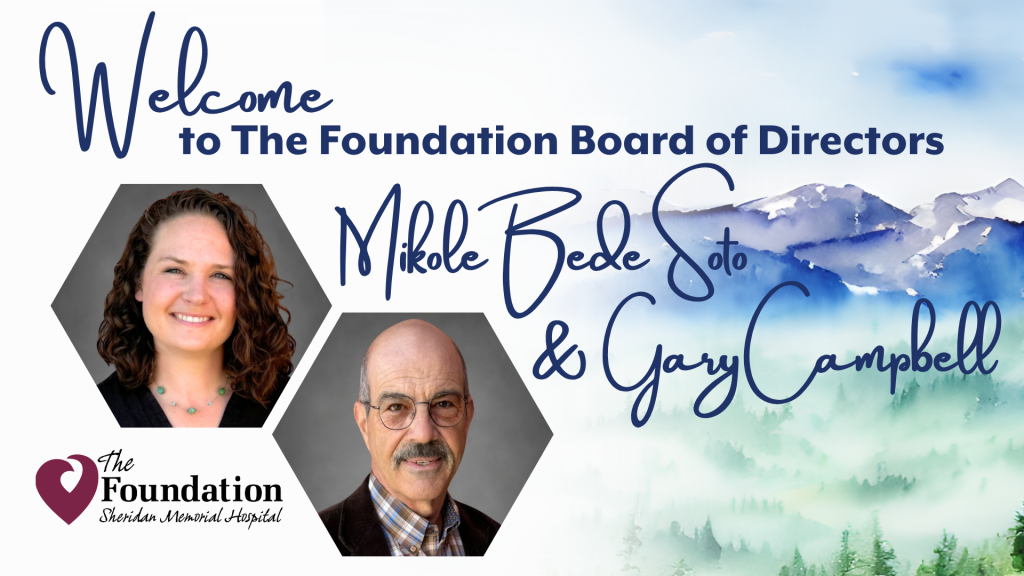
During their annual meeting on July 23, 2024, The Sheridan Memorial Hospital (SMH) Foundation recognized outgoing board directors and welcomed two community members to serve on The Foundation board.

Outgoing Foundation board directors – Vicki Jorgenson and Rob Johnson

With much gratitude for sharing their time, talents and passion, The Foundation announces the departure of two valued board members, Vicki Jorgenson and Rob Johnson. Both served six years and were instrumental in the growth and success of the SMH Foundation during their tenure on the board. Their dedication to The Foundation’s mission has been a driving force behind our fundraising efforts and community outreach initiatives. The Foundation leadership thanked them for their service and wished them all the best in their future endeavors during the annual meeting.

“Vicki’s been an incredible supporter of our community hospital for decades. She is a quiet connector who cares deeply for our community. Vicki’s legacy of kindness and support will always be a part of SMH,” shares hospital and Foundation Chief Development Officer, Cody Sinclair. “Rob Johnson is a pillar of professionalism and thoughtful leadership. It was an absolute pleasure to witness the Foundation’s success under Rob’s calm and steady leadership as Board President over the last two years,” Sinclair expressed.

New board directors – Mikole Bede Soto & Gary Campbell

The Sheridan Memorial Hospital Foundation is excited to announce the addition of two new Foundation board members – Mikole Bede Soto and Gary Campbell.

Mikole was raised in Sheridan and then attended the University of Wyoming, where she received a B.A. in History and Political Science and a Master’s in History. After receiving her Juris Doctorate degree from the University of Wyoming in 2017, Mikole Bede Soto joined Chapman Valdez & Lansing in 2018 in the Sheridan office.

Mikole finds it important to be engaged in the Sheridan community. Currently, she serves on the Sheridan Chamber of Commerce Board, KidsLife Board, and Museum of the Bighorns Board. Mikole is also a graduate of the 2020-2021 Sheridan County Leadership class. “The hospital is such a pillar of our community. Having excellent healthcare in our community is part of what makes Sheridan so special,” shared Mikole. “I look forward to helping contribute to this asset in our community and ensuring it is here for everyone.”

When able to adventure, Mikole enjoys spending time outdoors with her husband, Austin, daughter, Marley, and their dogs and horses. Occasionally, Mikole teaches cooking classes at her family’s business, Verdello.

On behalf of the entire Foundation Board & staff, Sinclair highlighted, “The Foundation Board is thrilled to have Mikole join our team. She has a wonderful perspective being engaged in the community around her. Her skills, talents and dedication to serving our community excites our entire team and we look forward to working alongside her.”

Gary Campbell grew up in Sheridan and earned a bachelor’s degree in civil engineering at the University of Wyoming. His career included working with the U.S. Forest Service across National Forests throughout the country as well as leadership positions in Washington D.C. Gary ended his career with the Bureau of Reclamation and oversaw many large water projects across nine states in the Western United States.  Gary brings a wealth of knowledge and experience. “Coming back to Sheridan brought out a desire to serve the community that gave so much to me. Having family members who have experienced a lot in healthcare systems, I feel that I can truly help to support and make a difference for others, to ensure that they all have the excellent care they deserve,” says Campbell. “Serving on The Foundation Board is the exact opportunity I was looking for to give back and really connect.”

After a decorated and extensive career, Gary is now retried back in Sheridan, the community he has always called home. Gary is an avid outdoorsman and likes to hunt and fish.  You can often find Gary with his family: wife – Cindy, his son Justin and wife Katie also of Sheridan, and visiting daughter Ronni in Reno, Nevada.

“When you meet Gary, he exudes professionalism and kindness. His passion and thoughtfulness are always apparent and just what we look for in a board member. He has so much to offer our hospital and Foundation. Our team is looking forward to sharing and learning from him,” expressed Sinclair.

Looking ahead

The Foundation team is inspired by the leadership, passion, and community spirit of our board. The Foundation welcomes Mikole Bede Soto and Gary Campbell and express gratitude for the involvement and contributions of the other Foundation board members: President Sue Belish, Vice President Wendy Smith, Secretary Yvonne Gatley, Treasurer Chuck Burgess and at-large directors Dr. Bill Doughty, Richard Garber, Ryan Franklin, Rosemary Rieder and Dr. Joshua Scott. Their diverse backgrounds and dedication to service will strengthen efforts to support Sheridan Memorial Hospital in providing exceptional healthcare to our community.

To get the most up-to-date Foundation information and learn more about The Board of Directors, visit sheridanhospital.org/foundation or call our Foundation Team at 307.673.2418.


Anne Hinman was kind enough to leave this 5 star google review about Sheridan Memorial Hospital’s Wyoming Rehab:  “I could not have been happier with the treatment and personal care of this team!  I messed up my back and was in a lot of pain.  Jeanne was able to squeeze me in for a consultation and really took the time to figure out where my pain was coming from and how to treat it.  Highly recommend this clinic.”

Anne said a friend of hers recommended Wyoming Rehab – so she went to the hospital’s website and learned about the Free Screenings for non-emergent issues. 

“I am a bit embarrassed to say that I had begun lifting weights and was experiencing “very much” pain – I’m 27 and was scared that I had really done something bad to my back and I hoped that physical therapy might help.  It was awesome that Jeanne Brooks could fit me in the same day as I called Wyoming Rehab.

Jeanne checked out my back and walked me through some activities and motions that helped loosen up my back.  It was a lot more help than I was expecting on a screening visit. Jeanne also gave me a list of things that I could do on my own to help alleviate the pain and relax my back.

Jeanne also said that I was welcome to come back for more help if need be, but I am doing fine on my own now.  If I ever have an injury, I know I would go back to Wyoming Rehab.”

If you have nagging aches or pains, give Wyoming Rehab a call today to schedule a non-emergent free screening – 307.674.1632.


For most people, Sheridan, WY is a place to come when you want to get away from the crowds yet still crave the comforts of a small town. For Sig Palm, the deciding factor to come to Sheridan was having local access to exceptional healthcare.

Sig’s first introduction to Sheridan came in 1967, while on a trip to meet with the forest supervisor and his primary staff. Sig was a newlywed, freshly off active duty in the Army, and brand new to the Forest Service. That day kicked off a pivotal Forest Service career spanning fifty-eight years and numerous states. While the bulk of his working years took him far away from Sheridan, he never forgot how at home he felt there. Unforeseen to him at the time, Sheridan would become the place he relied on to manage numerous health concerns ranging from minor to extensive.

Sig is no stranger to heart problems – both his maternal grandfather and his mother died of congestive heart failure. Around the age of 11, Sig realized he had inherited the same heart trouble. “I knew about it because I didn’t have the stamina that other kids did, like in PE.” So, it was of little shock to Sig when in 2012, on a Boy Scout trip to Yellowstone with his grandson, he went into congestive heart failure.

At that time, Sig and his wife Judi were living in Colorado Springs but contemplating a return move to Sheridan. “Sheridan is where we felt most at home. Our kids were born around here, and we kept in touch with our friends.” But for Sig and Judi, they couldn’t base their decision to move back solely on feelings – the scare on that Yellowstone Boy Scout trip made proximity to specialized healthcare the number one determinant in where they would live. Armed with a list of Sheridan doctors suggested by his physician in Colorado Springs, Sig set to work researching. “The most important thing to me at the time was the heart center and what it offered. I told them what I had going on, and Dr. Brennan came highly recommended.” What he found in researching Sheridan Memorial Hospital Heart Center sealed the deal – after decades away, they were coming home to Sheridan.

Since their move back to Sheridan, Sig has run the gamut with hospital specialties. From Cardiology, Orthopedics, and Wyoming Rehab to Internal Medicine and The Welch Cancer Center – he has been a patient of each. Sig recalls a conversation he had with Dr. Megan Ratterman, Oncologist at the Welch Cancer Center, when he was diagnosed with Multiple Myeloma. She said, “I won’t feel offended if you want a second opinion.” Sig thought about it and decided, “Nah. You know, I want to stick with the Sheridan team. I trust their counsel.”

Sig understands he has options for care. He has chosen to stay here at SMH. For Sig, the ability to receive the care he needs locally made all the difference. “Everyone I have ever came in contact with at the hospital has been just beyond wonderful.”

For more information about the many exceptional services offered at Sheridan Memorial Hospital, visit our website at www.SheridanHospital.org.

The challenges that come with a debilitating injury are more than physical.  The mental challenges of not being able to do things that came easy prior to the injury can be beyond frustrating. And the baby steps it sometimes takes to get back to “normal” can seem to take forever.

Matt Kemerling’s shoulder injury from a workplace mishap took him through some very challenging times. “I separated my biceps from my shoulder is how the doctor described it to me,” Kemerling stated. “The news that I had to have surgery just shattered me. But the doctor assured me that the surgery followed by a strong physical therapy regimen I could get back to normal.”

Kemerling admits his first thoughts about physical therapy were “that it’s a waste of time. I wasn’t a big believer in it.” But he was willing to give it a try and after the surgery he got to work with Charlotte Walter and Mike Duncan at Wyoming Rehab.

“I don’t think I could have been more fortunate to work with two people who fit my personality better,” Kemerling said. “I was super impressed with them both. They are super motivators and helped drive me to get done what I needed to get done.”

The regimen was three days a week to start and slowed to two days as progress was made.

“As we started doing therapy at the (Wyoming Rehab) facility and I did my homework, I saw improvements and that was a huge factor in my motivation,” Kemerling added. “Just the way Charlotte and Mike listened and talked to me really raised my spirits and helped with the mental aspect of dealing with this injury. That was so important.”

Kemerling was impressed with Walter and Duncan’s approach to therapy, the way they kept his goals in front of him and how they were invested in his success.

“The relationships I developed with the team at Wyoming Rehab were amazing and it was a little sad when I was done with my therapy and had to tell Charlotte and Mike good-bye,” Kemerling said. “It was an awesome experience, with a very professional team and I would recommend them to anyone.”

Learn more about Wyoming Rehab services by following the link sheridanhospital.org/medical-services/rehabilitation-services/  Specific exercises and stretches from a qualified professional at Wyoming Rehab will alleviate and can prevent common health problems.  Call Wyoming Rehab  today to set up a free screening for non-emergent physical impairments or injuries – 307.674.1632.

Taylor Wendtland came to Wyoming Rehab after living with moderate to severe low back pain for nearly 10 years. The pain affected his ability to participate in many of the outdoor activities he enjoys. Since coming for treatment, Taylor’s pain has completely resolved, and he is back to doing all the things he loves. Here Taylor is playing Ultimate Frisbee in the park after just a few weeks of treatment at Wyoming Rehab. Congratulations Taylor!!

Call Wyoming Rehab today at 307.674.1632 and ask about our FREE Screens and Treatment Recommendations on Non-Emergent Physical Impairments/Injuries.

The one thing I wanted most after the horse riding accident was to be able to get back to roping.” Mark Ferries

A severe rotator cuff injury…
A flawless surgical repair…
A determined patient…
And WYOMING REHAB helping Mark achieve his goal.
 
MEDICAL EXCELLENCE – right here at home