
Welcome to Sheridan Memorial Hospital
1401 West 5th St. Sheridan, WY — 307.672.1000

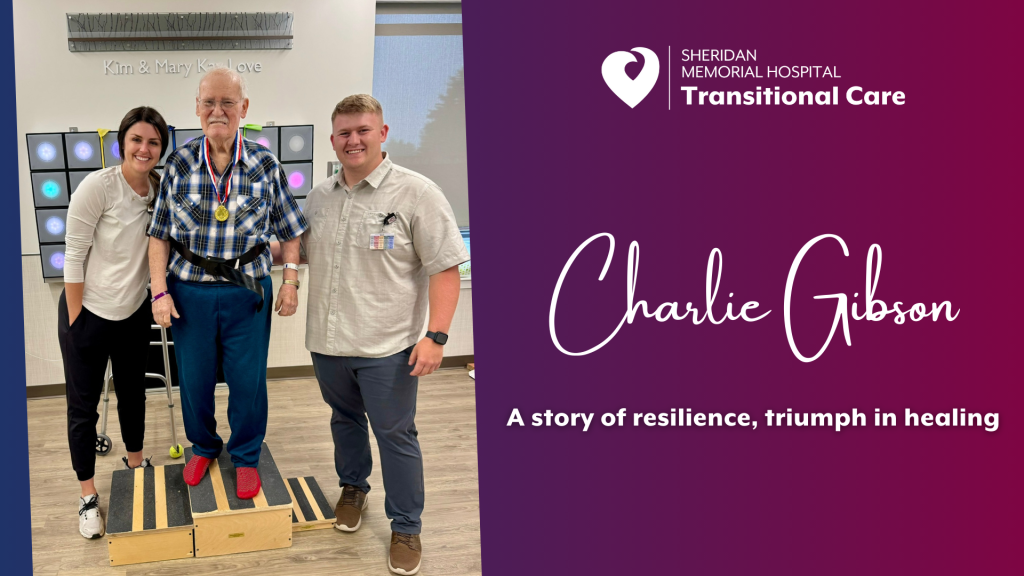
At 91, Charlie Gibson faced some of the toughest challenges of his life all at once. A prostate cancer diagnosis led to the discovery of a malignant kidney, which was promptly removed, leaving him with healing stitches. To make matters worse, Gibson was hit with a severe urinary tract infection that left him bedridden and drained of energy.
But Gibson’s story doesn’t end there — it’s just the beginning of his remarkable recovery at Sheridan Memorial Hospital’s Transitional Care Unit. Gibson affectionately refers to his time in TCU as “the resurrection of Charlie Gibson,” and the team of physical therapists worked with him, pushing him to regain his strength and balance. But, they didn’t just put him through the paces — they made it fun.
Gibson said the highlight of his stay was undoubtedly the decathlon the physical therapists organized for him. Inspired by the Olympic Games that were on TV during his first two weeks at the hospital, Gibson joked that in his next life, he’d come back as a decathlete. The staff took him at his word and set up a series of challenges that included boxing, throwing a javelin (made from a pool noodle), bowling and more. For Gibson, this event wasn’t just a series of exercises; it was a testament to his resilience and spirit.
“I developed the decathlon for Mr. Gibson after being inspired by the fact that even at 91 years old he displayed an unwavering work ethic and determination to overcome any challenge life put in front of him,” said Dawson Eppe, a physical therapy assistant, who worked with Gibson. “I am a firm believer that everyone is an athlete no matter their mobility or age, and the therapy and exercises we choose for treatment should scale with the patient and reflect that.”
The decathlon wasn’t easy. With his recent surgeries and infections, Gibson found the challenges both taxing and exhilarating, but he didn’t back down. With determination and the encouragement of his therapists, Gibson completed every event, even managing to climb the podium at the end. His efforts were rewarded with a gold medal, a symbol of his triumph over adversity.
Throughout his stay, Gibson found the key to recovery was more than just physical therapy. It was about staying positive, listening to happy music, laughing and accepting challenges — even when they seemed insurmountable. These principles guided him throughout his life, from his career with the U.S. Forest Service to his passion for poetry and art in retirement.
Gibson’s story is one of courage, humor and an indomitable spirit. He’s now looking forward to returning home, where he’ll continue his recovery and resume the active life he’s always enjoyed. He knows it will take time to get back into his routine, but he’s ready for the challenge.
For anyone who might find themselves in a similar situation, Charlie has a simple message: “Don’t just lay around. You don’t get well doing that. You need someone to kick you in the butt every day and get you moving.” And if you’re lucky enough to be at Sheridan Memorial Hospital Transitional Care, you’ll have a team of people ready to do just that — with a smile, a laugh, and maybe even a gold medal to reward your efforts.
If you or a loved one have spent three nights in the hospital and still need additional care before returning home, ask your case worker or physician about Transitional Care at Sheridan Memorial Hospital. Our Transitional Care program offers a supportive environment where you can continue your recovery close to home.
Javelin (made from a pool noodle)
Boxing
Bowling
Receiving the Gold
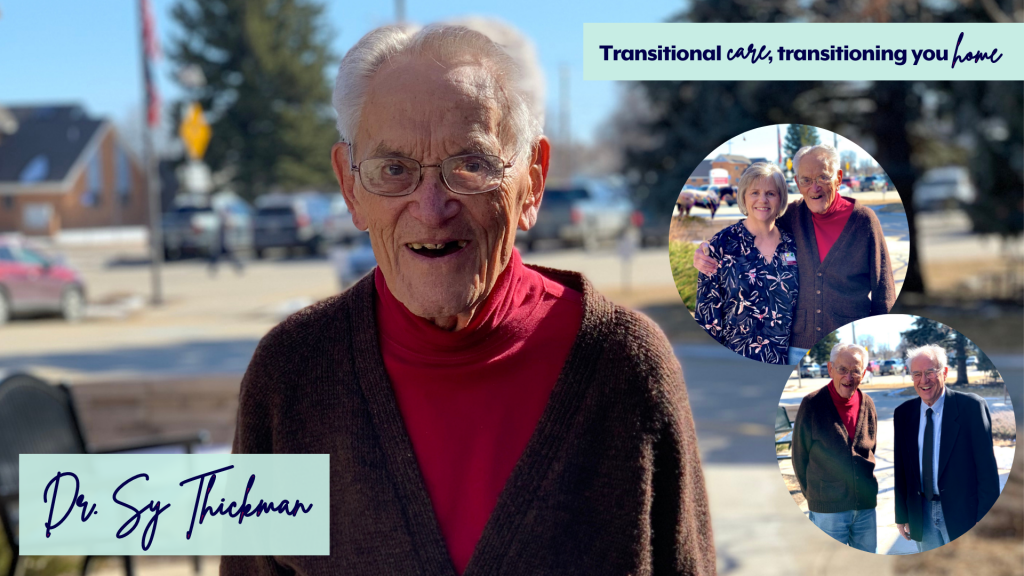
In early January 2020, Dr. Sy Thickman stepped outside for his usual dog walk. Awaiting him was a thin layer of snow covering thick black ice; he slipped and fell as soon as he reached the street.
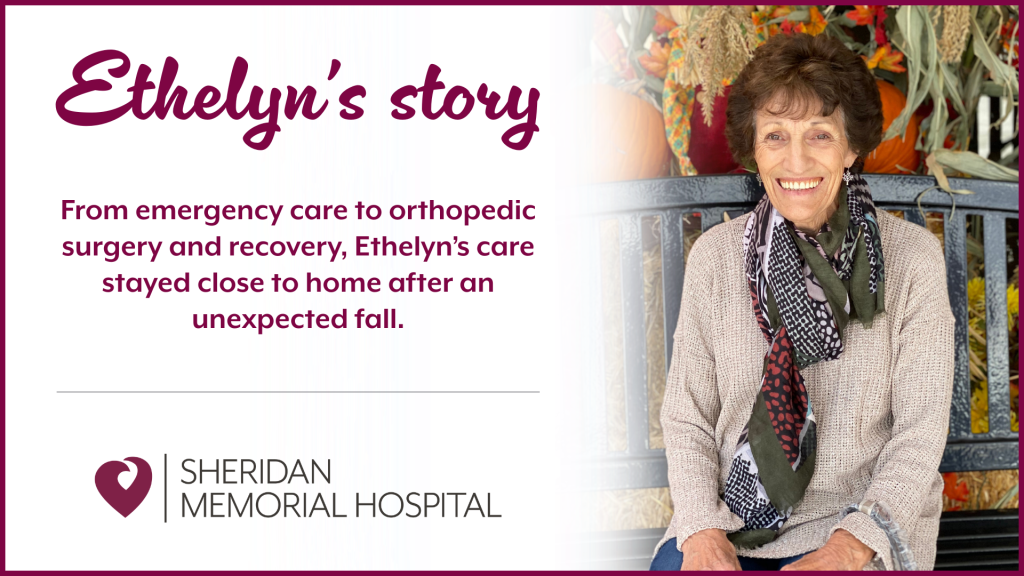
“I live with a very dear friend and yelled out to her,” Dr. Thickman remembered. “I was lying in the snow — I couldn’t move at all.”
His friend called for an ambulance, and within 15 minutes, Dr. Thickman arrived at Sheridan Memorial Hospital (SMH). X-rays revealed a fractured hip, and an orthopedic surgeon recommended an operation as soon as possible. The very next day, Thickman underwent a successful surgery and was transferred to the Transitional Care Unit (TCU).
The TCU is a recuperative and supportive place to heal following an injury, surgery, or serious illness. An expert team of nurses, doctors, and physical therapists manages patients’ transitions from daily intensive care to returning home.
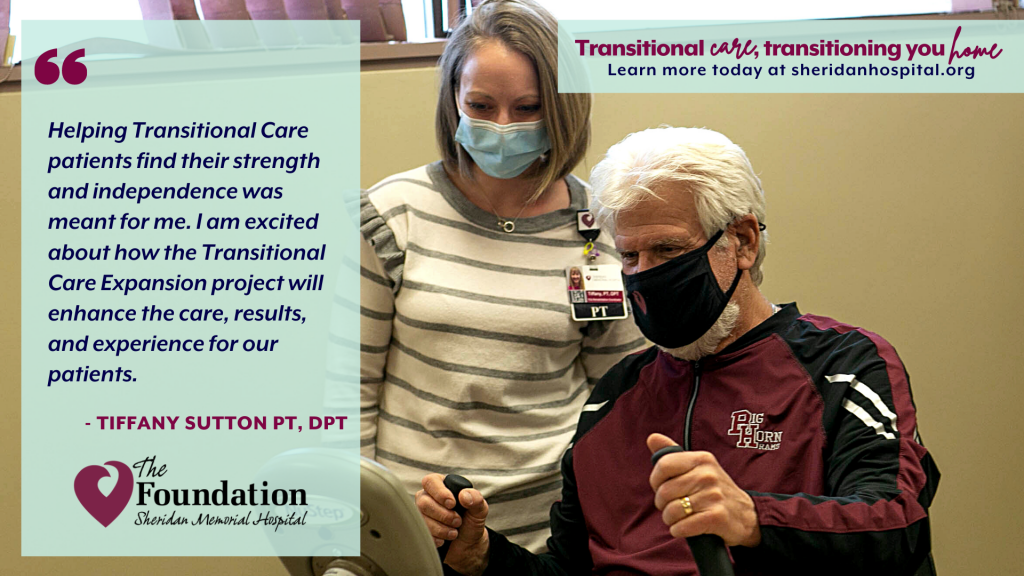
“Some people may think that if they lie in bed all day and seem to be doing better medically, they’re ready to go home,” said Tiffany Sutton, a longtime physical therapist and the TCU Rehab Coordinator. “But you need (physical therapy) so you can go safely home — and stay home.”
Sutton and her team frequently have to put on a cheerful show to entice patients to participate in the all-important but often uncomfortable physical therapy. A physician since 1946, Dr. Thickman didn’t need to “drink the Kool Aid,” Sutton said.
And yet, this was his first hospitalization in his then 96 years. Dr. Thickman was admittedly worried, especially when he wasn’t able to move his injured leg at all for many days.
“You begin to think occasionally of potential consequences that would not be uncommon at this age,” he said. “There was a period of hospitalization early on in which I wondered if I was going to be able to return to a normal way of life.”
Enter: the TCU team. The nurses kept Dr. Thickman company, encouraged him to enjoy his meals in the community dining space with his fellow patients, and made him as comfortable as possible. The physical therapists worked on his mobility with their creative methods meant to mimic activities of daily living. The doctors monitored his progress. Everyone lifted his mood.
“I really had such comfort with the staff,” Thickman said. “They came every day, and it was fun to expect them. Never did I have any concern that wasn’t fulfilled. I felt in good hands, and I was able to — if you don’t mind the expression — ‘have fun with it.’”
The feeling was mutual.
“He was very fun — a joy to have,” Sutton said. “He shared his wisdom with us, which was incredibly wonderful of him. He would joke around with us and talk to us about how medicine has progressed. Thirty years ago, this (level of physical therapy) would never have happened.”
After two weeks of progressive improvement, Dr. Thickman could move with a walker with comfort, dress, and care for himself on his own. He was ready to be discharged. The transition home came with more prescribed physical therapy that tapered off over another two months.
Today, at age 98, Dr. Thickman is able to walk without the assistance of a cane or walker. He attributes his complete recovery to the “excellent care” at Sheridan Memorial Hospital.
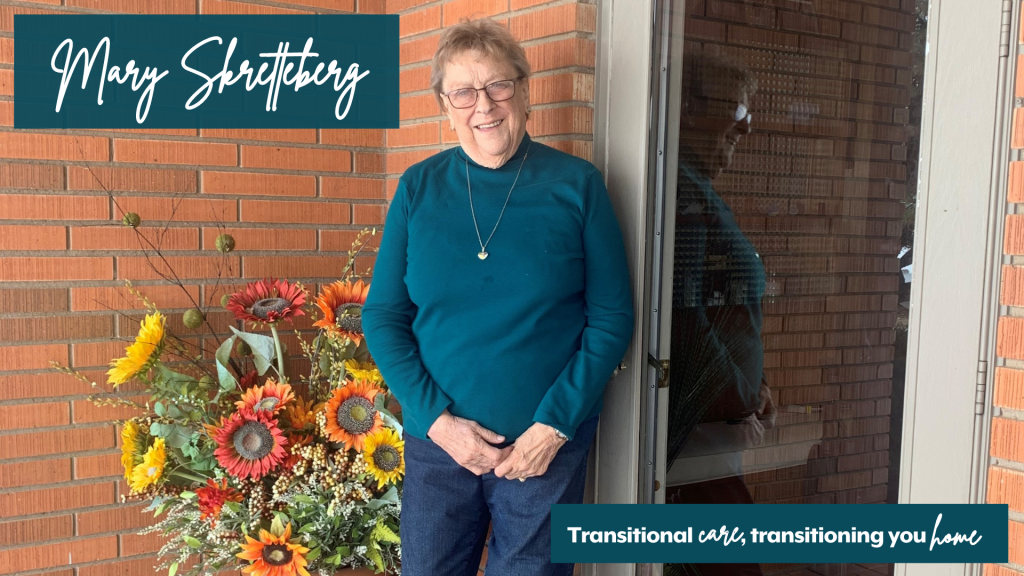
When Mary Skretteberg severely broke her ankle in September 2019, the prescription of a prolonged hospital stay felt like insult added to injury for the 79-year-old. But when she was discharged two months later, she said goodbye to the staff at Sheridan Memorial Hospital’s Transitional Care Unit (TCU) with tears in her eyes.
Skretteberg was surprised by the level of community she found at the TCU, a recuperative place to heal following an injury, surgery, or serious illness. “It was kind of like a college dormitory,” she explained. “You’re sharing a space: You’re sharing the dining room, you’re sharing the therapy, and you’re sharing your pains and aches and worries.”
By the end of her stay, Skretteberg felt at home in the halls of the TCU.
Today, Skretteberg is thrilled to be home with her husband. She continues to practice physical therapy and is “on the mend.”
And she continues to think fondly of her TCU family. Skretteberg hopes the TCU is able to add more beds “because the community is growing, and once you’re 50, 55, 60 years old, you start to break an ankle here, fall there — you need some time to recover in a hospital that doesn’t feel like a hospital.
“The TCU feels like TLC.”
To learn more about Transitional Care and the current Expansion Project, visit sheridanhospital.org/foundation today!
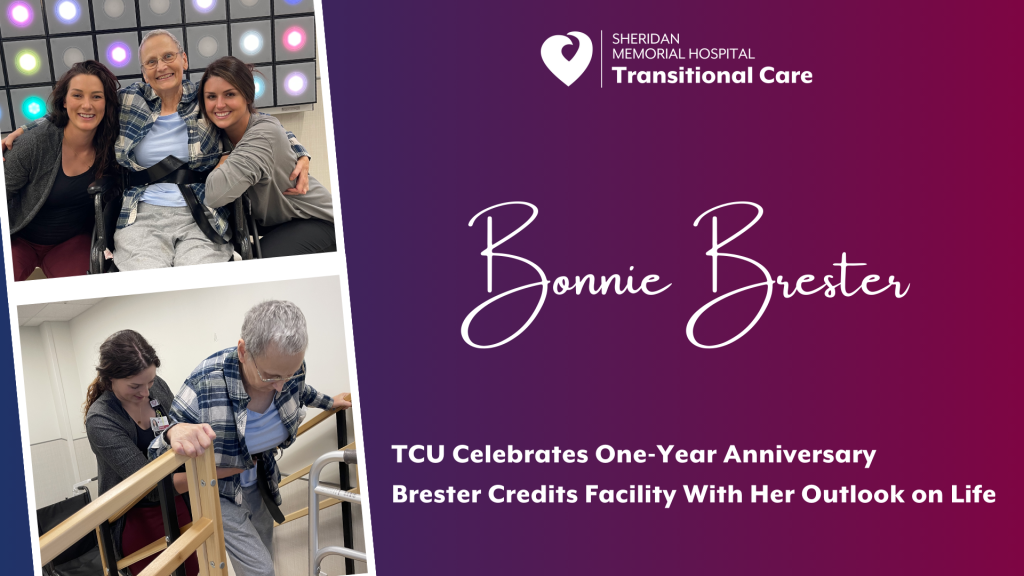
Bonnie Brester had a rough year. Her husband, Mark, died in July 2022, and about six months later, Brester received a breast cancer diagnosis that would change not only her outlook on life but where she would call home.
Brester began treatment for the cancer in January, but about three days after one of her chemotherapy treatments her condition quickly declined.
“I had developed neuropathy and I was going to have to learn to walk all over again,” Brester said. “I needed emotional support. I needed physical therapy. I needed a place that could care for me throughout the day.”
While she had lived in Billings, Montana, with her husband prior to his passing, Brester knew her new situation wouldn’t allow for that independence. She moved to Sheridan and began receiving care in Sheridan Memorial Hospital’s Transitional Care Unit, which provides a recuperative and supportive place to heal following injury, surgery or serious illness. For Brester, Sheridan Memorial Hospital’s TCU meant she could be closer to family because her son, Dusty, and his wife, Jamie, live in Sheridan.
“I can’t say enough about all the great people at Sheridan’s TCU unit,” Jamie Brester said. “My mother has been in TCU twice for short amounts of time and just recently, my mother-in-law spent approximately 90 days there.”
“…Having her in Montana and us down here was not an option,” Jamie Brester said of her mother-in-law. “Bonnie was released to the TCU in July after Billings providers had told us to start looking at hospice options.
“When she got to Sheridan, chemotherapy had taken so much out of her she could not walk or eat and was not comprehensive most of the time. We thought we were going to lose her,” Jamie Brester added. “Once she got to Sheridan, everything changed. Bonnie started to feed herself, started physical therapy and really started to live again.”
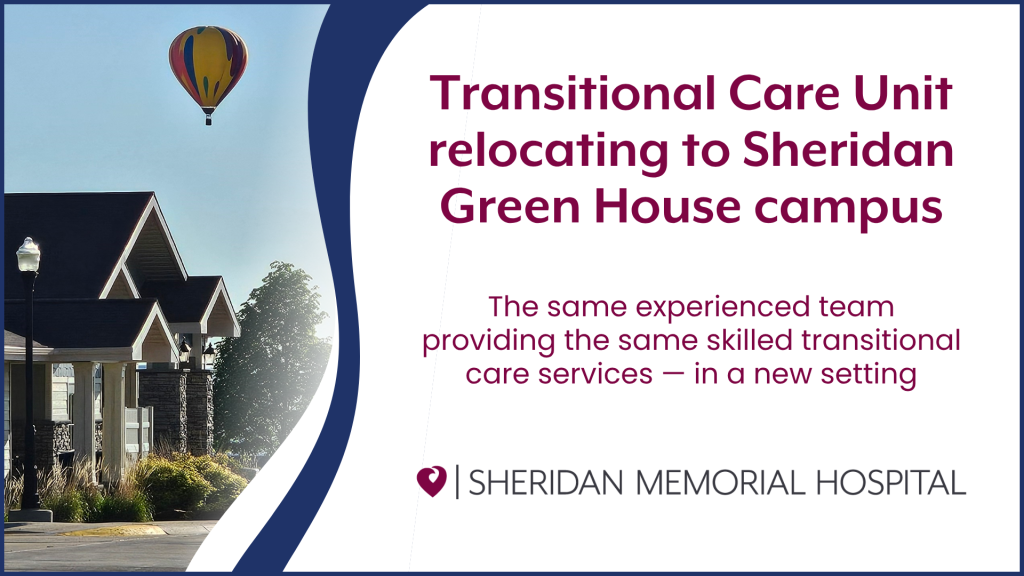
The new TCU space at Sheridan Memorial Hospital opened in the fall of 2022, after several years of planning and construction. The new space, located on the second and third floors of the original 1954 hospital, includes 20 private suites for those needing time, space and help in healing.
“The first year has been full of celebrations, lessons, growth and achievements,” said Ashlee Winne, TCU manager. “I really enjoy seeing the progress the patients make. They come in sometimes at the hardest times of their lives and by the time they leave are often in better condition and spirits than before whatever illness or injury brought them to TCU. It really is a blessing to watch each patient’s individual journey.”
Now open for more than one year, TCU has served more than 188 individuals.
Bonnie Brester spent 100 days in TCU, relearning the skills she would need to live at home. She relearned how to walk. She practiced balance that would allow her to reach for a glass out of the cupboard and conduct daily personal hygiene. She worked hard to build the strength needed to get in and out of vehicles and step over and onto curbs.
“Everybody was so enthusiastic and so patient with me,” Brester said. “One of the first times I was able to walk with my walker, there were several nurses there cheering me on. It was a whole cheering section just for me.”
Patients on the TCU have an entire team of healthcare professionals available to help in the healing process. The team includes nurses, nurses’ aides, physical therapists, occupational therapists, speech therapists, nurse practitioners, doctors, case managers and more.
Thanks to that team, Bonnie Brester said she feels ready to live with Dusty, Jamie and their family in Sheridan.
“The people here at TCU have really given me a lot of support and a lot of good therapy,” Brester said. “The biggest thing I had to learn was to believe in myself, that I could do this. It was hard for me, but everyone was so encouraging. They wouldn’t let me go home if they weren’t sure I was ready.”
Jamie Brester said their family owes Bonnie Brester’s progress to the staff at SMH.
“Bonnie has been back home for a few weeks now, but misses her connections from the hospital,” she said. “She made friends with just about everyone there. I really believe the environment allowed her to thrive and she became determined to win at this game called life.”
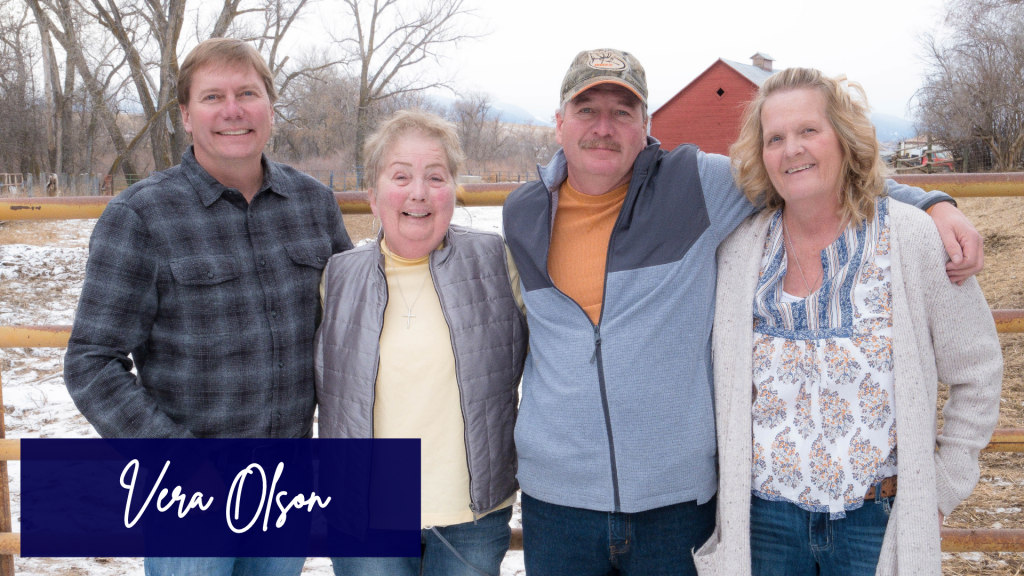
Vera Olson was suffering from more than illness when first admitted into the Transitional Care Unit (TCU) at Sheridan Memorial Hospital in February 2019. On top of experiencing atrial fibrillation and viral sepsis, she was grieving the very recent death of her daughter.
For Vera, looking back today, that first six-week stay in the recuperative wing blurs together. However, one element remains salient: the kindness of the TCU nurses and physical therapists (PT).
“They watched me, they worked with me when I got stronger, they kept the exercises interesting,” Vera remembered. “They made it fun. The TCU [team] seemed to work so well together. It was the highlight of my day.”
“She loved doing therapy with us,” Tiffany Sutton, PT noted. “Even when she was exhausted and sad, she would still come and try to do things with us. We did the therapy, of course, that’s a big part of it — but we also helped her grieve and heal from her daughter’s passing.”
The TCU’s focus on healing patients both physically and mentally was not lost on Vera Olson.
“I will never forget the caring, the support, the lightness of it, and the encouragement that they give you,” she said.
With each day’s dose of exercise, sunshine, and laughter, Vera felt a bit stronger. When she was admitted, she could barely walk for 15 feet and keep her head up, even when assisted. By the time she was discharged, she could walk more than 400 feet independently.

To ease the transition, the TCU team set up home healthcare to visit Vera throughout the week, a service that she deeply appreciated.
“Anytime you can be at home, it’s good,” Vera said.
However, this was not her last trip to the TCU. Due to other health issues, Vera has returned twice more for shorter stays. She would not have returned if it were not such a good experience, she said. “Of all the places I received transitional care, Sheridan Memorial Hospital was by far the best! It was like family caring for me.”
Today, knowing that the TCU team is there for her when she needs them, “Is a very good feeling, very great, very warm,” according to Vera.
To learn more about Transitional Care visit https://www.sheridanhospital.org/medical-services/transitional-care today!