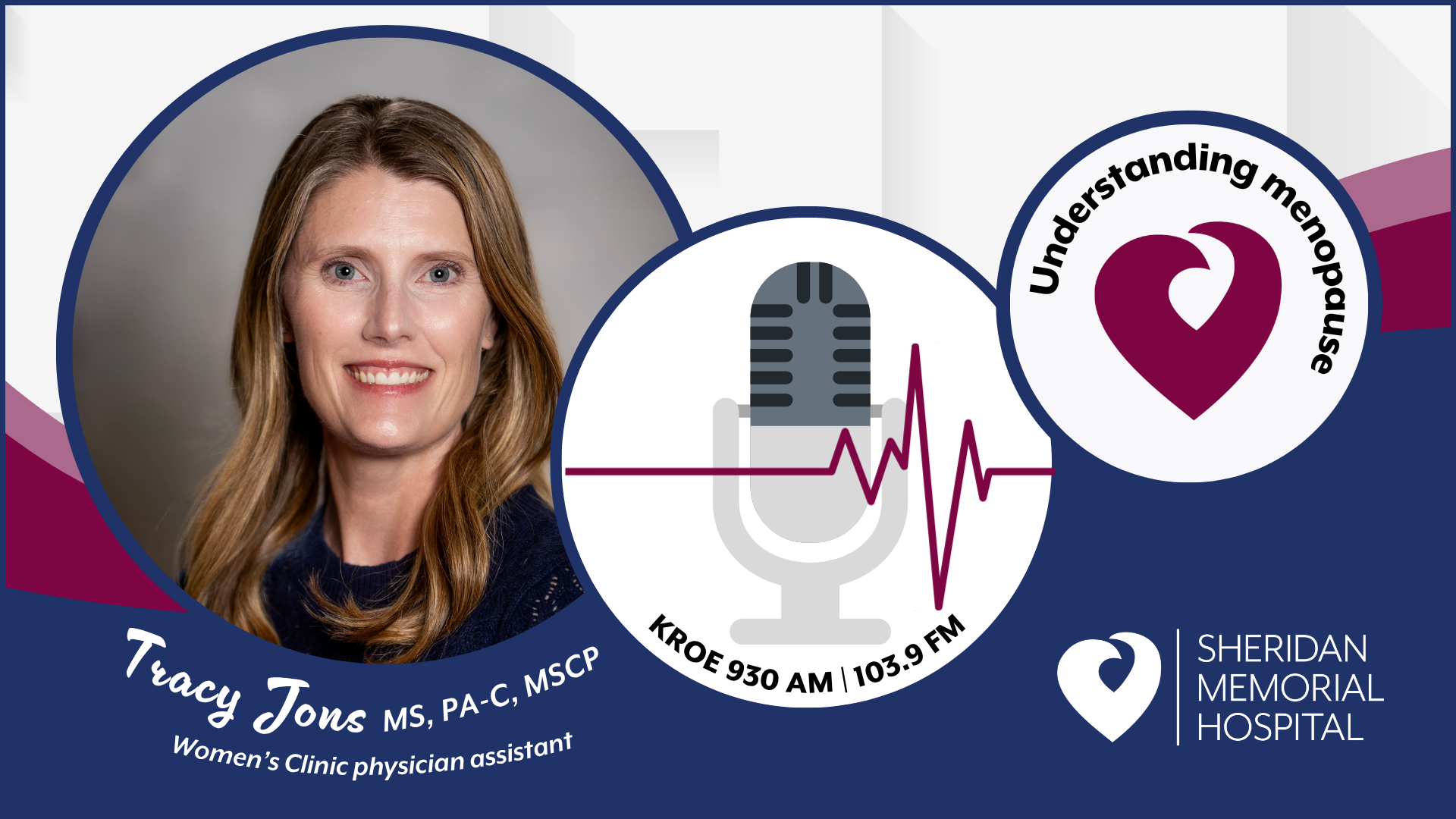
Physician assistant Tracy Jons, MS, PA-C, MSCP, from Sheridan Memorial Hospital’s Women’s Clinic recently appeared on Sheridan Media’s Public Pulse to discuss menopause and perimenopause symptoms and treatment, and the importance of seeking support during this natural stage of life.
The conversation followed World Menopause Day on Oct. 18, which focused this year on the often-overlooked connection between menopause and chronic pain.
With nearly 20 years of experience at the Women’s Clinic, Jons has witnessed significant changes in how healthcare providers understand and address menopause.
“When I started, there wasn’t a lot to be offered for women through menopause,” Jons said. “We just thought, ‘Oh yeah, they stop having periods, and then they have hot flashes, and they’re miserable for a little while, and then they get through it.’ And it’s so much bigger than that.”
Jons explained that menopause involves much more than hot flashes and changes in menstrual cycles. During perimenopause, the transitional period leading up to menopause, fluctuating hormone levels can cause sleep disturbances, brain fog, anxiety, irritability and other symptoms. These changes can begin gradually and last several years, with experiences varying significantly from woman to woman.
The discussion also explored how hormonal changes can affect the body’s perception of pain, potentially intensifying joint and muscle aches, migraines and other chronic conditions. Jons noted that researchers are continuing to study this connection to better understand how menopause affects women’s overall health.
Another common misconception Jons addressed is the belief that hormone testing is necessary to diagnose menopause or determine appropriate treatment. Because hormone levels fluctuate significantly during perimenopause, testing often provides limited useful information. Instead, healthcare providers can evaluate symptoms, discuss individual concerns and explore available treatment options.
“We do have to ride it out, but there’s definitely help out there,” Jons said. “If you really sit down and work through it with your doctor, there’s a lot that can be offered for assistance.”
Beyond the physical symptoms, Jons emphasized the emotional challenges many women experience during this transition, particularly while balancing careers, families and other responsibilities.
“I just don’t feel like myself,” Jons said, describing one of the most common concerns she hears from patients.
Throughout the conversation, Jons encouraged women to speak openly with their healthcare providers, friends and loved ones about what they’re experiencing. She also highlighted the important role partners, family members and friends can play by listening, offering encouragement and providing practical support.
“Keep an open mind and talk to people. Talk to your doctor, talk to your friends, and be open with each other,” Jons said. “I think the social part of this time is also important as a part of healing, as a part of feeling better.”
Women experiencing symptoms of perimenopause or menopause can schedule an appointment with the Sheridan Memorial Hospital Women’s Clinic by calling 307.672.2522. Learn more at sheridanwomensclinic.org.
To hear the full conversation, listen to the complete Public Pulse interview below.