
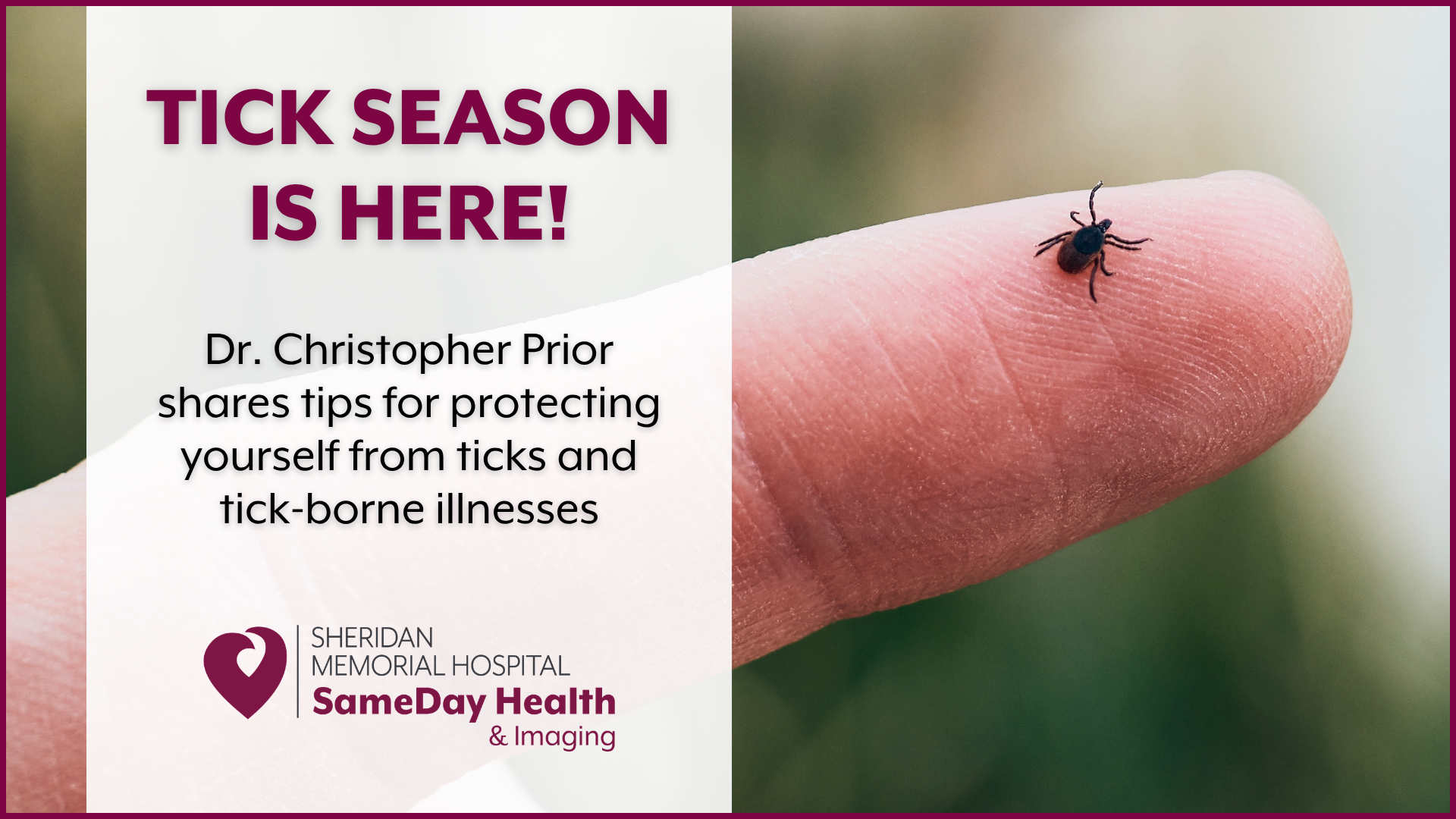
By Christopher Prior, DO, FAAFP, CAQSM, a physician at Sheridan Memorial Hospital’s SameDay Health & Imaging clinic.
A very mild winter and early runoff has invited an early tick season here.
Colorado tick fever, Rocky Mountain spotted fever and tularemia are the primary illnesses found here spread by Rocky Mountain wood tick and American dog tick. The blacklegged tick (deer tick) is not known to live in Wyoming, and most cases of Lyme disease are limited to travel to other states.
Preventing tick bites
- Use insect repellant – Apply an EPA-registered insect repellant containing DEET (skin), picaridin (skin and clothes) or permethrin (clothes).
- Wear protective clothing – Wear long sleeve shirts and long pants with pants tucked into boots.
- Stay on trails – Avoid dense grass and vegetation.
- Shower after outdoor activity – Showering within two hours may wash off most unattached ticks.
- Perform tick checks – Buddy checks are also helpful.
- Check pets – Ticks can be harmful to pets and may be transferred to other occupants of your home.
How to remove a tick
To remove ticks, use fine tip tweezers as close to skin as possible and pull.
Tick-borne illnesses
Ticks can cause a variety of health issues including:
- Lyme disease – This is caused by Burgdorferi and can cause fever, fatigue, joint pain and a bullseye rash. If left untreated it can cause serious complications affecting joints, heart or nervous system.
- Rocky Mountain spotted fever – The American dog tick can cause fever, headache, rash and even organ fever. Early detection and treatment are essential to prevent complications.
- Other tick disease – Ticks can transmit a variety of other disease including ehrlichiosis, tularemia, babesiosis and anaplasmosis.
When to seek care
Be sure to seek care if you begin experiencing:
- Severe headache
- Difficulty breathing
- Paralysis
- Heart palpitations
- In or traveled through an endemic area
- Unable to remove tick
- Develop flu like symptoms
- Expanding rash
This article originally appeared in The Sheridan Press on May 4, 2026.