Welcome to Sheridan Memorial Hospital
1401 West 5th St. Sheridan, WY — 307.672.1000
Taylor Wendtland came to Wyoming Rehab after living with moderate to severe low back pain for nearly 10 years. The pain affected his ability to participate in many of the outdoor activities he enjoys. Since coming for treatment, Taylor’s pain has completely resolved, and he is back to doing all the things he loves. Here Taylor is playing Ultimate Frisbee in the park after just a few weeks of treatment at Wyoming Rehab. Congratulations Taylor!!
Call Wyoming Rehab today at 307.674.1632 and ask about our FREE Screens and Treatment Recommendations on Non-Emergent Physical Impairments/Injuries.
By Sierra Gross Stallman, MD – Medical Director for Sheridan Memorial Hospital’s Internal Medicine practice
With our sunny 90 degree days and all the attention currently on COVID-19, it seems impossible to fathom flu season is coming near. Uncertainty about the future seems to be the one sure thing in the coronavirus pandemic. However, a few things are clear: the virus is circulating through the population and flu season is only a few months away. According to the Centers for Disease Control and Prevention (CDC), up to 62,000 people died and up to 740,000 people were hospitalized due to flu complications between October 2019 – April 2020. Hence, it is crucial we continue to be aware of, attempt to prevent and treat the flu, especially now with the COVID-19 pandemic wreaking havoc in our world.
Flu and COVID-19 can share many, though not all, symptoms including fever, chills, cough, sore throat, muscle or body aches, headaches, and fatigue. While as a community, we are working on limiting the spread of COVID-19 through multiple methods including proper hand hygiene, getting vaccinated is already an established prevention for flu. It is the best option to prevent, control, and decrease the socioeconomic burden of influenza. The influenza vaccine is more important now than ever as the Novel Coronavirus continues to spread.
Even though the flu shot is not perfect at preventing the flu, it can lower your risk of developing serious complications. Flu vaccinations have been shown to reduce deaths, ICU admissions, and overall duration of hospitalization. Within a population, the more people that receive the vaccine, the better it becomes at preventing the flu and its complications. Therefore, everyone who is able to get the flu vaccine, generally those six months or older, should get vaccinated, not only for your own health, but also for those around you. It is especially important for those at high risk of flu complications to get vaccinated, which includes: children 6 months to four years old, pregnant women, people older than 50, immunosuppressed individuals, and those with certain chronic diseases. Keep in mind that many people who are at high risk for developing a serious case of the flu are considered high risk for severe complications of COVID-19. In addition, health officials have confirmed that coinfection of flu and COVID-19 is possible and was seen at the end of the last flu season.
To protect our community through this coming flu season, it is important to consider timing of vaccination. Once people are vaccinated it takes about 14 days for the immune system to generate a protective response. The standard flu shot cannot give you the flu as it does not contain live virus, though it is possible to catch the flu before your vaccine takes effect. Studies have detected a steady decline in vaccine protection the months following administration. By six months after vaccination, flu vaccine effectiveness can be reduced by more than half. Therefore, individuals should try to get the vaccine just before flu activity starts, so that they are optimally protected for the duration of the season. Flu activity begins to increase in October and November, peaks between December and February and lasts until April and May. CDC guidelines are currently recommending people get vaccinated in September or October. This is based on data from previous flu seasons, suggesting tens of thousands of influenza cases and hundreds of deaths can likely be avoided if older adults wait until October to get their immunizations. While COVID-19 has been compared to the flu in regards to symptoms, they are not the same, and the flu vaccine cannot prevent COVID-19. With the Novel Coronavirus in our community and flu season coming upon us, getting the flu vaccine is your best first-line defense against getting sick. Please help us protect you, your loved ones, and those around you. Get vaccinated!
by Lacey Johnson, MSN, RN, Medical-Surgical Manager at Sheridan Memorial Hospital
TCU is, most often, a short-term care facility for medically complex patients who are transitioning from the hospital to home. At Sheridan Memorial Hospital, our TCU is designed to provide rehabilitation and skilled nursing care to ensure you are meeting your goals to be successful when you go home.
The journey towards TCU typically begins with an acute inpatient stay. Whether you are recovering from injury, illness, surgery, or disability, our TCU has a team of therapists, nurses and Case Management staff who are here to assist you in your recovery. Focusing on a patient’s recovery to return to independence and go back home is a goal of the unit.
The benefit of the TCU is that it provides coordination and continuity during transitions between different locations or levels of care. The TCU bridges the gap between various providers, services and settings, ideally providing education about the next stage of recovery for the patient and their family and caregivers.
Our TCU is hospital-based, unlike community-based subacute care facilities, the team of professionals is present 24-7 to collaboratively answer questions and change your care plan as needed.
How it works:
Following a qualifying hospitalization, your physician may recommend that you receive additional skilled nursing care to assure a safe transition back to your home or other living arrangement. The Case Manager speaks with you about your options for skilled nursing, where you make your choice. Once you make that decision, the transition of care begins. The nursing staff works to create your care plan and goals for TCU. Once that is completed, you are moved to the TCU area, where you begin your journey to recovery and strength.

During your stay in TCU, your care is personalized to fit your needs and goals. On a daily basis, your goals and current state are discussed with you, your family, therapist, nursing and Case Management. If you do not feel you are meeting your goals, your care plan is adjusted to move toward success.
Opportunities in the TCU include rehabilitation with some of the best Physical Therapists, Occupational Therapists, Speech Therapists and Nurses. The staff focuses on teaching skills and activities that are needed to prepare for the transition to home including: cooking and baking in the TCU kitchen, completing laundry tasks in the laundry room, exercising either in the therapy gym or outside on the beautiful SMH campus, and practicing entering and exiting a vehicle. Prior to the patient’s discharge, home visits are scheduled. These home visits are a perfect way for the care team to determine, with you and your family, the barriers you may have at home. The team then adds those barriers to your care plan while in TCU for the team to work with you to overcome them for a safe transition home.
Giving back to the community in which you live can be very rewarding. For those who have done it, you know how it feels and what it means to give of your time and talents.
Dr. Kristopher Schamber says, “I want to help; and when someone asks, if I feel I am capable of doing the task, I want to make a difference.”
This kind of positive community attitude, along with his expertise as a physician at Sheridan Memorial Hospital’s Internal Medicine, has led to recognition for the doc.
The American College of Physicians (ACP) recently bestowed on Schamber the designation of Fellow, or FACP, a designation honoring the work he does with his patients as well as in his community.
“It is an honor and distinguishing to be a Fellow of the ACP,” Schamber said. “This recognizes the work we do outside of the workplace, throughout the community, as well as excellence in medicine.”
The ACP website states it this way, “ACP Fellowship is a mark of distinction representing the pinnacle of integrity, professionalism and scholarship for those who aspire to pursue careers in Internal Medicine. The most important considerations for ACP Fellowship are excellence and contributions made to both medicine and to the broader community in which the internist lives and practices.”
While Schamber knows he can’t take on every community challenge put before him, he has honed his efforts to a couple of areas.
“It is important to seek those opportunities I am passionate about and hospice care and dementia care are the two big ones for me,” he says.
That passion gave way to activities at the Senior Center (The Hub) where Schamber volunteers his time for quarterly presentations called Doc Talks and his involvement in the Dementia Friendly Program, among other activities.
“Since my days in medical school and residency, I also have a passion for helping in underserved clinics,” Schamber added. “So when the opportunity came to help at the Sheridan Health Center that was a no-brainer for me.”
To obtain this new accolade, it requires letters of recommendation from two physician colleagues. For Schamber, those two colleagues were Dr. Ian Hunter, Sheridan County Public Health Officer and physician at SMH Internal Medicine; and Dr. Robert Monger, Rheumatologist at Cheyenne Regional Medical Center, Governor of the Wyoming ACP Chapter and Clinical Dean for the Wyoming WWAMI Medical School Program.
“Dr. Schamber certainly deserves to be recognized as a Fellow of the ACP,” Hunter said. “He puts in the work, cares greatly about his patients and community to the point of action beyond his paid job. This recognition speaks to the level of competency and caring of Dr. Schamber and we are lucky to have him in our community.”
Dr. Monger also has high praise for this accomplishment, “Dr. Schamber is an outstanding physician, and being awarded FACP is a true mark of excellence because to be awarded FACP a physician is nominated by and then voted on by fellow physicians for the honor. It’s awarded to physicians who practice excellent patient care and also are involved as leaders in the physician community.”
When asked what may be on the horizon for him, Schamber humbly says he is definitely interested in leadership roles in the community in the future, but they aren’t on his immediate radar.
“Thinking about what’s next is a tough one,” he adds. “I do these things because I’m passionate about them and to help the community. I didn’t have this end in mind. I just hope this demonstrates my dedication to the field of medicine and to the community.”
“That’s not to take anything away from the other physicians in our community who work just as hard and put is just as much time, if not more,” he adds humbly.
Environmental Services (EVS) has always been an integral part of Sheridan Memorial Hospital (SMH). With the rise of COVID-19 cases, their hours of dedicated service towards keeping everyone at our hospital safe has been all the more necessary. So in honor of EVS Week, we want to shed some light on everything the members of our housekeeping and laundry staff have done and currently doing to ensure SMH can keep providing excellent patient-centered care to our wonderful community.
March began as just another routine month for the EVS staff. Their days consisted of the usual standard daily work, and they followed the same processes and procedures. But when COVID-19 began rapidly spreading throughout the country in mid-march, EVS had to break from routine and start adopting new ways to keep the hospital as safe as possible. One of the most difficult initial problems that EVS had to work around was the lack of information on how to protect against COVID-19. Heather Yost, an environmental services aide, explained, “Since COVID-19 was such a new disease, a lot of the health organizations, like the CDC, were still trying to decipher exactly what did and didn’t work when trying to stop its spread. So a good number of the processes that we would adopt ended up being changed pretty rapidly because of new discoveries. It also didn’t help that with every new process, we had to get additional education for that process, which took even more time out of our already cramped schedules.”
But now that time has passed, and much more research has been done, the entire EVS team has finally been able to find a consistent process they use to keep us safe. However, just because they’re done doing all the guesswork, it doesn’t mean they’re done doing all the hard work.
Whenever EVS cleans an isolation room after the patient has been discharged, they must first wait outside until any air in the room which could’ve been contaminated by the patient has been filtered out. While waiting, EVS dons personal protective equipment (PPE), including gloves, gowns, and facial coverings such as MAXAIR CAPRs to protect them from any traces of disease. When the contaminated air has been filtered out, they can enter the isolation room and begin disinfecting. Once they’ve entered the isolation room, procedure dictates that they are to remain inside until all cleaning processes have been followed, and the room has been completely sterilized. So EVS goes about the room, disinfecting the entire space, including the floors, furniture, bathroom, and even the walls. Then, once the room is thoroughly cleaned, they must remain inside it to doff all of their PPE and dispose of any materials that may have been contaminated in the process of cleaning. It is only then that they are finally allowed to exit the room. The process of cleaning just one of these isolation rooms can take up to 2 hours, about twice as long as it normally takes to clean a typical MedSurg room, and that isn’t including the time it takes to don and doff any necessary PPE. With this additional time devoted to cleaning the isolation rooms and other areas vulnerable to COVID, EVS has never been busier. But they’ve kept their chin up and continue to push through these congested times, even when that has meant working overtime or helping to share someone else’s load during a hard shift
You might wonder what keeps them going, how they are able to take on such busy days, and how they are able to keep cool under this kind of pressure. Emily Cummings shared, “My family is what drives me forward. I’ve had loved ones who once stayed in these same rooms that I cleaned today. EVS was there to keep things clean and safe for the people I loved. If my Dad were sick in the hospital, I’d want to know that everyone there was doing everything they could to keep him safe, so that’s why I need to do everything I can to keep these patients safe.” “I’ve been afraid to get COVID, I know how serious this disease can be, but I want to contribute in any way I can to stopping it from getting to somebody else,” Heather Yost explained. “I keep going because of everyone on the EVS team. I see how hard they work every day, and I’m so proud of all the hard work that they do. They inspire me every day to work harder than I ever thought I could,” Karen Wemple concluded.
We at Sheridan Memorial Hospital are so very grateful for our outstanding Environmental Services team. We can’t thank them enough for their perseverance throughout these difficult times and for the amazing work they do every day to ensure that our community has a clean, safe place to receive excellent patient-centered care.
Since the Sheridan Memorial Hospital (SMH) Urgent Care opened in 2013, patient traffic has more than tripled. This growth is the leading reason SMH Urgent Care will be re-locating to a new office located south of the hospital at 1435 Burton Street, beginning next Monday, August 24.
“We are excited about our new space on Burton Street. Our goal is to continue to provide excellent patient-centered care to the community through a better space, enhanced resources, improved privacy and a keen eye toward safety in the new Coronavirus landscape,” said Urgent Care Medical Director David Nickerson, MD. “The new clinic offers multiple options for COVID-19 testing and offers separate waiting and treatment areas for patients who are not ill. It is also located adjacent to the COVID Testing Center, which offers drive-up testing.”
Some of the benefits of the new office include:
Because of this transition, the SMH Urgent Care will be closing at Noon on Saturday, August 22, to complete the move. The new office is located at 1435 Burton Street and will be open Monday, August 24, at 8 am.
NEW Urgent Care Hours
The Sheridan Memorial Hospital Foundation Board of Directors is pleased to announce its new officers and returning board members for the coming year, which began July 1, 2020.
According to Chief Development Officer Cody Sinclair, “we are excited to have Richard Garber lead the Foundation Board as the President for this next fiscal year. He and the other eight board members – Rob Johnson, Vice-President; Matt Ebzery, Treasurer; Rita Rohrbaugh, Secretary; Vicki Jorgenson, Dr. Sarah Smith Maguire, Stella Montano, Dr. Bill Doughty and Dr. Tim Scott – carry strong beliefs in The Foundation’s mission and vision to support excellent healthcare for our community.”
Richard has lived most of his life in Sheridan County, from spending his childhood on the family ranch in Big Horn to spending his career as an owner, Deere employee, Sales Representative and Store Manager at John Deere for 38 years; Richard truly is a Sheridan native. He is currently spending his golden years pursuing his passion for flying and dedicating his time and energy to serving our community. Previously, he served on the Sheridan County Chamber Board from 2012 to 2018, serving as President, Vice-President, and Past President. Richard was also honored as the Chamber Board Member of the Year by the Wyoming State Chamber of Commerce in 2018. Garber states, “My goal is to have a positive effect on those around me and contribute to our community. I appreciate the opportunity to be a part of the Sheridan Memorial Hospital Foundation. I look forward to being a part of the important work of the board, which is to ensure excellent care continues for everyone in Sheridan.”
The team was thrilled to welcome Dr. Doughty earlier this year as a Director on our board. He has been pivotal in countless Foundation efforts and a true champion for the work of The Foundation and Sheridan Memorial Hospital. We are also excited to welcome Dr. Tim Scott as this year’s Board of Trustees Representative, as he has been such a valued partner of our Foundation for decades.
“The Foundation looks forward to spending the year ahead with our passionate team of kind, caring individuals.” Sinclair added, “We are so fortunate to have such an engaged and dedicated board. It is a pleasure to work with this team as we focus on our goals and objectives over the next year.”
The Foundation proudly announces Jennifer Meineke is this year’s recipient of the Cato Scholar Award, made possible with an endowment gift from the Wayland H. Cato, Jr. and Marion R. Cato Foundation. Jennifer has been a member of the Environmental Services team at Sheridan Memorial Hospital for two years and is an active community volunteer with The Hub and previously served on the Story Volunteer Fire Department.
Jennifer is a second-year nursing student at Sheridan College and expects to graduate with her Associate Degree of Nursing in May 2021. The Foundation and Nursing Leadership applaud Jennifer Meineke on her efforts to achieve her goals, as she stated, “I feel my experience will uniquely benefit our community hospital and patients are given my multifaceted background in biology, nursing, and environmental services.”
Along with our Cato Scholarship Award, The Sheridan Memorial Hospital Foundation awarded 16 additional nursing and clinical education scholarships for hospital staff members throughout Sheridan Memorial Hospital departments.
The Educational Endowment was initiated in 2003 with private donations. Beginning with a vision of excellent care for our rural community, the program and endowment continue to grow and evolve alongside our strong nursing staff and their ability to provide specialty care.
Scholarship funds are distributed annually through an application and interview process. Nursing leadership from the hospital, along with Foundation Board members and staff, review and select the recipients. Including this year’s awards, The Foundation will have granted nearly $372,000 toward educational assistance to our hospital staff members. “We are proud of the Sheridan Memorial Hospital staff. We are so grateful we can provide opportunities and development to those who make our organization what it is today,” states Director of Donor Relations, Ada Kirven. “Our ability to assist in advancing their careers and invest in the hospital’s greatest asset – our people – is truly priceless.”
Awardees can use granted funds for a variety of educational opportunities such as Associate, Bachelor, and Graduate Degrees at a diverse group of colleges and universities, specialty area training for critical care, and professional conferences. This year’s nursing scholarships included programs at Sheridan College, the University of Wyoming, and Grand Canyon University. Other staff scholarships included Women’s Health Labor and Delivery, Welch Cancer Center, Dietitian Advanced Practice, Wound Care, Surgical Services, and the Big Horn Heart Center.
Visit The Foundation at Sheridan Memorial Hospital or call Ada Kirven at 673-2417 for more information.
When you meet Elisabeth Scalva, MD, the first thing you might notice is her height. However, that quickly fades away as her vibrant personality radiates as she engages with people. As a new Obstetrics/Gynecology physician at SMH Women’s Clinic, Scalva will bring that positivity, and her infectious laugh, to bear on her work every day.
“I have always had a genuine love for people,” Scalva says. “When I couple that with my love for science, I naturally moved towards healthcare.”
It was her grandfather, a veterinarian, who initially piqued her interest through his practice.
“He would have to dissect animals or do surgeries and that was my first exposure to any type of medicine,” she adds.
Originally from Littleton, CO, Scalva grew up in the shadow of the big city of Denver. But she knew she had a passion for rural areas and bringing quality healthcare to those who make their homes away from the big city lights, especially women.
“I trained in rural settings after medical school and have always had a commitment to rural medicine,” Scalva says. “I thought I wanted to be a general surgeon at first, but found that I am passionate about helping women throughout their entire life. I like and appreciate that continuity.”
Scalva was part of a private practice in Grand Junction, CO for the three years prior to her move to Sheridan. Her best friend from med school, Lindsay Capron (another OB/GYN physician at the SMH Women’s Clinic), was recruiting her pretty hard.
“Lindsay and I are very close and she knew how much my family and I would love it in Sheridan,” Scalva said. “And she was right. We came to interview and just loved it.”
Describing herself as “outdoorsy,” Scalva and her family like to hike, backpack and camp. She is also into trail running and yoga.
“My husband, Ryan, and I bought a home near the park and just love being able to take our kids, ages one and four, to the park,” said Scalva. “We want to be a part of the community and living in the heart of it makes sense for us.”
By Kim Gilbert, FNP-C, AGACNP-BC
Kim Gilbert is a Family Nurse Practitioner at Sheridan Memorial Hospital’s Internal Medicine practice.
I am a certified Family Nurse Practitioner, earning my master’s degree in 2012. Recently I completed a post-master’s certificate program through the University of Northern Colorado-Greeley as an Adult Gerontology Acute Care Nurse Practitioner, graduating in April 2020. I am now dual certified FNP/AGACNP. With this new certification, I am better able to care for our communities’ aging population, diagnosing and treating patients in both the clinic as well as the hospital.
I would like to explain what a Nurse Practitioner is and what we do. There are many types of health care providers in our current health care delivery system. Physicians, physician assistants, and nurse practitioners make up a vast majority of them. Over the last fifty years, advanced practice nurse roles have increased and evolved with the ever-changing health care system. Nurse practitioners, also known as NPs, are one type of advanced practice nurse. NPs are nurses who obtain additional training to provide either primary care or specialty care to a specific population. NPs are trained in a specific role based on the education they obtain. Nurse practitioners can diagnose and treat acute illness and chronic disease as well as provide preventative health care to the population they serve.
The most common type of nurse practitioner is the Family Nurse Practitioner (FNP), making up approximately 70% of advanced practice nurses. Family Nurse Practitioners provide primary care to all ages. Some Family Nurse Practitioners obtain additional training such as Emergency NP or specialty, such as oncology. In addition to FNP, there are other nurse practitioner education programs that train to a specific population, such as pediatric (ages 0-21) or adult-gerontology (age 18 and older). Within these roles, there are educational programs geared toward primary care (PC), which is the management of chronic conditions and preventative care, or programs with an emphasis on acute care (AC), or the management of acute illness (which includes patients in the hospital setting). Another specific training program includes Women’s Health Nurse Practitioners (WHNP). These NPs provide a variety of care to women of all ages. Finally, there is the Psychiatric Mental Health Nurse Practitioner (PMHNP). These NPs provide psychiatric and mental health care to all ages of patients.
Nurse practitioners typically have either a master’s degree (MS) or a Doctorate of Nursing Practice (DNP) degree. State licensure and certification are required to practice within a state. Each state has specific requirements for practice, which includes required continuing education to maintain licensure as well as requirements to maintain the ability to prescribe medications, also known as prescriptive authority.
As a health care consumer, there are many options and choices for receiving care. Understanding your options can be very difficult, especially as health care delivery systems change. Learning more about the training and certification your health care provider can help when you are looking for a primary care provider or if you become ill and require additional services such as hospitalization or specialty care. Sheridan Memorial Hospital’s Internal Medicine providers include physicians, physician assistants, and family nurse practitioners who are divided into teams to ensure patients receive consistent, well-managed and timely care.
By Benjamin Widener, MD, of Sheridan Memorial Hospital Rheumatology
I am pleased to announce that Sheridan Memorial Hospital is opening a Rheumatology practice in August, where I will be working as a Rheumatologist. I recently completed my Fellowship in Rheumatology at the University of Nebraska Medical Center (UNMC) in Omaha, Nebraska, and have returned to my hometown of Sheridan to continue serving the community and surrounding region.
Many of you may know me as I previously practiced in Sheridan as an Internal Medicine physician before being accepted into the two-year Rheumatology Fellowship, where I received advanced training and education in the diagnosis and management of Rheumatic diseases.
As a medical specialty, Rheumatology is new to Sheridan. In assessing the healthcare needs of our community, Rheumatology was identified as a needed and valuable specialty for our community.
Rheumatology fellowship develops a physician’s skills to better diagnose and treat diseases such as rheumatoid arthritis, gout, lupus, psoriatic arthritis, ankylosing spondylitis, and many other inflammatory and arthritic conditions. This education inherently involves developing a deeper understanding of the immune system and of the rapidly advancing therapies being developed to help treat Rheumatic diseases. My fellowship education consisted of clinical care of patients, academic research, teaching resident physicians and medical students, and advanced education in clinical Immunology.
Additionally, I received dedicated education and training in the use of musculoskeletal ultrasound. Thanks to the generosity of the Sheridan Memorial Hospital Foundation and our community, the hospital has been able to acquire a brand-new point-of-care ultrasound machine to facilitate this unique service. This training and technology can be used to aid in the diagnosis of rheumatic conditions and guide therapeutic procedures, making them safer and more effective.
Access to a Rheumatologist is limited in many parts of the country, especially in rural communities, as there are around only 5,000 Rheumatologist in the United States. Having worked in Sheridan previously and knowing the limitations my patients had in accessing Rheumatology care, I am passionate about providing this specialty care to the Sheridan community.
Rheumatic disease and similar conditions can be complex, and patients benefit from the care of a specialist, particularly within a collaborative care network, such as the team available at Sheridan Memorial Hospital. I am excited to continue to work with the Sheridan Memorial Hospital clinicians and staff to serve Sheridan and the surrounding community. It is my hope that having local access to Rheumatology will allow many of our patients to stay here in Sheridan rather than traveling out of town for their healthcare.
If you are interested in seeing me, please contact your primary care provider about sending a referral to Sheridan Memorial Hospital Rheumatology. I will begin seeing patients when the new practice opens in the Outpatient Center beginning August 3, 2020.
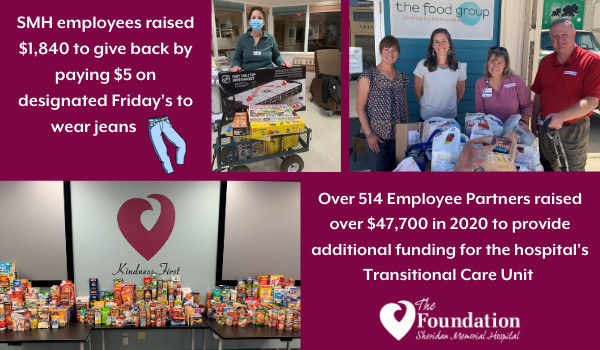
Sheridan Memorial Hospital staff are very grateful for all the wonderful things our community has done for us during the pandemic. There have been so many businesses, organizations, and individuals who have given to us, that Chad Slyngstad, one of the house supervisors at the hospital, brought up the idea of a community food drive.
So during June, the SMH Gives Back Food Drive was held. Staff donated two full pickup loads of food which were distributed to The Food Group, People Assistance Food Bank, and the Salvation Army in early July.
After the food was delivered, some SMH staff picked a day to volunteer to help The Food Group as a team-building experience. They enjoyed the experience of organizing, sorting, and bagging the food, as well as learning the nutritional needs in our community.
Overall, SMH staff had a great time during the food drive and we look forward to more food drives in the future!


On Friday, July 3, 80 golfers and hospital volunteers gathered at The Powder Horn Golf Club to raise awareness and funds for patient care programs at Sheridan Memorial Hospital. The Foundation’s 11th Annual Golf Tournament focused on raising funds that will go towards our hospital’s areas of greatest need, related to the COVID-19 pandemic. Access to the best supplies, tools, and equipment available make it possible for Sheridan Memorial Hospital to continue driving forward in providing excellent patient-centered care, for everyone.
Even with the size and adjustments to this year’s tournament, the event was a huge success, raising over $12,000 for various areas of greatest need, related to the COVID-19 pandemic at Sheridan Memorial Hospital. Over its 11 years, the annual event has raised over $250,000 in support of excellent patient care for our community. Projects funded include the Intensive Care Unit, Cardiac Care, and the Cath Lab, the Patient GAP Fund, which helps ensure successful recovery for patients after a hospital stay, various other department projects. Most recently, these funds were able to support the COVID-19 Care Fund that was created to immediately provide relief and support to Sheridan Memorial Hospital in the beginning stages of COVID-19 in our community.
With daily changes and updates to operations due to COVID-19, the 2020 tournament was a modified version of how this event has run in the past, including the number of teams able to play, the check-in process, and tournament start, and even the day of play. “We are eager about this event each year, and with the last six months the world has faced, The Foundation was especially looking forward to spending time with our sponsors and participants at this year’s tournament. Modifications were made, so this event was possible, taking into consideration the safety of players and volunteers. The SMH Foundation looks forward to future tournaments where we are again able to open this tournament up to all of our friends and supporters,” shared Chief Development Officer Cody Sinclair.
Winners of this year’s Tournament included:
1st Place Team – Shawn O’Dell, Will O’Dell, Danny Shore, Jayson Shore
Others who received recognition for their excellent play included Kaelee Saner, Kristin Wilkerson, Logan Garstad, and Joe Wright.
According to The Foundation, First Federal Bank and Trust, 609 Consulting, LLC; D.A. Davidson; Kennon; and O’Dell Construction were this year’s Hole-in-One, Gold Sponsors.
Cody Sinclair, Chief Development Officer, wrapped up the event, “It was a great day of golf and philanthropy with funds raised to support healthcare for our community. Sheridan Memorial Hospital and the care it provides to everyone is remarkable, and The Foundation is appreciative of everyone who was involved. Thank you to all of our wonderful tournament sponsors, participants, and volunteers for helping make this a great event!”
For more information on The Foundation, and how you can become part of their life-changing efforts, visit sheridanhospital.org/foundation today.
By Cheryl Varner, M.D.
I am a physician in the Navy reserves just returning to Wyoming from serving in New York City. I was deployed to the Javits New York Medical Station in early April and began seeing COVID patients by April 8. This was at the peak of the number of COVID cases happening in NYC, the top of their “curve”. During that time, NYC hospitals were operating above capacity and our mission at Javits was to offload some of the less acute patients in order to make room in local hospitals to care for the sickest patients.
Javits was not a full-service hospital (think field hospital set up in a convention center). We provided approximately 4,700 hospital bed-days of relief to local NYC hospitals during our mission. Most of our patients got better and were discharged home, which was definitely cause for celebration.
The public health conditions of NYC are very different from Sheridan, WY. Population density, social determinants of health, and Health Care Systems all look quite different here. Retrospectively, it appears that COVID has not had community spread in Sheridan, even though we have had a few cases. When community spread occurs, we will likely see more cases and some hospitalized patients. I feel Sheridan County is prepared for community spread, if and when it occurs. If it does occur, we will need to protect each other (and vulnerable people) using the same tactics we have been employing so far, wearing facemasks in public, practicing frequent hand hygiene, and being tested if we have COVID symptoms.
Because someone can be sick with little to no symptoms (asymptomatic), they can spread COVID to other people unknowingly. It is also known that there is a pre-symptomatic phase of COVID when you can spread the virus unknowingly. This is why my family will wear a facemask, even if we feel well, to help reduce the spread of COVID. This was especially important in NYC with such a high prevalence of COVID and high population density.
I am overjoyed to be back home in Sheridan. I missed my family, friends and community desperately. Your support while I was gone meant the world to my family and me. I appreciate you all so much.
Cheryl Varner, M.D.
Sheridan Memorial Hospital Ear Nose and Throat
June 18-24 — National Certified Nursing Assistants Week
Certified Nursing Assistants (CNAs) provide intimate, hands-on healthcare to patients. A day in the life of a CNA might include taking patients temperature, blood pressure, and other vital signs, helping with bathing, dressing and the basic activities of life.
According to Lacey Johnson, Director of Nursing, “At Sheridan Memorial Hospital, our CNAs, are really the heart of our patient care areas. They are at the bedside providing hands-on care to our patients – assisting the nurses with many, many responsibilities. CNAs play an important role in the patient care team — answering the patient’s questions and responding to their needs. Quite a few of our CNAs perform a dual role as unit clerks, managing information and communication within their departments. We thank them for the care they provide round the clock every day!”
We caught up with a few of our long-time CNAs – here’s what we found out about them:
Ronnie Munroe – Patient Safety

Ronnie has worked in healthcare for nearly 32 years, 12 of those as a CNA at SMH. She worked on Med/Surg and sometimes in ICU and now has changed roles a bit, currently working in patient safety – helping to prevent injuries.
She has always liked to help people and enjoys interacting with staff and patients. Over the years Ronnie has loved getting to know her patients and would to do anything she could to make their day better. “If they were craving something and weren’t on a special diet, I might bring them something from home. Or if someone was down, I would go to the gift shop and get them a little something.”
Ronnie says that sometimes patients would say they would like to pay me. I would ask them to smile and then say “paid in full” — my payment was their smile.”
Looking back, one of her most memorable moments at SMH was when Ronnie had her first code, “She was a patient I had taken care of before. Helping assist with that code and getting her back was awesome!”
Another fond time at SMH was when Ronnie impersonated Elvis Presley for the hand hygiene talent contest.
Cris Sears – Emergency Department

Cris has worked at SMH for nearly 35 years as a CNA and as a Unit Coordinator. She’s worked in every department, but has spent most of her time in the Emergency Department.
“I love taking care of people – patient care. And the different things I’ve seen and the people I’ve met. I love it and wouldn’t change one thing about it. I like the hands-on, taking care of people. Through the years I’ve met so many people and enjoy hearing their stories,” Cris says.
Cris says that between the employees and the people she has taken care of, she can’t even try to count the memorable moments at SMH. She recalls that when she started at SMH she was the young one – but that’s changed now.
Sue Bohm – Women’s Health

Sue says that SMH is her home – where she’s worked as a CNA for 40 ½ years! But that wasn’t the beginning of her healthcare career, she first worked at Eventide (now Sheridan Manor) back in 1976.
Even though Sue says she always swore she didn’t want to work in healthcare — she says what brought her to the profession was her aunt, who is now 82 years old and still teaches CNAs the “old ways.”
Sue says, “I just applied to Eventide and have been at it ever since. At SMH I have worked on Med/Surg when it was on 3rd floor, in Central Supply and then in Women’s Health for the majority of the years.” Sue plans to retire this summer.
Thinking back, Sue remembers a 5 year old patient who was in the hospital for quite some time. She had cancer and the staff would play with her and make her laugh so hard she would cry. They even got her a puppy and gave it to her just a few days before she passed away. That was back in the old building.
Sue feels that the people she works with are her family – she loves them and has fond memories of monthly birthday parties for staff.
Sandy Boll – Recovery Room

Sandy has been at SMH for over 18 years working as a CNA and a Unit Coordinator. She’s been in many departments including Med/Surg, Emergency Department, ICU, Women’s Health, Transitional Care and now in Outpatient Surgery. Her healthcare career didn’t start at SMH though. Sandy worked in a nursing home in Nebraska for 10 years – starting at age 18. Then she worked as a CNA at RENEW for 5 years before coming to SMH.
She has many fond memories of SMH – like the first day of the EMR go-live and the first day of the new Emergency Department with two helicopters coming and going.
Sandy truly enjoys helping people even if they are going through rough times. “I like knowing I can make a difference, no matter how small, in the patients and family’s lives.”
“I absolutely love this hospital. I have the opportunity to get to know the wonderful people of our community and also to build relationships with the doctors and nurses here. I’ve enjoyed watching the growth and progress that the hospital has made. Providing the best care for our patients and community,” Sandy says.
By Kristi Ramsey, RN, BSN, RCIS, CVRN – Sheridan Memorial Hospital Cath Lab Manager
The connection between diabetes and the heart starts with high blood sugar levels. Over time, those high sugar levels cause the arteries in the body to become hard and stiff. The less pliable the arteries are the greater chance for fatty deposits to build upon the inside of the vessel wall. This condition is known as atherosclerosis. These fatty deposits are also commonly called plaque buildup. The plaque can build upon itself to the point where it can completely stop blood flow to the heart muscle.
How can the heart be protected against other diseases such as diabetes?
Some facts about diabetes:

https://www.cdc.gov/diabetes/library/features/diabetes-and-heart.html
Sheridan Memorial Hospital is hosting a free drive-by Glucose Screening on Tuesday, June 30th. If you would like your glucose checked, just come to the employee parking lot outside of the cafeteria on June 30th from 9am to 1pm. Appointments are not necessary. No need to get out of your vehicle – just follow the signs and look for the tent in the parking lot on the North side of the hospital cafeteria. Health care professionals will be out there to give you a quick glucose test. They will also provide healthy heart information on living with heart disease and a handout on how to use your dinner plate format to help you plan healthy meals.
We do ask that wear a face covering when you come and if you are not feeling well that day, please stay at home.
As the initial shock of the COVID-19 Pandemic winds down and we begin to adjust to our new normal, we at Sheridan Memorial Hospital wanted to reflect on an outstanding member of the community who helped to ease our burdens during these trying times. So begins the story of Andy Quinn and his desire to do a half marathon, with 100 pounds on his back, to help our community remain WYO Strong.
Andy Quinn began his 2020 spring break like the rest of his peers, excited for some much-needed rest and relaxation but simmered by the expectation of returning to campus in little over a week to complete the latter half of his spring semester. By the end of spring break, however, Andy was shocked to find out that he was getting an extended break and would most likely not be returning to campus. On top of that, he was also disappointed to find that The Mickelson Trail Marathon, an event which he had endured rigorous training for, was canceled because of the pandemic. Now Andy would spend the rest of his semester living at home, helping on the family ranch, and engaging in online courses.
With newfound free time, Andy began to spend more and more time enjoying the great outdoors. However, when his father, Anthony Quinn of Sheridan Orthopedic Associates, started coming home from work early due to the restrictions of elective surgeries, Andy recognized the realities of the pandemic and wanted to help. In talking with his father, Andy realized that the repercussions of COVID19 had a severe financial impact on Sheridan Memorial Hospital and its employees, “I just wanted people to be able to keep working and helping people. I shadowed doctors and surgeries at SMH and just spent a lot of time milling around Sheridan Memorial Hospital in High School. It’s hard not to want to give back.”
With that, Andy started searching for ways that he could help and, in the process, was able to find a way to merge his desire to raise funds for the hospital and participate in a marathon, an opportunity he thought he missed with the cancellation of the Mickelson Trail Marathon. With help from The Foundation’s Director of Donor Relations Ada Kirven and their partners at WYO Timing, Andy was able to participate in the WYO Strong Virtual Race benefiting The Foundation at Sheridan Memorial Hospital. Now, all that Andy had left to do was to train and do a half marathon while carrying 100 pounds on his back, a feat that he had never attempted before. Luckily, his father was there to help get him ready. “We trained by looking for elk horns over long distances, and if we were lucky, we would have weight added at the end. My dad was instrumental in motivating me and was always willing to help train outside with me. And to be honest? I think he could probably still do more than I could.”
After many hours of hiking and training with his father, Andy was ready to grab some weights and run. He strapped 100 pounds to his back and started his half marathon, only stopping to repair a strap, which tore under the 100 pounds of weight as soon as his journey began. Andy recounted that his biggest challenge was not with the physical struggle he was enduring, but instead, he found the more significant test to be mental. “Having to actively think about what I was doing throughout the entire half marathon, analyzing how the extreme weight was distributed between my legs and how it was affecting how sore my legs were becoming, that was the biggest challenge.” Nevertheless, Andy persevered, and after carrying 100 pounds up hills and through canyons for 13 grueling miles, he finished his race.
Andy’s leadership and tenacity lead to donations of over $7,500 to his own personal WYO Strong fundraising efforts. Thanks to Andy’s effort and example, 65 others were inspired to take part in individual WYO Strong races, helping to raise nearly $10,000 in donations for the COVID-19 Care Fund & Greatest Needs at Sheridan Memorial Hospital.
“We truly appreciate that Andy was so willing to dedicate his time and energy to help support our community and to take some weight off of other’s shoulders – quite literally,” says Director of Donor Relations Ada Kirven. “Young people like Andy creatively supporting these efforts are the types of contributions that will ensure our community has excellent patient care available to us well into our future and theirs. It ensures our community stays WYO Strong.”
From everyone here at Sheridan Memorial Hospital, we would like to say thank you to Andy and all those who ran and helped to raise money for SMH in these trying times. Thank you for taking the future of our community into your own hands, thank you for making this community the best the world has ever seen, and thank you for being the Heart of Our Community.
If you have a dad, know a dad or are a dad… this is important. With Father’s Day coming up this Sunday, it is the perfect time to celebrate Dad. Now we all know the stereotype that men don’t like going to the doctor. However, it is necessary and best to do preventative maintenance before restorative maintenance is “required.” Ask any car guy and the advice will be the same. As they say, “An ounce of prevention is worth a pound of cure.”
So these health tips are focused on good ‘ol Dad. Let’s help breakdown the stereotype.
Schedule an Annual Checkup
The most preventative part of preventative healthcare. An annual checkup will cover from head to toe and everything in between. Even if you feel fine, consistent checkups and screenings are vital to protect your health. Find a primary care physician and be an active part of your healthcare plan going forward.
Make Sleep a Priority
Based on some research, up to 25% of men are sleep-deprived. Sleep deprivation can be linked to obesity, heart disease, depression and diabetes. Getting those eight hours a night can really work to improve work performance and your body’s ability to fight disease.
Eat Healthy
Today’s fast-paced society lends itself to fast-paced meals that are easy to acquire. This leads to too many fatty foods and drinks loaded with sugar. A little meal pre-planning and you can find yourself eating more fruits, veggies and lean proteins, which will make all the difference in your daily routine.
Unplug to De-Stress
While small amounts of stress can get you moving and help you complete a project, too much stress is hard on the body and mind. Find time to get away from the screens in your life (computer, phone). Go for a hike, take the kids fishing, enjoy a picnic with the family. This time away will not only help you come back refreshed, but also help with the most important social connections in your life.
Exercise
We’ve all heard it at some point… the benefits of exercise are tremendously helpful. It helps reduce the chances of heart attack, stroke, diabetes and host of other “issues” that can crop up. Exercise can also help you sleep better (see above). Even if you can only get in 30 minutes a day, that’s 2.5 hours per week, or 130 hours per year. Moreover, you are probably already getting some of this time in through yard work, shoveling snow, or other chores around the house.
Obviously, the key to all of this is to work on making habitual choices to improve your health. Healthy habits lead to longer lives with the ones we love.
Sheridan Memorial Hospital (SMH) continues to maintain readiness to care for our community throughout the COVID pandemic. Ensuring that SMH has the necessary personal protective equipment (PPE) and taking the necessary precautions to keep patients and visitors safe remains a top priority. The hospital continues to work with County, State and CDC guidelines to follow proper protocols and preparations as things change, but it is the cooperation and care shown by our community that continues to motivate our employees to meet our mission.
To date, almost 7,000 masks and personal protective equipment (PPE) items have been donated to SMH. The majority of the donated homemade masks have been provided to patients to keep and use as they move about the community. To maintain a healthy inventory of PPE, SMH constantly reviews their processes and updates them as needed. These processes include:
Kennon Products of Sheridan, a proud partner of The Hospital Foundation, is manufacturing mask kits that include both fabric and elastic materials to make 10 homemade masks for SMH patients, visitors, and staff not in direct patient contact. If you are willing to pick up one or more of these kits to sew and bring back to the hospital, please contact Jasmine Slater at jasmineslater@sheridanhospital.org or 675.2620 to set up curbside pick-up of these kits.
“We understand this is a fluid situation and we are working hard to be proactive,” said Dr. John Addlesperger, Chief Medical Officer. “We can’t thank our community enough for giving of their time, effort and resources.”
***