Wound Care
Phone: 307.672.1161
Outpatient Center
1333 West 5th St, Suite 106
Sheridan, WY 82801
Clinic Hours:
Mon – Fri: 8 am – 5 pm
Welcome to Sheridan Memorial Hospital
1401 West 5th St. Sheridan, WY — 307.672.1000
Wound Care
Phone: 307.672.1161
Outpatient Center
1333 West 5th St, Suite 106
Sheridan, WY 82801
Clinic Hours:
Mon – Fri: 8 am – 5 pm
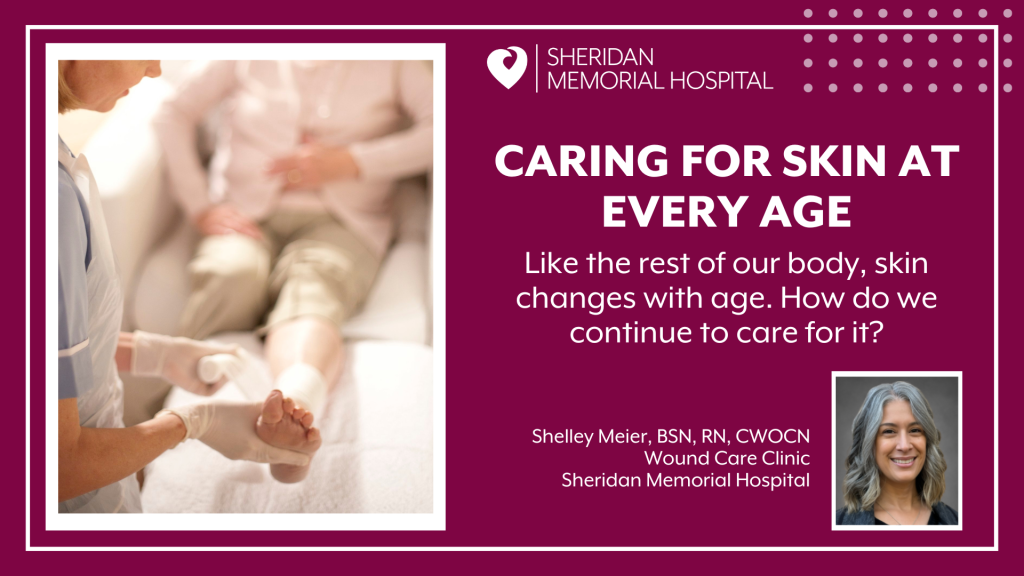
Shelley Meier, BSN, RN, CWOCN, is a nurse in the Sheridan Memorial Hospital Wound Care Clinic.
Our skin does a lot of heavy lifting. It protects us from infection, helps regulate temperature and acts as the body’s first line of defense against the world around us. But like the rest of our body, skin changes with age. It becomes thinner, less elastic and often drier. These changes make older adults more vulnerable to wounds, infections and a condition that can have serious health consequences: pressure ulcers.
Pressure ulcers develop when constant pressure reduces blood flow to the skin and underlying tissues. This lack of circulation can damage the skin, leading to painful sores that range from mild redness to deep wounds. The most common places they appear are over bony areas — such as heels, hips, tailbone and elbows.
Prevention is key
The single most important factor in managing pressure ulcers is prevention. Small, daily habits can make all the difference and actions like regular repositioning, skin care and nutrition play a role.
Caring for existing ulcers
Caring for a pressure ulcer requires both local wound management and attention to overall health.
• Relieve pressure: Healing cannot occur if pressure continues on the sore. Use pillows, foam wedges or specialized cushions to keep weight off the affected area. Frequent repositioning — at least every two hours in bed — is vital.
• Clean the wound: Gentle cleansing is the foundation of care. Most ulcers can be cleaned with saline or mild wound cleansers. Harsh antiseptics like hydrogen peroxide or iodine should be avoided unless directed by a healthcare provider, as they can damage healthy tissue.
• Dressings: A clean, moist environment encourages faster healing. Dressings vary depending on the ulcer’s depth and drainage. A nurse or wound specialist can recommend the right choice and help set a schedule for changing them.
• Infection control: Signs of infection include increased redness, swelling, warmth, pus or foul odor. Fever can also be a warning. If infection is suspected, contact a healthcare provider immediately — oral or topical antibiotics may be needed.
• Pain management: Pressure ulcers can be painful, especially during dressing changes. Over-the-counter pain relievers, prescribed medications or topical anesthetics may help improve comfort and tolerance of care.
Support healing from within
The body needs extra support when fighting a wound. Adequate protein, vitamins and hydration strengthen the skin and immune system. For older adults with poor appetite, supplements or dietitian guidance may be beneficial. Good diabetes control and circulation health are also crucial factors.
While prevention is key, if a pressure ulcer does develop, consulting a wound care expert can help ensure a steady path to healing.
To learn more about the Sheridan Memorial Hospital Wound Care Clinic and how we can help you care for and prevent wounds, see sheridanhospital.org/medical-services/wound-care/.
Jennifer (Jen) Crouse considers herself somewhat of an authority on how healthcare should be delivered. During her 16-year healthcare career, she served in a number of professional capacities, including hospital administration. But a hospitalization in her youth, for a spinal cord injury, that she sustained in a car accident, is what ultimately set her on the path of wanting to help others.
“After being hospitalized for several months with my injury,” Jen recalls “I had good insight of what it was like to be a patient. I knew I wanted to be in a profession where I could assure patient care experiences were the best possible.”
As a hospital administrator, Jen paid close attention to patient care details. Other factors important to her included hospital smells, cleanliness and esthetic looks.
Last year when Jen required urgent medical attention, she naturally scrutinized the medical surroundings and care she received. Sheridan Memorial Hospital’s facilities, services, staff and physicians did not disappoint her.
Within a few weeks of moving to Sheridan, to take over as the new executive director of the Sheridan College Foundation, Jen developed a wound and became ill with a fever.
“So new to the community, I didn’t have a doctor. I didn’t know anything about the hospital or its services,” says Jen. When I called Big Horn Mountain Medicine and explained what was going on, staff got me in to see Autumn Barrett, PA-C immediately. It all happened so quickly and efficiently. I was told, ‘Don’t worry, we’ll take care of you.’”
For the next six weeks, Jen required outpatient services in Wound Care three times a week.
“Every interaction I had throughout my care was amazing,” says Jen. “Everyone was always so kind and friendly. From the moment I arrived in the parking lot, I was assisted. The staff handling the front desk greeted both my son and me by name. Savannah and the wound care team were exceptional. They took good care of me. They also provided me with the special supplies that I needed for home care. Despite the difficult circumstance, it was a great overall experience.”
Jen went on to say that the standard of care is higher here than what she would have imagined for a community this size.
“Compared to other hospitals I have worked in or visited, Sheridan Memorial Hospital is a great hospital,” says Jen. “It’s super impressive.”
Jen says her family’s move to Sheridan in and of itself was a big transition in their lives, without having to contend with additional worry.
“I haven’t required this level of patient care since my car accident,” says Jen. “It’s been over a year since I was treated and yet, I can still feel the emotional aspects of it if I think back. One thing certain, the care I received here was nothing short of a blessing.”