
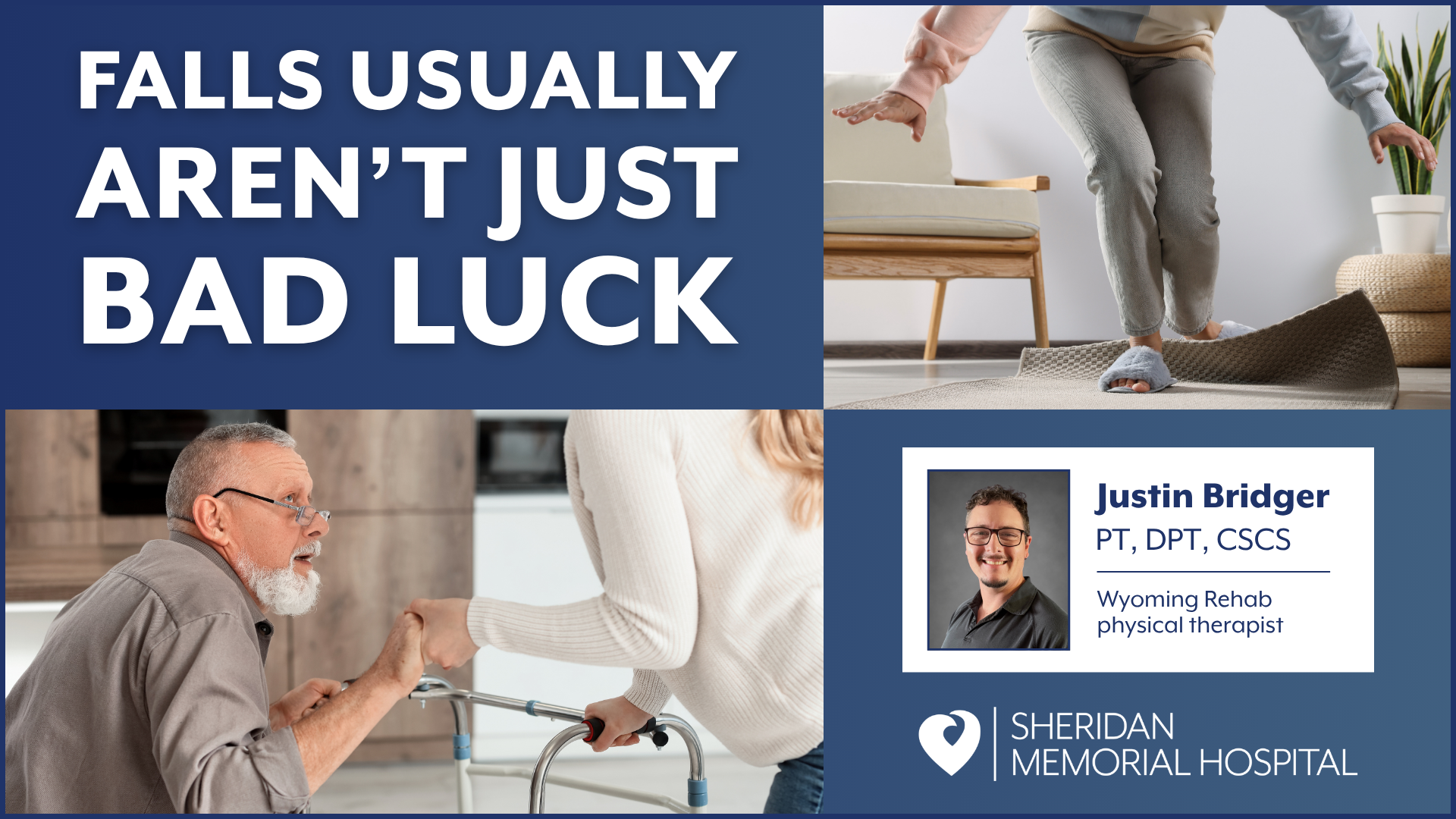
By Justin Bridger, DPT, PT, CSCS, a physical therapist at Wyoming Rehab
There’s a common tendency, as we age, to treat a fall as part of the natural aging process. I understand the appeal of that, but in reality, most falls aren’t random. Falls typically have a cause and, more often than not, can be avoided with the right preparation.
Recently, I and two colleagues from Sheridan Memorial Hospital shared information about falls and how to prevent them at The Hub on Smith. Knowing how common falls in the community truly are, I wanted to share that same information here.
First, a fall is any loss of balance that ends with you hitting the ground, a wall or some other surface you weren’t intending to crash into. I’d also count near-misses — the moments where you stumble and catch yourself just in time. Some tend to shrug these off as reflexes doing their job, but they are early signals, and they deserve the same attention as an actual fall.
One cause I bring up constantly with the people I see is postural hypotension — a drop in blood pressure that happens when you stand or sit up too quickly. It can leave you lightheaded, hot, nauseous or briefly faint. Dehydration, certain medications and long stretches of bed rest all make it worse. The good news is the fix is embarrassingly simple: get up slower, pause when you change position and drink water consistently through the day.
Another factor that can increase fall risk is your home environment. I’ve walked through homes where the biggest hazard wasn’t a rug or a step — it was a favorite chair that was just a little too low, or a hallway light switch that was just out of reach at night. What seem like small mismatches between your body and your environment can create a higher risk of falls.
Balance is a partnership between three parts of your body: your eyes, your inner ear and the sensory feedback your body gets from the ground beneath you. When one system starts to lag, the others try to compensate. That’s why I have patients practice balance with their eyes closed, on a pillow or while turning their head — it forces the weaker systems to catch up.
Another proactive way to avoid falls is to build up your strength — not strength in the slow, steady sense, but how quickly your muscles can fire when it counts, like the split second it takes to plant a foot and stop yourself from falling. Strength and power can be the first things to fade as we age, but training can help. Exercises such as stomps, jumps or quick sit-to-stands can rebuild strength and power faster than people expect.
Even with all of these prevention efforts, falls can still happen, so I also teach patients how to fall better — spreading the impact, tucking instead of bracing stiffly, protecting the head and wrists.
If you’ve felt unsteady, or you’ve had a fall in the last year, don’t brush it off. Bring it up with your doctor and ask about physical therapy. This isn’t something you have to figure out alone.
This article originally appeared in The Sheridan Press on September 8, 2026.