Welcome to Sheridan Memorial Hospital
1401 West 5th St. Sheridan, WY — 307.672.1000

SMH Friendly Faces

At Sheridan Memorial Hospital, caring for patients goes beyond clinical excellence—it’s about
Sheridan Memorial Hospital is making remarkable strides in addressing Wyoming’s critical mental
I can’t walk! How often do you overlook the importance of your foot and ankle until pain or
While perimenopause and menopause are natural processes unique to each individual, many women
After years of chronic ankle pain, Judy Merriott, DVM, reached a point where everyday tasks—and even walking—became unbearable. Working as an
Sheridan Memorial Hospital invests in the next generation of healthcare professionals—those who live, grow and serve right here in our community.
April 21, 2025 — Recently on Sheridan Media's Public Pulse, orthopedic surgeon Dr. Jory
I cannot tell people often enough how much there is to be grateful for living in such a generous, selfless
With a mission \"to provide comfort to and better the welfare of Sheridan Memorial Hospital (SMH)
When it comes to running, efficient movement and injury prevention matter just as much as wearing a good pair of sneakers. Common running mistakes—
Sheridan Memorial Hospital’s Wyoming Rehab physical therapists, Justin Bridger and Lindsay
At Sheridan Green House, Sheridan Memorial Hospital’s long-term care facility, staff provide
Discover how Sheridan Memorial Hospital’s Same Day Health & Imaging is redefining healthcare
On Thursday, December 12, 2024, Sheridan Memorial Hospital Foundation hosted its annual
Sheridan Memorial Hospital is excited to welcome Dr. Ryan Villegas to our team as a dedicated
Dr. Jason Ackerman from Sheridan Memorial Hospital Addiction & Internal Medicine Clinic spoke

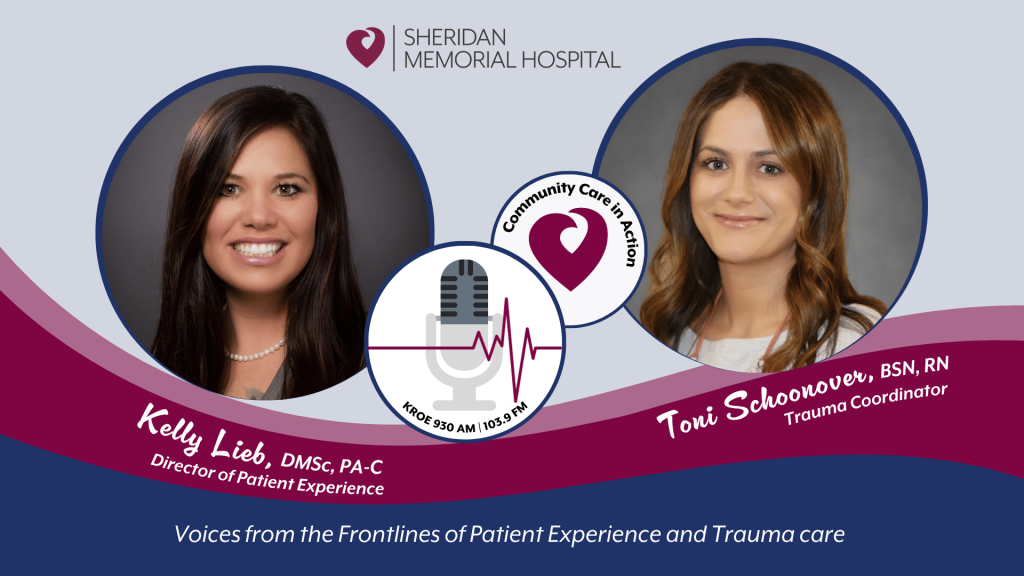
At Sheridan Memorial Hospital, caring for patients goes beyond clinical excellence—it’s about connection, compassion, and continuous improvement. In a recent conversation with host Floyd Whiting on Sheridan Media’s Public Pulse, two dedicated healthcare professionals—Kelly Lieb, DMSc, PA-C, Director of Patient Experience, and Toni Schoonover, BSN, RN, Trauma Coordinator—shared their journeys into healthcare and how their roles shape the patient and community experience every day.

Both Kelly and Toni emphasized the deeply personal paths that led them into medicine. For Toni, it began in childhood. “When I was in eighth grade, my mom got really sick, and I helped care for her. Ever since then, I’ve had a passion for caring for others.” That early experience has since evolved into a role focused on trauma education, emergency care coordination, and injury prevention through community outreach.

Kelly’s story also reflects a lifelong commitment to both science and people. Today, she balances patient care with her leadership in enhancing the patient experience. “We aim to create a five-star experience that patients remember as feeling cared for,” she shared. Her role includes spearheading initiatives like the hospital’s upcoming Patient and Family Advisory Council— “The Voice”— Voicing opportunities for improvement, collaboration and engagement a new opportunity— for patients and families to help shape care delivery through direct partnership and feedback.

The conversation highlighted the collaborative nature of healthcare at Sheridan Memorial. From bedside interventions to systemic improvements, both speakers stressed the importance of teamwork across disciplines, whether it’s between nurses and physician assistants or through cross-functional efforts to engage the community.

Sheridan Memorial Hospital’s outreach extends far beyond its walls, thanks to programs like Third Thursday, where Toni and her team offer hands-on injury prevention education supported by the Sheridan Memorial Hospital Foundation. These efforts demonstrate the hospital’s commitment to proactive health and safety—a mission rooted in community connection and wellness.

Whether responding in the ED or shaping policy behind the scenes, Kelly and Toni embody Sheridan Memorial Hospital’s vision: to serve our community with excellent patient-centered care.

🎧 Listen to Kelly Lieb and Toni Schoonover’s full interview on Public Pulse by clicking below.

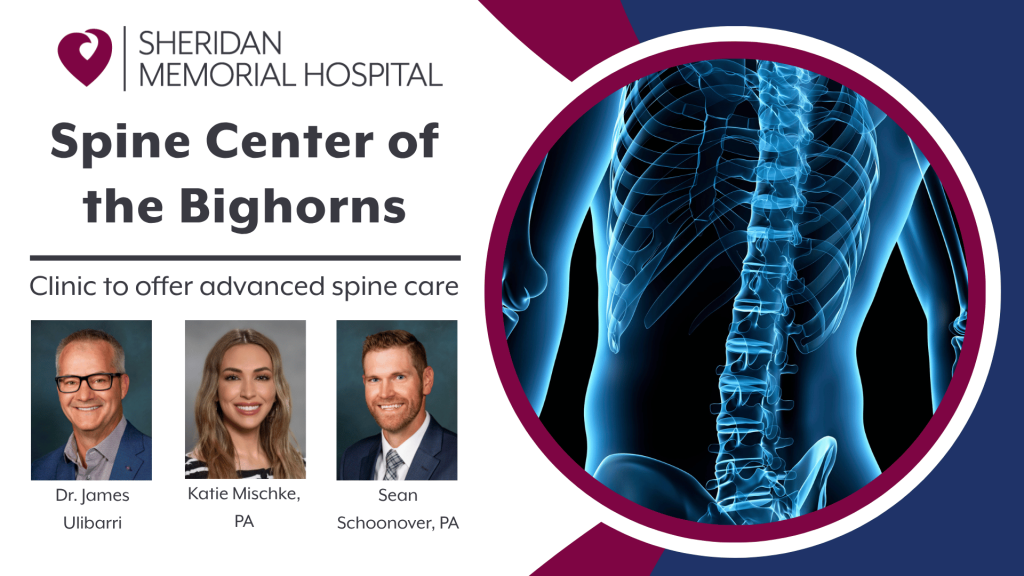
SHERIDAN – Dr. James Ulibarri alongside physician assistants Sean Schoonover and Katie Mischke will launch Spine Center of the Bighorns at Sheridan Memorial Hospital in July, offering advanced spine surgery options to individuals across the region.
“Our mission to provide excellent, patient-centered care close to home means providing access to advanced specialties,” said Mike McCafferty, hospital CEO. “We’re thrilled to add a team of well-respected providers with deep Wyoming roots to the Sheridan Memorial Hospital team as part of that mission.”

Dr. Ulibarri grew up on a ranch outside of Douglas and completed his undergraduate degree at the University of Wyoming before attending medical school at the University of Wisconsin. He completed his orthopedic surgery residency at the University of Wisconsin and a fellowship in spine surgery at the University of Pittsburgh. He returned to practice medicine in Wyoming in 2009, specializing in surgery of cervical, thoracic and lumbar spine, including degenerative disease, trauma and tumors.

Sean Schoonover, a certified physician assistant, grew up in Cody and attended the University of Wyoming, where he met his future wife, Toni, a registered nurse originally from Sheridan. He earned an associate degree in surgical technology before completing the physician assistant program at Northern Arizona University. After earning his master’s degree, he worked at Mayo Clinic’s Phoenix Campus Neurosurgical Department, with a focus on spine surgery. Schoonover and his wife returned to Wyoming after the birth of their first child, and the couple now lives in Sheridan with their three children.

Katie Mischke is a Sheridan native returning to her hometown after spending seven years working in neurosurgery at St. Vincent Healthcare in Billings. Mischke graduated from Carroll College in 2014 before attending the physician assistant program at Rocky Mountain College. She has worked in orthopedics and spine care for more than 10 years and said she enjoys helping individuals regain a higher level of functionality and more enjoyment in their day-to-day lives.

The Spine Center of the Bighorns at Sheridan Memorial Hospital will begin seeing patients July 14.

Transforming Mental Healthcare: Sheridan Memorial Hospital’s Growing for You Campaign

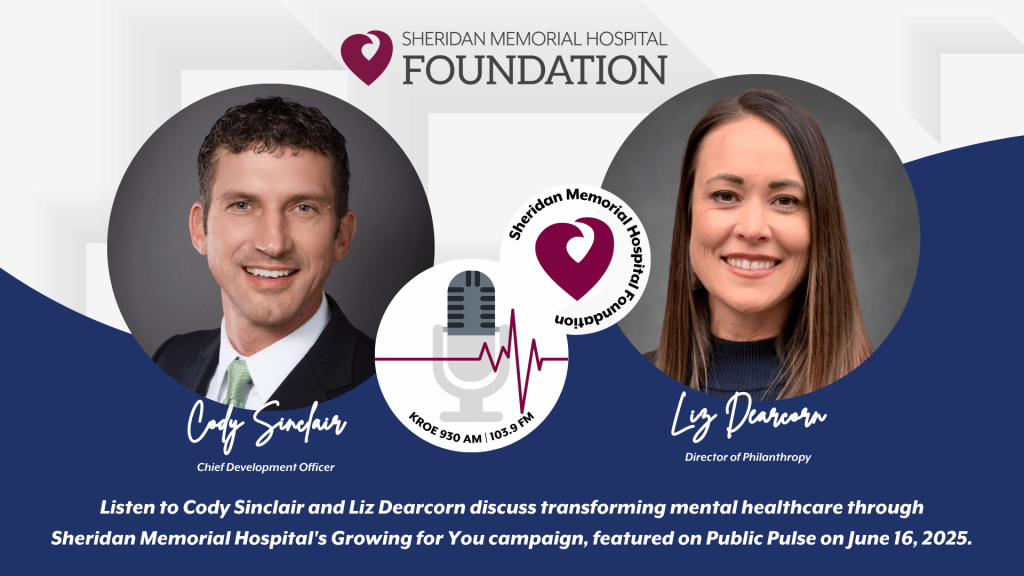
Sheridan Memorial Hospital is making remarkable strides in addressing Wyoming’s critical mental health needs through its Growing for You Campaign. As discussed in a recent episode of Public Pulse hosted by Floyd Whiting, Chief Development Officer Cody Sinclair and Foundation Director of Philanthropy Liz Dearcorn shared the progress of this transformative initiative. The campaign is funding a new Behavioral Health Unit, a vital step toward providing accessible, comprehensive mental health care in Sheridan County and beyond.
Wyoming’s mental health crisis

Wyoming faces a significant mental health crisis, with a 2022 statistic revealing that 32% of adults experiencing anxiety or depressive disorders did not receive needed counseling or therapy, compared to the national average of 28%. The state’s suicide rate, alarmingly 120% higher than the national average, underscores the urgency of this project. The Behavioral Health Unit aims to bridge these gaps by offering crisis stabilization, inpatient care and a robust network of community-based services.

Campaign goals and progress

The campaign, launched in 2023, has a total project goal of $18.9 million, with the Sheridan Memorial Hospital Foundation tasked with raising $8.12 million. Thanks to overwhelming community support, including contributions from local donors, businesses, the state legislature and partners like the Helmsley Charitable Trust, the campaign is just $700,000 short of its goal. A recent $45,000 matching gift from O’Dell Construction and Shawn & Lisa O’Dell has further energized fundraising efforts, encouraging community members to double their impact by donating.

Community collaboration and leadership

Cody Sinclair highlighted the collaborative spirit driving the project: “When you have a whole community come together, and with The Foundation, we have a committee that meets every couple months… it’s been a team effort for sure.” This teamwork extends beyond fundraising, with the hospital forging partnerships with local law enforcement, schools and mental health providers to create a seamless care network. Dr. Michael Kinney, the new psychiatrist at SMH, has already made a significant impact, serving over 300 patients in just six months and reducing Title 25 involuntary commitments.

Impact and vision of the Behavioral Health Unit

Liz Dearcorn emphasized the project’s immediate and future impact: “The community needs the right place, the right department, and the right team to take care of these people going through a mental health crisis. Seeing this all come together, phase by phase, has been absolutely incredible.” The Behavioral Health Unit, now in phase three of four, involves renovating hospital spaces to include six inpatient rooms, a crisis stabilization area and pediatric rooms, ensuring care for all ages.

Project efficiency and community engagement

The project’s rapid progress is a testament to the dedication of the hospital’s team, led by figures like Director of Behavioral Health Brittany Goodvin and Dr. Kinney. By repurposing existing hospital space, costs were reduced from an initial $32 million to a more manageable $18.9 million, making this vision feasible. Community engagement remains central, with tours available to showcase the ongoing renovations and foster continued support.

🎧 Listen to Cody Sinclair and Liz Dearcorn’s full interview on Public Pulse by clicking below.


Sheridan Memorial Hospital invites the community to get involved by donating or scheduling a tour to see the progress firsthand. Contact The Foundation at 307.673.2418 or visit sheridanhospital.org/foundation to contribute to this life-changing initiative. Every donation, no matter the size, is a step toward a stronger, healthier Sheridan County.

By Daniel L. Peterson, DPM, FACFAS – a board-certified, fellowship-trained foot and ankle surgeon at Sheridan Orthopedic Associates now affiliated with Sheridan Memorial Hospital.

Don’t overlook your feet and ankles

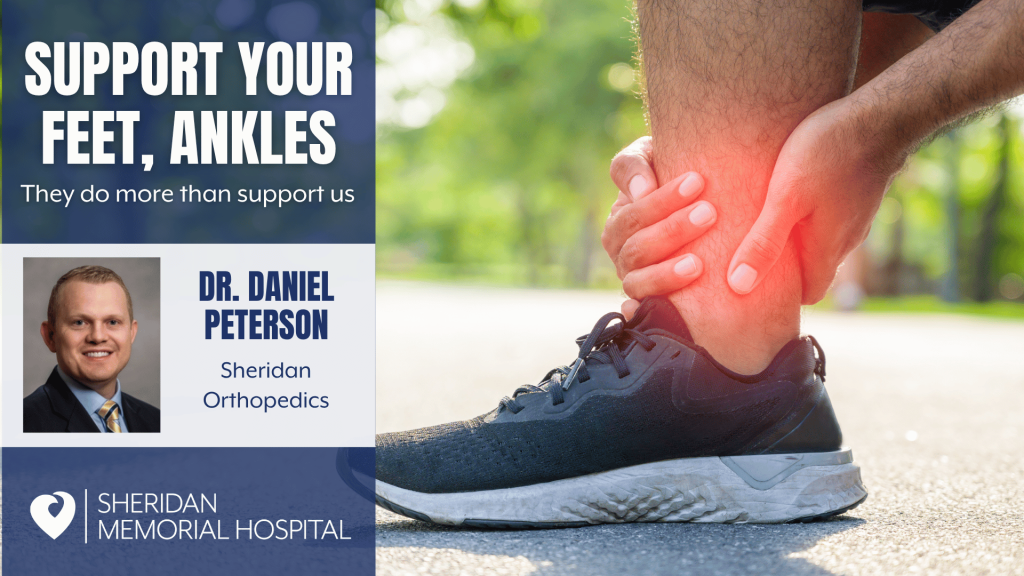
I can’t walk! How often do you overlook the importance of your foot and ankle until pain or injury slows you down? They do more than support our body weight, they keep us moving. Some common conditions affecting this vital part of the body include:

Plantar fasciitis

A top cause of heel pain, plantar fasciitis occurs when the thick band of tissue along the bottom of the foot becomes inflamed. Supportive footwear, stretching, and injections are often considered first line therapy.

Achilles tendinitis

This overuse injury affects the tendon connecting calf muscles to the heel. It causes pain and stiffness in the back of the leg. Both acute and chronic pain can often be treated conservatively with appropriate offloading.

Ankle sprains

Sprained ankles occur when ligaments stretch or tear due to a sudden twist. Swelling, pain and bruising are common symptoms. Oftentimes the ligaments will improve without surgery. If pain persists, the ligaments may need to be repaired.

Ankle arthritis

Arthritis in the ankle leads to pain, stiffness and reduced mobility due to cartilage wear or most often from a previous injury. Treatment can include bracing and injections. In severe cases, an ankle fusion or an ankle replacement can get you back to walking pain free.

Bunions

Bunions are bony bumps at the base of the big toe, often causing it to angle inward. They may result from genetics or years of tight shoes. Treatments range from wider footwear and pads to surgical correction.

Hammertoes

Hammertoes are deformities where one or more toes bend abnormally. This is often due to muscle imbalance, arthritis or ill-fitting shoes. They can cause discomfort, corns and difficulty walking. Early stages may respond to shoe changes, padding and callus removal. Sometimes the toe needs to be straightened to provide relief.

Flat feet

Collapsed or underdeveloped arches can cause pain or fatigue, especially after standing or walking. Bracing can be helpful initially. Some individuals will benefit from surgery to recreate the arch of the foot.

Foot infections

Foot infections can result from ingrown toenails, puncture wounds, blisters or cuts. People with neuropathy or poor circulation are especially at risk. Symptoms may include redness, swelling, warmth and pus. Prompt treatment is essential to prevent complications. Depending on the severity, treatment may involve nail removal, incision and drainage, and/or antibiotic medications.

When to seek help

Persistent foot or ankle pain shouldn’t be ignored. If rest doesn’t help, consult a foot and ankle specialist.

If you’re living with persistent foot or ankle pain, don’t wait. Early treatment can prevent long-term damage and help you stay active. Call Sheridan Orthopedic Associates at 307.672.9855 or visit sheridanortho.com to schedule a consultation with Dr. Peterson and take your first step toward lasting relief.

By Tracy Jons, MS, PA-C, MSCPphysician assistant and menopause society certified practitioner, who has worked with the Sheridan Memorial Hospital Women’s Clinic since 2007, specializing in obstetrics, gynecology and hormone therapy.

While perimenopause and menopause are natural processes unique to each individual, many women are not prepared to understand the abundance of information filtered to them on social media. It is important to ensure your information is based on evidence, not industry.
Eighty-five percent of women experience menopausal symptoms. For some this starts in their 40s, and some much earlier or later. As I walk patients through what happens during their reproductive years, and then into perimenopause and menopause, I see them light up – finally understanding their symptoms. Sometimes first symptoms are increased anxiety or irritability, not sleeping as well, joint pain, weight changes or changes in their menstrual cycle. Women notice hot flashes, night sweats and struggle to think clearly through the brain fog. They don’t feel like themselves – experiencing vaginal dryness, painful sex and their sexual desire goes down. Perimenopause represents a time when women’s reproductive hormones are no longer a smooth even rhythm, and instead become more volatile with narrowing higher highs and lower lows. It’s like another round of puberty!

Every story is unique, but there are steps you can take to ease these natural processes.

In 2002, a large study on hormone therapy, called the women’s health initiative, stopped due to concerns about stroke risk. This was shocking because researchers started the trial assuming they would prove hormone replacement therapy decreased the risk of cardiovascular disease. The study also reported an increase in breast cancer risk. This caused a wave of panic and suddenly everyone feared taking hormones. It has taken the last 20 years to look at the data and new research to understand what happened. We know a whole lot more now.

Menopause hormone therapy (what we used to call hormone replacement therapy or HRT) for most women is the safest and most effective option to help them feel more like themselves again. A wide variety of options allow for the healthiest formulation for each woman whether it be estrogen, progesterone and/or testosterone.

For example, if we time initiation within 10 years of the last menstrual period and use a transdermal approach, there is not an increased risk for cardiovascular disease or stroke. We also know that for women who took estrogen only, there was no increased risk of breast cancer, but for women who took estrogen and progestin the risk increased slightly.  Now, we have options to reduce this breast cancer risk. These discussions provide reassurance and allow women to feel more in control.

For some women however, hormone therapy is still off the table. Women with a history of cardiac disease, blood clot, stroke or breast cancer still have several new treatments available to relieve their symptoms. These are exciting times in this area of medical research.

When you meet with your healthcare provider to talk about symptoms, ensure that provider is committed to staying up to date on the best way to care for you during a time that feels so strange.  Discuss lifestyle measures, eating well, exercise, keeping your heart and bones strong, preventing cancer and your menopausal experience. You should be in control of your medical care and your body.

If you’re noticing changes in your body that leave you feeling unsure or overwhelmed, you’re not alone. The experienced team at Sheridan Memorial Hospital’s Women’s Clinic is here to listen, support, and help you find real answers. Your health matters—and so does your story. If you would like to make an appointment call or text 307.672.2522.

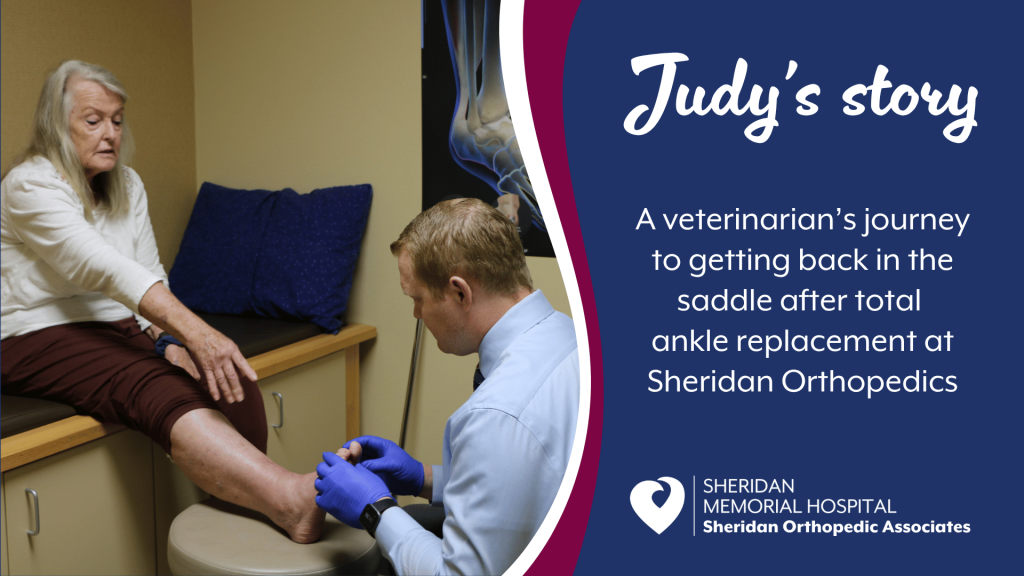
After years of chronic ankle pain, Judy Merriott, DVM, reached a point where everyday tasks—and even walking—became unbearable. Working as an equine veterinarian felt impossible, and the activities she once loved were now out of reach. Determined to get back in the saddle, both literally and figuratively, Judy turned to Sheridan Orthopedics, where she found the care and support she needed to reclaim her mobility and joy.
Judy has called Sheridan home for the past year, returning to Wyoming after spending 12 years practicing veterinary medicine in Australia. Her ankle pain began about five years ago, following an injury she sustained while working abroad.

“I was doing chiropractic work on a horse and standing on a stepladder,” Judy recalled. “I was up above this mare’s neck, and the person holding her wasn’t paying much attention. The mare jumped sideways, knocked me off the ladder and stepped on my ankle.”

Although initial X-rays showed no broken bones, the damage worsened over time. The pain gradually began to affect every part of her life.

“I was a solo practitioner, so I didn’t get much time off,” she explained. “I soldiered on, but every year it got a little worse. Eventually, I was walking with my foot turned out like a duck because that was the only position that felt comfortable. When I moved to Sheridan, I knew that if I still wanted to work as an equine vet, I needed my mobility back. I have to be able to get out of the way quickly if my patient—the horse—isn’t happy with me.”

Judy’s pain didn’t just affect her work. It also kept her from enjoying her favorite pastimes.

“I like to hike, and I love to ride horses,” she shared. “I tried to ride last summer, but I ended up getting of the horse in tears because my ankle hurt so much.”

Eager for a solution, Judy researched providers in Sheridan, Billings and Denver. She eventually met with Dr. Daniel Peterson, DPM, FACFAS, at Sheridan Orthopedics, who introduced the possibility of a total ankle replacement.

After speaking with others in the community and hearing consistent praise for Dr. Peterson’s expertise and kindness, combined with the convenience of receiving care close to home, Judy felt confident moving forward with the procedure.

From her first visit to her final follow-up, Judy felt heard, respected and supported throughout the process.

“The front desk staff were very friendly and efficient,” Judy said. “And the scheduler was great, even when I had to postpone my surgery twice. Any time I had a concern, I could call the office, and Dr. Peterson would personally call me back.”

Her experience stood in stark contrast to a previous major surgery.

“I had both knees replaced in 2008 in Colorado. The surgeon was well-known, but I felt like I was just a blip on their screen,” she said. “Dr. Peterson never made me feel that way. I felt very well taken care of.”

In December 2024, Sheridan Orthopedics became part of the Sheridan Memorial Hospital team, enhancing the hospital’s ability to deliver expert, coordinated orthopedic care close to home. This integration ensures patients like Judy receive a smooth, supportive experience—from initial consultation through surgery and recovery—guided by a team that puts people first.

Judy’s surgery went smoothly, and she spent one night at Sheridan Memorial Hospital—a stay that left a lasting impression.

“The nurses were wonderful,” she reflected. “When you’re a patient, someone else has to help you do everything—and they were kind, respectful and never made me feel awkward.”

Now, several weeks into her recovery, Judy has made remarkable progress—enough to impress even Dr. Peterson.

“At my two-week check-up, my incisions had already healed really well,” she said. “By four weeks, Dr. Peterson looked at my X-rays and range of motion and said, ‘I’m really surprised. I’ve never seen an ankle heal this quickly.’”

Judy chuckled. “And I said to him, “I told you I was a good healer!”

She continues physical therapy and is eager to walk again without a boot or crutch, but she’s also learning to listen to her body.

“I have a tendency to push through things,” Judy admitted. “A few days ago, I felt strong enough to go for a walk with my neighbor, but on the way back, it started to hurt. I’m learning to listen to my ankle and know when it’s had enough. I’m trying to do everything I can to make it heal quickly, but at the same time, I don’t want to overextend myself.”

When asked what advice she would give others considering ankle replacement, Judy answered, “Number one, go to Dr. Peterson. Number two, trust your doctor. Make a list of your questions and concerns, and just go have a conversation.”

In just a few more weeks, Judy hopes to be hiking the Bighorns with her Border Collie and, eventually, riding horses again.

“I’ll be thrilled the first time I get back on a horse,” she said with a smile. “I’ll be thrilled, because that was my life for many, many years.”

If bone, joint or muscle pain is keeping you from the things you love, you don’t have to go through it alone. Visit sheridanortho.org to learn how Sheridan Orthopedics can help you get back in the saddle and back to doing what you love.

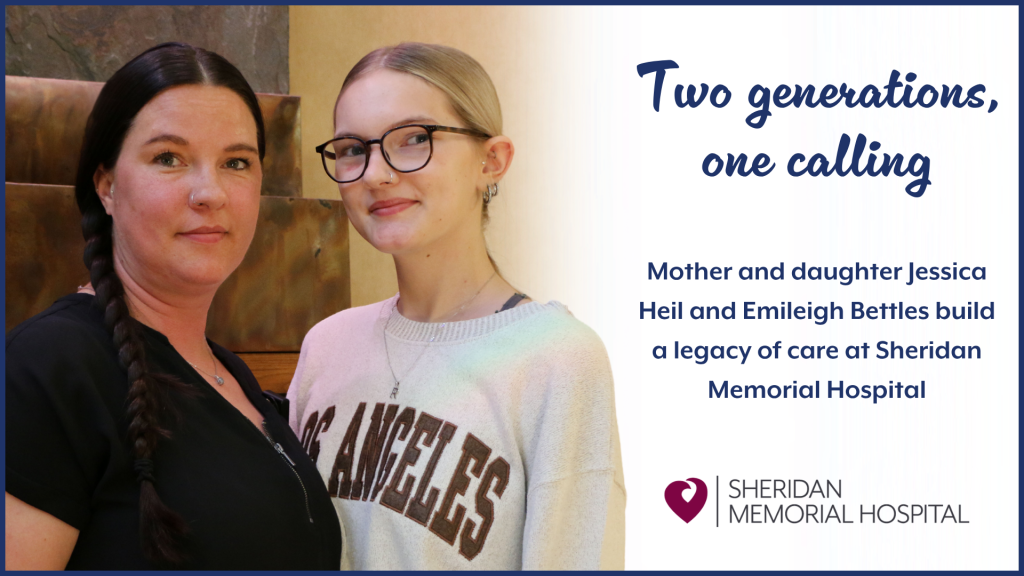
Two generations, one calling: Mother and daughter Jessica Heil and Emileigh Bettles build a legacy of care at Sheridan Memorial Hospital

Sheridan Memorial Hospital invests in the next generation of healthcare professionals—those who live, grow and serve right here in our community. For Med/Surg Manager Jessica Heil and her daughter, Emileigh Bettles, “growing our own” isn’t just a philosophy—it’s a shared journey.
Emileigh, a senior at Sheridan High School and a part-time certified nursing assistant (CNA) at Sheridan Memorial Hospital’s Transitional Care Unit (TCU), didn’t always plan to follow in her family’s footsteps. But everything changed after she enrolled in a high school CNA course. During the class, she shadowed nurses in the hospital’s Med/Surg unit, and that’s when her passion for healthcare blossomed.

“It was originally just another class to take,” Emileigh explained. “But once we started clinicals, I realized how much I actually liked it. My mom, my dad, my grandma—they’re all in the healthcare field. I loved coming to the hospital and seeing what my mom did and how much of a difference good healthcare workers like her can make for patients. So, I wanted to be like them.”

Jessica also hadn’t expected Emileigh to choose the same path.

“Emileigh just liked other things when she was younger. Both her dad and I are in healthcare, but neither of us saw it coming,” Jessica said. “But I’m super, super proud of her, and I love seeing her with patients and hearing from patients about how caring she is.”

Emileigh’s first job was as a CNA at Sheridan Green House, but she transitioned to the TCU shortly after Sheridan Green House became part of Sheridan Memorial Hospital in the summer of 2024. In the TCU, she finds great fulfillment in building meaningful connections with patients.

“I really love working in the TCU because you don’t see a different patient every time,” Emileigh said. “You have the same patients, and you get to build connections with them while helping them get better. You learn their life stories—where they came from, why they came to Wyoming. It’s nice to know that when one of my patients goes home, they’re leaving better than when they came in.”

While Emileigh gained experience on the TCU floor, Jessica offered guidance from behind the scenes.

“I quizzed Emileigh on her CNA skills as we drove to Denver for her certification test,” Jessica said. “It was a refresher for me, too, because what you learn in class can be so different from real-life situations. We also have interesting conversations at home, where I help her work through things like her first patient death.”

Emileigh appreciates her mother’s support—she occasionally texts Jessica with questions about patient charts or the hospital’s ongoing construction—but she also values the independence she and her mother work hard to maintain at work.

“It’s hard to call her ‘Jessica’ at work,” Emileigh laughed. “But I want my coworkers to like and respect me for who I am and not just because I’m her daughter. I want to prove myself as a good coworker.”

Emileigh and Jessica do occasionally cross paths at work. One rainy day, Jessica and Emileigh worked side by side to help a patient who needed assistance getting from his car into the hospital.

“Emileigh had floated down to Med/Surg from the TCU, so I asked her to help me get the patient out of his car,” Jessica recalled. “It was raining, and the patient’s wife, who was sick, too, was trying to help us, but her husband had a hard time following directions. He couldn’t really stand or get out of the car on his own. We reassured her and got him into the wheelchair, but his wife couldn’t come in because she was sick too. We got him settled into his room, and I called his wife to let her know he was safe and comfortable. She started crying and thanking us. I told her, ‘Please, don’t worry. You take care of you. You get to rest now.’”

A few weeks later, the patient’s wife called again.

“She asked if I was Emileigh’s mother. When I said I was, she told me I should be proud of my daughter for following in my footsteps,” Jessica said. “The best part was that I didn’t even have to coach Emileigh in that moment. She immediately just took over and knew what to do and how to talk to him. But that wasn’t anything out of the usual. That’s just who she is and what she does for all her patients.”

Emileigh’s passion for healthcare extends beyond her workplace. In April 2025, she traveled with Sheridan High School’s SkillsUSA team to the Wyoming State Leadership and Skills Conference in Casper. There, she placed third in the Nursing Assistant event and helped her team earn second place in the Health Knowledge Bowl. The competition, which included both a skills test for CNAs and a quiz-based knowledge bowl, gave Emileigh the opportunity to put her training and experience to the test.

“During the Bowl, they described some symptoms of a condition, and as we talked about it, the face of one of my patients from the TCU popped into my head,” Emileigh said. “I suddenly knew the answer was chronic heart failure. It was great to draw from actual experience and use that to answer the question.”

Sheridan Memorial Hospital proudly supports young healthcare workers like Emileigh by hiring high school students as CNAs and offering flexible schedules to fit school and seasonal commitments.

“If you can only work weekends, great—let’s schedule you then,” Jessica said. “If you can work full-time in the summer, we’ll make that happen. We know some will leave for school, but we don’t turn them away because of that.”

Jessica sees that investment as long-term.

“Our hope is that they come back because they had a great experience. Because they felt welcomed and safe here,” she said. “Our goal is to get them trained here and make them great nurses. Then, even if they do leave for a different, bigger facility, they will be a standout nurse and people will ask when where they learned it all. And they’ll say Sheridan Memorial Hospital.”

As Emileigh prepares to graduate, her sights are set on nursing school. She recently applied for a clinical scholarship from the Sheridan Memorial Hospital Foundation and hopes to begin Sheridan College’s nursing program soon.

“It’s a bit scary,” Jessica admitted. “Because everything’s moving so fast, and she’s my kiddo. But I know who Emileigh is and I know what kind of person she is, so I know that wherever she goes, she’ll be fine.”

Inspired to make a difference?

Join the dedicated team at Sheridan Memorial Hospital and be part of a mission that spans generations. To explore current opportunities, contact our Human Resources Recruiter, Darby Hamilton, at 307.672.1091 or email recruiting@sheridanhospital.org.

Discover what’s possible: sheridanhospital.org/about-us/careers

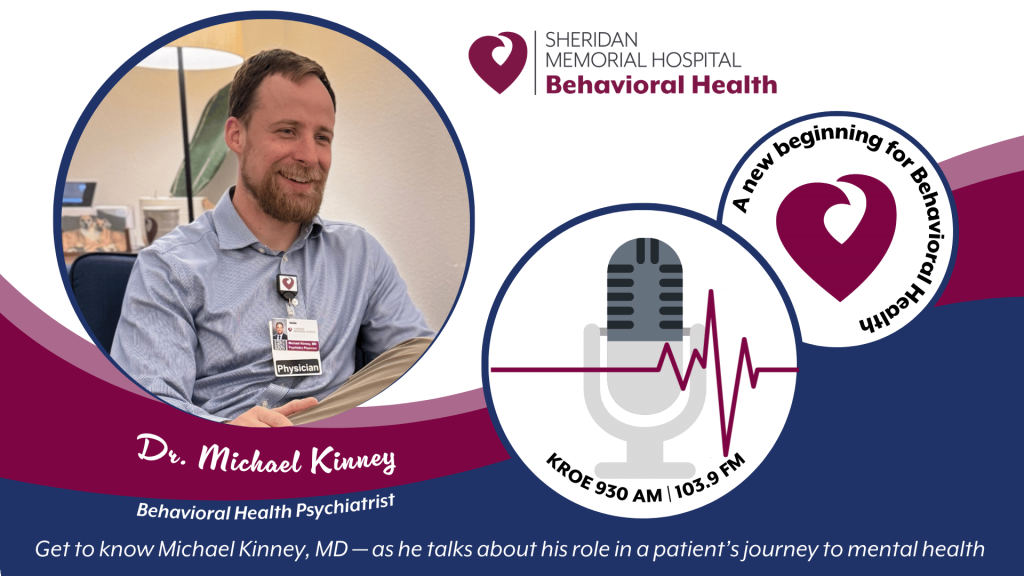
When Dr. Michael Kinney and his wife, Lindsay, first arrived in Sheridan, they were looking for something more than a beautiful place to live. They were seeking impact.
“We wanted to make a big splash in a little pond,” Dr. Kinney shared during a recent interview on Public Pulse with host Floyd Whiting. That desire led him to Sheridan Memorial Hospital, where he now serves as the organization’s psychiatrist, serving patients ages 13 and older.

And that splash? It’s already rippling.

Building behavioral health service from the ground up

Dr. Kinney joined Sheridan Memorial Hospital in late 2024 and quickly stepped into a role that was as foundational as it was formidable — building a behavioral health clinic from the ground up.

“It’s intimidating,” he admitted. “But exciting.”

With no existing psychiatry infrastructure in the hospital system, Dr. Kinney and Director of Behavioral Health Brittany Goodvin have taken on the challenge of creating not just a clinic, but a new model of care — patient-focused, data-informed and stigma-free.

Rather than being overwhelmed by the size of the mission, they’ve approached it one piece at a time.

“Let’s not look at the whale,” Kinney said. “Let’s take just pieces of it off at a time.”

Meaningful metrics and measurable impact

One of the most promising signs of success so far? A nearly 20% reduction in the use of emergency hold proceedings under Wyoming’s Title 25 since the clinic opened. Dr. Kinney sees that number not only as a marker of progress but also as an early indicator that the community is gaining access to care in a more timely and supportive way.

And the future is even brighter. With the hospital’s behavioral health facility currently under construction — featuring a crisis stabilization area, inpatient beds and expanded outpatient therapy spaces — Sheridan Memorial is preparing to meet a broader spectrum of mental health needs with compassion and skill.

Psychiatry rooted in purpose

Dr. Kinney’s journey into medicine wasn’t linear. Initially pursuing law, it wasn’t until a volunteer EMT call — where a child in distress looked up at him “like [he] was Superman” — that he realized his calling was to be a different kind of helper.

That sense of calling became even more personal after the tragic loss of his brother to addiction and mental illness.

“He didn’t survive those issues,” Kinney said. “And that’s part of what drives me now.”

Kinney speaks openly about that grief and how it shaped his desire to become a psychiatrist unafraid of addressing addiction.

“I don’t want to do this halfway,” he said. “I want to be able to take care of the whole person.”

A philosophy of thoughtful care

In an age where medication can feel like a quick fix, Dr. Kinney is refreshingly intentional. He uses metaphor to explain the role of treatment: if mental health challenges are a Wyoming blizzard, then medication is the pair of boots that keeps your feet warm—but it’s therapy that helps you find your way out of the storm.

“Some people need the boots longer than others. But nobody should feel like they have to weather it alone.”

Kinney also emphasizes the importance of accurate diagnosis. He noted that a significant number of patients he sees arrive with labels like bipolar disorder that may not fit. His approach involves “getting back to the drawing board,” with careful attention to both removing unnecessary medications and prescribing only what’s needed to support healing.

Community matters

One thing is clear: Kinney is here for Sheridan. He praises the region’s strength and resilience while recognizing the need to shift cultural attitudes around mental health.

“This is a place that takes care of others,” he said. “But to do that well, we have to start by taking care of ourselves.”

And that begins with making it easier — and more normal — to ask for help.

“Pay attention to how you feel,” he said. “Honor your emotions. That’s where healing starts.”

At Sheridan Memorial Hospital, the addition of Dr. Kinney is part of a larger commitment to transform how the community understands, accesses and receives behavioral health care.

🎧 Listen to Dr. Kinney’s full interview on Public Pulse by clicking below.


To speak with someone about behavioral health services at Sheridan Memorial Hospital, visit Behavioral Health – Sheridan Memorial Hospital or call 307.675.2674.

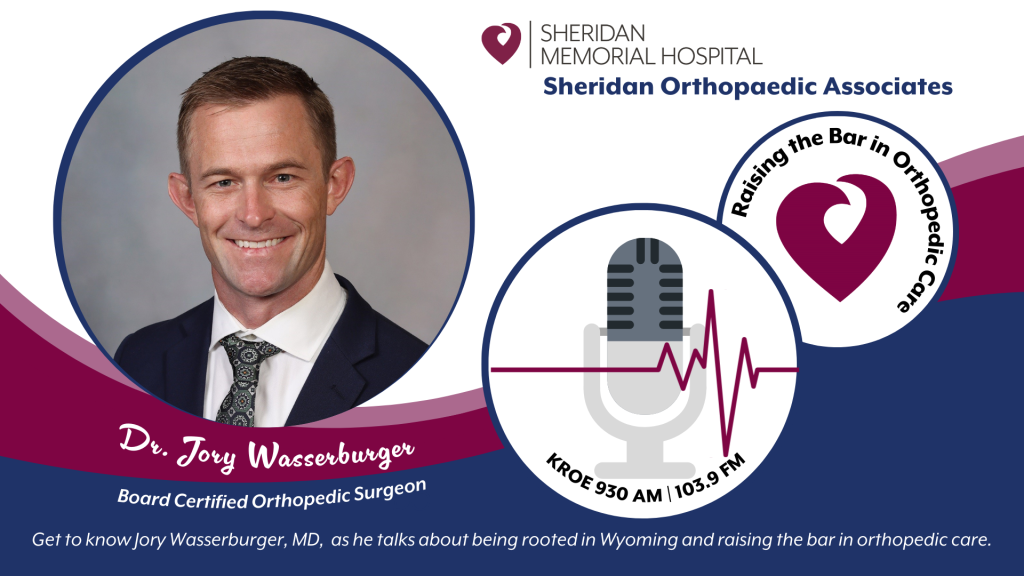
April 21, 2025 — Recently on Sheridan Media’s Public Pulse, orthopedic surgeon Dr. Jory Wasserburger joined host Floyd Whiting to share insights into his journey in medicine, the exciting advancements happening in orthopedic care, and the recent integration of Sheridan Orthopedic Associates into Sheridan Memorial Hospital.
A native of Gillette, Wyoming, Dr. Wasserburger’s Wyoming roots run deep. Growing up with a strong ranching background and a mother who was a nurse, he described how early exposure to hospital environments and a deep desire to help people naturally guided him toward medicine—and ultimately orthopedics. His story embodies the spirit of service and community dedication that Sheridan Memorial Hospital (SMH) strives to cultivate every day.

During the conversation, Dr. Wasserburger spoke passionately about the “match process” in medical training, the challenges of becoming an orthopedic surgeon, and the powerful sense of purpose he found in treating injuries that help people move, work, and live fully again.

“Bones are the rebar of the body,” he explained, reflecting on how restoring mobility improves lives in tangible, lasting ways.

Today, Dr. Wasserburger specializes in sports medicine, joint replacements, and tendon repair—areas critical to keeping our active, adventurous community on the move.

“Whether it’s shoulder replacements, ACL reconstructions, or helping a rancher return to work, the outcomes are transformative,” he shared.

A particularly exciting development for patients is Sheridan Orthopedic Associates’ new access to robotic-assisted surgery—a leading-edge technology now available thanks to the partnership with Sheridan Memorial Hospital. “The robot doesn’t replace the surgeon,” he noted. “It enhances precision, decreases recovery times, and ultimately improves outcomes.”

The decision for Sheridan Orthopedic Associates to become part of Sheridan Memorial Hospital was a deliberate one, rooted in a shared commitment to excellent, patient-centered care. By joining SMH, the orthopedic team now benefits from expanded resources, streamlined insurance processes, collaboration with hospital-based rehabilitation services, and access to innovative technologies like the robotic surgical platform.

“Ultimately, it’s about taking the very best care of our patients,” Dr. Wasserburger emphasized. “We’re here, we live here, and we’re part of the same community. Being stronger together means a healthier Sheridan.”

Sheridan Memorial Hospital’s 2023–2026 Strategic Plan outlines a clear focus on expanding access to care, enhancing quality and safety, and ensuring a sustainable future. The addition of Sheridan Orthopedic Associates strengthens the hospital’s ability to meet community needs, especially in key priority areas like chronic disease management and injury recovery.

At SMH, we’re proud to support Dr. Wasserburger and the Sheridan Orthopedic team as they deliver world-class orthopedic care—right here at home.

🎧 Listen to Dr. Wasserburger’s full interview on Public Pulse by clicking below.


To schedule an appointment with Sheridan Orthopedic Associates, visit sheridanortho.com or call 307.674.7469.

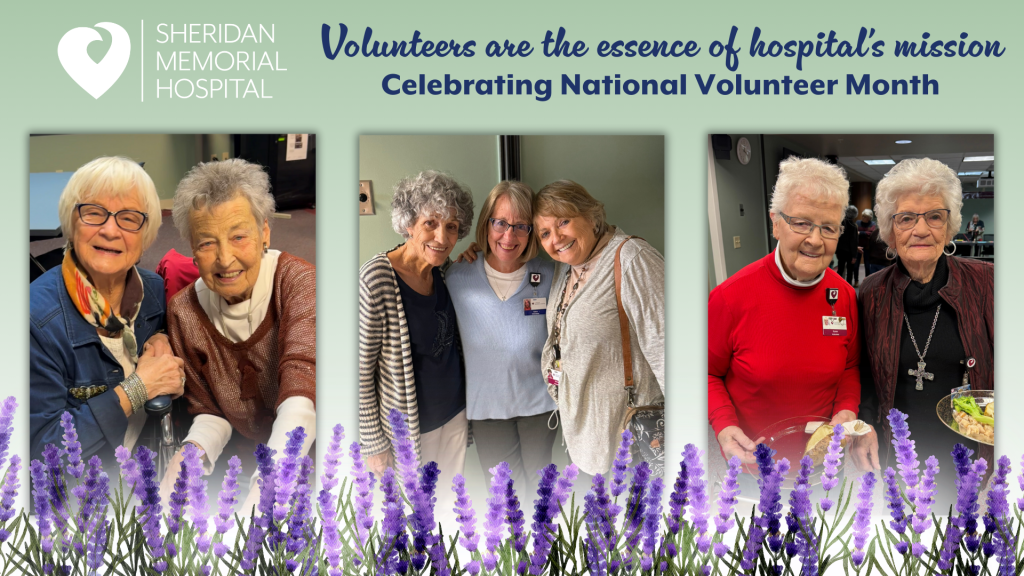
I cannot tell people often enough how much there is to be grateful for living in such a generous, selfless community. At the heart of our community, thousands of generous individuals tirelessly dedicate their time and energy to helping others and ensuring their well-being, often caring for others they have never met. As the coordinator of such remarkable humans at Sheridan Memorial Hospital (SMH), I am fortunate to witness, feel and experience the difference our volunteers make in our community and how helping others can really come full circle in helping oneself.
There are encounters, big and small, with our volunteers that make a difference to those who walk through any of our hospital doors. As an organization, we strive to live our mission “to provide our community with excellent patient-centered care.” Patient-centered care includes the obvious – our patients. However, with a patient at the center of something, there must also be something, or someone, to surround them. At SMH, we strive to care for the whole patient by supporting visitors, families, caretakers, friends, and all others who make up any patient’s team.

From greeting patients and families with a warm smile to assisting with administrative tasks, volunteers play a crucial role in creating that supportive, welcoming and compassionate environment at SMH. In their own ways, each volunteer embodies this spirit by extending their care and compassion to everyone they encounter.

It is the conversation with a volunteer that goes from talking about the weather to discussing the latest books they like to reach to sharing photos of their grandkids and/or pets, momentarily forgetting a loved one is in surgery.

It is hospice volunteers supporting the caretakers and families before, during and after a patient’s hospice journey, in their joy and in their grief.

It is engaged and connected individuals who dedicate time as a board director to Sheridan Memorial Hospital, The Foundation, and Green House because they believe in rural healthcare, having care when you least expect it and need it most.

It is the Auxiliary’s 65-year tradition of putting on the 5-year-old birthday party where a volunteer helps, remembering when she attended the first-ever party with her own son 65 years ago when he turned five.

Our volunteer’s actions reflect the true essence of community care, and we are proud to have such dedicated individuals as part of our team. Whether decorating the hallways during the holidays, helping a patient feel at ease during a difficult time, or supporting a family member in need, our volunteers go above and beyond to make a positive difference with all they encounter in our hospital hallways.

However, they are not just our volunteers. When patients and families choose Sheridan Memorial Hospital, they are entrusting us with their health and well-being. One of the most profound aspects of our volunteers’ contributions is the trust they place in us to care for them, their friends and their loved ones.

One of our SMH volunteers who, in many ways, supports SMH and efforts to grow for our community, contributed to the transformed Transitional Care Unit completed in the fall of 2022. Fast forwarding eight months, I got a call from her letting me know that she wouldn’t be in for a “little” bit to volunteer as she wasn’t feeling her best. She had been rushed to emergency care and later found out she had pneumonia and needed to have a “little” procedure for a partially collapsed lung. I know she was trying not to worry everyone, but a “little” bit? Two weeks later, she was transferred to SMH’s Transitional Care Unit (TCU), where she would stay for the next six weeks. During one of our visits, I distinctly remember her saying, “I couldn’t make it to the TCU open house, and you kept telling me to come get a tour when I was volunteering. I’m so glad it’s here, but this sure wasn’t how I planned to see it.” At that moment, she reaffirmed to me that volunteering made her feel connected to the patient care our community hospital staff and volunteers provide right here at home. To her, this was our mission in action and that SMH is there when we least expect it but need it most.

As organizations celebrate Volunteer Appreciation Month nationwide, we want to extend our deepest gratitude to all the volunteers who serve Sheridan Memorial Hospital. To the hundreds of volunteers our visitors have encountered, your efforts make a significant difference in the lives of our patients and their families, and we are incredibly fortunate to have you as part of our team. Thank you for your unwavering dedication, compassion, and commitment to caring for our community. Your service is a testament to the power of community and the difference you make through selfless giving. We couldn’t do it without you.

To learn more about Volunteering at SMH, or to share a story about a hospital volunteer, please reach out to Development Coordinator Jasmine Slater at 307.675.2620 or by clicking HERE.


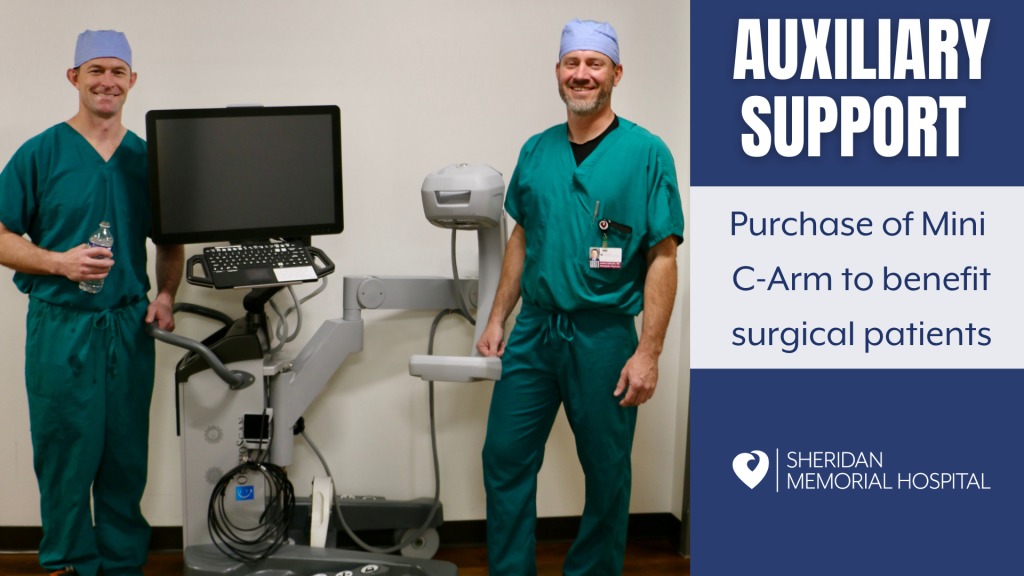
With a mission “to provide comfort to and better the welfare of Sheridan Memorial Hospital (SMH) patients,” the Sheridan Memorial Hospital Auxiliary Board recently voted on their 2025 gift to the hospital—one that best exemplifies their purpose. The board unanimously committed $13,000 toward a Mini C-Arm, a piece of surgical equipment that will increase resources for staff and elevate the patient experience.
With this gift, the Auxiliary has given $771,000 to SMH since 1991, which does not come close to reflecting the actual difference they make at our community hospital every day. There is only one value that can define our volunteer’s efforts, leadership, and genuine care for Sheridan Memorial Hospital staff and patients—it is priceless.

The Auxiliary Board asked the Sheridan Memorial Hospital Foundation Board to match their efforts and support the purchase of the Mini C-Arm. This device is helpful for small bone orthopedic fractures and offers opportunities for cost-effectiveness for the patients. A surgeon can operate it without requiring a radiology technician, which improves staffing efficiency within the radiology department. Additionally, the Mini C-Arm offers increased mobility and emits minimal radiation, reducing exposure for both patients and staff, thus contributing to a more positive patient care experience.

With support from both the Foundation and Auxiliary, equipment was purchased, delivered and put to use at the beginning of April. Sheridan Memorial Hospital truly appreciates our volunteers and the thoughtful consideration both boards take to ensure their gifts make a difference in the lives of many in our community.

Emma Groteluschen, Surgical Services Manager

Emma Groteluschen
Surgical Services Manager

“Having volunteers and community members that make up our Auxiliary is such a gift,” shared Surgical Services Manager Emma Groteluschen. “Funding and support like this expedite the purchase and use of equipment that makes a difference to our patients daily. It’s a domino effect. When our community supports an item like the Mini C-Arm, it creates other opportunities to prioritize other enhancements throughout the organization.”

Groteluschen also highlighted the connection between SMH’s staff and patients and the difference it makes in interactions.

“I am a strong advocate for staff satisfaction and experience because it is proven that staff satisfaction is directly correlated to patient experience and quality care. Having new technology enhances the growth and development of our staff, which makes them feel invested in and valued leading towards higher engagement and satisfaction,” Groteluschen said.  “In a rural community, having these tools and resources available to our staff truly exemplifies the prioritization of our staff and patient care along with our ability to create an excellent experience for our neighbors, friends, family – and maybe even you someday when you need it most.”

To learn more about Volunteering or joining the Sheridan Memorial Hospital Auxiliary Board, please reach out to Development Coordinator Jasmine Slater at 307.675.2620 or by clicking here.

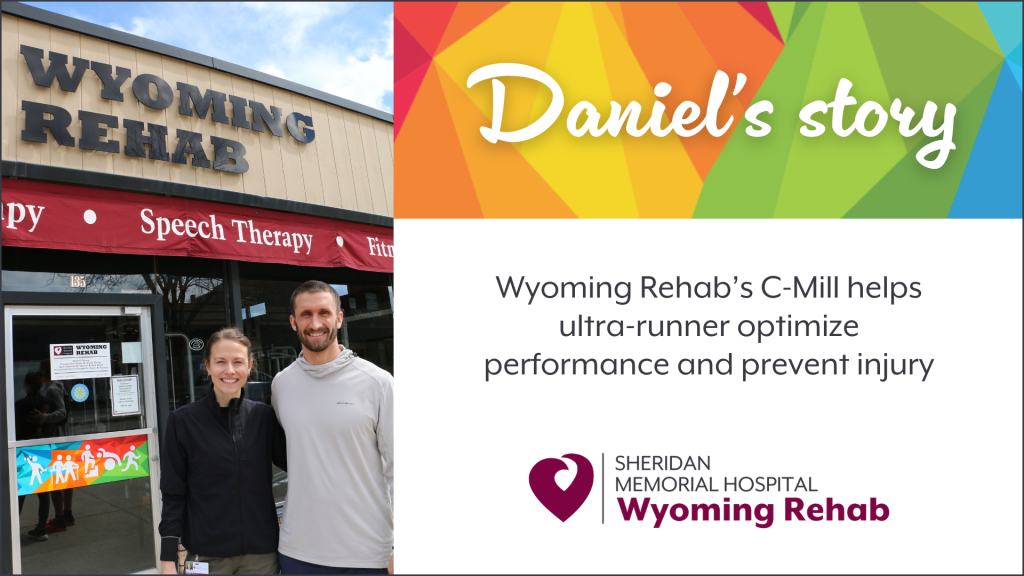
When it comes to running, efficient movement and injury prevention matter just as much as wearing a good pair of sneakers. Common running mistakes—like excessive pelvic drop and overstriding—when they occur too frequently, place extra stress on the muscles and joints of the lower back, hips and knees. Over time, this added strain increases a runner’s risk for injury.

Wyoming Rehab’s C-Mill—an advanced piece of equipment resembling a treadmill available at only a few locations nationwide—integrates virtual reality to add variety to exercises, features a force plate to measure gait and adaptability and includes frontal and side cameras for in-depth analysis of walking or running patterns.

The C-Mill is a powerful tool for improving movement efficiency and reducing injury risk. While commonly used in stroke and traumatic brain injury rehabilitation, it also plays a vital role in performance training for athletes at all levels.

“It’s super cool equipment,” said Wyoming Rehab’s Lindsay Kinney, PT, DPT, COMT. “You record a 30-second video, and the C-Mill picks up on all of the weight-bearing, loading and any asymmetry that you can see with somebody’s strike or step length. It’s truly a one-of-a-kind device, and I feel lucky to have access to it.”

One person benefiting from the C-Mill’s technology is Daniel Katz, an avid runner and EMT with Wyoming Regional EMS. Daniel recently underwent a gait analysis with Wyoming Rehab using the C-Mill, and his experience highlights how understanding your body’s movement and making small adjustments can lead to significant long-term benefits.

Daniel, who has completed marathons, half-marathons and ultra-races, discovered his love for long-distance running during the COVID-19 pandemic. What started as a short-term challenge when his friend invited him to run a virtual marathon quickly became a lifelong passion.

“Until I was 25, I swore I would never be a distance runner,” Daniel said. “But halfway through the virtual race, I ended up loving it and haven’t stopped running since.”

Daniel now trains for the 2025 Bighorn Trail Run, scheduled for June 20–21, 2025. The course, which traverses the Little Bighorn and Tongue River areas of Bighorn National Forest, challenges even the most seasoned ultra-runners, with over 20,500 feet of ascent and 20,750 feet of descent. Daniel completed the 52-mile course last year, and this year, he and his wife plan to tackle the 32-mile course together.

Over time, Daniel’s training has evolved, focusing on building weekly mileage to match or surpass race distances, stacking long runs and following a nutrition plan that supports his endurance. He now incorporates the C-Mill into his training to elevate his performance.

A typical running gait analysis at Wyoming Rehab begins with a discussion about the runner’s injury history and current issues. Lindsay then conducts a full mobility and strength assessment in a treatment room, followed by a run on the C-Mill. Using insights from both the assessment and the C-Mill, she creates a personalized treatment plan that may include targeted strength training and gait re-training to improve running mechanics.

Daniel’s gait analysis revealed key insights into his running form. Video footage showed a pelvic drop of more than six degrees, suggesting reduced lateral hip strength. This kind of asymmetry commonly contributes to running injuries. To address this, Lindsay recommended exercises to strengthen the gluteus medius and hip rotators, as well as targeted training to help Daniel maintain a level pelvis while running.

Additionally, the distance between Daniel’s foot and center of mass indicated overstriding. To improve efficiency and reduce injury risk, Lindsay suggested cadence adjustments to bring his foot strike closer to his body.

“Catching these discrepancies now is powerful, as we can address them before they become problems in the future, especially when Daniel is packing in the miles during a training cycle for a race,” Lindsay said. “If he doesn’t fix these issues, somewhere else in the body must pick up the slack, overloading an area that might not be equipped to handle it.”

Daniel appreciated both the depth of insight and Lindsay’s passion for helping runners.

“What’s great about Lindsay is that you can find a lot of people who know their stuff, but she loves this stuff,” he said. “And she’s a runner, too.”

“Runners are unique—all we want to do is run,” Lindsay added. “Sustaining an injury that prevents us from being able to do that is demoralizing, especially if it we have to miss a race because of it. A personalized analysis is a helpful way in keeping us out running on the roads or trails and reducing one’s chances for overload injuries.”

Using the information gathered from Daniel’s running gait analysis, he and Lindsay now have a clear roadmap to improve his running mechanics and stay healthy for the long haul.

“I’m not setting out to be a top-of-the-world runner,” Daniel said. “But I do want to keep running for the next three to four decades. If I can be one of those old guys who still run marathons at 72 that would be awesome. This analysis will help me stay on track.”

Lindsay emphasized that the goal of gait analysis isn’t necessarily to change a runner’s stride, but to optimize their natural movement patterns.

“Everyone has their ‘signature’ moves,” she explained. “Everyone is so individualized. Using the C-Mill, we can identify factors that may predispose someone to injury and provide exercises to strengthen those areas, making their running gait as efficient as possible.”

For Daniel, the experience reinforced the importance of periodic assessments, even for healthy athletes.

“Any work you do when you’re healthy helps prevent injuries and accelerates your training,” Daniel said. “It’s like mental health—when you connect with a therapist while you’re healthy and not in crisis mode, the good work can actually be done.”

He also noted how the C-Mill helped him better understand his body’s needs.

“This will help people develop intuition about their bodies,” Daniel said. “People should listen to their bodies, and they can come in to do these assessments to learn how.”

Looking to enhance your performance and stay injury-free? Call Wyoming Rehab today at 307.674.1632 to schedule your free screening and receive personalized treatment recommendations for non-emergent impairments and injuries. Visit wyomingrehab.org to explore Wyoming Rehab’s full range of services.

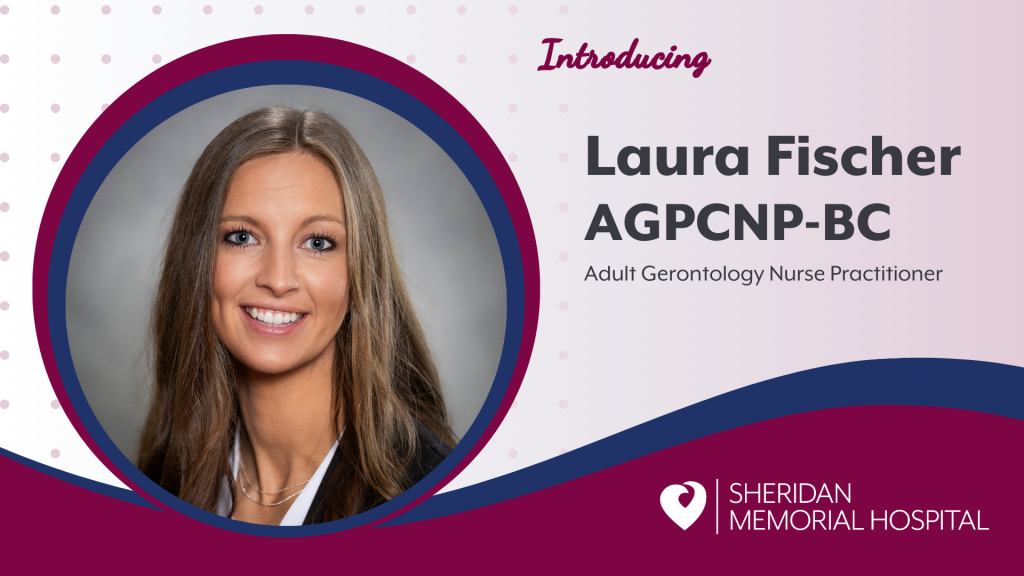
Sheridan Memorial Hospital is excited to welcome Laura Fischer, a board-certified adult gerontology primary care nurse practitioner, to our healthcare team.
Laura grew up on her family’s farm about 30 minutes outside Grand Rapids, Michigan. Her passion for healthcare began in high school when she worked as a Certified Nursing Assistant at the Grand Rapids Home for Veterans. There, she developed a deep love for geriatric medicine and nursing, inspiring her to pursue a Bachelor of Science in Nursing from Davenport University.

For nine years, Laura worked in the ICU at Mercy Health St. Mary’s in Grand Rapids. While she loved her work, the COVID-19 pandemic led to burnout, prompting her to return to school for a Master of Science in Nursing from Spring Arbor University.

Though Michigan had always been home, the call of the West was strong. Laura and her husband, Austin, frequently visited Wyoming for hunting and outdoor adventures. After a trip last summer, they decided to make the move.

“There’s a slower pace of living, a focus on enjoying the little things,” Laura said. “Everyone waves to each other. People are just sweet. They’re nice to each other, which we really appreciate.”

With her passion and expertise in geriatric and palliative care, Laura is eager to serve Sheridan’s older population.

“Not a lot of people are drawn to geriatrics, but when I worked in the ICU, we cared for patients from ages 18 to 118, and I always felt drawn to the older ones,” she shared. “That’s a gift I try to use to care even more for them because I feel like they’re a vulnerable population.”

When choosing where to work, Sheridan Memorial Hospital stood out for its strong reputation and resources.

“Almost everyone I’ve met has good things to say about Sheridan Memorial Hospital,” Laura said. “There are also resources here to help me use my degrees and expand my scope of practice, like access to the lab and other specialties.”

In her role with Sheridan Memorial Hospital, Laura will support palliative care and Sheridan Green House in collaboration with Internal Medicine’s Dr. Allison Dawson.

Outside of work, Laura and her family enjoy hunting—she successfully bagged two elk in the last two years—hiking, fishing and spending time outdoors with Austin and their 3-year-old son, Cason. Their faith and family connections remain central in their lives, and they plan to get horses soon—especially since Cason, who already loves riding, dreams of becoming a “wopin’ cowboy.”

With a strong background in geriatric and palliative care, Laura is eager to make a meaningful impact in Sheridan. For her, this move isn’t just about a change in scenery—it’s about providing excellent, patient-centered care to the community she now calls home.

Please join us in welcoming Laura Fischer to Sheridan Memorial Hospital and the Sheridan community!

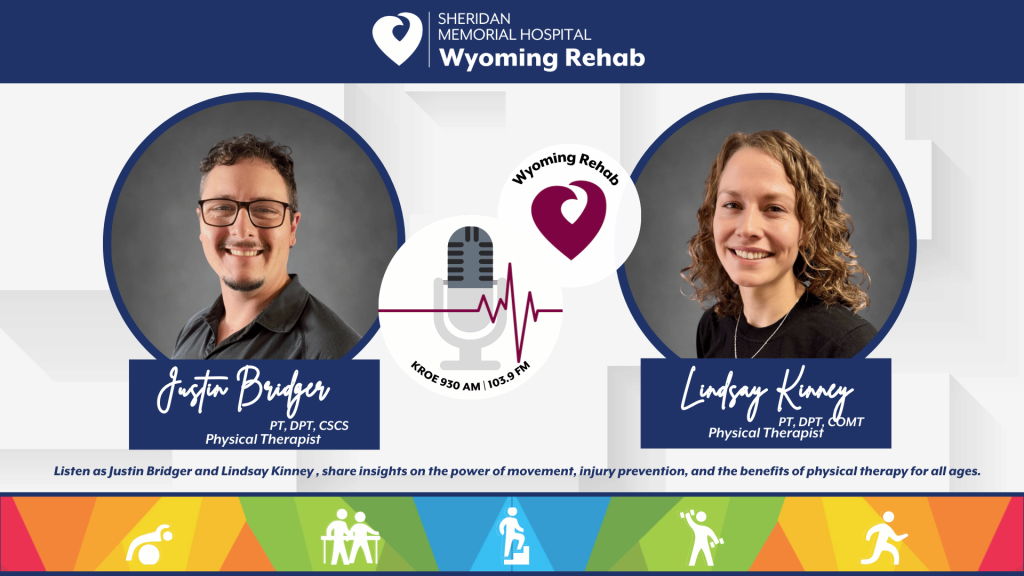
Wyoming Rehab’s physical therapists, Justin Bridger & Lindsay Kinney, joined Public Pulse to talk about the power of physical therapy in recovery, injury prevention, and overall well-being. From getting back on the trails after winter to helping patients overcome injuries, their message is clear—staying active is the key to lifelong health!

Listen now by clicking below!

Learn more about the many services provided through Wyoming Rehab by visiting https://www.sheridanhospital.org/medical-services/rehabilitation-services/

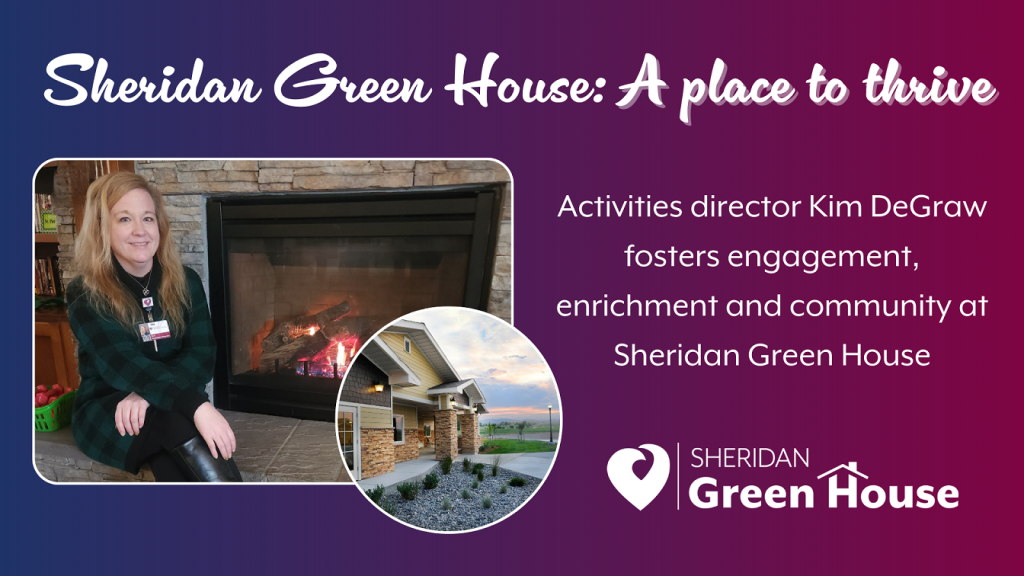
Activities director Kim DeGraw fosters engagement, enrichment and community at Sheridan Green House

At Sheridan Green House, Sheridan Memorial Hospital’s long-term care facility, staff provide individualized care, foster meaningful relationships, and create a home-like environment—all to enhance the lives of residents. Engaging activities tailored to each resident’s interests and needs play a vital role in this mission, helping maintain cognitive function, emotional well-being and physical health as they age. Research shows that social interaction and mentally stimulating activities can slow cognitive decline, reduce feelings of isolation and improve overall well-being. At Sheridan Green House, activities are more than just entertainment—they are essential for keeping residents engaged, connected and thriving.
One of the most popular programs is Opening Minds through Art (OMA), an evidence-based initiative designed for individuals living with dementia. In OMA, trained volunteers—such as students, family members or caregivers—pair with residents to help foster creativity by focusing on imagination rather than memory. This program not only empowers residents to explore their artistic abilities but also encourages them to take on new roles as artists and teachers, creating a meaningful legacy of artwork.

In addition to OMA, traditional games like Yahtzee and Dominos have become favorites among residents, with regular gatherings for friendly matches. Family involvement is also a key element at Sheridan Green House, and staff actively encourage families to visit and spend quality time with their loved ones. Last Christmas, a cookie-decorating event brought families together for some festive fun, and upcoming events, such as family pizza nights, are in the works to further strengthen connections and deepen bonds between residents and their families.

Kim DeGraw, Sheridan Green House’s activities director, is the driving force behind these personalized individual and group activities. With a passion for creating meaningful engagement and improving life for residents, Kim’s background in education and her innovative approach to long-term care transform the experience for the residents she serves.

“Kim is such a great fit for this work,” said Tonya Carlson, executive director of Sheridan Green House. “She really understands the importance of life enrichment—really meeting people where they are and understanding what will add quality to their day-to-day lives. Of course, there are the parties and the big events, but she really pays extra attention to the more specific needs of the individuals that live here.”

Originally from northcentral Montana, Kim has spent much of her life balancing single motherhood with professional growth. She is the proud mother of two daughters—15-year-old Erykah and 9-year-old Abberdean—and has worked hard to build a solid foundation for them. Over the course of her career, Kim spent 15 years as a teacher and earned two master’s degrees—one in curriculum and instruction and another in management and leadership.

Kim’s move to Sheridan was both a personal and practical decision, as she saw the town as a great place for her children to grow up. Determined to secure a job before relocating, Kim discovered the activities director position at Sheridan Green House and recognized it as the perfect fit for her skills and educational background.

“With my master’s degrees in curriculum, management and leadership, it all just meshed,” she explained.

Under the guidance of Tonya Carlson, executive director of Sheridan Green House, Kim developed a deep appreciation for the elders at the facility and the impact of her work in helping them thrive.

“Tonya is an excellent administrator,” Kim said. “She’s a great fit for this facility because she’s incredibly patient and always willing to answer my questions with detailed explanations. It’s been wonderful to have someone so willing to educate me in so many different areas.”

Kim’s passion for dementia care, in particular, has grown significantly.

“I’ve fallen in love with caring for residents with dementia,” she says. “When people think of activities, they often picture birthday parties, games and fun all day. But if I could reclassify this department, I’d call it ‘Life Enrichment.’ You’re enriching these elders’ lives by offering personalized activities—whether it’s conversation, reminiscing or simply sitting with them.”

For Kim, connecting with residents, especially those with dementia, means stepping into their world.

“I’ve been coming in the last three nights to support a resident who needs a little extra care,” she shared. “We ‘built a fence’ across the living room together. We went mining. We went shopping for hats because he wanted a new one. It makes me feel like a kid again. It’s hard to put into words, but offering that compassion and being in their time—in their world—is so rewarding for me.”

When planning activities for all residents at Sheridan Green House, Kim emphasizes the importance of personalization. She regularly checks in with residents to ask what they would like to do and incorporates their preferences into the next activity schedule.

“I’ll go around and ask residents what they want to do and put it in my brain bank, and then I’ll try to put it on the next schedule,” she said. “Last month, a handful of ladies wanted to make jewelry, so I made sure to put that on this month’s schedule. I make sure to get my ideas from my residents. Sometimes I come up with activities that seem like they could be fun, and I’ll put it on the schedule and we give it a shot. Either the residents like it and we do it again, or it’s a flop and we move on to something else.”

One of the most successful large-group activities so far has been the winter carnival, where Kim and the Sheridan Green House staff brought traditionally outdoor games inside.

“It was a whole group effort,” Kim said. “Sabrina, our administrative coordinator, ran the cotton candy machine. We had games and popcorn. Everybody loved it! We’d love to do it again, maybe when the weather warms up, so we can take it outside next time.”

Looking ahead, Kim is eager to continue developing individualized activities for residents and further embrace the Green House model. Kim also hopes to continue strengthening family involvement and make Sheridan Green House a true extension of home for everyone involved.

“Once we get the word out about how Sheridan Green House is ran, we will not have an empty bed,” Kim said.

Sheridan Green House is comprised of four cottages, each with 12 rooms available for residents. If you or a loved one is considering long-term care, reach out to Sheridan Green House at 307.672.0600. For additional information, see sheridangreenhouse.org.

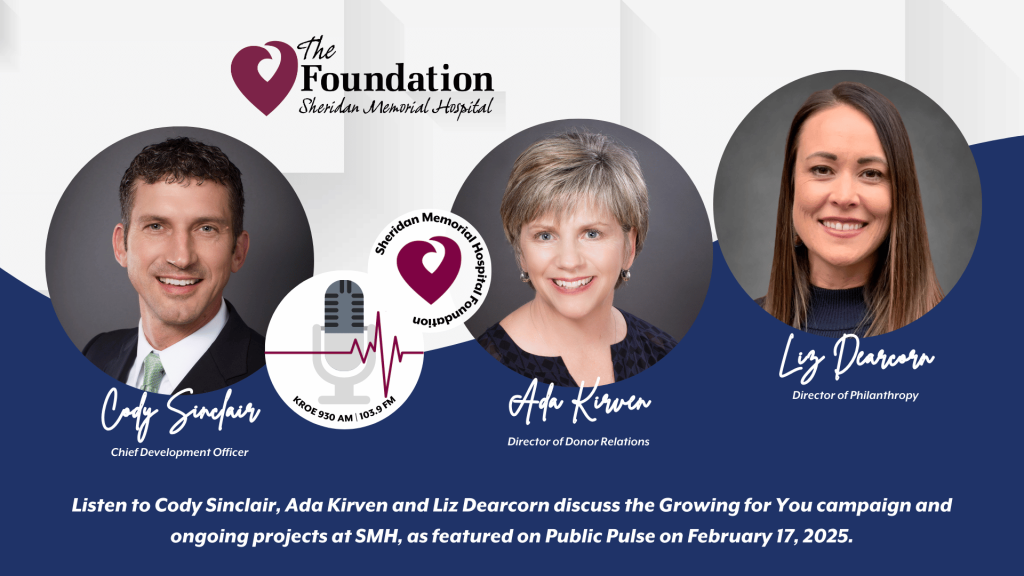
Sheridan Memorial Hospital Foundation leaders recently joined Sheridan Media’s Public Pulse to share updates on the Growing for You campaign. Chief Development Officer Cody Sinclair, Director of Donor Relations Ada Kirven and Director of Philanthropy Liz Dearcorn discussed the campaign’s impact on expanding mental health care in the region. Listen Here!
Sheridan Memorial Hospital’s Growing for You campaign is transforming healthcare in our community! From new pediatric and behavioral health units to emergency care upgrades, every dollar donated helps keep quality care close to home. 

For additional details on The Foundation and the Growing for You campaign, as well as current initiatives at Sheridan Memorial Hospital, please contact us at 307.673.2418 or explore our website at sheridanhospital.org/foundation.

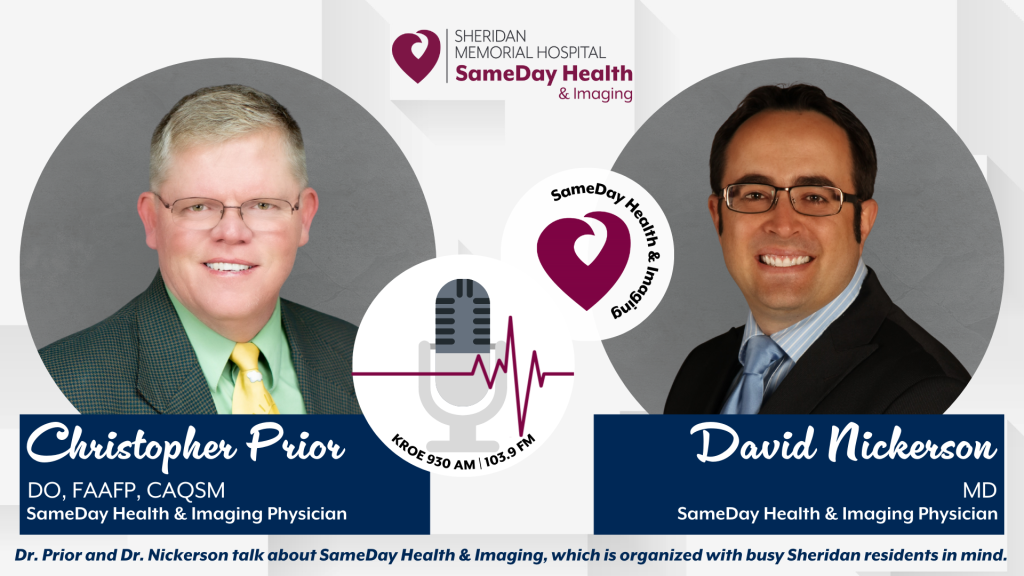
Discover how Sheridan Memorial Hospital’s Same Day Health & Imaging is redefining healthcare convenience in Sheridan County. On the January 20th episode of Public Pulse, host Floyd Whiting sat down with Dr. Christopher Prior and Dr. David Nickerson to explore how this innovative clinic is bridging the gap between urgent care and primary care.
From walk-in and scheduled appointments to on-site imaging, lab services, and telehealth, SameDay Health & Imaging offers a comprehensive approach to patient-centered care. The doctors shared their unique professional journeys, insights on the differences between urgent and emergency care, and how modern technologies streamline communication across healthcare providers.

Dr. Prior emphasized, “SameDay Health & Imaging evolved to meet patients’ needs, providing timely, efficient, and comprehensive care without delays.” Dr. Nickerson added, “It’s a great starting point for anyone unsure where to go or unable to get into their regular provider.”

Key Services Offered:

  • Walk-in and scheduled appointments
  • Telehealth for added convenience
  • On-site imaging, lab draws, mammography, and more
  • Integrated care with Sheridan Memorial’s electronic medical records system

Same Day Health & Imaging ensures that care is both efficient and personal, making it easier for patients to access the services they need when they need them.

Listen now to what Dr. Christopher Prior and Dr. David Nickerson have to say on Public Pulse,
hosted by Floyd Whiting.

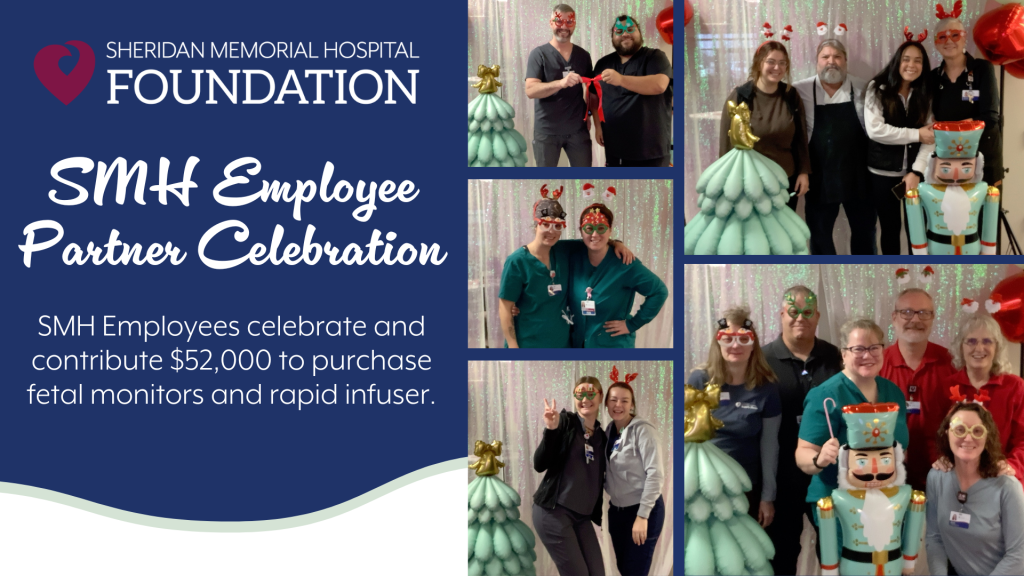
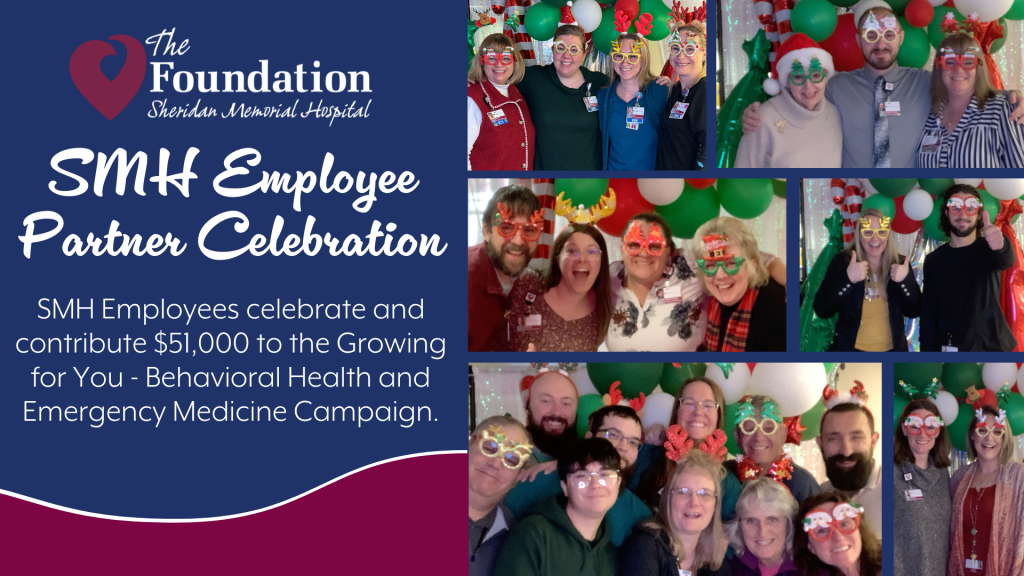
On Thursday, December 12, 2024, Sheridan Memorial Hospital Foundation hosted its annual holiday breakfast to honor and celebrate Employee Partners for their contributions to the hospital’s Foundation. During the event, Partners vote to fund a strategic project in the hospital’s area of greatest need, with the funds accumulated over the past year. In 2024, 622 employee partners participated in this unique philanthropic program and donated $51,948 through biweekly payroll deductions.
This year, at the Annual Partner Celebration, Employee Partners at Sheridan Memorial Hospital made a significant contribution to our community hospital by voting to support the hospital’s Behavioral Health Campaign for a second consecutive year. Their contributions to the Growing for You Campaign now total over $100,000, demonstrating their commitment to improving healthcare for the community. SMH employees’ generosity and dedication to improving patient care daily make Sheridan Memorial Hospital a truly special place.

The Growing for You Campaign, which kicked off in 2023, features multiple phases that impact several areas of Sheridan Memorial Hospital. The project began with the renovation of space on the hospital’s lower level in order to relocate the internal pharmacy and materials management. That phase of the project along with updates to the Emergency Department were completed in 2024.

Currently, renovations for a new Pediatric Unit are underway and will be followed by changes to a portion of the inpatient medical/surgical unit and construction of the new Behavioral Health Unit.

The Employee Partner Giving program at Sheridan Memorial Hospital has a long history of making a positive difference in patient care. The program was established in 2004 by a group of dedicated employees who wanted to give back to their community. Over the past 21 years, Employee Partners have contributed over half a million dollars toward patient care improvement projects at your community hospital. The program continues to grow, with new generous and passionate employees joining us and leaving a legacy through the Employee Partner Giving opportunities. Their efforts and generosity have opened doors and provided opportunities that will forever shape the trajectory of our organization.

“We are so grateful for our employees each and every day,” expresses Chief Development Officer Cody Sinclair. “The Employee Partner Program is just another example of how our employees contribute to our culture of kindness and care deeply for our patients. The Foundation would not be as successful without our employees’ unwavering commitment to care for our community. As we look to the future, we are grateful for the ongoing support of Employee Partners and the difference they continue to make in healthcare in our community. Together, we can build a better future for all who rely on Sheridan Memorial Hospital for their care.”

For more information about The Foundation, please contact our team at 307.673.2418 or visit sheridanhospital.org/foundation.

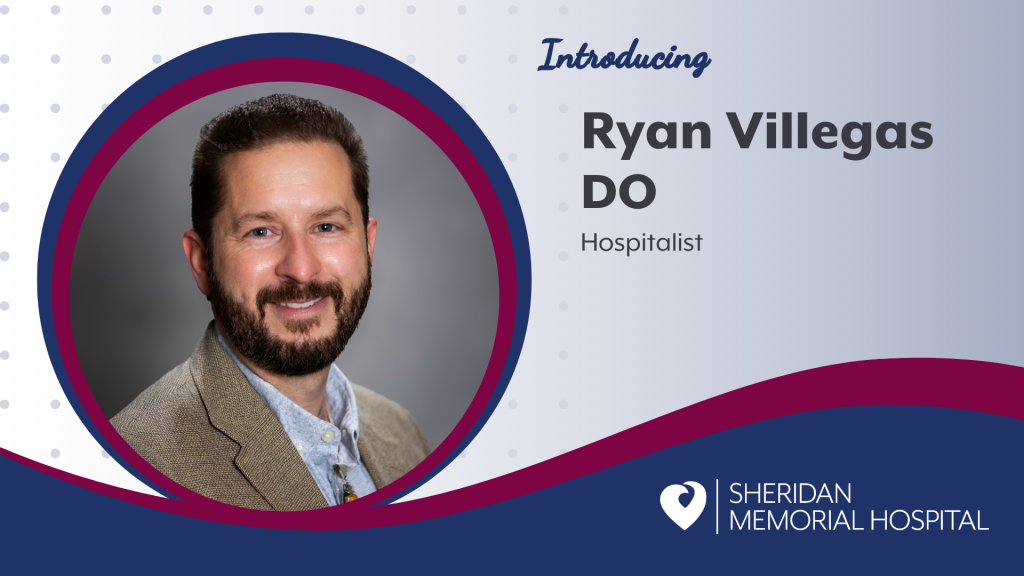
Sheridan Memorial Hospital is excited to welcome Dr. Ryan Villegas to our team as a dedicated hospitalist. With a rich background spanning international borders and a deep commitment to patient care, Dr. Villegas brings a wealth of medical expertise and a unique global perspective.

His journey to healthcare began with a childhood spent across South America, Central America and Southeast Asia, where he gained a profound respect for human resilience and diverse approaches to health and well-being.

“I saw people in Asia who were still active and thriving well into their 80s,” he shared, “and it planted a seed in me to help others live well throughout their lives.”

Driven by this inspiration, Dr. Villegas pursued studies in biology and neuroscience at the University of Texas, eventually finding his path to medicine. Now, as a hospitalist, he provides critical, immediate care that supports patients and families during their most challenging moments.

Though Dr. Villegas could have practiced anywhere, he chose Sheridan for its warm, welcoming community and the natural beauty that aligns with his family’s values. His wife and their three young sons –  ages 6, 8 and 10 – will soon join him from Santa Fe, ready to embrace Sheridan’s outdoor lifestyle and genuine community spirit.

“As I waited for my interview, a local resident struck up a conversation and even invited my family to her ranch,” Dr. Villegas recalled, reflecting on his first visit to Sheridan. “That openness, that genuine spirit, truly impressed me. The warmth and authenticity here really drew us in, and I’m honored to join a hospital and community that share these values.”

Dr. Villegas is known for his holistic approach to patient care, where listening and empathy are cornerstones.

“We’re all human beings created equal,” he said. “In every patient interaction, my goal is to truly listen and respect each individual’s unique story.”

He added that he firmly believes healing extends beyond treating physical ailments — it’s about nurturing the mind and spirit as well. His compassionate approach is evident in moments like a shared music connection with a former patient, where he recognized that sometimes nurturing the spirit can be just as vital as tending to the body.

“My priority as a physician is to remain curious and be a good listener. If I can listen well, I can provide the best care,” he stated.

Outside the hospital, Dr. Villegas looks forward to immersing himself in the Sheridan community. As an avid outdoorsman and musician, he envisions connecting with others through his family’s love for classical music, outdoor adventures and day-to-day interactions.

Please join us in welcoming Dr. Villegas to Sheridan Memorial Hospital and the broader Sheridan community. We’re excited to have him on our team and look forward to the positive impact he will bring to our patients and neighbors alike.

Dr. Jason Ackerman from Sheridan Memorial Hospital Addiction & Internal Medicine Clinic spoke with Floyd Whiting on Public Pulse about addiction and the support available to those struggling with it. Dr. Ackerman explained how addiction is more than just bad choices—it’s a medical condition that affects the brain. He also talked about the importance of breaking the stigma around addiction so people feel safe asking for help.

During the conversation, Dr. Ackerman shared how treatment can make a big difference. Using medicine to reduce cravings can help people focus on building better habits and relationships. He also talked about the role of family and support systems, especially during stressful times like the holidays, when many people face extra challenges.

Sheridan Memorial Hospital’s Addiction and Internal Medicine Clinic is ready to help, with a team of caring professionals who understand the journey to recovery. Dr. Ackerman encourages anyone struggling—or their loved ones—to reach out. There is hope, and there is help.

To get started, call 307.675-2674 or visit Addiction and Internal Medicine Clinic – Sheridan Memorial Hospital. Listen to the full podcast now!


Learn more at Sheridan Memorial Hospital Addiction and Internal Medicine Clinic or call today for an appointment at 307.675.2674.