
Written by Josie Fagerland, BSN, RN, RNC, a nurse on the Women’s Health and Pediatric Units at Sheridan Memorial Hospital.
Parents, grandparents, babysitters and caregivers play a vital role in infant safety. The team at Sheridan Memorial Hospital encourages families to carry the same evidence-based habits home to protect their baby every day.
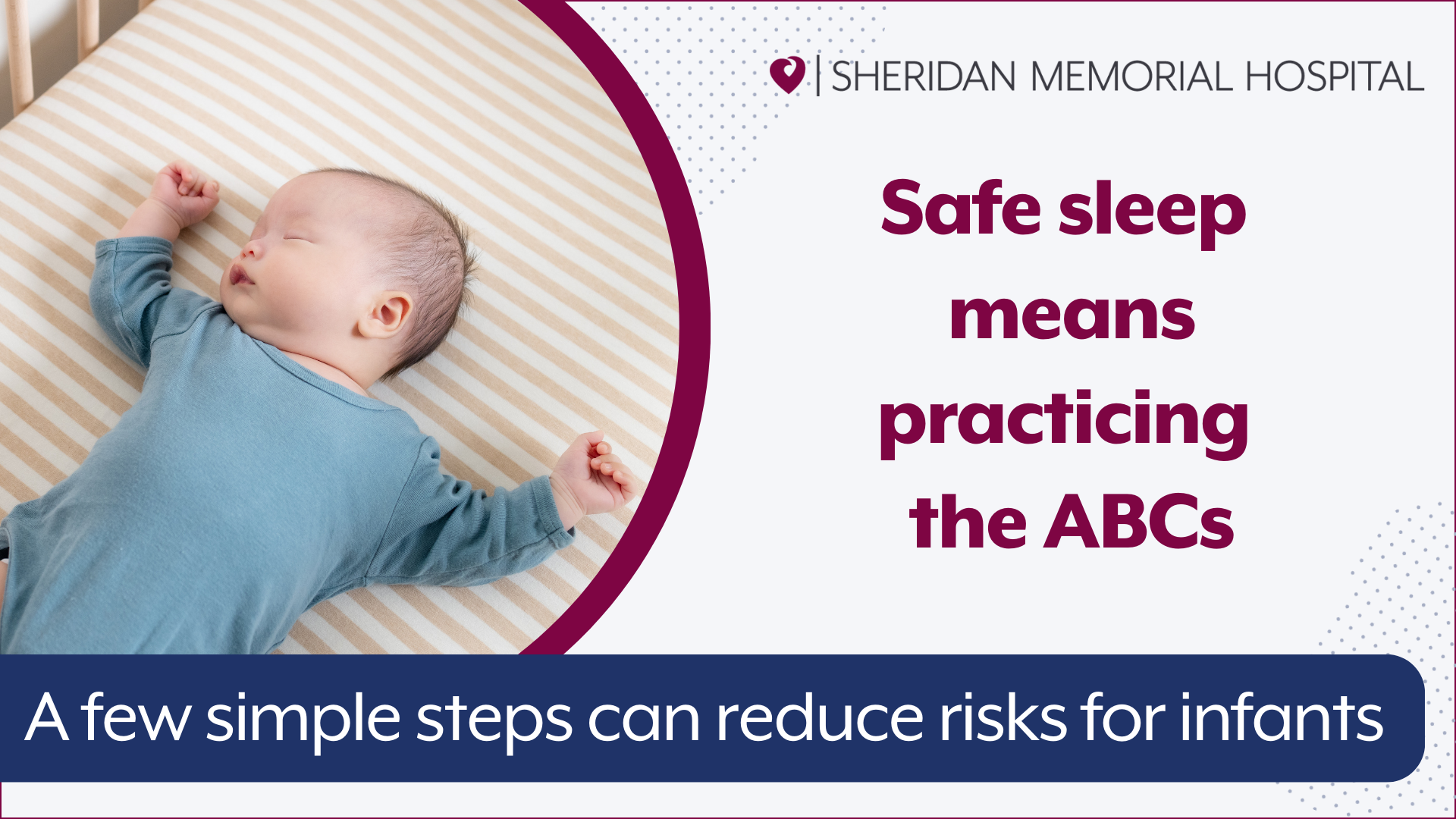
For us, this means following the ABCs (Alone, Back, Crib):
- Alone: Your baby should sleep without pillows, blankets, toys or bumpers in their sleep space.
- Back: Always place your baby on their back for naps and nighttime sleep.
- Crib: Use a firm sleep surface with a fitted sheet in your child’s crib.
Once a baby can roll from back to front independently, they may remain in the position they choose —but they still need a safe, uncluttered sleep space.
Creating a safe sleep environment
A few simple steps can dramatically reduce risks for infants while they sleep.
- Use a firm mattress with no gaps.
- Keep the room smoke-free.
- Maintain a comfortable temperature — not too warm.
- Use sleep sacks instead of loose blankets.
- Offer a pacifier at sleep time if your baby accepts one.
While car seats, swings, baby carriers and slings are helpful for travel or awake time, they are not safe for routine sleep. If your baby falls asleep in one, move them to a safe sleep surface as soon as possible.
Preventing drops, falls at home
One of the most common causes of infant drops is caregiver fatigue. If you feel sleepy — during late-night feedings, for example — place your baby safely in the crib before resting. Never risk falling asleep with your baby in your arms or on a couch or chair.
- Always sit before picking up your baby if you feel tired or unsteady.
- Never transfer a sleepy infant between people unless both caregivers are fully alert and prepared.
- Keep floors free of clutter, cords or tripping hazards.
Healthcare providers work through safe sleep education with parents when they are admitted for the birth of their child, throughout their stay at the hospital and again before discharge. Women’s health and pediatric healthcare providers are also available to answer questions about safe sleep practices, but infant safety is a community effort. When families, healthcare providers and caregivers work together and share safe sleep knowledge, we prevent injuries before they happen — and help every child sleep safely.
For more information on community safe sleep resources, local classes or hospital education materials, families are encouraged to contact Sheridan Memorial Hospital’s Women’s Health Department. Together, we can ensure every baby has the safest start in life.