
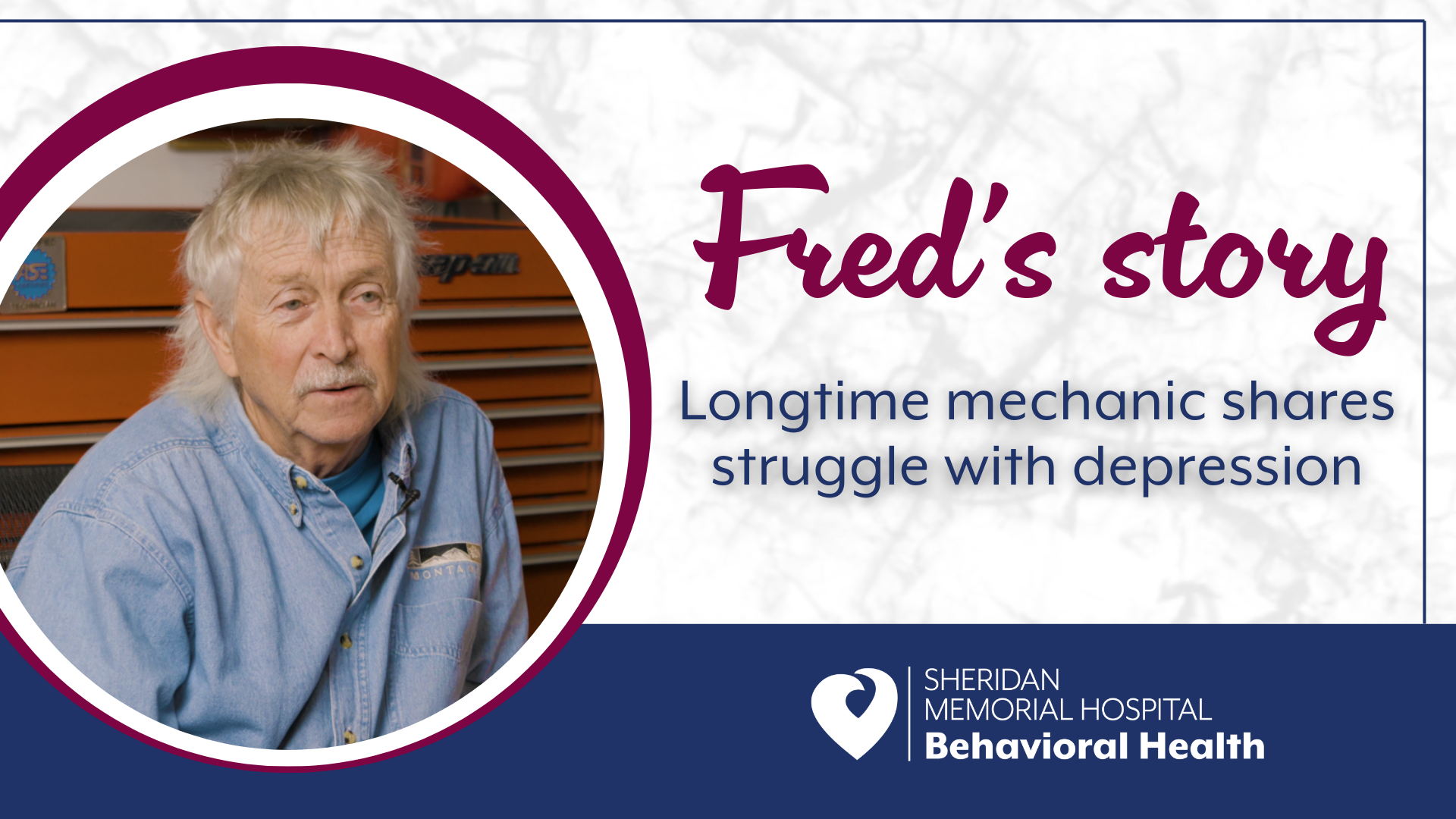
In early 2025, Fred Cherni made a plan. Two actually. After retiring in the spring of 2021, plans had become rare, leaving Cherni struggling with a lack of purpose. To top it off, he had been in pain for years, the result of a lingering back injury and what felt like many attempts at failed pain management.
So, Cherni had plans.
“Everything had come together,” Cherni said. “And I just thought, screw this, I’m done. It wasn’t a thought. It was a plan.”
Cherni had planned to end his own life in the summer of 2025. Before he did, though, he had an appointment with a pain management service in Sheridan. While he was there, Cherni asked about depression.
“I hadn’t ever had it,” Cherni explained. “I was curious. And the gal there told me, ‘You can’t let it go too far.’”
When he asked her what “too far” looked like, the employee explained that thoughts of suicide were likely a sign depression had gone untreated. Cherni had gone beyond thoughts; he had plans.
Cherni made an appointment with Sheridan Memorial Hospital’s Dr. Derek Redinger, who recognized Cherni’s struggle and referred Cherni to SMH psychiatrist Dr. Michael Kinney.
Dr. Kinney spent nearly an hour and a half with Cherni in that first appointment, seeking to understand his situation and how best to help. At the time, Cherni had been on multiple medications, mostly to treat his pain. They weren’t working.
Dr. Kinney and Cherni discussed treatment options, from medication to inpatient care at a regional facility. No matter the path Cherni chose, Dr. Kinney didn’t want him to leave the office without a plan.
Dr. Kinney recommended transcranial magnetic stimulation (TMS), which he had seen work with patients in the past. TMS is a noninvasive treatment that utilizes magnetic pulses to stimulate different areas of the brain. The treatment is available in Sheridan, so Cherni decided to give it a try. Eleven treatments into the 36-treatment program, Cherni said it was like a light bulb lit up in his mind.
“I went from wanting to die to having hope and wanting to live,” Cherni said.
He finished his 36th TMS treatment just before Thanksgiving and said while he knows he has a lot of work ahead of him, he feels optimistic in a way he hasn’t in years.
History of pain
Cherni has spent nearly his entire life working with his hands. Born and raised in Sheridan, he has earned a living as a mechanic since he was 18 years old. He worked on everything from agricultural equipment as a co-owner of C&K Equipment to classic and modern cars as the owner of Cherni Auto Repair.
Several years before retiring, though, Cherni injured his back. He remembers several instances where he moved just right – or wrong – and then couldn’t move at all it hurt so bad. One of those instances resulted in an ambulance ride to the Emergency Department, where providers determined he had fractured his back.
Following surgery to repair the fracture, though, Cherni still experienced extensive pain and pain management options were limited.
“It’s so hard because you feel like you’re treated like a drug addict; I take drug tests every month,” Cherni said. “Yet nothing works. And at a certain point, I felt the only way to end the pain was to end it all.”
The physical pain from his back injury, combined with the mental and emotional struggle of retirement weighed heavy.
“If I were to ask you what you were doing tomorrow, or Friday, you would know,” Cherni said. “But for me, I didn’t know. I had no plans. I had nothing to do. And people say ‘You just need a hobby.’ It sounds easy. Just go do it. But it wasn’t that way for me.”
Since seeking treatment with Dr. Kinney, receiving TMS, participating in physical therapy and regularly seeing a mental health therapist, Cherni said he has been able to decrease the amount of pain medication he takes.
“I didn’t realize until Dr. Kinney told me, that depression can cause pain too,” Cherni said.
He also has a job installing real estate signs and has plans to find another job in the future, once he clears out a storage unit he and his wife have owned for years.
“I’m not done,” Cherni said of his progress. “But I definitely have a different perspective.”
Not alone
Cherni has celebrated his care team – which includes an internal medicine physician, psychiatrist, mental health therapist and physical therapist – as well as the support he has received from his wife, Janet.
“My advice would be is to talk to someone that you feel safe with,” Janet Cherni said. “And hope that that person is the person who will help you take the step to get the help you need.”
For Fred and Janet Cherni, the experience is reshaping their understanding of mental health. They believe society must move away from labeling those with mental health challenges as “crazy,” recognizing that stigma only discourages people from seeking the help they need.
“This has changed the way that we both look at depression, and it’s on our way to changing the way we look at mental health altogether,” Janet Cherni said. “Fred was the person who looked at depression as being something that you could control. You just go do something about it. And yet, he became depressed, and he couldn’t do anything about it until he told somebody. That changed everything.”
While Fred Cherni said he can relate to the commonly held stigmas surrounding mental health, his personal experience has shown that care from an experienced and knowledgeable team can provide hope.