
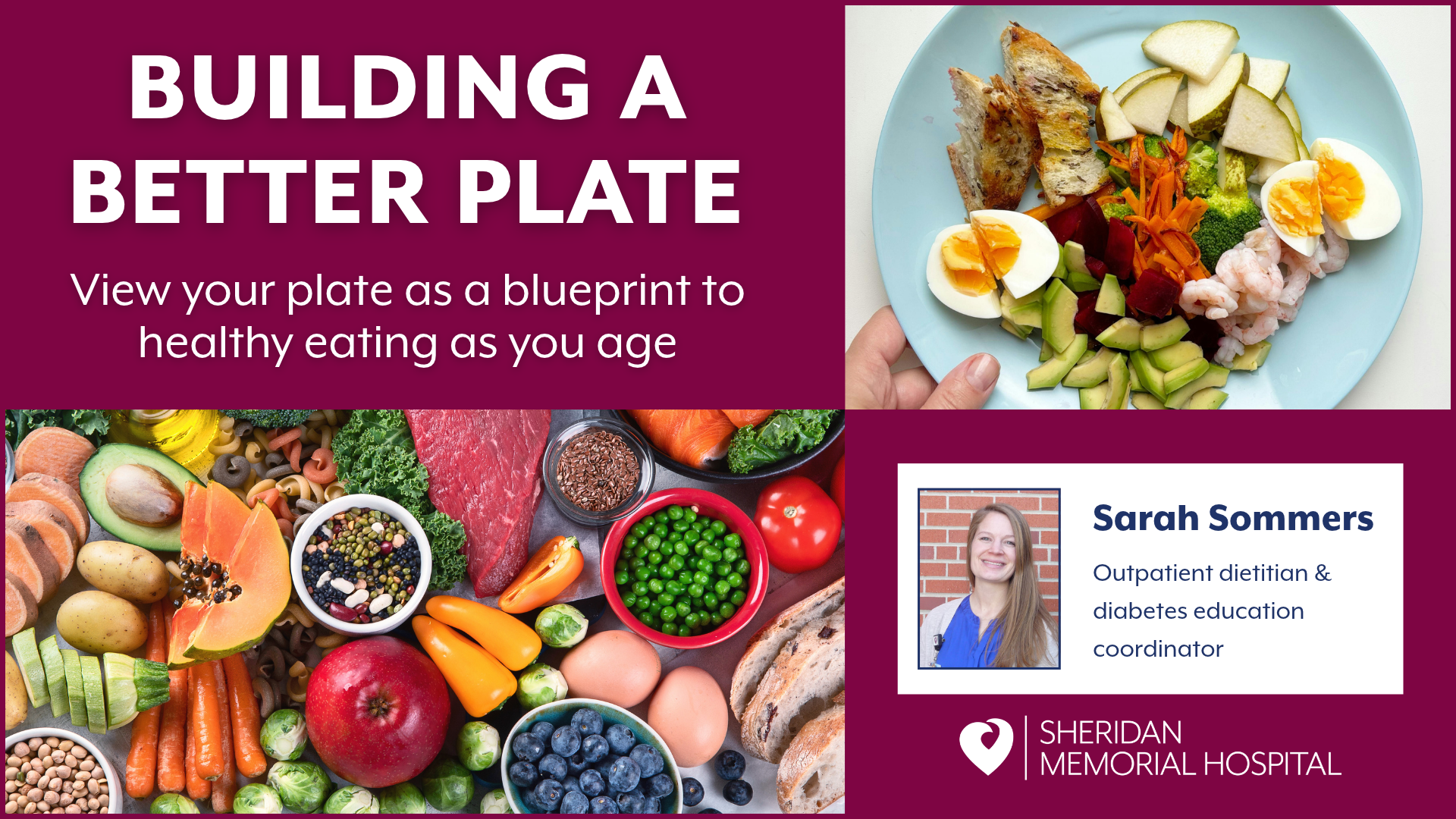
By Sarah Sommers, RD, LD, CDCES, an outpatient dietitian and diabetes education coordinator at Sheridan Memorial Hospital
Think back to the last time you built something. Maybe you pieced together a new piece of furniture or planned a garden. What did you determine you needed to ensure success?
You likely needed the right tools, appropriate materials and a plan.
As the years go by, our bodies demand a similar approach. We need the right tools and knowledge, access to healthy foods and a plan. While our overall calorie needs naturally taper, our need for high-value materials goes up. Eating well in our later years is not about perfection or calorie obsession. It is simply about safeguarding our independence – keeping our muscles strong, our bones sturdy and our blood sugar steady.
An easy way to look at healthy eating as we age is to look at your plate as a blueprint.
First, dedicate half of your blueprint to non-starchy vegetables. This could include foods like broccoli, leafy greens, peppers or green beans. These foods offer fiber to support heart health and digestion without causing sharp spikes in blood sugar. If fresh produce is difficult to come by, canned and frozen varieties work just as well. Just be sure you look for low-sodium or unsweetened options to keep preparation easy.
Next, utilize one-quarter of the plate for lean protein. As we age, muscle slips away faster, making protein an essential part of every meal. Eggs, Greek yogurt, canned tuna, poultry, lentils or cottage cheese are great structural foundations that protect physical strength and balance. Getting protein within an hour of completing strength training or resistance exercises gives your muscles a big boost in recovery.
Finally, the remaining one-quarter of your plate should be dedicated to high-fiber carbohydrates. This could include oats, brown rice, whole-grain toast or berries. For anyone keeping an eye on blood sugar or managing diabetes, carbohydrates shouldn’t be looked at as the enemy. The trick with these types of foods is to consider quality, portion and partnership. For example, a bag of chips is not the same quality as complex carbohydrates such as apples or whole-grain crackers. To really strengthen your blueprint for better eating, consider pairing complex carbs with proteins or healthy fats. Think apples and peanut butter or whole-grain crackers and cheddar cheese. These combinations slow digestion and prevent energy crashes.
If you take medications like insulin that can cause sudden dips in blood sugar, keep snacks on hand that can help add support to your blueprint. If you are feeling shaky, sweating or dizzy – reach for about 15 grams of fast-acting sugar like juice or honey, then eat a small combination of proteins and carbs.
The biggest thing to remember is that your plans need to be realistic. Building a hotel is different than reading the instructions to put together a new couch. Set yourself up for success by building a blueprint for realistic habits you can stick to in the long term. If cooking feels overwhelming or your appetite is dwindling, smaller more frequent meals and ready-to-eat favorites can make a big difference. Adding friends or loved ones to the mix can also help the stress of healthy eating feel less burdensome by making it fun and social.
If you are still unsure about how to build your blueprint for better eating, check with your insurance to see if medical nutrition therapy is an option. Medicare covers two hours of time with a registered dietitian for those managing diabetes and kidney concerns, and other insurances may also cover the cost of this specialized care.
This article originally appeared in The Sheridan Press on Nov. 17, 2026.