
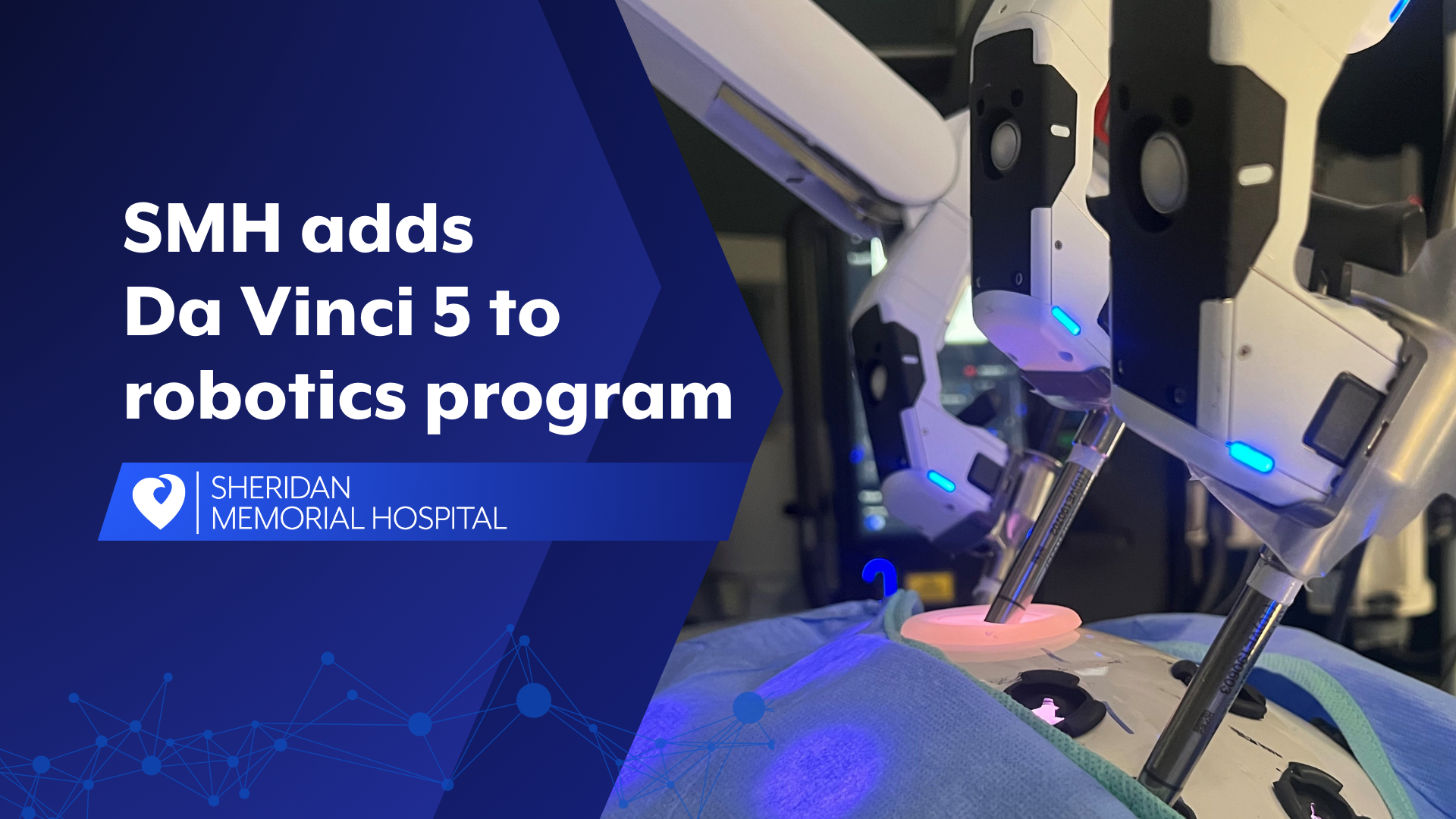
When robotic-assisted surgery was introduced at Sheridan Memorial Hospital in 2022, it represented a bold investment in the future of local healthcare. At the time, three surgeons began using a single robotic system to perform advanced minimally invasive procedures — bringing cutting-edge surgical technology closer to home for patients who previously may have needed to travel for that level of care.
Just a few years later, that investment has grown into something even more meaningful.
Today, the hospital proudly offers two state-of-the-art robotic-assisted surgical systems, led by eight specially trained surgeons across multiple specialties. This expansion reflects not only the success of the program, but also the growing demand from patients seeking the benefits of robotic-assisted surgery — right here in their own community.
The growth was driven by both clinical outcomes and utilization. Prior to expansion, the hospital’s original robotic system — a da Vinci Xi — was being used at nearly 80 percent capacity, a clear signal that the program had outgrown its initial footprint. In response, hospital leadership made a strategic decision: upgrade the original system to the newest da Vinci 5 platform and add a second robotic system to better serve patients and healthcare providers alike.
Robotic-assisted surgery allows surgeons to perform complex procedures through small incisions using enhanced visualization, precision instruments and advanced control. The da Vinci 5 system offers improved ergonomics, refined instrumentation and advanced technology designed to support surgeon performance while maintaining a strong focus on patient safety.
At SMH, robotic-assisted systems are now used for a wide range of procedures, including general surgery, urologic surgery, gynecologic procedures, colorectal surgery and other minimally invasive interventions. These systems support procedures such as hernia repairs, gallbladder removal and hysterectomy, as well as bariatric and urologic procedures — all of which benefit from precision and minimally invasive approaches.
For patients, the advantages are significant. Robotic-assisted surgery often means smaller incisions, less blood loss, reduced pain, shorter hospital stays and faster recovery times. Many patients are able to return to normal activities sooner, with fewer complications and improved overall surgical experiences. Just as important, patients can access this level of advanced care without leaving their community, close to family, support systems and trusted providers.
For surgeons, the technology enhances dexterity and visualization, translating to more precise movements and improved access in complex anatomical areas. The result is a collaborative environment where technology supports clinical expertise — never replacing it, but elevating it.
The expansion of robotic-assisted surgery is more than a technology upgrade; it is a reflection of the hospital’s ongoing commitment to delivering excellent, patient-centered care. By investing in advanced surgical systems and expanding the team of trained surgeons, the hospital continues to meet the evolving needs of the community while ensuring patients receive care that is both modern and compassionate.
What began in 2022 with three surgeons and one system has become a thriving surgical program—one that demonstrates how innovation, when paired with community values, can transform healthcare close to home.